
Strategies for Reducing Customer Service Costs through Automation
Automating customer service by ensuring resolution happens within the message can significantly cut costs. Prioritize writebacks to core systems to prevent operational debt and avoid unnecessary rework, ultimately enhancing efficiency and trust.
What if chasing conversations wasn’t the real solution? Time and again we’ve seen that the only sustainable strategies for reducing customer contact and cost make the task finish where it starts inside the message. If outcomes do not write back to core systems, you do not have automation. You have rework, risk, and avoidable calls.
In this guide, we’ll walk you through the best strategy for reducing customer service costs through automation: self-service resolutions within the message.
Key Takeaways:
Resolution inside the message is the lever that reduces cost, not more conversations
Writebacks to systems of record close the loop and prevent operational debt
Make the message the app with secure, policy‑aware self‑service
Orchestrate channels for action, not awareness, and measure completion, not sends
Start with one high‑volume workflow and define completion unambiguously
Guardrails matter: identity, audit, and idempotent writebacks protect trust
Tools that cannot write back reliably will fail at scale
The Challenge: Why “Reduction” Efforts Fail Without Closed Loops
Most strategies to reduce customer contacts fail because they stop at outreach, then push people to portals or agents. The handoff breaks momentum, adds friction, and hides the real cost in manual wrap‑up. If outcomes never write back automatically, volume moves around while queues and unit cost stay high.
Surface Wins, Hidden Debt
Teams celebrate lower handle time or higher bot containment, then wonder why escalations and carryover remain stubborn. The root cause is simple. The flow does not finish where it starts. A customer taps a link, hits a login, bounces, then calls. Your team verifies identity, updates records, and writes notes by hand. That is operational debt. It compounds every day.
You feel it on Friday nights when exceptions stack up. You see it when customers who acted reasonably do not see balances updated. They call. That double cost, rework and avoidable support calls, erodes trust and budget. According to McKinsey, digital self‑service that truly completes tasks can cut cost to serve by double digits when it replaces manual steps, not when it adds new ones.
What Broken Loops Cost You
The cost is not abstract. It shows up as:
Missed writebacks that trigger reconciliation sprints
Longer cycle times as customers switch channels to finish
Lost revenue when eligible plans are not presented in flow
Higher compliance risk when consent trails are incomplete
A simple rule helps: if you need an agent to confirm the outcome in a system of record, your automation is unfinished. Most teams do not fail at messaging. They fail at safe, reliable completion that updates back‑end systems without people in the loop.
A Resolution‑First Method: Proven Strategies for Reducing Customer Contact and Cost
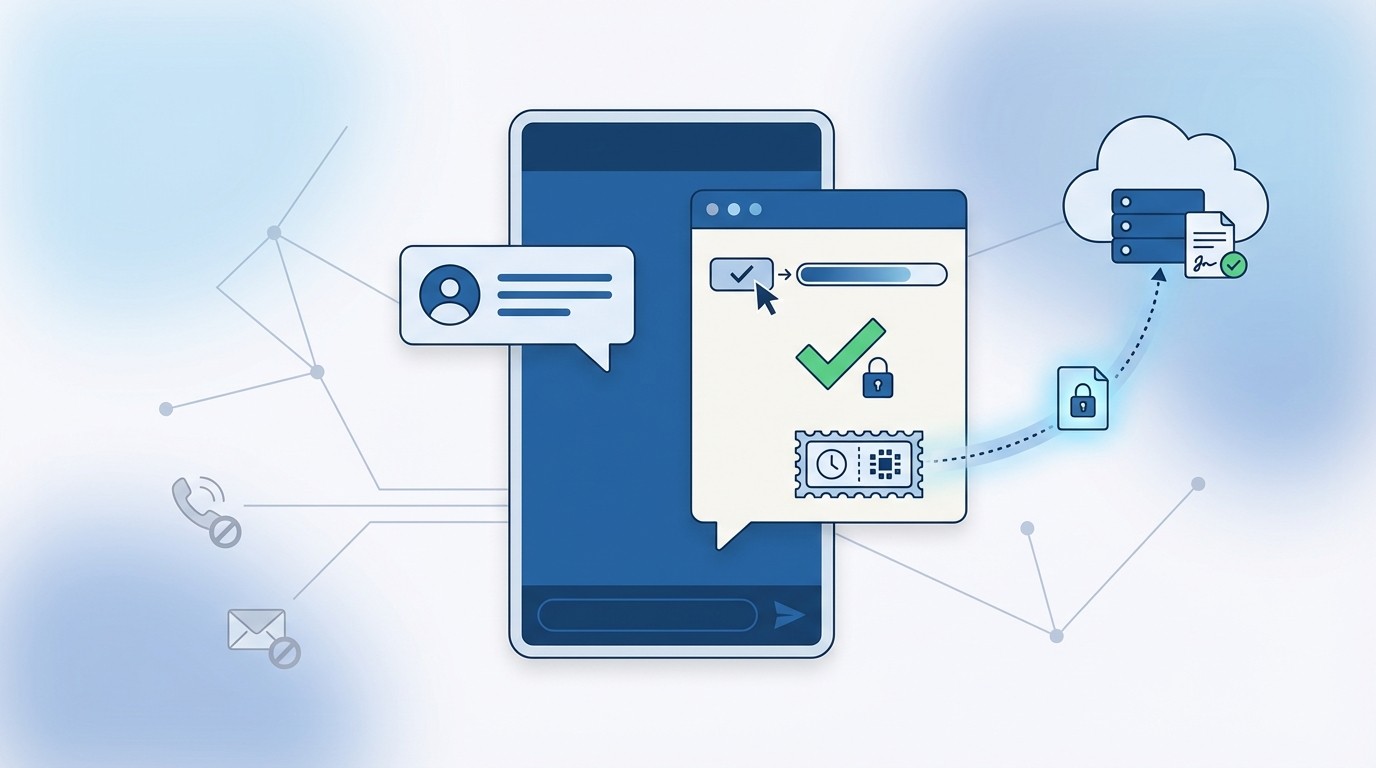
A resolution‑first method reduces contacts by finishing routine work inside the message and proving it with auditable writebacks. Define completion clearly, design the message as the app, guarantee writebacks, orchestrate channels for action, then measure resolution and improve the flow.
Define Completion Unambiguously
Ambiguity kills automation. You cannot improve what you have not defined. For each workflow, write a one‑sentence definition of “done” that a regulator and your CFO would both accept. Examples: payment posted, arrangement recorded with schedule, KYC verified, document attached with timestamped consent.
Once “done” is clear, list the exact data you need to decide eligibility and execute completion. Keep it minimal. In my experience, teams overspecify early, which creates brittle flows and more exceptions. Start with the smallest payload that enables a safe transaction, then add fields only when a real exception justifies it.
To make this concrete:
Name the outcome in plain language
List the minimum fields required to reach it
Document the writeback target and success criteria
This avoids the common mistake of optimizing sends while leaving “what counts as done” fuzzy.
Make The Message The App
Portals add friction right at the moment of decision. Customers should see only the actions they are eligible to take, inside the conversation, after lightweight identity checks. That is how you reduce drop‑off and finish more work without agents.
The pattern is practical. Validate identity with a one‑time code, known‑fact checks, or a signed deep link. Present a compact, branded mini‑app that shows exactly what the customer can do: update a card, choose a compliant plan, confirm details, upload a document, or sign an attestation. Keep the form short, enforce client‑side validation, and show progress so people know how many steps remain.
To build this flow:
Greet, verify, and confirm context in one screen This is particularly relevant for strategies for reducing customer.
Present eligible actions with clear copy and fees, if any
Confirm choices, capture consent, and submit
Show a receipt with a reference number
Studies like Gartner’s research on customer effort and loyalty show that task‑focused digital flows reduce effort and repeat contacts when they replace calls and logins with guided steps in context.
Guarantee System Writebacks
This is where many projects break. If the update does not persist in the system of record, your team picks it up later. That is waste, risk, and delay. Design for writebacks up front. Map schemas, define idempotency keys, plan for retries with backoff, and set circuit breakers so downstream systems stay stable.
I have seen teams skip this and pay for it in reconciliation time. Do the opposite. Decide which system is authoritative for each field. Document the exact endpoint or adapter you will post to on success. Log the request and response with timestamps and identifiers you can audit. Treat every writeback as a transaction with its own SLA and error handling path.
A quick readiness check:
Do you know the idempotency key and where you store it
Can you prove success without opening the core system UI
What is your retry and dead‑letter policy for failures
Orchestrate Channels For Action, Not Awareness
Blasting messages creates noise. Orchestration creates completion. Use consent, preferences, and trigger data to choose the right channel, time window, and copy for each step. Each message should point to the in‑message app that finishes the task. No detours.
Start simple. If SMS performs best for first touch, use it. If customers often complete on email at 7 a.m. local time, schedule it. Respect quiet hours and set frequency caps. Escalate across channels only when a rule warrants it, like a due‑date threshold or a failed prior attempt. The goal is fewer touches and higher completion, not more sends.
If a step does not move the workflow toward completion, remove it. A smaller, sharper sequence outperforms a long cadence that asks customers to switch channels or remember a portal password.
Measure Resolution, Then Improve The Flow
Measure what matters: completion rate, time to resolution, writeback success, and deflection. These metrics tell you if you are actually reducing contacts and cost. Pageviews and sends will not. Build dashboards or exports that show each step from trigger to writeback, so you can see drop‑offs and fix them fast, especially when evaluating strategies for reducing customer.
Do weekly reviews with ops and risk. Look for steps with high abandon or frequent exceptions. Fix copy, shorten forms, tune channel timing, or add an eligibility rule to prevent dead ends. Over time, a simple discipline works best: change one thing, measure, then decide to keep it or roll it back.
Track these four numbers, every week:
Completion rate by workflow and channel
Median time to resolution from trigger to writeback
Writeback success and retry counts
Agent deflection percentage for eligible cases
Ready to stop chasing conversations and start finishing work inside the message? Let’s chat.
How RadMedia Enables Closed‑Loop Strategies For Reducing Customer Effort And Cost
RadMedia turns the method above into day‑to‑day operations. It connects your triggers to secure, in‑message mini‑apps, executes rules on autopilot, and writes outcomes back to systems of record. The result is fewer repeat contacts, faster cycle times, and proof that completion happened safely.
From Triggers To In Message Completion
RadMedia’s managed back‑end integration removes the hardest part, connecting legacy cores and modern APIs without client engineering. Triggers from billing, collections, policy, and compliance systems feed context into omni‑channel orchestration. Customers get a secure link, complete a task in a no‑download mini‑app, and the outcome writes back idempotently.
The Autopilot Workflow Engine enforces policy so only eligible actions appear. If a card update or plan setup is valid, RadMedia executes downstream transactions and schedules next steps. If a rule blocks completion, the case routes to an agent with full context. This protects quality while keeping people focused on edge cases instead of routine work.
What used to take days of back‑and‑forth becomes minutes:
Managed Back‑End Integration maps schemas and handles errors, so updates land safely
In‑Message Self‑Service Mini‑Apps collect inputs, validate, and capture consent with timestamps
Omni‑Channel Messaging Orchestration sequences SMS, email, and WhatsApp for action, not awareness
Autopilot Workflow Engine applies eligibility and exception rules consistently
Closed‑Loop Resolution and Writeback records outcomes in systems of record with audit logs
Writebacks, Security, And Proof
Closed‑loop resolution is not a slogan. RadMedia writes outcomes directly to systems of record with idempotent guarantees, retries with backoff, and circuit breakers that protect stability. Security, identity, and audit controls safeguard every step, from signed deep links and one‑time codes to role‑based access and full event logs.
Telemetry gives you the numbers that matter: deliveries, opens, actions, validations, writebacks, and time to resolution. Export outcomes and logs to your data lake or SIEM to track deflection and prove compliance. That transformation matters because it closes the gap between what customers did and what your systems show. It is how you prevent the double cost of rework and avoidable calls described earlier.
RadMedia exists for this exact shift. It turns routine, policy‑bound tasks into straight‑through processing, reduces contact center load, and gives you the evidence to defend decisions in audit or review.
Before we wrap, if you want to see a closed‑loop flow running end to end, from trigger to writeback, on your highest‑volume use case, we can show it live.
Conclusion for Strategies for reducing customer
Reducing customer contacts is not about more messages or new bots. It is about finishing routine work inside the message and proving completion with reliable writebacks. Start with one high‑volume workflow. Define “done,” make the message the app, guarantee writebacks, orchestrate for action, and measure resolution. When you do, cost falls, queues shrink, and trust grows.