
Implementing Phased Rollouts for Customer Service Solutions
Implementing phased rollouts for customer service solutions minimizes risks and uncovers integration issues early, ensuring smoother transitions. This approach saves time, protects customer trust, and enhances workflow efficiency by validating processes before scaling.
It’s easy enough to think that a sweeping change in your customer service and communication workflows will solve everything, but more often than not big-bang solutions lead to big-bang failures. Implementing phased rollouts for customer communication workflows avoids that trap by proving resolution, integration, and safety on a small surface area before you scale. The payoff is simple to state and hard to fake: measurable completion inside the message with zero manual reconciliation.
If you run billing, collections, or compliance, you already know the cost of guesswork. Phasing lets you tune channel mix, validate identity flows, and harden writebacks while the blast radius stays small. Frankly, we see teams save months of rework by sequencing changes, not shipping everything at once.
Key Takeaways:
Phased rollouts de-risk change, uncover integration gaps early, and protect customer trust.
Measure completion inside the message, not conversation volume, as your north star.
Start with one policy-bound, high-volume workflow to prove resolution and deflection quickly.
Validate identity, writebacks, and audit evidence before expanding reach or channels.
Tune channel sequencing and cadence with real data, not opinions.
Design exception paths on day one so only edge cases reach agents.
Success looks like fewer touches, faster resolution, and clean system-of-record updates.
Why Implementing Phased Rollouts for Customer Workflows Prevents Costly Failures
Phased rollouts prevent hidden integration issues, channel friction, and policy edge cases from turning into public failures. By proving resolution on a narrow slice first, you surface writeback gaps, identity mistakes, and timing problems while the impact is contained. Teams avoid rework, protect brand trust, and build a repeatable playbook for scale.
Big-Bang Launches Hide Integration Risk
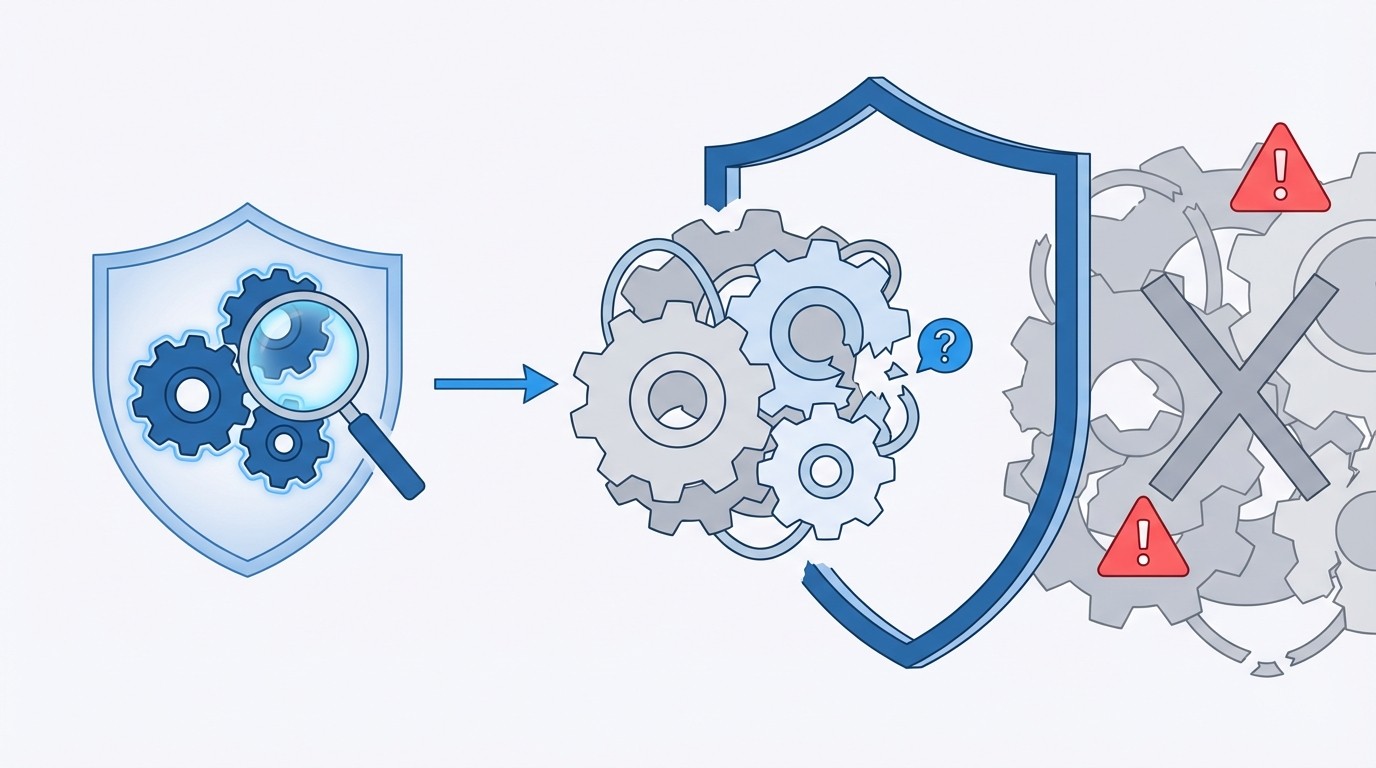
The fastest way to fail is to light up outreach at scale before your systems can safely accept outcomes. The moment customers start acting, every weakness in authentication, schema mapping, retries, and idempotency shows up as duplicate records, missing notes, or stuck balances. That is why reliability engineering patterns emphasize careful validation, monitored retries, and backoff when downstream systems wobble, a principle documented in the AWS Well-Architected Reliability pillar. In our experience, the issues you catch in a 5% cohort would have been headline-level problems at 100%.
It also feels different on the ground. Teams rush to reconcile exceptions manually, spreadsheets appear, and leaders start asking why automation increased workload. You can almost hear the sigh when an analyst says, “We will fix it in the next sprint.” A phased approach replaces that spiral with instrumented experiments and clear roll-forward criteria.
Channel Scale Exposes Last-Mile Friction
When you increase volume, small frictions become systemic blockers. A missing consent flag, an inconvenient time window, or a login step most customers will not complete can crater completion rates. Industry data continues to show that messaging works best when it removes steps and points directly to action, a theme echoed in the Twilio State of Customer Engagement research. Scale simply magnifies what was already wrong.
Phasing lets you test channel combinations, quiet hours, and content framing without burning your list. You learn which customers move on SMS versus email, which windows avoid fatigue, and which messages lead to action rather than replies. The cost of guessing is real. The fix is measured learning before expansion.
How to Implement Phased Rollouts for Resolution First Operations
Phased rollouts work when they are designed around completion, safety, and evidence. Define resolution clearly, slice scope intelligently, and expand only after you can prove writebacks, identity, and audit trails hold under load. You will move slower at the start and much faster after the first proof.
Define Resolution and Guardrails First
Start by writing down what “done” means in system terms. For billing remediation, that might be a posted payment, a set arrangement, or a verified card-on-file. For compliance, it might be a completed attestation with a timestamped consent record and attached documents. Tie each outcome to a specific writeback: the field updated, the note attached, the document stored, and the evidence required.
Then define guardrails. Which customers are eligible by policy? What identity checks are mandatory, and which are risk-based? What happens when a downstream system is unavailable? Map these rules before you plan sequences, because guardrails determine what is even possible. Honestly, this step saves more cycles than any other.
To lock this in, draft a one-page resolution spec:
Outcome definition, including fields and records to update
Eligibility and policy rules that allow or block completion This is particularly relevant for implementing phased rollouts for.
Identity requirements, including fallback checks
Evidence and audit artifacts to capture
Start With One High-Volume, Policy-Bound Workflow
Pick a workflow that meets three criteria: high volume, clear policy envelope, and measurable resolution. Failed payments, due-date thresholds, address updates, or KYC refreshes are common starting points. The test is simple: could a mini-app show only valid options and finish the task without agent help? If the answer is yes, you have a candidate.
Limit the first cohort to a narrow segment, like a single region or product line. Keep the number small enough that your team can watch every metric daily and read individual records when something looks off. We have seen 2–5% of total volume work well for the first slice. The goal is learning, not scale, for the first two weeks.
Design Slice Experiments and Success Metrics
Give each slice a clear hypothesis and exit criteria. For example, “Switching the first nudge from email to SMS increases mini-app starts by 15% in cohort A,” or “Adding a known-fact check before payment reduces abandonment by 10%.” Define the measurement windows and the minimum data needed to decide.
Measure what matters to resolution: completion rate, time to resolution, writeback success, deflection, and exception rate. Track identity success and failure patterns too. If you only measure open and click rates, you will optimize for attention, not outcomes. In my view, that is the most common mistake.
Prove Writebacks Safely Before Broad Reach
Do not scale until writebacks prove consistent under real conditions. That means retry behavior looks sane, idempotency prevents duplicates, and downstream circuit breakers protect core systems. Identity and consent flows should pass internal audit review before you expand. The NIST Digital Identity Guidelines are a good touchstone for right-sizing verification.
Run failure drills. Simulate a downstream outage, a partial timeout, or a malformed payload. Confirm the system does not lose outcomes or produce conflicting records. It can feel slow, but the time you spend here prevents the midnight call when a batch job masked a data conflict no one anticipated.
Tune Channel Sequencing and Cadence With Data
Use cohort data to refine channel order, timing, and content. Many teams find that a simple pattern works best: start with the channel that historically moves the fastest, follow with the one that reaches missed customers, and reserve the third for polite escalation. Respect consent and quiet hours. Keep the message short, specific, and always pointed at the mini-app that completes the task.
As you scale, keep your cohorts small enough to keep learning. You will see patterns by segment: some groups prefer late evening, others weekday mornings. Codify those learnings into rules so outreach adapts instead of blasting. The result is fewer touches and higher completion.
Plan Escalations and Exceptions From Day One
Even the best workflows meet reality. A card declines, a plan is ineligible, or a customer disputes an amount. Design where those cases go and what context travels with them. Exceptions should arrive with a full trail: trigger data, outreach history, customer inputs, identity checks, and any partial results already written back, especially when evaluating implementing phased rollouts for.
When agents receive that context, they can start at decision, not discovery. That is how you keep people focused on high‑judgment work while the system closes routine cases. It is also how you avoid the expensive back-and-forth that kills customer patience.
How RadMedia Makes Phased Rollouts and Closed-Loop Resolution Practical for Implementing phased rollouts for
RadMedia enables phased rollouts by handling the hardest parts for financial services: backend integration, policy-aware orchestration, in-message self-service, and guaranteed writebacks. You prove resolution on a narrow slice, then expand with confidence because identity, auditability, and reliability are already built in. What took months to wire by hand becomes a managed path to scale.
If you’re ready to stop losing weekends to work, get in touch.
Managed Integration and Autopilot Orchestration
RadMedia’s Managed Back-End Integration removes the brittle, bespoke work most pilots stumble on. The team connects to legacy cores and modern APIs, maps schemas, and enforces idempotency so outcomes land cleanly in systems of record. That directly addresses the earlier risk of duplicate records and manual reconciliation that shows up under load.
Layered on top, the Autopilot Workflow Engine advances each case from trigger to completion using policy-aware rules and time-based logic. It links backend events to outreach and mini-app interactions so only valid paths are shown and next steps execute automatically. The practical effect is predictable cycle times, fewer exceptions, and a clean handoff when an edge case needs a human. In our experience, that shift from discovery to decision is where unit cost drops fastest.
See our Strategies for Reducing Customer Service Costs through Automation for more.
In-Message Self-Service, Omni-Channel, and Guaranteed Writebacks
In-Message Self-Service Mini-Apps let customers complete the task inside the conversation, whether that is updating a card, authorizing a payment, confirming details, or uploading documents. Omni-Channel Messaging Orchestration sequences SMS, email, and WhatsApp to drive action while respecting consent, quiet hours, and fatigue caps. When the customer finishes, Closed-Loop Resolution and Writeback updates balances, posts arrangements, clears flags, and attaches notes or documents with idempotent guarantees.
Security, Identity, and Audit Controls validate customers with one-time codes or known-fact checks, enforce encryption and role-based access, and log every consent and input for regulators. Telemetry, Reliability, and Data Export provide the evidence of progress you need: completion, time to resolution, writeback success, and deflection, ready for your data lake or SIEM. The callback to your earlier pain is clear: the minutes lost to manual checks, rework, and data cleanup are replaced by straight‑through processing.
RadMedia is built for this kind of transformation.
The Path Forward: Start Small, Prove Resolution, Then Scale
Phased rollouts are not about caution. They are about control. Pick one high‑volume, policy‑bound workflow, define resolution tightly, validate identity and writebacks, and tune channels with real data. When the first slice proves completion inside the message, you have a blueprint you can repeat with confidence.
If you want that first proof to land quickly and safely, bring in a partner that owns integration, mini-app UX, orchestration, and writebacks. That is how you turn resolution from a goal into a number on your dashboard. Ready for customer communication workflows on autopilot? Get in touch.