
SMS vs WhatsApp vs Push: Choosing Channels for Billing & Collections Workflows
Choosing the right channel for billing and collections should focus on task completion and system writebacks, not just open rates. Use a Resolution Score to measure effectiveness, cut costs, and streamline workflows for better outcomes.
Most billing and collections teams make the same mistake. They compare SMS, WhatsApp, and push by open rate and click rate, then wonder why cases still sit unresolved. Channel choice should be judged by one thing only: does this message path complete the task and write back to core systems without help.
We’ll walk you through a practical way to choose channels that close the loop. We’ll define a Resolution Score you can compute per workflow, show where non writeback paths quietly inflate cost, and give you a playbook you can run today. If you are evaluating tools, keep the lens simple. Resolution, not conversation.
Key Takeaways:
Rank SMS, WhatsApp, and push with a Resolution Score based on consent, in message actionability, writeback success, reach, time to resolution, and unit cost.
Replace opens and clicks with completion rate, writeback success, deflection, and time to resolution as your north star metrics.
Quantify the hidden cost of non writeback paths, including manual wrap up minutes and error driven rework.
Model consent rules per channel and refresh consent inside the conversation, not through a portal.
Guarantee idempotent writebacks with keys, retries, and telemetry so one outcome writes once even if a user taps twice.
Choose channel mix by region and workflow, then sequence by outcome, not popularity.
Start with one high volume workflow, measure the deflection gap, then tune copy, timing, and channel choices against resolution metrics.
Stop Chasing Opens, Choose Channels That Close the Loop
Most teams ask which channel gets the highest open rate, but the better question is which channel completes the task and writes back to core systems. A Resolution Score flips your comparison from vanity to outcomes. When you rank SMS, WhatsApp, and push by completion and writeback, you cut waste and lower agent load. We see this shift change budgets and behavior quickly.
What is a Resolution Score and why does it matter?
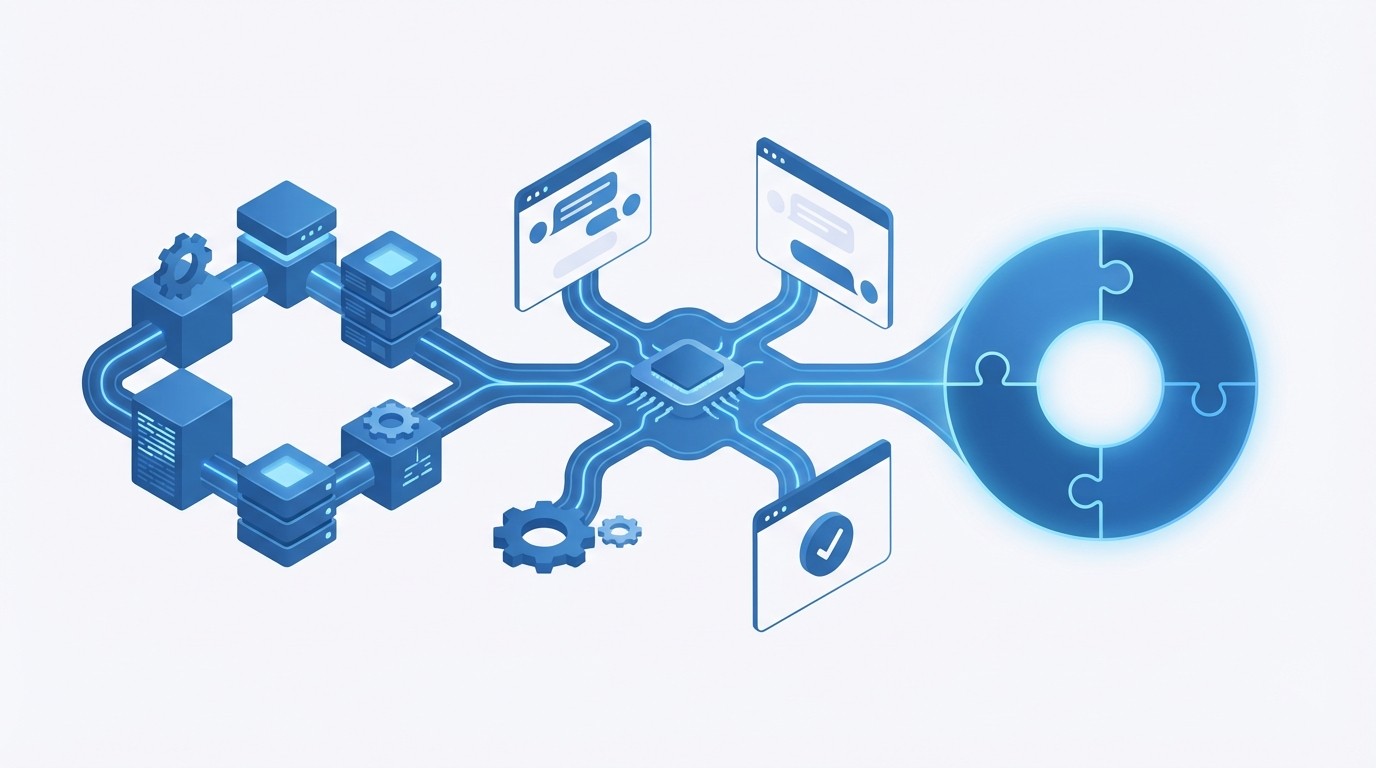
A Resolution Score compares channels on outcomes, not clicks. Multiply four factors for each channel and workflow: consent availability, in message actionability, writeback success, and reach. Then weight by time to resolution and unit cost. The result ranks channels for failed payment, plan setup, or KYC refresh so sequencing decisions are clear. We’ll discuss the specific ways to apply it to your book.
Build the factors in plain terms. Consent availability is a 0 to 1 measure of whether you can message this user today with proof. In message actionability is a 0 to 1 measure of whether the task can finish inside the thread without a portal. Writeback success is the share of attempts that update source systems consistently. Reach captures how many targets can be touched on that channel. Weighting by time to resolution and unit cost keeps speed and spend in view.
Use the score to justify channel order. If WhatsApp completes a payment in one step and writes back in seconds, it can beat five SMS nudges plus a call even at a higher per message price. That is not a guess. It is a calculation. Industry overviews like CleverTap’s comparison of SMS, WhatsApp, and RCS echo this pattern when richer interactions are possible.
The hidden cost of non writeback interactions
Messages that cannot write back automatically create an operations tax you rarely see on a dashboard. Every portal detour adds manual wrap up, reconciliation work, and repeat outreach. Each of those steps adds minutes, and across thousands of cases those minutes become real money. The true cost is not just time. It is error risk and slower revenue resolution.
Start by tallying current waste. How many unresolved cases lead to agent callbacks, and how long does wrap up take when notes and flags must be set by hand. Where do mismatched records force rework. Then model the same path with in message completion and guaranteed writeback. The difference is your savings. It is common to find double digit reductions in unit cost once the last mile closes in message.
We were skeptical the first time we ran this analysis with a collections team. The math was blunt. A single in message payment flow outperformed a week of reminders plus a call, because it removed channel hops and manual reconciliation. That finding surprised everyone, and it reshaped their investment plan.
Why open rate and CTR mislead billing managers?
Open rate and CTR look good on paper but rarely correlate to completed tasks. A message can be opened five times and still fail if the action sits behind a login. Replace those metrics with completion rate, writeback success, and time to resolution. Add deflection from agents as a hard cost measure. Those show truth, not noise.
Consider two options. Option A sends five SMS reminders that push to a portal, then a call. Option B sends one WhatsApp flow that collects payment in message and writes back instantly. If Option B clears the case in an hour, it wins even if its open rate is lower and its per message cost is higher. That is the point. Outcome beats optics. For channel context, see FICO’s view on using SMS, RCS, and WhatsApp in omni channel programs.
Consent, Actionability, and Writeback Decide Channel Fit
The right channel is the one you can legally use today, that lets the customer act inside the thread, and that writes back to core systems reliably. Compute this per workflow, not in the abstract. Consent rules, UI limits, and backend complexity vary by task. When you model the trio correctly, the “best” channel becomes obvious for each step.

How to compute a channel-level Resolution Score
Start with four base inputs per channel and workflow. Assign consent availability a value between 0 and 1. Score in message actionability between 0 and 1. Measure writeback reliability between 0 and 1. Estimate reach for your audience. Multiply them, then adjust by time to resolution and unit cost to get a composite. That composite drives default channel and fallback rules.
A quick example helps. For failed payments in a market where WhatsApp has strong consent and supports in message payments with high writeback success, WhatsApp may score near 0.7 to 0.8. If push has perfect actionability but limited reach due to app install, it may score 0.4. SMS may sit lower if it links to portals and cannot transact directly. Your weights tune the outcome to your reality.
Make this score part of your playbooks. Use it to pick the first channel, define fallback when consent or delivery fails, and set a stop condition when completion occurs. This approach prevents the common mistake of chasing popularity over fit.
Consent mechanics by channel, what trips teams up?
Consent rules differ by channel and region, and the traps are avoidable. SMS opt in policies vary by country and carrier. WhatsApp requires explicit user initiated or templated entry points and strict template use. Push depends on app install and OS prompts. Teams often miss consent freshness and evidence storage, which creates audit risk later.
Map consent capture, renewal, and expiration per channel. Store artifacts with timestamps and sources. Build flows that refresh consent inside the conversation when needed. For example, use a short in message consent step before presenting a payment plan. This small move keeps you compliant and raises completion by avoiding a portal hop. For channel tradeoffs, see Esendex’s SMS vs WhatsApp Business overview.
Honestly, most of the pain we see comes from missing proof. The message sends, the user engages, then legal asks for evidence six months later. Without a clean record, you carry risk. Capture once, then link it to the case.
Writeback reliability and idempotency across SMS, WhatsApp, push
Writeback is where many flows fail. Guarantee idempotent writes tied to the business outcome, such as a payment ID or arrangement token. Use retries with backoff and require transactional acknowledgments from downstream systems. Emit telemetry on each attempt, including responses, so you can prove consistency and recover from transient errors.
Design for mobile realities. Intermittent connectivity means a user may tap twice or submit after a delay. Idempotency keys ensure one outcome writes once. Retries handle network blips without creating duplicates. Logging gives operations a clean trail for audit and debugging. Without these, you risk duplicate charges, mismatched flags, and angry customers.
If we are being candid, idempotency sounds technical, but it is an insurance policy. It prevents costly mistakes and keeps trust intact when something goes wrong.
The Price of the Wrong Mix: Cost, Risk, and Agent Load
Choosing channels by habit creates hidden cost, added risk, and extra agent work. When a message cannot complete the task in thread, queues grow and revenue slips. Put numbers to it, then shift the mix. The gains become obvious once you see the unit economics and deflection gap.
Failure modes that inflate unit cost
The failure modes are predictable. Portal links that stall on login pages. Multi hop identity checks that send people in circles. Broken templates that pass the wrong variables. Message paths that cannot transact, so they push to a call. Each adds minutes and errors. The result is more outreach and slower resolution.
Quantify the impact. For each failure mode, estimate rework minutes, repeat sends, and escalations. Tie those to revenue leakage, such as delayed promises to pay or chargebacks from mismatched records. When you add it up, the cost is not small. It is material, and it is avoidable.
We might be wrong on your exact numbers, but the pattern holds. Fix the last mile in message, and the unit cost drops. Leave it broken, and you will keep paying the tax every month.
Regional pricing and volume tiers, how do you avoid hidden spend?
Message pricing varies by country, channel, and volume. WhatsApp and SMS carry different fees, free windows, and provider markups. Push rides on app economics but requires installs. If you model cost with global averages, you will miss local realities and blow budgets.
Build a country by channel cost table and include volume tiers and exemptions. Run sensitivity tests by consent mix and completion rate. In some markets, penetration first wins, so you lead with the channel that reaches the most people. In others, cost first wins, so you prioritize the cheapest channel that can still complete in message. Then revisit quarterly as rates and consent landscapes shift.
For a practical comparison of business messaging channels, see text messaging versus WhatsApp for business use cases. Use it as context, then plug in your own prices and volumes.
Agent load impact when workflows do not close in message
When tasks do not finish in message, they land on agents. Measure the deflection gap by workflow. For each incomplete message path, record the percent that escalate and the average handle time. Multiply by monthly volume. The queue impact is often bigger than expected.
Redesign steps to complete in message, then remeasure. We have seen teams remove thousands of minutes per week by adding a single in message action, such as collecting consent or verifying identity inside the thread. This is not about replacing people. It is about letting them focus on exceptions that need judgment.
One manager told us the change felt like breathing room. Fewer callbacks. Fewer repeat touches. More time for the hard work.
What It Feels Like When Workflows Drag
When workflows bounce between channels, everyone feels it. Analysts chase reconciliations. Agents juggle callbacks. Customers re explain context. It is exhausting. Replace the grind with a single secure interaction that completes the task and writes back. You will feel the difference in a week.
How do constant follow ups drain teams and customers?
Every follow up is a reminder that the first attempt failed. Teams chase, customers stall, and no one is sure what happened last. That confusion erodes morale and trust. A clean, in message flow that verifies identity, collects the needed inputs, and confirms the outcome in the same thread removes that stress.
Picture a billing issue where a customer updates a card inside the message, sees a confirmation, and receives a receipt, all in one place. No portal. No call. No guesswork. It feels simple because it is simple for them. Behind the scenes, the writeback closed the case without manual notes.
If you have lived through end of month cleanup, you know the pain of scattered evidence. Moving to single touch completion helps the whole room breathe.
Customer experience fallout when tasks jump channels
Channel hopping breaks momentum. Logins, app downloads, and broken sessions push people away. That avoidance delays payments and adds risk. Embedding identity checks and forms directly in the message keeps context intact. Confirming outcomes in the same thread gives immediate feedback, which boosts completion.
We were surprised how much faster people act when they never leave the thread. It sounds obvious, yet old habits persist. When an interaction starts and finishes in one place, customers move. That reduces the chance of complaints and escalations later.
For a debt collection angle on channel choice, see Aryza’s view on WhatsApp Business, SMS, and chatbots. Use it to inform your CX lens, then design for in message closure.
Risk and compliance anxiety from manual wrap up
Manual notes and scattered artifacts create audit anxiety. When outcomes depend on memory, evidence goes missing and mistakes creep in. Encode policy, capture consent with timestamps, and store artifacts automatically. Then, when an audit lands, produce a clean trail of messages, actions, and writebacks.
This shift from memory to telemetry removes ambiguity. Leaders sleep better. Teams stop arguing over what happened and focus on improving the flow. Research on messaging interactions, like Aalto’s doctoral work on conversational friction, underscores how context and continuity affect outcomes.
We are not saying you will never see an exception. You will. The point is to make the normal path safe by default.
A Practical Channel Playbook for Billing and Collections
You can put this into practice without a rebuild. Start with one high volume workflow, design from the outcome backward, and let the data guide your channel choices. We will walk through a three part playbook you can run this quarter.
Establish consent and sequence by outcome
Store consent artifacts per channel with timestamps, sources, and evidence. Enrich each account with responsiveness by channel, language, and quiet hour constraints. Sync these attributes from core systems so orchestration can choose the best channel dynamically. This prevents failed sends and reduces risk during audits.
Sequence by outcome, not popularity. For app users, try push first, then WhatsApp if you need richer flows, then SMS as the safety net. For billing updates, lead with the channel that can securely collect payment in message. Respect quiet hours and personal schedules to improve response quality. The goal is fewer touches, faster closure.
You might have a favorite channel internally. That is normal. The score and the outcome should veto preference when the data disagrees.
Guarantee idempotent writebacks every time
Define the outcome write fields before you send the first message. For example, payment status, plan terms, and consent payload. Use idempotency keys bound to the business outcome, retries with backoff, and acknowledgments to ensure one outcome writes once, even when the customer taps twice. Emit telemetry for each attempt so operations can monitor success and investigate anomalies.
Test the unhappy paths. Simulate network drops, duplicate submissions, and downstream timeouts. Your system should recover without creating duplicates or losing evidence. Without this discipline, you risk inconsistent records and chargeback headaches.
It is tempting to skip this step to move fast. Do not. It is the guardrail that keeps everything else safe.
Measure completion, writeback success, and deflection
Replace vanity metrics with outcome KPIs. Track completion rate, time to resolution, writeback success, and percent deflected from agents. Use these to tune copy, timing, and channel choices. When a step underperforms, test in message UI changes before adding more reminders. Optimize for lower message volume and faster closure.
Close the loop with weekly reviews. Where did fallouts occur. Which segments respond faster on WhatsApp versus SMS. How many cases reached agents and why. These questions keep attention on the real problem and prevent drift back to opens and clicks.
Over time, you will see a pattern. The best channel is the one that closes the task in a single interaction and proves it in your systems.
How RadMedia Automates Channel Orchestration for Resolution
Resolution requires three hard things to work together. Integration that writes outcomes back safely, in message self service that lets customers finish the task, and orchestration that adapts to consent, reach, and cost. RadMedia was built to do exactly this so your team can stop stitching tools and start measuring resolution.
Managed integration and writeback guarantees
RadMedia owns the hard part, integration and idempotent writebacks. Our team connects to core billing and collections systems, manages authentication and schema mapping, and guarantees consistent updates with retries and keys. Each write is bound to a business outcome and logged with acknowledgments for audit. This removes manual wrap up and slashes reconciliation time.
We tie this directly to the earlier cost drivers. When outcomes write back automatically, repeat outreach declines, error driven rework falls, and agent escalations drop. Telemetry at every step lets your team see success rates, investigate anomalies, and prove compliance. You get synchronization by default and fewer places to fail.
In our experience, this is where most programs stall. With RadMedia, integration is handled for you, which means pilots move to production without months of engineering.
In message self service that completes payments and plans
RadMedia embeds secure mini apps inside SMS, WhatsApp, and email so customers update cards, set plans, or provide attestations without leaving the thread. Identity and consent are captured in flow using one time codes or known facts, then outcomes write back automatically. What once took multiple reminders and a call now completes in one interaction.
This is the deflection engine. Routine, policy bound cases resolve inside the message and never hit a queue. Exceptions escalate with full context, including messages sent, inputs collected, validation results, and attempted writebacks. Agents start with the facts, not discovery. Customers see progress instantly, which boosts completion.
If you have been burned by portal logins and drop offs, this change feels like night and day. It is simple for the user and safe for your systems.
Autopilot sequencing across SMS, WhatsApp, and email
RadMedia’s orchestration engine adapts to consent, responsiveness, and regional costs to choose the right channel and cadence. It learns which combinations drive completion for each workflow and segment. Quiet hours, send windows, and pacing are respected. Templates personalize copy and embed links to the right mini app for the task.
The result ties back to Rational Drowning. Fewer messages, higher completion, lower unit cost, and fewer escalations. That is the transformation you modeled earlier, now made real by a system that chooses the best path automatically and proves outcomes through telemetry.
If you want to see the score based approach in action, start with your highest volume workflow. RadMedia can stand up a pilot, connect to your systems, and deliver closed loop results you can measure.
Conclusion
Channel choice for billing and collections is not a popularity contest. It is a resolution problem. When you score SMS, WhatsApp, and push by consent, in message actionability, writeback success, reach, speed, and cost, the right path for each workflow becomes obvious. Close the loop inside the message, write back automatically, and measure completion and deflection.
Pick one workflow. Map the outcome and the writeback fields. Sequence by outcome, not by habit. Then measure the shift in time to resolution and unit cost. You will cut waste, reduce risk, and give your agents room to focus on the work only people can do.
Discover how to choose the best channel for billing workflows. Compare SMS, WhatsApp, and push notifications based on resolution and cost-efficiency.
SMS vs WhatsApp vs Push: Choosing Channels for Billing & Collections Workflows - RadMedia professional guide illustration
[{"q":"How do I choose the right channel for customer communication?","a":"To choose the right channel, start by assessing your customers' preferences. Use RadMedia to automate outreach across SMS, email, and WhatsApp, tailoring messages based on consent and actionability. Rank these channels using a Resolution Score that focuses on completion rates and writeback success. This way, you can ensure that you're not just reaching out but also effectively closing the loop on tasks, which is crucial for billing and collections workflows."},{"q":"What if my customers prefer different communication channels?","a":"If your customers have varied channel preferences, you can use RadMedia's omni-channel messaging orchestration. This feature allows you to send tailored messages to customers via their preferred channels, whether it's SMS, WhatsApp, or email. Start by segmenting your audience based on their past interactions and preferences, then configure your outreach strategy to optimize timing and frequency for each channel. This ensures that you engage effectively and improve resolution rates."},{"q":"Can I automate follow-ups for unresolved cases?","a":"Yes, you can automate follow-ups for unresolved cases using RadMedia's Autopilot Workflow Engine. This engine links triggers from your back-end systems to outreach, allowing you to set rules for follow-up messages based on customer actions or inaction. By defining specific conditions, you can ensure that customers receive timely nudges without manual intervention, helping to close cases more efficiently and reduce operational costs."},{"q":"When should I refresh customer consent during communication?","a":"You should refresh customer consent during communication whenever a significant action is required, such as updating payment details or changing a plan. RadMedia allows you to capture consent directly within the message using in-message self-service apps. This approach not only simplifies the process for customers but also ensures that you remain compliant with regulations. Make it a standard part of your workflows to ask for consent in context, rather than directing customers to a separate portal."},{"q":"Why does my team need to focus on resolution metrics?","a":"Focusing on resolution metrics is essential because it directly impacts your operational efficiency and customer satisfaction. Instead of measuring success by conversation volume, you should track completion rates, time-to-resolution, and writeback success. RadMedia helps you automate these processes, ensuring that tasks are completed within the messaging platform itself. This shift reduces the load on your agents and minimizes costs associated with manual follow-ups, ultimately improving your bottom line."}]
03 Feb 2026
8a58bc07-cdd4-44b7-b2db-d812f94151e1
{"@graph":[{"@id":"https://radmedia.co.za/sms-vs-whatsapp-vs-push-choosing-channels-for-billing-collections-workflows#article","@type":"Article","image":"https://jdbrszggncetflrhtwcd.supabase.co/storage/v1/object/public/article-images/6dca98ae-107d-47b7-832f-ee543e4b5364/sms-vs-whatsapp-vs-push-choosing-channels-for-billing-collections-workflows-hero-1770103979266.png","author":{"name":"RadMedia","@type":"Organization"},"headline":"SMS vs WhatsApp vs Push: Choosing Channels for Billing & Collections Workflows","keywords":"SMS vs WhatsApp vs Push Notifications","publisher":{"name":"RadMedia","@type":"Organization"},"wordCount":3290,"description":"SMS vs WhatsApp vs Push: Choosing Channels for Billing & Collections Workflows","dateModified":"2026-02-03T07:32:40.621+00:00","datePublished":"2026-02-03T07:27:45.410993+00:00","mainEntityOfPage":{"@id":"https://radmedia.co.za/sms-vs-whatsapp-vs-push-choosing-channels-for-billing-collections-workflows","@type":"WebPage"}},{"@id":"https://radmedia.co.za/sms-vs-whatsapp-vs-push-choosing-channels-for-billing-collections-workflows#breadcrumb","@type":"BreadcrumbList","itemListElement":[{"item":"https://radmedia.co.za","name":"Home","@type":"ListItem","position":1},{"item":"https://radmedia.co.za/sms-vs-whatsapp-vs-push-choosing-channels-for-billing-collections-workflows","name":"SMS vs WhatsApp vs Push: Choosing Channels for Billing & Col","@type":"ListItem","position":2}]}],"@context":"https://schema.org"}
[{"url":"https://jdbrszggncetflrhtwcd.supabase.co/storage/v1/object/public/article-images/6dca98ae-107d-47b7-832f-ee543e4b5364/sms-vs-whatsapp-vs-push-choosing-channels-for-billing-collections-workflows-inline-0-1770104010013.png","alt":"How RadMedia Automates Channel Orchestration for Resolution concept illustration - RadMedia","filename":"sms-vs-whatsapp-vs-push-choosing-channels-for-billing-collections-workflows-inline-0-1770104010013.png","position":"after_h2_1","asset_id":null,"type":"ai_generated","dimensions":{"width":1024,"height":1024}},{"url":"https://jdbrszggncetflrhtwcd.supabase.co/storage/v1/object/public/article-images/6dca98ae-107d-47b7-832f-ee543e4b5364/sms-vs-whatsapp-vs-push-choosing-channels-for-billing-collections-workflows-inline-1-1770104028600.png","alt":"What It Feels Like When Workflows Drag concept illustration - RadMedia","filename":"sms-vs-whatsapp-vs-push-choosing-channels-for-billing-collections-workflows-inline-1-1770104028600.png","position":"after_h2_2","asset_id":null,"type":"ai_generated","dimensions":{"width":1024,"height":1024}}]
90
3290
Most billing and collections teams make the same mistake. They compare SMS, WhatsApp, and push by open rate and click rate, then wonder why cases still sit unresolved. Channel choice should be judged by one thing only: does this message path complete the task and write back to core systems without help.
We’ll walk you through a practical way to choose channels that close the loop. We’ll define a Resolution Score you can compute per workflow, show where non writeback paths quietly inflate cost, and give you a playbook you can run today. If you are evaluating tools, keep the lens simple. Resolution, not conversation.
Key Takeaways:
Rank SMS, WhatsApp, and push with a Resolution Score based on consent, in message actionability, writeback success, reach, time to resolution, and unit cost.
Replace opens and clicks with completion rate, writeback success, deflection, and time to resolution as your north star metrics.
Quantify the hidden cost of non writeback paths, including manual wrap up minutes and error driven rework.
Model consent rules per channel and refresh consent inside the conversation, not through a portal.
Guarantee idempotent writebacks with keys, retries, and telemetry so one outcome writes once even if a user taps twice.
Choose channel mix by region and workflow, then sequence by outcome, not popularity.
Start with one high volume workflow, measure the deflection gap, then tune copy, timing, and channel choices against resolution metrics.
Stop Chasing Opens, Choose Channels That Close the Loop
Most teams ask which channel gets the highest open rate, but the better question is which channel completes the task and writes back to core systems. A Resolution Score flips your comparison from vanity to outcomes. When you rank SMS, WhatsApp, and push by completion and writeback, you cut waste and lower agent load. We see this shift change budgets and behavior quickly.

What is a Resolution Score and why does it matter?
A Resolution Score compares channels on outcomes, not clicks. Multiply four factors for each channel and workflow: consent availability, in message actionability, writeback success, and reach. Then weight by time to resolution and unit cost. The result ranks channels for failed payment, plan setup, or KYC refresh so sequencing decisions are clear. We’ll discuss the specific ways to apply it to your book.
Build the factors in plain terms. Consent availability is a 0 to 1 measure of whether you can message this user today with proof. In message actionability is a 0 to 1 measure of whether the task can finish inside the thread without a portal. Writeback success is the share of attempts that update source systems consistently. Reach captures how many targets can be touched on that channel. Weighting by time to resolution and unit cost keeps speed and spend in view.
Use the score to justify channel order. If WhatsApp completes a payment in one step and writes back in seconds, it can beat five SMS nudges plus a call even at a higher per message price. That is not a guess. It is a calculation. Industry overviews like CleverTap’s comparison of SMS, WhatsApp, and RCS echo this pattern when richer interactions are possible.
The hidden cost of non writeback interactions
Messages that cannot write back automatically create an operations tax you rarely see on a dashboard. Every portal detour adds manual wrap up, reconciliation work, and repeat outreach. Each of those steps adds minutes, and across thousands of cases those minutes become real money. The true cost is not just time. It is error risk and slower revenue resolution.
Start by tallying current waste. How many unresolved cases lead to agent callbacks, and how long does wrap up take when notes and flags must be set by hand. Where do mismatched records force rework. Then model the same path with in message completion and guaranteed writeback. The difference is your savings. It is common to find double digit reductions in unit cost once the last mile closes in message.
We were skeptical the first time we ran this analysis with a collections team. The math was blunt. A single in message payment flow outperformed a week of reminders plus a call, because it removed channel hops and manual reconciliation. That finding surprised everyone, and it reshaped their investment plan.
Why open rate and CTR mislead billing managers?
Open rate and CTR look good on paper but rarely correlate to completed tasks. A message can be opened five times and still fail if the action sits behind a login. Replace those metrics with completion rate, writeback success, and time to resolution. Add deflection from agents as a hard cost measure. Those show truth, not noise.
Consider two options. Option A sends five SMS reminders that push to a portal, then a call. Option B sends one WhatsApp flow that collects payment in message and writes back instantly. If Option B clears the case in an hour, it wins even if its open rate is lower and its per message cost is higher. That is the point. Outcome beats optics. For channel context, see FICO’s view on using SMS, RCS, and WhatsApp in omni channel programs.
Consent, Actionability, and Writeback Decide Channel Fit
The right channel is the one you can legally use today, that lets the customer act inside the thread, and that writes back to core systems reliably. Compute this per workflow, not in the abstract. Consent rules, UI limits, and backend complexity vary by task. When you model the trio correctly, the “best” channel becomes obvious for each step.

How to compute a channel-level Resolution Score
Start with four base inputs per channel and workflow. Assign consent availability a value between 0 and 1. Score in message actionability between 0 and 1. Measure writeback reliability between 0 and 1. Estimate reach for your audience. Multiply them, then adjust by time to resolution and unit cost to get a composite. That composite drives default channel and fallback rules.
A quick example helps. For failed payments in a market where WhatsApp has strong consent and supports in message payments with high writeback success, WhatsApp may score near 0.7 to 0.8. If push has perfect actionability but limited reach due to app install, it may score 0.4. SMS may sit lower if it links to portals and cannot transact directly. Your weights tune the outcome to your reality.
Make this score part of your playbooks. Use it to pick the first channel, define fallback when consent or delivery fails, and set a stop condition when completion occurs. This approach prevents the common mistake of chasing popularity over fit.
Consent mechanics by channel, what trips teams up?
Consent rules differ by channel and region, and the traps are avoidable. SMS opt in policies vary by country and carrier. WhatsApp requires explicit user initiated or templated entry points and strict template use. Push depends on app install and OS prompts. Teams often miss consent freshness and evidence storage, which creates audit risk later.
Map consent capture, renewal, and expiration per channel. Store artifacts with timestamps and sources. Build flows that refresh consent inside the conversation when needed. For example, use a short in message consent step before presenting a payment plan. This small move keeps you compliant and raises completion by avoiding a portal hop. For channel tradeoffs, see Esendex’s SMS vs WhatsApp Business overview.
Honestly, most of the pain we see comes from missing proof. The message sends, the user engages, then legal asks for evidence six months later. Without a clean record, you carry risk. Capture once, then link it to the case.
Writeback reliability and idempotency across SMS, WhatsApp, push
Writeback is where many flows fail. Guarantee idempotent writes tied to the business outcome, such as a payment ID or arrangement token. Use retries with backoff and require transactional acknowledgments from downstream systems. Emit telemetry on each attempt, including responses, so you can prove consistency and recover from transient errors.
Design for mobile realities. Intermittent connectivity means a user may tap twice or submit after a delay. Idempotency keys ensure one outcome writes once. Retries handle network blips without creating duplicates. Logging gives operations a clean trail for audit and debugging. Without these, you risk duplicate charges, mismatched flags, and angry customers.
If we are being candid, idempotency sounds technical, but it is an insurance policy. It prevents costly mistakes and keeps trust intact when something goes wrong.
The Price of the Wrong Mix: Cost, Risk, and Agent Load
Choosing channels by habit creates hidden cost, added risk, and extra agent work. When a message cannot complete the task in thread, queues grow and revenue slips. Put numbers to it, then shift the mix. The gains become obvious once you see the unit economics and deflection gap.
Failure modes that inflate unit cost
The failure modes are predictable. Portal links that stall on login pages. Multi hop identity checks that send people in circles. Broken templates that pass the wrong variables. Message paths that cannot transact, so they push to a call. Each adds minutes and errors. The result is more outreach and slower resolution.
Quantify the impact. For each failure mode, estimate rework minutes, repeat sends, and escalations. Tie those to revenue leakage, such as delayed promises to pay or chargebacks from mismatched records. When you add it up, the cost is not small. It is material, and it is avoidable.
We might be wrong on your exact numbers, but the pattern holds. Fix the last mile in message, and the unit cost drops. Leave it broken, and you will keep paying the tax every month.
Regional pricing and volume tiers, how do you avoid hidden spend?
Message pricing varies by country, channel, and volume. WhatsApp and SMS carry different fees, free windows, and provider markups. Push rides on app economics but requires installs. If you model cost with global averages, you will miss local realities and blow budgets.
Build a country by channel cost table and include volume tiers and exemptions. Run sensitivity tests by consent mix and completion rate. In some markets, penetration first wins, so you lead with the channel that reaches the most people. In others, cost first wins, so you prioritize the cheapest channel that can still complete in message. Then revisit quarterly as rates and consent landscapes shift.
For a practical comparison of business messaging channels, see text messaging versus WhatsApp for business use cases. Use it as context, then plug in your own prices and volumes.
Agent load impact when workflows do not close in message
When tasks do not finish in message, they land on agents. Measure the deflection gap by workflow. For each incomplete message path, record the percent that escalate and the average handle time. Multiply by monthly volume. The queue impact is often bigger than expected.
Redesign steps to complete in message, then remeasure. We have seen teams remove thousands of minutes per week by adding a single in message action, such as collecting consent or verifying identity inside the thread. This is not about replacing people. It is about letting them focus on exceptions that need judgment.
One manager told us the change felt like breathing room. Fewer callbacks. Fewer repeat touches. More time for the hard work.
What It Feels Like When Workflows Drag
When workflows bounce between channels, everyone feels it. Analysts chase reconciliations. Agents juggle callbacks. Customers re explain context. It is exhausting. Replace the grind with a single secure interaction that completes the task and writes back. You will feel the difference in a week.
How do constant follow ups drain teams and customers?
Every follow up is a reminder that the first attempt failed. Teams chase, customers stall, and no one is sure what happened last. That confusion erodes morale and trust. A clean, in message flow that verifies identity, collects the needed inputs, and confirms the outcome in the same thread removes that stress.
Picture a billing issue where a customer updates a card inside the message, sees a confirmation, and receives a receipt, all in one place. No portal. No call. No guesswork. It feels simple because it is simple for them. Behind the scenes, the writeback closed the case without manual notes.
If you have lived through end of month cleanup, you know the pain of scattered evidence. Moving to single touch completion helps the whole room breathe.
Customer experience fallout when tasks jump channels
Channel hopping breaks momentum. Logins, app downloads, and broken sessions push people away. That avoidance delays payments and adds risk. Embedding identity checks and forms directly in the message keeps context intact. Confirming outcomes in the same thread gives immediate feedback, which boosts completion.
We were surprised how much faster people act when they never leave the thread. It sounds obvious, yet old habits persist. When an interaction starts and finishes in one place, customers move. That reduces the chance of complaints and escalations later.
For a debt collection angle on channel choice, see Aryza’s view on WhatsApp Business, SMS, and chatbots. Use it to inform your CX lens, then design for in message closure.
Risk and compliance anxiety from manual wrap up
Manual notes and scattered artifacts create audit anxiety. When outcomes depend on memory, evidence goes missing and mistakes creep in. Encode policy, capture consent with timestamps, and store artifacts automatically. Then, when an audit lands, produce a clean trail of messages, actions, and writebacks.
This shift from memory to telemetry removes ambiguity. Leaders sleep better. Teams stop arguing over what happened and focus on improving the flow. Research on messaging interactions, like Aalto’s doctoral work on conversational friction, underscores how context and continuity affect outcomes.
We are not saying you will never see an exception. You will. The point is to make the normal path safe by default.
A Practical Channel Playbook for Billing and Collections
You can put this into practice without a rebuild. Start with one high volume workflow, design from the outcome backward, and let the data guide your channel choices. We will walk through a three part playbook you can run this quarter.
Establish consent and sequence by outcome
Store consent artifacts per channel with timestamps, sources, and evidence. Enrich each account with responsiveness by channel, language, and quiet hour constraints. Sync these attributes from core systems so orchestration can choose the best channel dynamically. This prevents failed sends and reduces risk during audits.
Sequence by outcome, not popularity. For app users, try push first, then WhatsApp if you need richer flows, then SMS as the safety net. For billing updates, lead with the channel that can securely collect payment in message. Respect quiet hours and personal schedules to improve response quality. The goal is fewer touches, faster closure.
You might have a favorite channel internally. That is normal. The score and the outcome should veto preference when the data disagrees.
Guarantee idempotent writebacks every time
Define the outcome write fields before you send the first message. For example, payment status, plan terms, and consent payload. Use idempotency keys bound to the business outcome, retries with backoff, and acknowledgments to ensure one outcome writes once, even when the customer taps twice. Emit telemetry for each attempt so operations can monitor success and investigate anomalies.
Test the unhappy paths. Simulate network drops, duplicate submissions, and downstream timeouts. Your system should recover without creating duplicates or losing evidence. Without this discipline, you risk inconsistent records and chargeback headaches.
It is tempting to skip this step to move fast. Do not. It is the guardrail that keeps everything else safe.
Measure completion, writeback success, and deflection
Replace vanity metrics with outcome KPIs. Track completion rate, time to resolution, writeback success, and percent deflected from agents. Use these to tune copy, timing, and channel choices. When a step underperforms, test in message UI changes before adding more reminders. Optimize for lower message volume and faster closure.
Close the loop with weekly reviews. Where did fallouts occur. Which segments respond faster on WhatsApp versus SMS. How many cases reached agents and why. These questions keep attention on the real problem and prevent drift back to opens and clicks.
Over time, you will see a pattern. The best channel is the one that closes the task in a single interaction and proves it in your systems.
How RadMedia Automates Channel Orchestration for Resolution
Resolution requires three hard things to work together. Integration that writes outcomes back safely, in message self service that lets customers finish the task, and orchestration that adapts to consent, reach, and cost. RadMedia was built to do exactly this so your team can stop stitching tools and start measuring resolution.
Managed integration and writeback guarantees
RadMedia owns the hard part, integration and idempotent writebacks. Our team connects to core billing and collections systems, manages authentication and schema mapping, and guarantees consistent updates with retries and keys. Each write is bound to a business outcome and logged with acknowledgments for audit. This removes manual wrap up and slashes reconciliation time.
We tie this directly to the earlier cost drivers. When outcomes write back automatically, repeat outreach declines, error driven rework falls, and agent escalations drop. Telemetry at every step lets your team see success rates, investigate anomalies, and prove compliance. You get synchronization by default and fewer places to fail.
In our experience, this is where most programs stall. With RadMedia, integration is handled for you, which means pilots move to production without months of engineering.
In message self service that completes payments and plans
RadMedia embeds secure mini apps inside SMS, WhatsApp, and email so customers update cards, set plans, or provide attestations without leaving the thread. Identity and consent are captured in flow using one time codes or known facts, then outcomes write back automatically. What once took multiple reminders and a call now completes in one interaction.
This is the deflection engine. Routine, policy bound cases resolve inside the message and never hit a queue. Exceptions escalate with full context, including messages sent, inputs collected, validation results, and attempted writebacks. Agents start with the facts, not discovery. Customers see progress instantly, which boosts completion.
If you have been burned by portal logins and drop offs, this change feels like night and day. It is simple for the user and safe for your systems.
Autopilot sequencing across SMS, WhatsApp, and email
RadMedia’s orchestration engine adapts to consent, responsiveness, and regional costs to choose the right channel and cadence. It learns which combinations drive completion for each workflow and segment. Quiet hours, send windows, and pacing are respected. Templates personalize copy and embed links to the right mini app for the task.
The result ties back to Rational Drowning. Fewer messages, higher completion, lower unit cost, and fewer escalations. That is the transformation you modeled earlier, now made real by a system that chooses the best path automatically and proves outcomes through telemetry.
If you want to see the score based approach in action, start with your highest volume workflow. RadMedia can stand up a pilot, connect to your systems, and deliver closed loop results you can measure.
Conclusion
Channel choice for billing and collections is not a popularity contest. It is a resolution problem. When you score SMS, WhatsApp, and push by consent, in message actionability, writeback success, reach, speed, and cost, the right path for each workflow becomes obvious. Close the loop inside the message, write back automatically, and measure completion and deflection.
Pick one workflow. Map the outcome and the writeback fields. Sequence by outcome, not by habit. Then measure the shift in time to resolution and unit cost. You will cut waste, reduce risk, and give your agents room to focus on the work only people can do.
