
How to Automate Dispute Handling and Reduce Agent Load in Collections
Automate routine collections disputes to reduce agent load and achieve 60–80% straight-through resolutions. Focus on clear workflows that streamline evidence intake and decision-making, reserving agents for complex cases to enhance efficiency.
Collections disputes feel messy because they are. Edge cases, evidence, and policy collide, and your team pays the tax in time and rework. We’ll walk you through a practical way to automate the routine, keep humans for judgment, and close the loop without extra portals or manual wrap‑up.
You’re not trying to “drive engagement.” You’re trying to get to a clean, auditable outcome that posts to your ledger and reduces agent load. We’ll discuss the specific ways workflows break today, the numbers that matter, and a blueprint you can apply with your current stack.
Key Takeaways:
Automate routine, policy‑bound disputes; escalate gray areas with context, not guesswork
Design for closed‑loop resolution: intake, evidence, decision, and writeback in one flow
Target 60–80% straight‑through resolution with clear eligibility, dollar limits, and documentation rules
Instrument idempotent writebacks, retries, and telemetry to protect financial integrity
Measure completion rate, time‑to‑resolution, deflection, SLA adherence, and writeback success—not conversation counts
The Real Goal Is Fewer Conversations, More Completed Disputes
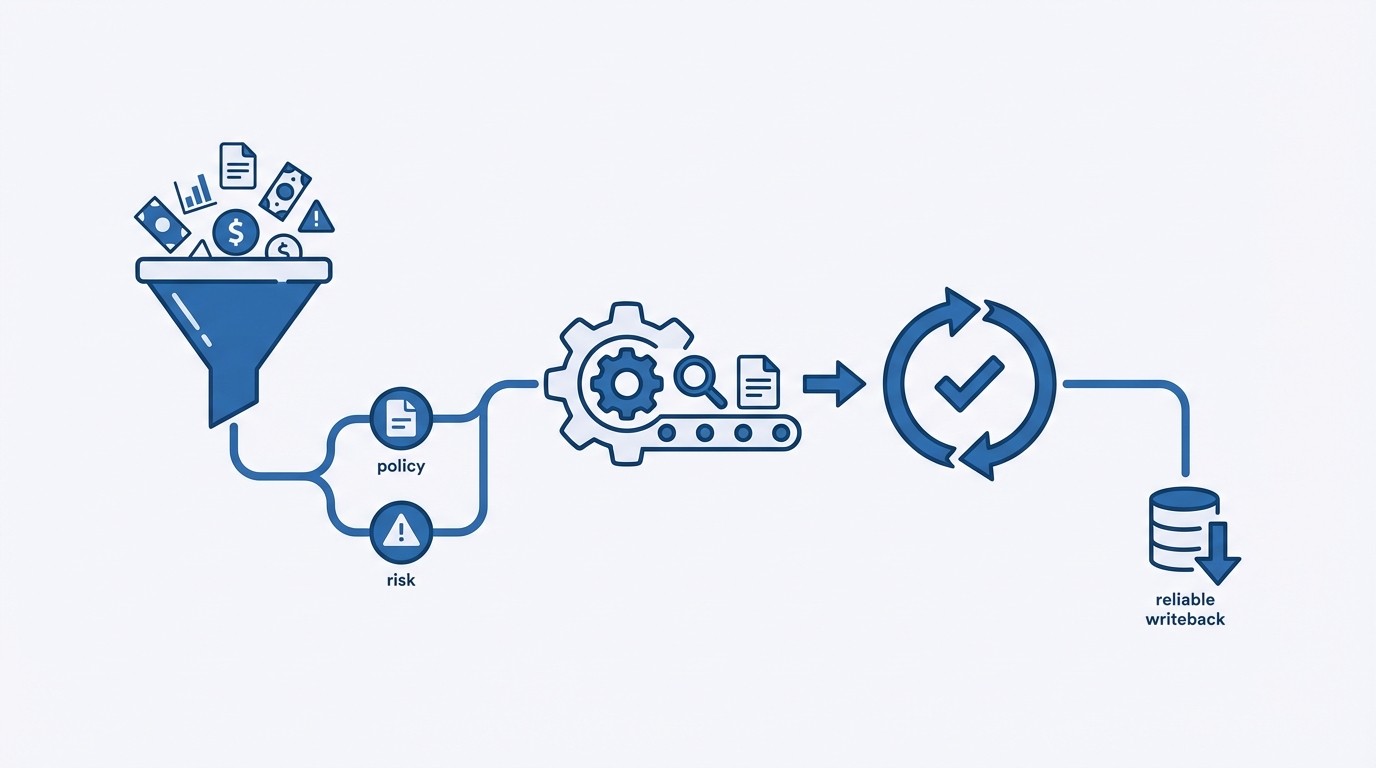
Automation in collections disputes works when it targets routine cases and routes exceptions with context. Aim for straight‑through outcomes on predictable categories, then reserve agents for judgment calls and regulatory nuance. For example, duplicate payment with a receipt can auto‑resolve; a complex fraud claim shouldn’t.
Why automating every case backfires
Over‑automation ignores ambiguity. Disputes include regulatory nuance, evidentiary gaps, and edge cases you can’t predict. When every case hits a bot, error rates and complaints rise. The pattern we see: cycles get longer, not shorter, because the messy 20% bounces between channels until a person fixes it.
A better path is hybrid by design. Let the engine handle what policy already answers—amount limits, known reason codes, and documented proof types—and escalate when signals point to risk or discretion. Honestly, the fastest teams got there by removing choices from routine paths and adding context to the few that need people.
Scope the problem with clarity. Start by listing dispute types you can decide with evidence you already trust. Then encode “must‑have” documents, thresholds, and eligibility. According to Versapay’s best practices on AR dispute automation, strong categorization is what unlocks safe automation at scale.
What counts as a routine dispute in collections
Routine disputes share two traits: they’re policy‑bound and verifiable. Think duplicate payment with receipt, simple billing error that matches your ledger, payment posting latency within a defined window, small balance adjustments under a dollar limit, and due‑date misunderstandings with clear terms.
Define eligibility up front. Set amount caps by segment, limit the number of adjustments per account per period, and list acceptable evidence types. Keep this in a rules engine, not in agent scripts, so updates ship once and apply everywhere. We’ve seen this tighten outcomes and reduce variance week one.
One more guardrail: align documentation with audit needs. If your compliance team needs a timestamped receipt and an attestation, make those mandatory in‑flow. That removes back‑and‑forth and stops disputes from aging while agents chase basics.
What is closed‑loop dispute resolution, and why does it matter?
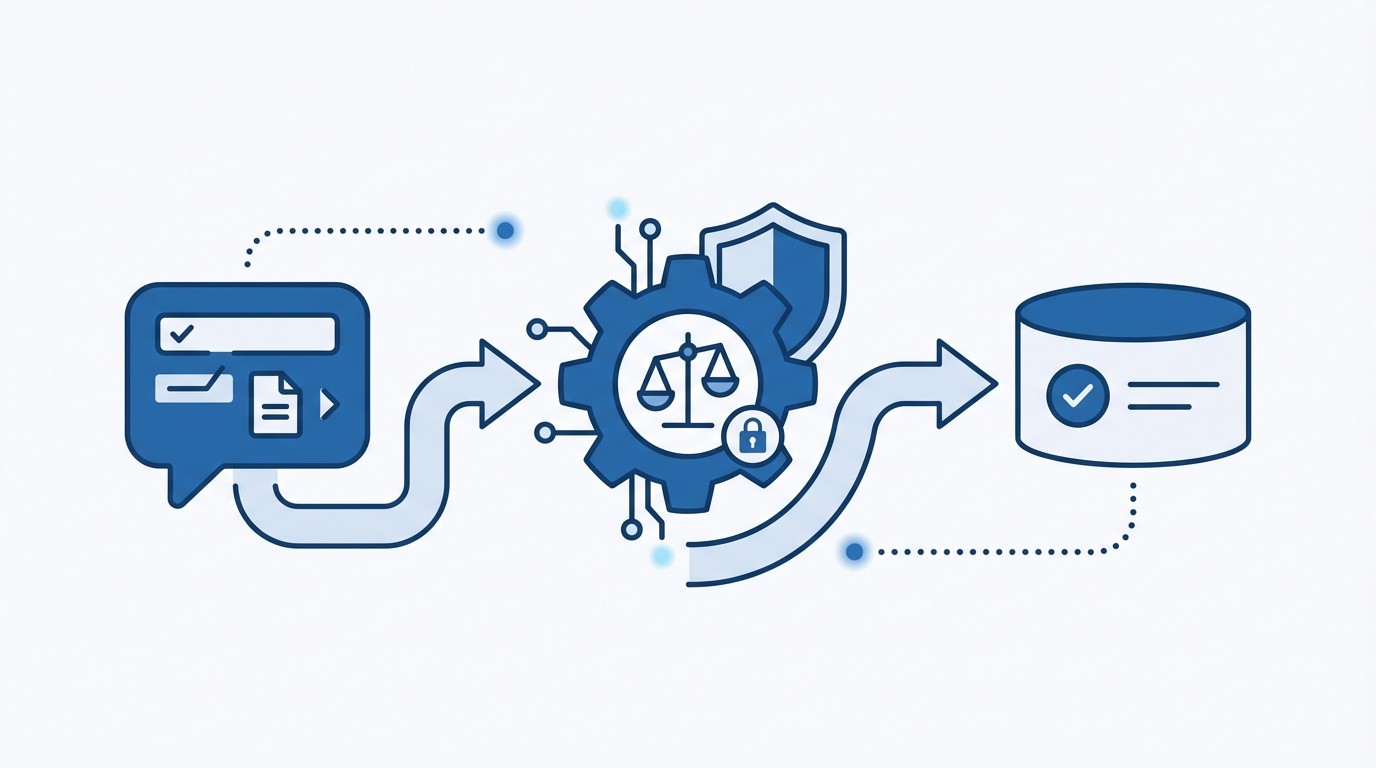
Closed‑loop means the customer initiates the dispute, submits evidence, passes policy checks, receives the decision, and the outcome posts—without leaving the message. The loop closes when the ledger, flags, notes, and documents update automatically. No portals. No manual wrap‑up. Just a finished case.
Closed‑loop matters because fragmentation creates waste. Channel hops cause abandonment, rekeying invites error, and delayed writebacks force reconciliation later. When outcomes write back instantly, you shrink cycle time and raise consistency. It also gives leaders a single source of truth for audit and reporting.
If your stack can’t complete the task inside the message, you’ll feel it in queues and exceptions. That’s the real lever for cost and customer experience—fewer conversations, more completed disputes.
Ready to see what closed‑loop looks like in practice? Stop the ping‑pong and Walk Through a Sample Flow.
Where Dispute Handling Breaks Today
Dispute handling breaks at two seams: channel detours and evidence sprawl. Portals and manual wrap‑up add steps and invite abandonment, while scattered files slow review and raise compliance risk. Fixing both requires in‑message completion and standardized evidence capture with automatic writeback.
The hidden costs of portal detours and manual wrap-up
Portal detours sound efficient. In reality, they add logins, resets, and channel switches right at the moment of action. Many customers bounce and call. Agents then verify identity, re‑ask questions, toggle between 3–5 systems, and type notes by hand. Each handoff adds minutes and risk.
Across thousands of disputes, that becomes material. You pay in overtime, rework, and inconsistency. We’ve watched teams celebrate “send volume” while their backlog quietly grows. The tell: disputes age past targets because routine items still need a person to stitch systems together.
Reducing steps inside the message, then writing outcomes back automatically, removes these seams. The impact shows up in cycle time and unit cost, not vanity conversation metrics. As Corcentric notes, manual dispute management compounds cost and risk when processes stay fragmented.
Evidence chaos creates compliance risk
Evidence scattered across emails, tickets, and shared drives slows everything. Agents hunt for receipts and screenshots, then guess whether they’re current or complete. Missing artifacts mean callbacks and re‑requests. Meanwhile, audit readiness suffers because proof isn’t bundled with the case.
Standardize intake instead. Prompt for specific documents in the flow, validate formats up front, and time‑stamp every submission. Bundle artifacts with the dispute record so reviewers open one complete package. This speeds exceptions and reduces complaint exposure because decisions rest on a clean, immutable trail.
One small detail that pays off: store digital consent and key interactions alongside the evidence. That anchors decisions to clear customer actions if questions arise later.
The Economics of Hybrid Automation
Hybrid automation lowers cost by letting software handle predictable disputes while experts tackle the rest. Target 60–80% straight‑through resolution, then route high‑risk or high‑value cases with full context. This structure reduces handle time, shrinks backlog, and improves consistency across outcomes.
What is the 80-20 split, and how do you design for it?
The 80–20 split is a design choice: automate the routine 80%, escalate the 20% that need judgment. It works because policy answers most questions when evidence is present. The key is modeling: eligibility thresholds, dollar caps, prior history rules, and required documents for each path.
Design with signals, not hunches. Include risk flags (recent disputes, unusual amounts), segment rules (secured vs. unsecured), and time windows (posting latency). When a case falls outside norms, escalate with context: messages sent, customer inputs, captured evidence, and attempted writebacks. Agents decide, not discover.
Set review SLAs by category so work flows predictably. Urgent paths get near‑term review; standard paths get longer windows with automated nudges. This keeps queues healthy while preserving discretion for gray areas. If we’re honest, this structure is what makes automation safe in regulated environments.
The case for idempotent writebacks to protect financial integrity
Automation fails fast without reliable writebacks. Idempotent transactions ensure an adjustment posts once—even if a retry fires. Retries with backoff and circuit breakers handle slow or flaky downstream systems. Telemetry at each step confirms success and flags gaps for ops and finance to investigate.
Why it matters: ledger mismatches cost hours to reconcile and erode trust in the process. When balances, flags, notes, and documents update together, you lock in state across systems. Teams that get this right report faster reconciliation and cleaner audits. Benchmarks from Billtrust on credit and collections automation mirror this pattern: speed follows reliability.
If you still rely on manual wrap‑up, you’re accepting silent failure modes—missed attachments, partial notes, or double postings. That risk is avoidable with idempotency and telemetry designed in.
Still resolving routine disputes by hand? Save the back‑and‑forth and See a Hybrid Model in Action.
What It Feels Like When Disputes Drag
When disputes drag, backlogs swell by mid‑afternoon and status calls spike. Agents chase basics while complex cases wait. From the customer’s view, status feels opaque and trust erodes. Designing intake, evidence, and policy checks in‑message removes friction and restores momentum.
The 3pm backlog that never clears
You know the pattern. Routine items clog the queue by early afternoon. Agents mine emails for receipts, paste account notes, and reroute exceptions. Complex cases—where human judgment matters—wait longer. Teams work overtime just to keep up, and the backlog returns the next day.
This isn’t a staffing problem; it’s a process problem. Without standardized intake and straight‑through paths, agents become the glue between systems. Most of that work is repeatable. Move discovery and verification into the flow, and backlogs shrink because the routine stops landing in agent queues.
It’s surprising how quickly the mood shifts when agents get out of paperwork. Focus lifts, escalations get smarter, and complaint risk falls because you’re no longer losing time to missing basics.
How do customers experience a dispute that takes days?
From a customer’s seat, long disputes feel like silence. Channels change, instructions differ, and no one can confirm what’s needed. Anxiety rises, and so do escalations. Clear, in‑message steps with status updates and receipts calm the process. People cooperate when they see progress.
Shortening cycle time is the lever. When decisions are clear and quick, trust improves even when the answer isn’t what the customer hoped for. That’s the real signal that your process works—less confusion, fewer calls, more on‑time recoveries. Research on manual dispute management highlights these pain points, as seen in Corcentric’s analysis of cost and compliance exposure.
A Practical Blueprint for Automated Dispute Intake to Resolution
A working blueprint starts with classification and evidence, then ends with reliable writeback. Classify disputes by policy and risk, collect complete artifacts in‑flow, and close the loop to the ledger with telemetry and retries. This turns routine disputes into straight‑through outcomes you can trust.
Classification and routing rules that separate routine from complex
Stand up a clear taxonomy. Use triggers from billing or collections systems, reason codes, amounts, risk flags, and prior history to classify on intake. Map each class to a policy path: auto‑resolve or escalate. Keep rules in an engine so updates apply across channels without retraining agents.
Include predictable guardrails. Limit adjustments per period, cap dollars by risk tier, and require stronger evidence for higher amounts. When a case crosses a threshold—say, multiple disputes in 60 days—route to humans with full context: inputs captured, documents, validations, and any attempted writebacks. That saves minutes on every exception.
Review classification performance weekly at first. Look for paths with high bounce or frequent overrides, then tighten rules or evidence prompts. Small changes compound into large deflection gains.
Automated evidence bundles customers and systems can supply
Move evidence capture into the flow. Prompt for receipts, transaction IDs, and bank letters with clear examples. Validate file types and completeness in real time. Where possible, pull supporting data from your own systems to reduce what customers must provide.
Bundle artifacts into an immutable, timestamped package and attach it to the case. Now reviewers open one place to see everything: the dispute summary, the evidence, and the policy checks already run. This cuts handle time and improves consistency because decisions rest on the same inputs every time.
One bonus: these bundles make auditing far cleaner. That reduces stress when complaints arise. For more patterns on automation and evidence capture, see Quadient’s overview of dispute automation approaches.
How RadMedia Automates Disputes Without Increasing Agent Load
RadMedia enables closed‑loop dispute resolution by making the message the app and writing outcomes back automatically. Customers submit details and evidence in‑message, policies apply, and results post to systems of record. Exceptions escalate with context so agents decide faster.
In-message dispute intake with secure identity and consent
With RadMedia, customers start and complete disputes inside SMS, email, or WhatsApp. Identity is verified with one‑time codes or known facts, and digital consent is captured with timestamps. Forms collect structured fields, and file components handle document uploads with validation.
This reduces abandonment because there’s no portal or app to install. It also improves evidence quality since prompts appear at the right step and check for completeness. We’ve seen teams cut discovery time sharply when verification and intake happen together, in channel.
For operations leaders, the win is predictability. Every dispute begins with the right data, which makes both automation and human review faster and safer.
Guaranteed writebacks and reconciliation to systems of record
RadMedia writes outcomes directly to billing, collections, and CRM systems. Idempotent transactions prevent duplicates, while retries with backoff and circuit breakers handle downstream instability. Notes and documents attach automatically, and audit logs store for every step.
Telemetry provides a clear trail: what fired, what posted, and where a retry succeeded. This protects financial integrity and removes manual wrap‑up—the source of many silent errors. When downstream systems lag, the workflow waits and replays safely, not the agent.
If your finance and ops teams spend hours reconciling adjustments, this is where the savings come from. Clean writebacks mean clean ledgers.
Want numbers, not anecdotes? Faster straight‑through resolution and cleaner reconciliation are common outcomes in mature rollouts documented by industry sources like Billtrust’s automation benchmarks. If you’re ready to reduce manual reconciliation, Start a Working Session and map your first flow.
Conclusion
Dispute automation doesn’t start with a bot. It starts with policy, evidence, and a closed loop that finishes the task where it began. When intake, verification, decision, and writeback happen in the message, you remove the hidden costs—rekeying, detours, and manual wrap‑up—that drag teams down.
Start small: classify routine categories, set thresholds and documentation rules, and standardize evidence capture. Then design idempotent writebacks with retries and telemetry so finance can trust every outcome. That’s how you reduce agent load without adding risk—and how you turn fewer conversations into more completed disputes.
Discover how to automate dispute handling in collections. Reduce agent load and improve outcomes with effective workflows and strategies.
How to Automate Dispute Handling and Reduce Agent Load in Collections - RadMedia professional guide illustration
[{"q":"How do I automate routine dispute handling with RadMedia?","a":"To automate routine dispute handling with RadMedia, start by identifying high-volume workflows that are policy-bound, like failed payments or payment plan setups. You can use RadMedia to create an autopilot workflow that links triggers from your back-end systems to in-message self-service apps. This way, customers can resolve disputes directly in the message without needing to switch channels or log in. Once a customer completes the task, RadMedia writes the outcome back to your systems, ensuring everything is updated automatically and efficiently."},{"q":"What if my team struggles with complex disputes?","a":"If your team faces complex disputes, you can design your workflows to escalate these cases to agents with full context. RadMedia captures all relevant information during the automated process, so when an exception occurs, agents receive a complete history of the interaction. This allows them to focus on judgment calls and regulatory nuances rather than routine tasks, improving overall efficiency and reducing agent load."},{"q":"Can I measure the success of my automated workflows?","a":"Yes, you can measure the success of your automated workflows by tracking key metrics such as completion rates, time-to-resolution, and writeback success. RadMedia allows you to set up telemetry at every step of the workflow, so you can monitor how well your automation is performing. By focusing on these metrics, you can identify areas for improvement and ensure that your automation is effectively reducing the workload for your agents."},{"q":"When should I consider using RadMedia for compliance tasks?","a":"Consider using RadMedia for compliance tasks when you need to streamline processes like KYC refreshes or document collection. RadMedia’s in-message self-service apps allow customers to verify their identity and submit documents securely without leaving the conversation. This not only speeds up compliance but also ensures that all actions are logged for audit purposes, reducing the risk of errors and improving overall compliance management."},{"q":"Why does my team need to focus on resolution, not conversations?","a":"Focusing on resolution rather than conversations is crucial because it directly impacts efficiency and customer satisfaction. With RadMedia, you can automate routine tasks that typically require multiple conversations, allowing your team to handle more complex issues. By ensuring that tasks are completed within the message and outcomes are written back to your systems, you reduce operational overhead and improve the overall customer experience."}]
28 Jan 2026
0ed57176-13a4-41de-935d-af1280a29bcb
{"@graph":[{"@id":"https://radmedia.co.za/how-to-automate-dispute-handling-and-reduce-agent-load-in-collections#article","@type":"Article","image":"https://jdbrszggncetflrhtwcd.supabase.co/storage/v1/object/public/article-images/6dca98ae-107d-47b7-832f-ee543e4b5364/how-to-automate-dispute-handling-and-reduce-agent-load-in-collections-hero-1769560903196.png","author":{"name":"RadMedia","@type":"Organization"},"headline":"How to Automate Dispute Handling and Reduce Agent Load in Collections","keywords":"automated dispute handling collections","publisher":{"name":"RadMedia","@type":"Organization"},"wordCount":2265,"description":"How to Automate Dispute Handling and Reduce Agent Load in Collections","dateModified":"2026-01-28T00:37:14.253+00:00","datePublished":"2026-01-28T00:35:26.635117+00:00","mainEntityOfPage":{"@id":"https://radmedia.co.za/how-to-automate-dispute-handling-and-reduce-agent-load-in-collections","@type":"WebPage"}},{"@id":"https://radmedia.co.za/how-to-automate-dispute-handling-and-reduce-agent-load-in-collections#howto","name":"How to Automate Dispute Handling and Reduce Agent Load in Collections","step":[{"name":"The Real Goal Is Fewer Conversations, More Completed Disputes","text":"Automation in collections disputes works when it targets routine cases and routes exceptions with context. Aim for straight‑through outcomes on predictable categories, then reserve agents for judgment calls and regulatory nuance. For example, duplicate payment with a receipt can auto‑resolve; a complex fraud claim shouldn’t. !A Practical Blueprint for Automated Dispute Intake to Resolution concept illustration - RadMedia","@type":"HowToStep","position":1},{"name":"Why automating every case backfires","text":"Over‑automation ignores ambiguity. Disputes include regulatory nuance, evidentiary gaps, and edge cases you can’t predict. When every case hits a bot, error rates and complaints rise. The pattern we see: cycles get longer, not shorter, because the messy 20% bounces between channels until a person fixes it. A better path is hybrid by design. Let the engine handle what policy already answers—amount limits, known reason codes, and documented proof types—and escalate when signals point to risk or di","@type":"HowToStep","position":2},{"name":"What counts as a routine dispute in collections","text":"Routine disputes share two traits: they’re policy‑bound and verifiable. Think duplicate payment with receipt, simple billing error that matches your ledger, payment posting latency within a defined window, small balance adjustments under a dollar limit, and due‑date misunderstandings with clear terms. Define eligibility up front. Set amount caps by segment, limit the number of adjustments per account per period, and list acceptable evidence types. Keep this in a rules engine, not in agent script","@type":"HowToStep","position":3},{"name":"What is closed‑loop dispute resolution, and why does it matter?","text":"Closed‑loop means the customer initiates the dispute, submits evidence, passes policy checks, receives the decision, and the outcome posts—without leaving the message. The loop closes when the ledger, flags, notes, and documents update automatically. No portals. No manual wrap‑up. Just a finished case. Closed‑loop matters because fragmentation creates waste. Channel hops cause abandonment, rekeying invites error, and delayed writebacks force reconciliation later. When outcomes write back instant","@type":"HowToStep","position":4},{"name":"Where Dispute Handling Breaks Today","text":"Dispute handling breaks at two seams: channel detours and evidence sprawl. Portals and manual wrap‑up add steps and invite abandonment, while scattered files slow review and raise compliance risk. Fixing both requires in‑message completion and standardized evidence capture with automatic writeback. !How RadMedia Automates Disputes Without Increasing Agent Load concept illustration - RadMedia","@type":"HowToStep","position":5},{"name":"The hidden costs of portal detours and manual wrap-up","text":"Portal detours sound efficient. In reality, they add logins, resets, and channel switches right at the moment of action. Many customers bounce and call. Agents then verify identity, re‑ask questions, toggle between 3–5 systems, and type notes by hand. Each handoff adds minutes and risk. Across thousands of disputes, that becomes material. You pay in overtime, rework, and inconsistency. We’ve watched teams celebrate “send volume” while their backlog quietly grows. The tell: disputes age past targ","@type":"HowToStep","position":6},{"name":"Evidence chaos creates compliance risk","text":"Evidence scattered across emails, tickets, and shared drives slows everything. Agents hunt for receipts and screenshots, then guess whether they’re current or complete. Missing artifacts mean callbacks and re‑requests. Meanwhile, audit readiness suffers because proof isn’t bundled with the case. Standardize intake instead. Prompt for specific documents in the flow, validate formats up front, and time‑stamp every submission. Bundle artifacts with the dispute record so reviewers open one complete ","@type":"HowToStep","position":7},{"name":"The Economics of Hybrid Automation","text":"Hybrid automation lowers cost by letting software handle predictable disputes while experts tackle the rest. Target 60–80% straight‑through resolution, then route high‑risk or high‑value cases with full context. This structure reduces handle time, shrinks backlog, and improves consistency across outcomes.","@type":"HowToStep","position":8},{"name":"What is the 80-20 split, and how do you design for it?","text":"The 80–20 split is a design choice: automate the routine 80%, escalate the 20% that need judgment. It works because policy answers most questions when evidence is present. The key is modeling: eligibility thresholds, dollar caps, prior history rules, and required documents for each path. Design with signals, not hunches. Include risk flags (recent disputes, unusual amounts), segment rules (secured vs. unsecured), and time windows (posting latency). When a case falls outside norms, escalate with ","@type":"HowToStep","position":9},{"name":"The case for idempotent writebacks to protect financial integrity","text":"Automation fails fast without reliable writebacks. Idempotent transactions ensure an adjustment posts once—even if a retry fires. Retries with backoff and circuit breakers handle slow or flaky downstream systems. Telemetry at each step confirms success and flags gaps for ops and finance to investigate. Why it matters: ledger mismatches cost hours to reconcile and erode trust in the process. When balances, flags, notes, and documents update together, you lock in state across systems. Teams that g","@type":"HowToStep","position":10},{"name":"What It Feels Like When Disputes Drag","text":"When disputes drag, backlogs swell by mid‑afternoon and status calls spike. Agents chase basics while complex cases wait. From the customer’s view, status feels opaque and trust erodes. Designing intake, evidence, and policy checks in‑message removes friction and restores momentum.","@type":"HowToStep","position":11},{"name":"The 3pm backlog that never clears","text":"You know the pattern. Routine items clog the queue by early afternoon. Agents mine emails for receipts, paste account notes, and reroute exceptions. Complex cases—where human judgment matters—wait longer. Teams work overtime just to keep up, and the backlog returns the next day. This isn’t a staffing problem; it’s a process problem. Without standardized intake and straight‑through paths, agents become the glue between systems. Most of that work is repeatable. Move discovery and verification into","@type":"HowToStep","position":12},{"name":"How do customers experience a dispute that takes days?","text":"From a customer’s seat, long disputes feel like silence. Channels change, instructions differ, and no one can confirm what’s needed. Anxiety rises, and so do escalations. Clear, in‑message steps with status updates and receipts calm the process. People cooperate when they see progress. Shortening cycle time is the lever. When decisions are clear and quick, trust improves even when the answer isn’t what the customer hoped for. That’s the real signal that your process works—less confusion, fewer c","@type":"HowToStep","position":13},{"name":"A Practical Blueprint for Automated Dispute Intake to Resolution","text":"A working blueprint starts with classification and evidence, then ends with reliable writeback. Classify disputes by policy and risk, collect complete artifacts in‑flow, and close the loop to the ledger with telemetry and retries. This turns routine disputes into straight‑through outcomes you can trust.","@type":"HowToStep","position":14},{"name":"Classification and routing rules that separate routine from complex","text":"Stand up a clear taxonomy. Use triggers from billing or collections systems, reason codes, amounts, risk flags, and prior history to classify on intake. Map each class to a policy path: auto‑resolve or escalate. Keep rules in an engine so updates apply across channels without retraining agents. Include predictable guardrails. Limit adjustments per period, cap dollars by risk tier, and require stronger evidence for higher amounts. When a case crosses a threshold—say, multiple disputes in 60 days—","@type":"HowToStep","position":15},{"name":"Automated evidence bundles customers and systems can supply","text":"Move evidence capture into the flow. Prompt for receipts, transaction IDs, and bank letters with clear examples. Validate file types and completeness in real time. Where possible, pull supporting data from your own systems to reduce what customers must provide. Bundle artifacts into an immutable, timestamped package and attach it to the case. Now reviewers open one place to see everything: the dispute summary, the evidence, and the policy checks already run. This cuts handle time and improves co","@type":"HowToStep","position":16},{"name":"How RadMedia Automates Disputes Without Increasing Agent Load","text":"RadMedia enables closed‑loop dispute resolution by making the message the app and writing outcomes back automatically. Customers submit details and evidence in‑message, policies apply, and results post to systems of record. Exceptions escalate with context so agents decide faster.","@type":"HowToStep","position":17},{"name":"In-message dispute intake with secure identity and consent","text":"With RadMedia, customers start and complete disputes inside SMS, email, or WhatsApp. Identity is verified with one‑time codes or known facts, and digital consent is captured with timestamps. Forms collect structured fields, and file components handle document uploads with validation. This reduces abandonment because there’s no portal or app to install. It also improves evidence quality since prompts appear at the right step and check for completeness. We’ve seen teams cut discovery time sharply ","@type":"HowToStep","position":18},{"name":"Guaranteed writebacks and reconciliation to systems of record","text":"RadMedia writes outcomes directly to billing, collections, and CRM systems. Idempotent transactions prevent duplicates, while retries with backoff and circuit breakers handle downstream instability. Notes and documents attach automatically, and audit logs store for every step. Telemetry provides a clear trail: what fired, what posted, and where a retry succeeded. This protects financial integrity and removes manual wrap‑up—the source of many silent errors. When downstream systems lag, the workfl","@type":"HowToStep","position":19}],"@type":"HowTo","image":"https://jdbrszggncetflrhtwcd.supabase.co/storage/v1/object/public/article-images/6dca98ae-107d-47b7-832f-ee543e4b5364/how-to-automate-dispute-handling-and-reduce-agent-load-in-collections-hero-1769560903196.png","totalTime":"PT16M","description":"How to Automate Dispute Handling and Reduce Agent Load in Collections"},{"@id":"https://radmedia.co.za/how-to-automate-dispute-handling-and-reduce-agent-load-in-collections#breadcrumb","@type":"BreadcrumbList","itemListElement":[{"item":"https://radmedia.co.za","name":"Home","@type":"ListItem","position":1},{"item":"https://radmedia.co.za/how-to-automate-dispute-handling-and-reduce-agent-load-in-collections","name":"How to Automate Dispute Handling and Reduce Agent Load in Co","@type":"ListItem","position":2}]}],"@context":"https://schema.org"}
[{"url":"https://jdbrszggncetflrhtwcd.supabase.co/storage/v1/object/public/article-images/6dca98ae-107d-47b7-832f-ee543e4b5364/how-to-automate-dispute-handling-and-reduce-agent-load-in-collections-inline-0-1769560919142.png","alt":"A Practical Blueprint for Automated Dispute Intake to Resolution concept illustration - RadMedia","filename":"how-to-automate-dispute-handling-and-reduce-agent-load-in-collections-inline-0-1769560919142.png","position":"after_h2_1","asset_id":null,"type":"ai_generated","dimensions":{"width":1024,"height":1024}},{"url":"https://jdbrszggncetflrhtwcd.supabase.co/storage/v1/object/public/article-images/6dca98ae-107d-47b7-832f-ee543e4b5364/how-to-automate-dispute-handling-and-reduce-agent-load-in-collections-inline-1-1769560936749.png","alt":"How RadMedia Automates Disputes Without Increasing Agent Load concept illustration - RadMedia","filename":"how-to-automate-dispute-handling-and-reduce-agent-load-in-collections-inline-1-1769560936749.png","position":"after_h2_2","asset_id":null,"type":"ai_generated","dimensions":{"width":1024,"height":1024}}]
96
2265
Collections disputes feel messy because they are. Edge cases, evidence, and policy collide, and your team pays the tax in time and rework. We’ll walk you through a practical way to automate the routine, keep humans for judgment, and close the loop without extra portals or manual wrap‑up.
You’re not trying to “drive engagement.” You’re trying to get to a clean, auditable outcome that posts to your ledger and reduces agent load. We’ll discuss the specific ways workflows break today, the numbers that matter, and a blueprint you can apply with your current stack.
Key Takeaways:
Automate routine, policy‑bound disputes; escalate gray areas with context, not guesswork
Design for closed‑loop resolution: intake, evidence, decision, and writeback in one flow
Target 60–80% straight‑through resolution with clear eligibility, dollar limits, and documentation rules
Instrument idempotent writebacks, retries, and telemetry to protect financial integrity
Measure completion rate, time‑to‑resolution, deflection, SLA adherence, and writeback success—not conversation counts
The Real Goal Is Fewer Conversations, More Completed Disputes
Automation in collections disputes works when it targets routine cases and routes exceptions with context. Aim for straight‑through outcomes on predictable categories, then reserve agents for judgment calls and regulatory nuance. For example, duplicate payment with a receipt can auto‑resolve; a complex fraud claim shouldn’t.

Why automating every case backfires
Over‑automation ignores ambiguity. Disputes include regulatory nuance, evidentiary gaps, and edge cases you can’t predict. When every case hits a bot, error rates and complaints rise. The pattern we see: cycles get longer, not shorter, because the messy 20% bounces between channels until a person fixes it.
A better path is hybrid by design. Let the engine handle what policy already answers—amount limits, known reason codes, and documented proof types—and escalate when signals point to risk or discretion. Honestly, the fastest teams got there by removing choices from routine paths and adding context to the few that need people.
Scope the problem with clarity. Start by listing dispute types you can decide with evidence you already trust. Then encode “must‑have” documents, thresholds, and eligibility. According to Versapay’s best practices on AR dispute automation, strong categorization is what unlocks safe automation at scale.
What counts as a routine dispute in collections
Routine disputes share two traits: they’re policy‑bound and verifiable. Think duplicate payment with receipt, simple billing error that matches your ledger, payment posting latency within a defined window, small balance adjustments under a dollar limit, and due‑date misunderstandings with clear terms.
Define eligibility up front. Set amount caps by segment, limit the number of adjustments per account per period, and list acceptable evidence types. Keep this in a rules engine, not in agent scripts, so updates ship once and apply everywhere. We’ve seen this tighten outcomes and reduce variance week one.
One more guardrail: align documentation with audit needs. If your compliance team needs a timestamped receipt and an attestation, make those mandatory in‑flow. That removes back‑and‑forth and stops disputes from aging while agents chase basics.
What is closed‑loop dispute resolution, and why does it matter?
Closed‑loop means the customer initiates the dispute, submits evidence, passes policy checks, receives the decision, and the outcome posts—without leaving the message. The loop closes when the ledger, flags, notes, and documents update automatically. No portals. No manual wrap‑up. Just a finished case.
Closed‑loop matters because fragmentation creates waste. Channel hops cause abandonment, rekeying invites error, and delayed writebacks force reconciliation later. When outcomes write back instantly, you shrink cycle time and raise consistency. It also gives leaders a single source of truth for audit and reporting.
If your stack can’t complete the task inside the message, you’ll feel it in queues and exceptions. That’s the real lever for cost and customer experience—fewer conversations, more completed disputes.
Ready to see what closed‑loop looks like in practice? Stop the ping‑pong and Walk Through a Sample Flow.
Where Dispute Handling Breaks Today
Dispute handling breaks at two seams: channel detours and evidence sprawl. Portals and manual wrap‑up add steps and invite abandonment, while scattered files slow review and raise compliance risk. Fixing both requires in‑message completion and standardized evidence capture with automatic writeback.

The hidden costs of portal detours and manual wrap-up
Portal detours sound efficient. In reality, they add logins, resets, and channel switches right at the moment of action. Many customers bounce and call. Agents then verify identity, re‑ask questions, toggle between 3–5 systems, and type notes by hand. Each handoff adds minutes and risk.
Across thousands of disputes, that becomes material. You pay in overtime, rework, and inconsistency. We’ve watched teams celebrate “send volume” while their backlog quietly grows. The tell: disputes age past targets because routine items still need a person to stitch systems together.
Reducing steps inside the message, then writing outcomes back automatically, removes these seams. The impact shows up in cycle time and unit cost, not vanity conversation metrics. As Corcentric notes, manual dispute management compounds cost and risk when processes stay fragmented.
Evidence chaos creates compliance risk
Evidence scattered across emails, tickets, and shared drives slows everything. Agents hunt for receipts and screenshots, then guess whether they’re current or complete. Missing artifacts mean callbacks and re‑requests. Meanwhile, audit readiness suffers because proof isn’t bundled with the case.
Standardize intake instead. Prompt for specific documents in the flow, validate formats up front, and time‑stamp every submission. Bundle artifacts with the dispute record so reviewers open one complete package. This speeds exceptions and reduces complaint exposure because decisions rest on a clean, immutable trail.
One small detail that pays off: store digital consent and key interactions alongside the evidence. That anchors decisions to clear customer actions if questions arise later.
The Economics of Hybrid Automation
Hybrid automation lowers cost by letting software handle predictable disputes while experts tackle the rest. Target 60–80% straight‑through resolution, then route high‑risk or high‑value cases with full context. This structure reduces handle time, shrinks backlog, and improves consistency across outcomes.
What is the 80-20 split, and how do you design for it?
The 80–20 split is a design choice: automate the routine 80%, escalate the 20% that need judgment. It works because policy answers most questions when evidence is present. The key is modeling: eligibility thresholds, dollar caps, prior history rules, and required documents for each path.
Design with signals, not hunches. Include risk flags (recent disputes, unusual amounts), segment rules (secured vs. unsecured), and time windows (posting latency). When a case falls outside norms, escalate with context: messages sent, customer inputs, captured evidence, and attempted writebacks. Agents decide, not discover.
Set review SLAs by category so work flows predictably. Urgent paths get near‑term review; standard paths get longer windows with automated nudges. This keeps queues healthy while preserving discretion for gray areas. If we’re honest, this structure is what makes automation safe in regulated environments.
The case for idempotent writebacks to protect financial integrity
Automation fails fast without reliable writebacks. Idempotent transactions ensure an adjustment posts once—even if a retry fires. Retries with backoff and circuit breakers handle slow or flaky downstream systems. Telemetry at each step confirms success and flags gaps for ops and finance to investigate.
Why it matters: ledger mismatches cost hours to reconcile and erode trust in the process. When balances, flags, notes, and documents update together, you lock in state across systems. Teams that get this right report faster reconciliation and cleaner audits. Benchmarks from Billtrust on credit and collections automation mirror this pattern: speed follows reliability.
If you still rely on manual wrap‑up, you’re accepting silent failure modes—missed attachments, partial notes, or double postings. That risk is avoidable with idempotency and telemetry designed in.
Still resolving routine disputes by hand? Save the back‑and‑forth and See a Hybrid Model in Action.
What It Feels Like When Disputes Drag
When disputes drag, backlogs swell by mid‑afternoon and status calls spike. Agents chase basics while complex cases wait. From the customer’s view, status feels opaque and trust erodes. Designing intake, evidence, and policy checks in‑message removes friction and restores momentum.
The 3pm backlog that never clears
You know the pattern. Routine items clog the queue by early afternoon. Agents mine emails for receipts, paste account notes, and reroute exceptions. Complex cases—where human judgment matters—wait longer. Teams work overtime just to keep up, and the backlog returns the next day.
This isn’t a staffing problem; it’s a process problem. Without standardized intake and straight‑through paths, agents become the glue between systems. Most of that work is repeatable. Move discovery and verification into the flow, and backlogs shrink because the routine stops landing in agent queues.
It’s surprising how quickly the mood shifts when agents get out of paperwork. Focus lifts, escalations get smarter, and complaint risk falls because you’re no longer losing time to missing basics.
How do customers experience a dispute that takes days?
From a customer’s seat, long disputes feel like silence. Channels change, instructions differ, and no one can confirm what’s needed. Anxiety rises, and so do escalations. Clear, in‑message steps with status updates and receipts calm the process. People cooperate when they see progress.
Shortening cycle time is the lever. When decisions are clear and quick, trust improves even when the answer isn’t what the customer hoped for. That’s the real signal that your process works—less confusion, fewer calls, more on‑time recoveries. Research on manual dispute management highlights these pain points, as seen in Corcentric’s analysis of cost and compliance exposure.
A Practical Blueprint for Automated Dispute Intake to Resolution
A working blueprint starts with classification and evidence, then ends with reliable writeback. Classify disputes by policy and risk, collect complete artifacts in‑flow, and close the loop to the ledger with telemetry and retries. This turns routine disputes into straight‑through outcomes you can trust.
Classification and routing rules that separate routine from complex
Stand up a clear taxonomy. Use triggers from billing or collections systems, reason codes, amounts, risk flags, and prior history to classify on intake. Map each class to a policy path: auto‑resolve or escalate. Keep rules in an engine so updates apply across channels without retraining agents.
Include predictable guardrails. Limit adjustments per period, cap dollars by risk tier, and require stronger evidence for higher amounts. When a case crosses a threshold—say, multiple disputes in 60 days—route to humans with full context: inputs captured, documents, validations, and any attempted writebacks. That saves minutes on every exception.
Review classification performance weekly at first. Look for paths with high bounce or frequent overrides, then tighten rules or evidence prompts. Small changes compound into large deflection gains.
Automated evidence bundles customers and systems can supply
Move evidence capture into the flow. Prompt for receipts, transaction IDs, and bank letters with clear examples. Validate file types and completeness in real time. Where possible, pull supporting data from your own systems to reduce what customers must provide.
Bundle artifacts into an immutable, timestamped package and attach it to the case. Now reviewers open one place to see everything: the dispute summary, the evidence, and the policy checks already run. This cuts handle time and improves consistency because decisions rest on the same inputs every time.
One bonus: these bundles make auditing far cleaner. That reduces stress when complaints arise. For more patterns on automation and evidence capture, see Quadient’s overview of dispute automation approaches.
How RadMedia Automates Disputes Without Increasing Agent Load
RadMedia enables closed‑loop dispute resolution by making the message the app and writing outcomes back automatically. Customers submit details and evidence in‑message, policies apply, and results post to systems of record. Exceptions escalate with context so agents decide faster.
In-message dispute intake with secure identity and consent
With RadMedia, customers start and complete disputes inside SMS, email, or WhatsApp. Identity is verified with one‑time codes or known facts, and digital consent is captured with timestamps. Forms collect structured fields, and file components handle document uploads with validation.
This reduces abandonment because there’s no portal or app to install. It also improves evidence quality since prompts appear at the right step and check for completeness. We’ve seen teams cut discovery time sharply when verification and intake happen together, in channel.
For operations leaders, the win is predictability. Every dispute begins with the right data, which makes both automation and human review faster and safer.
Guaranteed writebacks and reconciliation to systems of record
RadMedia writes outcomes directly to billing, collections, and CRM systems. Idempotent transactions prevent duplicates, while retries with backoff and circuit breakers handle downstream instability. Notes and documents attach automatically, and audit logs store for every step.
Telemetry provides a clear trail: what fired, what posted, and where a retry succeeded. This protects financial integrity and removes manual wrap‑up—the source of many silent errors. When downstream systems lag, the workflow waits and replays safely, not the agent.
If your finance and ops teams spend hours reconciling adjustments, this is where the savings come from. Clean writebacks mean clean ledgers.
Want numbers, not anecdotes? Faster straight‑through resolution and cleaner reconciliation are common outcomes in mature rollouts documented by industry sources like Billtrust’s automation benchmarks. If you’re ready to reduce manual reconciliation, Start a Working Session and map your first flow.
Conclusion
Dispute automation doesn’t start with a bot. It starts with policy, evidence, and a closed loop that finishes the task where it began. When intake, verification, decision, and writeback happen in the message, you remove the hidden costs—rekeying, detours, and manual wrap‑up—that drag teams down.
Start small: classify routine categories, set thresholds and documentation rules, and standardize evidence capture. Then design idempotent writebacks with retries and telemetry so finance can trust every outcome. That’s how you reduce agent load without adding risk—and how you turn fewer conversations into more completed disputes.
