
Scale Collections Autopilot: Move From Pilot to 10x Throughput Without Headcount

To scale collections autopilot effectively, focus on resolution within messages rather than just increasing outreach. Implement tight controls and model capacity to achieve 10x throughput without adding headcount, ensuring compliance and minimizing risk.

Collections autopilot sounds simple when you run a pilot. You send messages, a few customers pay, and the dashboard looks healthy. Scaling is different. To reach 10x throughput without adding headcount, you need resolution inside the message, not just more outreach. You also need tight controls that protect downstream systems, SLAs, and compliance when volume rises.

We’ll walk you through a practical roadmap for collections autopilot. We’ll discuss the specific ways pilots fail at scale, how to design autothrottle and cadence controls, and how to model capacity across messages, mini‑app sessions, and writebacks. The goal is clear: grow resolution, not conversation volume, while keeping risk and unit cost in check.

Key Takeaways:

  • Treat resolution inside the message as your scale lever, not message volume

  • Prove integration and writeback guarantees before any ramp in sends

  • Design an autothrottle that respects quiet hours, rate limits, and error budgets

  • Model end‑to‑end capacity: messages, sessions, API calls, and writebacks

  • Pass full context on exceptions to avoid agent rework and wasted minutes

  • Encode consent, time windows, and frequency caps to reduce compliance risk

  • Ramp in cohorts with clear gates tied to completion, error rate, and writeback success

Volume Is Not Scale in Collections Autopilot

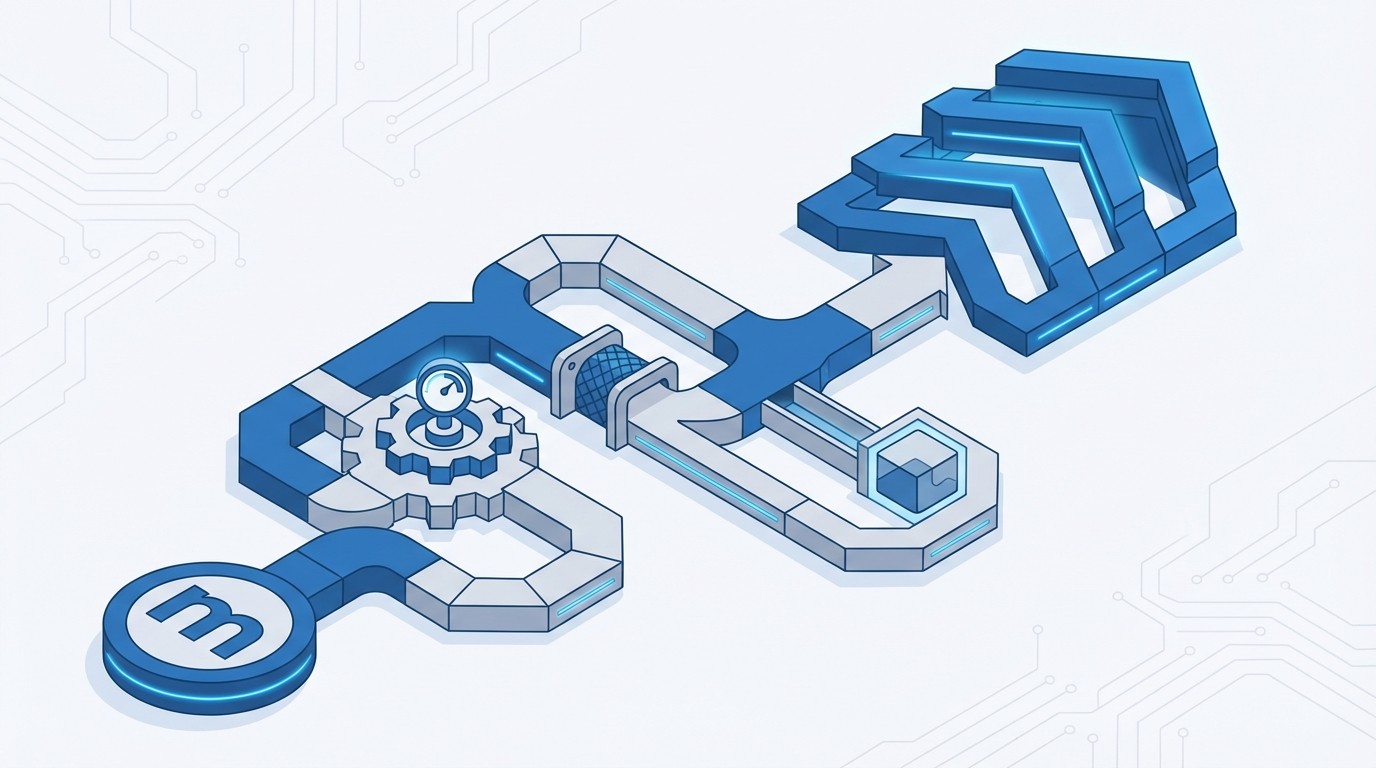
Collections autopilot scales when completion happens inside the message and outcomes write back to core systems automatically. That is the difference between more chatter and more paid accounts. When portals or agents remain in the loop, extra outreach just creates parallel queues and hidden reconciliation work.
The How‑To Roadmap for Collections Autopilot at 10x concept illustration - RadMedia

What changes at scale is pressure on every layer: identity checks, mini‑app sessions, payment gateways, and back‑end APIs. A small pilot rarely exposes the fragile parts. Under load, retries and timeouts cascade, and manual wrap‑up returns. The fix is architectural. Close the loop in‑message, enforce rules centrally, and pace sends to match downstream capacity.

Outreach vs. Resolution: What Actually Changes at Scale

Scaling outreach without changing where work finishes is a common mistake. It looks productive because sends grow and replies spike, yet completion lags. Customers hit a login, stall, and call. Agents re‑collect data and re‑key outcomes. You end up paying the operations tax while dashboards show activity, not results.

A resolution‑first pattern removes that friction. Customers verify identity and complete payment actions inside the message. The system enforces eligibility and rules, processes the transaction, and writes the outcome back. Agents see fewer predictable cases and more informed exceptions. That shift cuts waste and protects SLAs during spikes.

Why Spikes Break Downstream Systems

Unplanned volume exposes shared constraints. Identity services throttle, payment gateways return intermittent errors, and core APIs hit rate limits. Without a policy‑driven throttle, retries pile up, queues deepen, and the noise hides true failure modes. Teams lose hours to reconciliation and miss SLAs they thought were safe.

Treat capacity as an end‑to‑end budget. Set ceilings per channel, session concurrency, and integration. When latency rises or error budgets shrink, slow cadences, reduce concurrency, or defer lower‑priority cohorts. Cloud teams use similar patterns in managed modes like the Google Kubernetes Engine Autopilot overview and AWS EKS Automode best practices. Collections needs the same discipline.

What Collections Autopilot Is and Why It Matters

Collections autopilot links back‑end triggers to in‑message self‑service that completes compliant payment actions without agents. It validates identity, enforces policy, writes outcomes back automatically, and escalates only exceptions with full context. The payoff is resolution at scale, not noise. Done right, you reduce cost‑to‑serve and protect downstream systems during surges.

The approach also changes how you plan. You size for sessions and writebacks, not just messages sent. You measure completion, writeback success, and deflection, not only opens or replies. And you prove stability with an autothrottle that reacts to real telemetry, not guesses.

The Real Bottleneck for Collections Autopilot: Back‑end Readiness and Controls

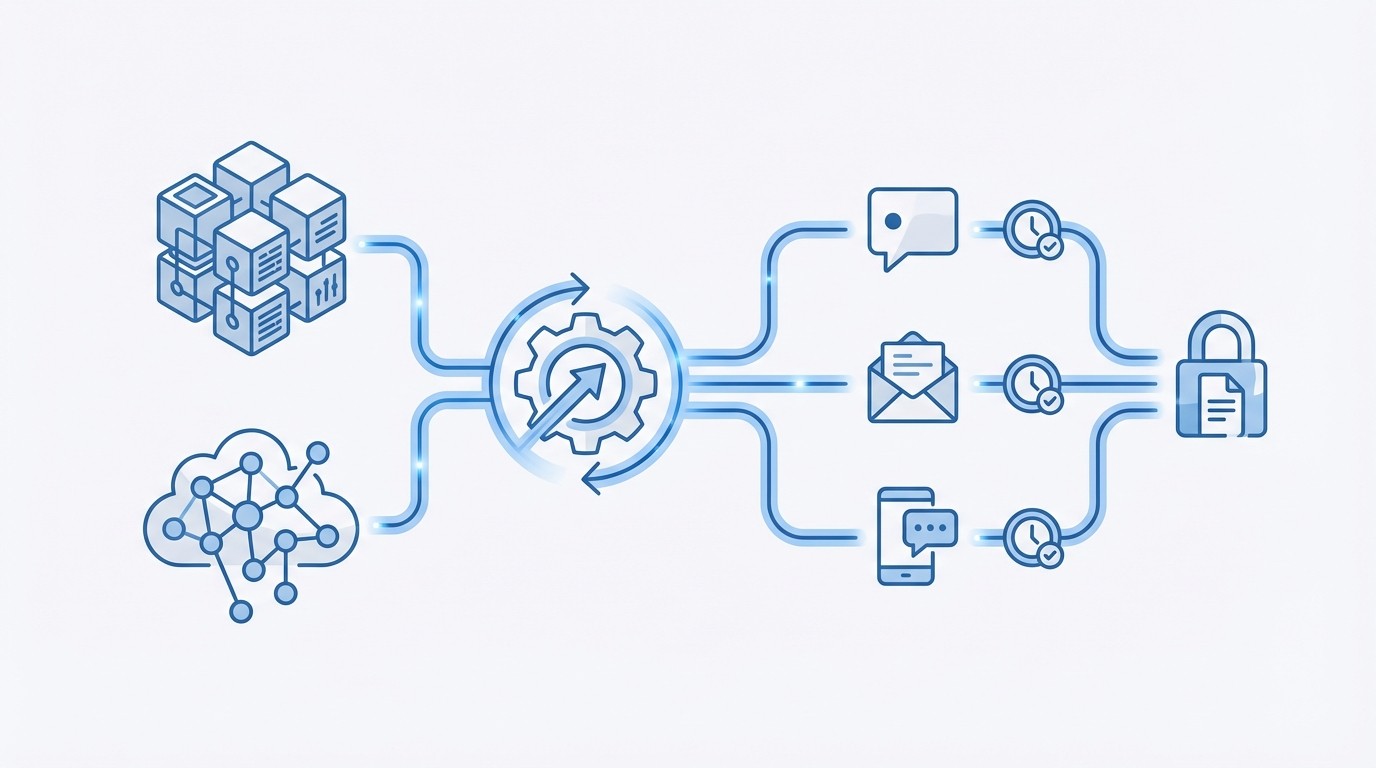
Back‑end readiness and writeback guarantees determine whether your scale plan works. If outcomes do not reach the system of record consistently, errors multiply, duplicates appear, and agents fix what automation broke. Treat writeback success as a go‑live gate, not a nice‑to‑have.
How RadMedia Operationalizes Collections Autopilot at Scale concept illustration - RadMedia

Designing an autothrottle is the next control. A policy‑driven throttle respects quiet hours, consent, send windows, and downstream rate limits. It widens only when telemetry supports it. Without this, you risk instability that erodes trust and invites audit findings.

Prove Integration and Writeback First

Pilots often skip the hard parts. Connectivity exists, but schemas are brittle, retries are ad hoc, and audit logs are thin. Under load, intermittent failures become duplicates or missing evidence. That is where costs explode and confidence drops.

Prove the path end to end. Validate authentication flows, schema mapping, idempotency keys, retry policies, and writeback auditability across targets. Dry‑run failure modes until outcomes still land correctly. If writeback success falls below target, pause the ramp. A clean writeback closes the loop and prevents manual wrap‑up from creeping back.

Design an Autothrottle That Adapts

A good throttle blends customer respect with system safety. It encodes quiet hours, consent status, time windows, and frequency caps. It also watches downstream signals like latency, error rate, and queue depth. When pressure rises, it slows gracefully rather than failing loudly.

Start with conservative ceilings per channel and integration, then widen based on data. Segment cohorts by risk and priority so you can defer lower‑value sends first. This pattern mirrors proven practices in managed compute modes. The goal is predictable resolution, not bursty sends that cause avoidable alarms.

Bake Governance Into Configuration

Scaling without policy alignment is a risk you can avoid. Document eligibility rules, consent capture, retention, and evidence storage. Socialize exception paths with risk and legal, then treat configuration as controlled artifacts with versioning and rollback. When auditors ask how the system enforces fair treatment and consent, you should point to rules, logs, and outcomes, not ad hoc notes.

A strong configuration story also reduces change freezes. When teams see that governance is encoded and tested, approvals come faster. That speeds iteration without sacrificing control.

Quantifying the Cost of Getting Collections Autopilot Wrong

The cost of a weak scale plan shows up in throughput, agent minutes, and risk. Messages climb, but completion stalls. Exceptions arrive without context. Cadence crosses boundaries that should have been enforced. Each mistake compounds at 5x or 10x volume.

A capacity model turns uncertainty into math. Estimate messages, session starts, API calls per session, and writebacks per outcome across a cohort. Add expected retries and identity checks. Then map that to channel throughput, session concurrency, and per‑system rate limits. You will spot bottlenecks before they hurt customers.

Capacity Math: From Messages to Writebacks

Start with a slice, for example 100k customers. For each step, project conversion: opens to session starts, identity success to action taken, action to writeback. Multiply by API calls per session and include retries. The result is a concrete view of channel sends, session concurrency, downstream calls, and writebacks per hour.

This matters because each layer has a ceiling. If identity verification success is lower than expected, more sessions retry. If payment retries rise, gateway calls spike. A simple spreadsheet prevents guesswork and avoids the hidden cost of rework after the fact.

The Exception Tax When Context Is Missing

When exceptions escalate without history, agents rediscover facts, recollect documents, and re‑key data. That is wasted time. It also invites errors and uneven outcomes that regulators notice. At scale, this tax quietly consumes headcount you thought you saved.

Fix it by attaching full context to every exception: messages sent, inputs collected, validation results, and attempted writebacks. Agents should start at resolution, not triage. Measure average handle time and first‑contact resolution for exceptions. You will see the difference in hours saved per hundred cases.

Cadence Mistakes That Trigger Compliance Risk

Aggressive nudging can cross quiet‑hour policies, consent boundaries, or fair treatment rules. This is not theoretical. Under pressure, teams send more and sort it out later. Audits arrive. Findings land. Confidence drops.

Codify time windows, channel preferences, suppression lists, and frequency caps. Capture digital consent with timestamps and store artifacts with the case. Logs should show what was sent, when, to whom, and why. These controls protect customers and your brand while you scale.

When Scale Fails, People Feel It

Failed scale is not just a graph. Customers bounce between channels, give up at logins, or wait on hold. Agents inherit angry calls and incomplete data. Leaders see red dashboards and worry about regulators, SLAs, and reputation. Anxiety rises because the system feels out of control.

Calming the system is possible. Circuit breakers, backoff, and deferral rules reduce noise and protect downstream systems. A measured ramp plan with clear gates rebuilds credibility. Evidence of control brings confidence back.

Customer Friction and Agent Fatigue in Broken Flows

When the last mile is broken, customers miss payments they intended to make. They encounter logins, forgotten passwords, or dead ends. They feel ignored even when outreach is constant. That frustration turns into abandoned tasks and complaints.

Agents feel it too. They repeat verification, copy data between screens, and write notes no one reads. Error rates rise. Morale drops. You can prevent this by removing last‑mile friction so actions complete in‑message and by sending only informed exceptions to agents with full context.

Red Dashboards and Lost Trust

When queues spike and integrations fail, leaders lose trust quickly. They fear penalties and reputational damage. A postmortem reveals that capacity models were thin and throttles were missing. The fix is to slow the ramp, add backpressure, and prove stability under stress.

A weekly review of telemetry tied to risk thresholds creates shared confidence. Completion rate, writeback success, error rate, and latency should decide when to widen the throttle. If any metric slips, pause and address the root cause first.

The How‑To Roadmap for Collections Autopilot at 10x

A practical roadmap starts with readiness, then tunes cadence and backpressure, then hardens exception routing, and finally plans capacity for 2x, 5x, and 10x. Each step builds guardrails that prevent costly failure modes.

This sequence respects regulated environments. It encodes policy and evidence first, not last. It also reduces risk by proving stability with real cohorts before large ramps. The outcome is predictable resolution at scale.

Operational Readiness Checklist

Readiness prevents rework. Before you touch volume, finalize integration contracts, idempotent writebacks, consent capture, audit logging, exception paths, and rollback. Then run a dry test that simulates concurrency and failure modes. If any box is unchecked, delay the ramp. Readiness beats speed that breaks later.

To execute the checklist:

  1. Validate integration flows end to end, including retries and idempotency keys, then test failure modes until writebacks remain consistent.

  2. Confirm consent capture, retention, and evidence storage with risk and legal, then version configurations with rollback.

  3. Exercise exception paths with synthetic cases and ensure escalations include full context for agents.

Cadence Tuning and Backpressure Patterns

Cadence control is your safety valve. Encode quiet hours, pacing, and channel sequencing per segment. Add backpressure rules that react to downstream latency, error spikes, or queue depth. Test with synthetic load and a small live cohort side by side. Do not widen until the system stays stable under push.

Useful patterns:

  • Start with conservative ceilings per channel and per integration, then widen based on measured error budgets

  • Defer lower‑priority cohorts first when pressure rises

  • Apply jitter to pacing so spikes smooth out and downstream systems breathe

Exception Routing That Preserves Agent Context

Exceptions are inevitable. What you control is how much work they create. Define exception reasons, eligibility rules for escalation, and routing destinations. Attach full context, inputs, and attempted writebacks so agents start at resolution, not discovery. Measure average handle time and first‑contact resolution for this queue.

A tight loop here prevents spirals during peak cycles. It also improves customer experience because problems do not repeat. You reduce waste and keep complex cases with the people who can solve them.

Capacity Planning Across 2x, 5x, 10x Scenarios

Plan growth in cohorts. For each step up, simulate messaging throughput, session concurrency, API limits, and storage impact. Set ramp gates based on error budgets, writeback success, and completion rate. If a metric slips, pause. This discipline prevents outages and protects trust.

A simple model beats guesses. Use it in weekly reviews to decide when to widen the throttle. The pattern mirrors proven approaches in managed platforms outlined in the Microsoft Autopilot overview and the Autopilot standard vs. feature comparison for GKE.

How RadMedia Operationalizes Collections Autopilot at Scale

RadMedia turns the new way into day‑to‑day operations. The service connects to legacy cores and modern APIs, sequences SMS, email, and WhatsApp with consent and quiet hours, delivers secure in‑message self‑service, and writes outcomes back with idempotency and retries. Exceptions escalate with full context so agents resolve faster.

This design addresses the earlier costs directly. It reduces the exception tax by attaching history and inputs, lowers compliance risk with encoded cadence and consent, and prevents spike‑driven failures with backpressure tied to telemetry. The result is controlled scale, fewer errors, and lower unit cost during surges.

Managed Integration With Writeback Guarantees

RadMedia manages authentication, schema mapping, and error handling across REST, SOAP, message queues, and secure batch. When a customer completes an action, RadMedia writes balances, flags, notes, and documents back to systems of record with idempotency keys and retries. That eliminates duplicate outcomes and manual wrap‑up that waste hours at scale.

By proving writeback success early, RadMedia gives operations a reliable foundation. It also provides audit logs that show exactly what changed, when, and why. That level of evidence protects approvals as you widen volume.

Orchestration With Consent, Windows, and Pacing

RadMedia sequences channels by consent status and known responsiveness, applying quiet hours, send windows, and frequency caps. When downstream latency rises or error rates creep up, orchestration slows cadences or defers lower‑priority cohorts to preserve SLAs. This is the autothrottle you modeled earlier, implemented with real telemetry.

Templates pull trigger data so messages are specific and actionable. Time window and cadence control reduce risk while sustaining throughput. The system focuses on completion, not just sends.

In‑Message Completion With Secure Identity and Exceptions That Start at Context

Customers verify identity with one‑time codes or known‑fact checks, then complete actions in‑message. Digital consent is captured and stored with timestamps. When an exception occurs, RadMedia escalates with full history and attempted writebacks so agents start at resolution. Routine cases resolve automatically. Exceptions move faster.

This pattern removes last‑mile friction, improves completion rates, and deflects predictable traffic from queues. It ties back to the earlier human impact by reducing frustration for customers and fatigue for agents.

Conclusion

Scaling collections autopilot is not a send‑more exercise. It is a resolution‑first system that closes the loop in‑message, writes outcomes back reliably, and protects customers and downstream systems with measured cadence and backpressure. The hard work is integration, governance, and controls that hold under stress.

If you adopt the roadmap here, you will ramp with confidence. Prove writebacks, encode policy, size capacity, and widen only when the data supports it. That is how you move from a fragile pilot to 10x throughput without adding headcount, while lowering risk and cost.

Discover how to scale collections autopilot effectively. Learn to enhance operational readiness and compliance while achieving 10x throughput without extra headcount.

Scale Collections Autopilot: Move From Pilot to 10x Throughput Without Headcount - RadMedia professional guide illustration

[{"q":"How do I set up RadMedia for automated collections?","a":"To set up RadMedia for automated collections, start by integrating it with your existing back-end systems. This can be done via REST or SOAP APIs, which RadMedia manages for you. Next, identify key triggers such as failed payments or due dates that will initiate outreach. Finally, use the in-message self-service apps to allow customers to update their information or make payments directly within the message, ensuring outcomes write back to your systems automatically."},{"q":"What if my customers prefer different communication channels?","a":"RadMedia can adapt to your customers' preferences by using omni-channel messaging. You can configure it to send messages via SMS, email, or WhatsApp based on what each customer prefers. This ensures that your outreach is effective and reaches customers where they are most likely to engage. Additionally, RadMedia's smart channel sequencing optimizes the timing and content of these messages to drive action."},{"q":"Can I automate compliance checks with RadMedia?","a":"Yes, you can automate compliance checks using RadMedia's in-message self-service apps. When you send out compliance refresh requests, customers can verify their identity and submit necessary documents directly within the message. This process captures digital consent and timestamps, ensuring that all compliance requirements are met without needing to switch channels or involve agents."},{"q":"When should I ramp up my messaging volume?","a":"You should ramp up your messaging volume when you have established a reliable workflow that ensures outcomes write back to your systems automatically. Before increasing sends, validate that your integration and writeback guarantees are functioning properly. It's also helpful to monitor key metrics like completion rates and error rates to ensure that your system can handle the increased load without compromising performance."},{"q":"Why does RadMedia focus on resolution instead of conversation volume?","a":"RadMedia emphasizes resolution because it leads to better operational efficiency and customer satisfaction. Focusing on completion rates rather than just conversation volume helps reduce costs and improve outcomes. By ensuring that tasks are completed within the message, you avoid the operational tax that comes from fragmented workflows, resulting in faster cycle times and a better experience for your customers."}]

16 Feb 2026

4911a934-fd0d-44ee-86a6-ae5043a472be

{"@graph":[{"@id":"https://radmedia.co.za/scale-collections-autopilot-move-from-pilot-to-10x-throughput-without-headcount#article","@type":"Article","image":"https://jdbrszggncetflrhtwcd.supabase.co/storage/v1/object/public/article-images/6dca98ae-107d-47b7-832f-ee543e4b5364/scale-collections-autopilot-move-from-pilot-to-10x-throughput-without-headcount-hero-1771250080922.png","author":{"name":"RadMedia","@type":"Organization"},"headline":"Scale Collections Autopilot: Move From Pilot to 10x Throughput Without Headcount","keywords":"scale collections autopilot","publisher":{"name":"RadMedia","@type":"Organization"},"wordCount":2506,"description":"Scale Collections Autopilot: Move From Pilot to 10x Throughput Without Headcount","dateModified":"2026-02-16T13:54:24.364+00:00","datePublished":"2026-02-16T13:51:26.204119+00:00","mainEntityOfPage":{"@id":"https://radmedia.co.za/scale-collections-autopilot-move-from-pilot-to-10x-throughput-without-headcount","@type":"WebPage"}},{"@id":"https://radmedia.co.za/scale-collections-autopilot-move-from-pilot-to-10x-throughput-without-headcount#howto","name":"Scale Collections Autopilot: Move From Pilot to 10x Throughput Without Headcount","step":[{"name":"Volume Is Not Scale in Collections Autopilot","text":"Collections autopilot scales when completion happens inside the message and outcomes write back to core systems automatically. That is the difference between more chatter and more paid accounts. When portals or agents remain in the loop, extra outreach just creates parallel queues and hidden reconciliation work. !The How‑To Roadmap for Collections Autopilot at 10x concept illustration - RadMedia What changes at scale is pressure on every layer: identity checks, mini‑app sessions, payment gateway","@type":"HowToStep","position":1},{"name":"Outreach vs. Resolution: What Actually Changes at Scale","text":"Scaling outreach without changing where work finishes is a common mistake. It looks productive because sends grow and replies spike, yet completion lags. Customers hit a login, stall, and call. Agents re‑collect data and re‑key outcomes. You end up paying the operations tax while dashboards show activity, not results. A resolution‑first pattern removes that friction. Customers verify identity and complete payment actions inside the message. The system enforces eligibility and rules, processes th","@type":"HowToStep","position":2},{"name":"Why Spikes Break Downstream Systems","text":"Unplanned volume exposes shared constraints. Identity services throttle, payment gateways return intermittent errors, and core APIs hit rate limits. Without a policy‑driven throttle, retries pile up, queues deepen, and the noise hides true failure modes. Teams lose hours to reconciliation and miss SLAs they thought were safe. Treat capacity as an end‑to‑end budget. Set ceilings per channel, session concurrency, and integration. When latency rises or error budgets shrink, slow cadences, reduce co","@type":"HowToStep","position":3},{"name":"What Collections Autopilot Is and Why It Matters","text":"Collections autopilot links back‑end triggers to in‑message self‑service that completes compliant payment actions without agents. It validates identity, enforces policy, writes outcomes back automatically, and escalates only exceptions with full context. The payoff is resolution at scale, not noise. Done right, you reduce cost‑to‑serve and protect downstream systems during surges. The approach also changes how you plan. You size for sessions and writebacks, not just messages sent. You measure co","@type":"HowToStep","position":4},{"name":"The Real Bottleneck for Collections Autopilot: Back‑end Readiness and Controls","text":"Back‑end readiness and writeback guarantees determine whether your scale plan works. If outcomes do not reach the system of record consistently, errors multiply, duplicates appear, and agents fix what automation broke. Treat writeback success as a go‑live gate, not a nice‑to‑have. !How RadMedia Operationalizes Collections Autopilot at Scale concept illustration - RadMedia Designing an autothrottle is the next control. A policy‑driven throttle respects quiet hours, consent, send windows, and down","@type":"HowToStep","position":5},{"name":"Prove Integration and Writeback First","text":"Pilots often skip the hard parts. Connectivity exists, but schemas are brittle, retries are ad hoc, and audit logs are thin. Under load, intermittent failures become duplicates or missing evidence. That is where costs explode and confidence drops. Prove the path end to end. Validate authentication flows, schema mapping, idempotency keys, retry policies, and writeback auditability across targets. Dry‑run failure modes until outcomes still land correctly. If writeback success falls below target, p","@type":"HowToStep","position":6},{"name":"Design an Autothrottle That Adapts","text":"A good throttle blends customer respect with system safety. It encodes quiet hours, consent status, time windows, and frequency caps. It also watches downstream signals like latency, error rate, and queue depth. When pressure rises, it slows gracefully rather than failing loudly. Start with conservative ceilings per channel and integration, then widen based on data. Segment cohorts by risk and priority so you can defer lower‑value sends first. This pattern mirrors proven practices in managed com","@type":"HowToStep","position":7},{"name":"Bake Governance Into Configuration","text":"Scaling without policy alignment is a risk you can avoid. Document eligibility rules, consent capture, retention, and evidence storage. Socialize exception paths with risk and legal, then treat configuration as controlled artifacts with versioning and rollback. When auditors ask how the system enforces fair treatment and consent, you should point to rules, logs, and outcomes, not ad hoc notes. A strong configuration story also reduces change freezes. When teams see that governance is encoded and","@type":"HowToStep","position":8},{"name":"Quantifying the Cost of Getting Collections Autopilot Wrong","text":"The cost of a weak scale plan shows up in throughput, agent minutes, and risk. Messages climb, but completion stalls. Exceptions arrive without context. Cadence crosses boundaries that should have been enforced. Each mistake compounds at 5x or 10x volume. A capacity model turns uncertainty into math. Estimate messages, session starts, API calls per session, and writebacks per outcome across a cohort. Add expected retries and identity checks. Then map that to channel throughput, session concurren","@type":"HowToStep","position":9},{"name":"Capacity Math: From Messages to Writebacks","text":"Start with a slice, for example 100k customers. For each step, project conversion: opens to session starts, identity success to action taken, action to writeback. Multiply by API calls per session and include retries. The result is a concrete view of channel sends, session concurrency, downstream calls, and writebacks per hour. This matters because each layer has a ceiling. If identity verification success is lower than expected, more sessions retry. If payment retries rise, gateway calls spike.","@type":"HowToStep","position":10},{"name":"The Exception Tax When Context Is Missing","text":"When exceptions escalate without history, agents rediscover facts, recollect documents, and re‑key data. That is wasted time. It also invites errors and uneven outcomes that regulators notice. At scale, this tax quietly consumes headcount you thought you saved. Fix it by attaching full context to every exception: messages sent, inputs collected, validation results, and attempted writebacks. Agents should start at resolution, not triage. Measure average handle time and first‑contact resolution fo","@type":"HowToStep","position":11},{"name":"Cadence Mistakes That Trigger Compliance Risk","text":"Aggressive nudging can cross quiet‑hour policies, consent boundaries, or fair treatment rules. This is not theoretical. Under pressure, teams send more and sort it out later. Audits arrive. Findings land. Confidence drops. Codify time windows, channel preferences, suppression lists, and frequency caps. Capture digital consent with timestamps and store artifacts with the case. Logs should show what was sent, when, to whom, and why. These controls protect customers and your brand while you scale.","@type":"HowToStep","position":12},{"name":"When Scale Fails, People Feel It","text":"Failed scale is not just a graph. Customers bounce between channels, give up at logins, or wait on hold. Agents inherit angry calls and incomplete data. Leaders see red dashboards and worry about regulators, SLAs, and reputation. Anxiety rises because the system feels out of control. Calming the system is possible. Circuit breakers, backoff, and deferral rules reduce noise and protect downstream systems. A measured ramp plan with clear gates rebuilds credibility. Evidence of control brings confi","@type":"HowToStep","position":13},{"name":"Customer Friction and Agent Fatigue in Broken Flows","text":"When the last mile is broken, customers miss payments they intended to make. They encounter logins, forgotten passwords, or dead ends. They feel ignored even when outreach is constant. That frustration turns into abandoned tasks and complaints. Agents feel it too. They repeat verification, copy data between screens, and write notes no one reads. Error rates rise. Morale drops. You can prevent this by removing last‑mile friction so actions complete in‑message and by sending only informed exceptio","@type":"HowToStep","position":14},{"name":"Red Dashboards and Lost Trust","text":"When queues spike and integrations fail, leaders lose trust quickly. They fear penalties and reputational damage. A postmortem reveals that capacity models were thin and throttles were missing. The fix is to slow the ramp, add backpressure, and prove stability under stress. A weekly review of telemetry tied to risk thresholds creates shared confidence. Completion rate, writeback success, error rate, and latency should decide when to widen the throttle. If any metric slips, pause and address the ","@type":"HowToStep","position":15},{"name":"The How‑To Roadmap for Collections Autopilot at 10x","text":"A practical roadmap starts with readiness, then tunes cadence and backpressure, then hardens exception routing, and finally plans capacity for 2x, 5x, and 10x. Each step builds guardrails that prevent costly failure modes. This sequence respects regulated environments. It encodes policy and evidence first, not last. It also reduces risk by proving stability with real cohorts before large ramps. The outcome is predictable resolution at scale.","@type":"HowToStep","position":16},{"name":"Operational Readiness Checklist","text":"Readiness prevents rework. Before you touch volume, finalize integration contracts, idempotent writebacks, consent capture, audit logging, exception paths, and rollback. Then run a dry test that simulates concurrency and failure modes. If any box is unchecked, delay the ramp. Readiness beats speed that breaks later. To execute the checklist: 1. Validate integration flows end to end, including retries and idempotency keys, then test failure modes until writebacks remain consistent. 2. Confirm con","@type":"HowToStep","position":17},{"name":"Cadence Tuning and Backpressure Patterns","text":"Cadence control is your safety valve. Encode quiet hours, pacing, and channel sequencing per segment. Add backpressure rules that react to downstream latency, error spikes, or queue depth. Test with synthetic load and a small live cohort side by side. Do not widen until the system stays stable under push. Useful patterns: Start with conservative ceilings per channel and per integration, then widen based on measured error budgets Defer lower‑priority cohorts first when pressure rises Apply jitter","@type":"HowToStep","position":18},{"name":"Exception Routing That Preserves Agent Context","text":"Exceptions are inevitable. What you control is how much work they create. Define exception reasons, eligibility rules for escalation, and routing destinations. Attach full context, inputs, and attempted writebacks so agents start at resolution, not discovery. Measure average handle time and first‑contact resolution for this queue. A tight loop here prevents spirals during peak cycles. It also improves customer experience because problems do not repeat. You reduce waste and keep complex cases wit","@type":"HowToStep","position":19},{"name":"Capacity Planning Across 2x, 5x, 10x Scenarios","text":"Plan growth in cohorts. For each step up, simulate messaging throughput, session concurrency, API limits, and storage impact. Set ramp gates based on error budgets, writeback success, and completion rate. If a metric slips, pause. This discipline prevents outages and protects trust. A simple model beats guesses. Use it in weekly reviews to decide when to widen the throttle. The pattern mirrors proven approaches in managed platforms outlined in the Microsoft Autopilot overview and the Autopilot s","@type":"HowToStep","position":20},{"name":"How RadMedia Operationalizes Collections Autopilot at Scale","text":"RadMedia turns the new way into day‑to‑day operations. The service connects to legacy cores and modern APIs, sequences SMS, email, and WhatsApp with consent and quiet hours, delivers secure in‑message self‑service, and writes outcomes back with idempotency and retries. Exceptions escalate with full context so agents resolve faster. This design addresses the earlier costs directly. It reduces the exception tax by attaching history and inputs, lowers compliance risk with encoded cadence and consen","@type":"HowToStep","position":21},{"name":"Managed Integration With Writeback Guarantees","text":"RadMedia manages authentication, schema mapping, and error handling across REST, SOAP, message queues, and secure batch. When a customer completes an action, RadMedia writes balances, flags, notes, and documents back to systems of record with idempotency keys and retries. That eliminates duplicate outcomes and manual wrap‑up that waste hours at scale. By proving writeback success early, RadMedia gives operations a reliable foundation. It also provides audit logs that show exactly what changed, w","@type":"HowToStep","position":22},{"name":"Orchestration With Consent, Windows, and Pacing","text":"RadMedia sequences channels by consent status and known responsiveness, applying quiet hours, send windows, and frequency caps. When downstream latency rises or error rates creep up, orchestration slows cadences or defers lower‑priority cohorts to preserve SLAs. This is the autothrottle you modeled earlier, implemented with real telemetry. Templates pull trigger data so messages are specific and actionable. Time window and cadence control reduce risk while sustaining throughput. The system focus","@type":"HowToStep","position":23},{"name":"In‑Message Completion With Secure Identity and Exceptions That Start at Context","text":"Customers verify identity with one‑time codes or known‑fact checks, then complete actions in‑message. Digital consent is captured and stored with timestamps. When an exception occurs, RadMedia escalates with full history and attempted writebacks so agents start at resolution. Routine cases resolve automatically. Exceptions move faster. This pattern removes last‑mile friction, improves completion rates, and deflects predictable traffic from queues. It ties back to the earlier human impact by redu","@type":"HowToStep","position":24}],"@type":"HowTo","image":"https://jdbrszggncetflrhtwcd.supabase.co/storage/v1/object/public/article-images/6dca98ae-107d-47b7-832f-ee543e4b5364/scale-collections-autopilot-move-from-pilot-to-10x-throughput-without-headcount-hero-1771250080922.png","totalTime":"PT17M","description":"Scale Collections Autopilot: Move From Pilot to 10x Throughput Without Headcount"},{"@id":"https://radmedia.co.za/scale-collections-autopilot-move-from-pilot-to-10x-throughput-without-headcount#breadcrumb","@type":"BreadcrumbList","itemListElement":[{"item":"https://radmedia.co.za","name":"Home","@type":"ListItem","position":1},{"item":"https://radmedia.co.za/scale-collections-autopilot-move-from-pilot-to-10x-throughput-without-headcount","name":"Scale Collections Autopilot: Move From Pilot to 10x Throughp","@type":"ListItem","position":2}]}],"@context":"https://schema.org"}

[{"url":"https://jdbrszggncetflrhtwcd.supabase.co/storage/v1/object/public/article-images/6dca98ae-107d-47b7-832f-ee543e4b5364/scale-collections-autopilot-move-from-pilot-to-10x-throughput-without-headcount-inline-0-1771250099467.png","alt":"The How‑To Roadmap for Collections Autopilot at 10x concept illustration - RadMedia","filename":"scale-collections-autopilot-move-from-pilot-to-10x-throughput-without-headcount-inline-0-1771250099467.png","position":"after_h2_1","asset_id":null,"type":"ai_generated","dimensions":{"width":1024,"height":1024}},{"url":"https://jdbrszggncetflrhtwcd.supabase.co/storage/v1/object/public/article-images/6dca98ae-107d-47b7-832f-ee543e4b5364/scale-collections-autopilot-move-from-pilot-to-10x-throughput-without-headcount-inline-1-1771250118288.png","alt":"How RadMedia Operationalizes Collections Autopilot at Scale concept illustration - RadMedia","filename":"scale-collections-autopilot-move-from-pilot-to-10x-throughput-without-headcount-inline-1-1771250118288.png","position":"after_h2_2","asset_id":null,"type":"ai_generated","dimensions":{"width":1024,"height":1024}}]

87

2506

Collections autopilot sounds simple when you run a pilot. You send messages, a few customers pay, and the dashboard looks healthy. Scaling is different. To reach 10x throughput without adding headcount, you need resolution inside the message, not just more outreach. You also need tight controls that protect downstream systems, SLAs, and compliance when volume rises.

We’ll walk you through a practical roadmap for collections autopilot. We’ll discuss the specific ways pilots fail at scale, how to design autothrottle and cadence controls, and how to model capacity across messages, mini‑app sessions, and writebacks. The goal is clear: grow resolution, not conversation volume, while keeping risk and unit cost in check.

Key Takeaways:

  • Treat resolution inside the message as your scale lever, not message volume

  • Prove integration and writeback guarantees before any ramp in sends

  • Design an autothrottle that respects quiet hours, rate limits, and error budgets

  • Model end‑to‑end capacity: messages, sessions, API calls, and writebacks

  • Pass full context on exceptions to avoid agent rework and wasted minutes

  • Encode consent, time windows, and frequency caps to reduce compliance risk

  • Ramp in cohorts with clear gates tied to completion, error rate, and writeback success

Volume Is Not Scale in Collections Autopilot

Collections autopilot scales when completion happens inside the message and outcomes write back to core systems automatically. That is the difference between more chatter and more paid accounts. When portals or agents remain in the loop, extra outreach just creates parallel queues and hidden reconciliation work.

The How‑To Roadmap for Collections Autopilot at 10x concept illustration - RadMedia

What changes at scale is pressure on every layer: identity checks, mini‑app sessions, payment gateways, and back‑end APIs. A small pilot rarely exposes the fragile parts. Under load, retries and timeouts cascade, and manual wrap‑up returns. The fix is architectural. Close the loop in‑message, enforce rules centrally, and pace sends to match downstream capacity.

Outreach vs. Resolution: What Actually Changes at Scale

Scaling outreach without changing where work finishes is a common mistake. It looks productive because sends grow and replies spike, yet completion lags. Customers hit a login, stall, and call. Agents re‑collect data and re‑key outcomes. You end up paying the operations tax while dashboards show activity, not results.

A resolution‑first pattern removes that friction. Customers verify identity and complete payment actions inside the message. The system enforces eligibility and rules, processes the transaction, and writes the outcome back. Agents see fewer predictable cases and more informed exceptions. That shift cuts waste and protects SLAs during spikes.

Why Spikes Break Downstream Systems

Unplanned volume exposes shared constraints. Identity services throttle, payment gateways return intermittent errors, and core APIs hit rate limits. Without a policy‑driven throttle, retries pile up, queues deepen, and the noise hides true failure modes. Teams lose hours to reconciliation and miss SLAs they thought were safe.

Treat capacity as an end‑to‑end budget. Set ceilings per channel, session concurrency, and integration. When latency rises or error budgets shrink, slow cadences, reduce concurrency, or defer lower‑priority cohorts. Cloud teams use similar patterns in managed modes like the Google Kubernetes Engine Autopilot overview and AWS EKS Automode best practices. Collections needs the same discipline.

What Collections Autopilot Is and Why It Matters

Collections autopilot links back‑end triggers to in‑message self‑service that completes compliant payment actions without agents. It validates identity, enforces policy, writes outcomes back automatically, and escalates only exceptions with full context. The payoff is resolution at scale, not noise. Done right, you reduce cost‑to‑serve and protect downstream systems during surges.

The approach also changes how you plan. You size for sessions and writebacks, not just messages sent. You measure completion, writeback success, and deflection, not only opens or replies. And you prove stability with an autothrottle that reacts to real telemetry, not guesses.

The Real Bottleneck for Collections Autopilot: Back‑end Readiness and Controls

Back‑end readiness and writeback guarantees determine whether your scale plan works. If outcomes do not reach the system of record consistently, errors multiply, duplicates appear, and agents fix what automation broke. Treat writeback success as a go‑live gate, not a nice‑to‑have.

How RadMedia Operationalizes Collections Autopilot at Scale concept illustration - RadMedia

Designing an autothrottle is the next control. A policy‑driven throttle respects quiet hours, consent, send windows, and downstream rate limits. It widens only when telemetry supports it. Without this, you risk instability that erodes trust and invites audit findings.

Prove Integration and Writeback First

Pilots often skip the hard parts. Connectivity exists, but schemas are brittle, retries are ad hoc, and audit logs are thin. Under load, intermittent failures become duplicates or missing evidence. That is where costs explode and confidence drops.

Prove the path end to end. Validate authentication flows, schema mapping, idempotency keys, retry policies, and writeback auditability across targets. Dry‑run failure modes until outcomes still land correctly. If writeback success falls below target, pause the ramp. A clean writeback closes the loop and prevents manual wrap‑up from creeping back.

Design an Autothrottle That Adapts

A good throttle blends customer respect with system safety. It encodes quiet hours, consent status, time windows, and frequency caps. It also watches downstream signals like latency, error rate, and queue depth. When pressure rises, it slows gracefully rather than failing loudly.

Start with conservative ceilings per channel and integration, then widen based on data. Segment cohorts by risk and priority so you can defer lower‑value sends first. This pattern mirrors proven practices in managed compute modes. The goal is predictable resolution, not bursty sends that cause avoidable alarms.

Bake Governance Into Configuration

Scaling without policy alignment is a risk you can avoid. Document eligibility rules, consent capture, retention, and evidence storage. Socialize exception paths with risk and legal, then treat configuration as controlled artifacts with versioning and rollback. When auditors ask how the system enforces fair treatment and consent, you should point to rules, logs, and outcomes, not ad hoc notes.

A strong configuration story also reduces change freezes. When teams see that governance is encoded and tested, approvals come faster. That speeds iteration without sacrificing control.

Quantifying the Cost of Getting Collections Autopilot Wrong

The cost of a weak scale plan shows up in throughput, agent minutes, and risk. Messages climb, but completion stalls. Exceptions arrive without context. Cadence crosses boundaries that should have been enforced. Each mistake compounds at 5x or 10x volume.

A capacity model turns uncertainty into math. Estimate messages, session starts, API calls per session, and writebacks per outcome across a cohort. Add expected retries and identity checks. Then map that to channel throughput, session concurrency, and per‑system rate limits. You will spot bottlenecks before they hurt customers.

Capacity Math: From Messages to Writebacks

Start with a slice, for example 100k customers. For each step, project conversion: opens to session starts, identity success to action taken, action to writeback. Multiply by API calls per session and include retries. The result is a concrete view of channel sends, session concurrency, downstream calls, and writebacks per hour.

This matters because each layer has a ceiling. If identity verification success is lower than expected, more sessions retry. If payment retries rise, gateway calls spike. A simple spreadsheet prevents guesswork and avoids the hidden cost of rework after the fact.

The Exception Tax When Context Is Missing

When exceptions escalate without history, agents rediscover facts, recollect documents, and re‑key data. That is wasted time. It also invites errors and uneven outcomes that regulators notice. At scale, this tax quietly consumes headcount you thought you saved.

Fix it by attaching full context to every exception: messages sent, inputs collected, validation results, and attempted writebacks. Agents should start at resolution, not triage. Measure average handle time and first‑contact resolution for exceptions. You will see the difference in hours saved per hundred cases.

Cadence Mistakes That Trigger Compliance Risk

Aggressive nudging can cross quiet‑hour policies, consent boundaries, or fair treatment rules. This is not theoretical. Under pressure, teams send more and sort it out later. Audits arrive. Findings land. Confidence drops.

Codify time windows, channel preferences, suppression lists, and frequency caps. Capture digital consent with timestamps and store artifacts with the case. Logs should show what was sent, when, to whom, and why. These controls protect customers and your brand while you scale.

When Scale Fails, People Feel It

Failed scale is not just a graph. Customers bounce between channels, give up at logins, or wait on hold. Agents inherit angry calls and incomplete data. Leaders see red dashboards and worry about regulators, SLAs, and reputation. Anxiety rises because the system feels out of control.

Calming the system is possible. Circuit breakers, backoff, and deferral rules reduce noise and protect downstream systems. A measured ramp plan with clear gates rebuilds credibility. Evidence of control brings confidence back.

Customer Friction and Agent Fatigue in Broken Flows

When the last mile is broken, customers miss payments they intended to make. They encounter logins, forgotten passwords, or dead ends. They feel ignored even when outreach is constant. That frustration turns into abandoned tasks and complaints.

Agents feel it too. They repeat verification, copy data between screens, and write notes no one reads. Error rates rise. Morale drops. You can prevent this by removing last‑mile friction so actions complete in‑message and by sending only informed exceptions to agents with full context.

Red Dashboards and Lost Trust

When queues spike and integrations fail, leaders lose trust quickly. They fear penalties and reputational damage. A postmortem reveals that capacity models were thin and throttles were missing. The fix is to slow the ramp, add backpressure, and prove stability under stress.

A weekly review of telemetry tied to risk thresholds creates shared confidence. Completion rate, writeback success, error rate, and latency should decide when to widen the throttle. If any metric slips, pause and address the root cause first.

The How‑To Roadmap for Collections Autopilot at 10x

A practical roadmap starts with readiness, then tunes cadence and backpressure, then hardens exception routing, and finally plans capacity for 2x, 5x, and 10x. Each step builds guardrails that prevent costly failure modes.

This sequence respects regulated environments. It encodes policy and evidence first, not last. It also reduces risk by proving stability with real cohorts before large ramps. The outcome is predictable resolution at scale.

Operational Readiness Checklist

Readiness prevents rework. Before you touch volume, finalize integration contracts, idempotent writebacks, consent capture, audit logging, exception paths, and rollback. Then run a dry test that simulates concurrency and failure modes. If any box is unchecked, delay the ramp. Readiness beats speed that breaks later.

To execute the checklist:

  1. Validate integration flows end to end, including retries and idempotency keys, then test failure modes until writebacks remain consistent.

  2. Confirm consent capture, retention, and evidence storage with risk and legal, then version configurations with rollback.

  3. Exercise exception paths with synthetic cases and ensure escalations include full context for agents.

Cadence Tuning and Backpressure Patterns

Cadence control is your safety valve. Encode quiet hours, pacing, and channel sequencing per segment. Add backpressure rules that react to downstream latency, error spikes, or queue depth. Test with synthetic load and a small live cohort side by side. Do not widen until the system stays stable under push.

Useful patterns:

  • Start with conservative ceilings per channel and per integration, then widen based on measured error budgets

  • Defer lower‑priority cohorts first when pressure rises

  • Apply jitter to pacing so spikes smooth out and downstream systems breathe

Exception Routing That Preserves Agent Context

Exceptions are inevitable. What you control is how much work they create. Define exception reasons, eligibility rules for escalation, and routing destinations. Attach full context, inputs, and attempted writebacks so agents start at resolution, not discovery. Measure average handle time and first‑contact resolution for this queue.

A tight loop here prevents spirals during peak cycles. It also improves customer experience because problems do not repeat. You reduce waste and keep complex cases with the people who can solve them.

Capacity Planning Across 2x, 5x, 10x Scenarios

Plan growth in cohorts. For each step up, simulate messaging throughput, session concurrency, API limits, and storage impact. Set ramp gates based on error budgets, writeback success, and completion rate. If a metric slips, pause. This discipline prevents outages and protects trust.

A simple model beats guesses. Use it in weekly reviews to decide when to widen the throttle. The pattern mirrors proven approaches in managed platforms outlined in the Microsoft Autopilot overview and the Autopilot standard vs. feature comparison for GKE.

How RadMedia Operationalizes Collections Autopilot at Scale

RadMedia turns the new way into day‑to‑day operations. The service connects to legacy cores and modern APIs, sequences SMS, email, and WhatsApp with consent and quiet hours, delivers secure in‑message self‑service, and writes outcomes back with idempotency and retries. Exceptions escalate with full context so agents resolve faster.

This design addresses the earlier costs directly. It reduces the exception tax by attaching history and inputs, lowers compliance risk with encoded cadence and consent, and prevents spike‑driven failures with backpressure tied to telemetry. The result is controlled scale, fewer errors, and lower unit cost during surges.

Managed Integration With Writeback Guarantees

RadMedia manages authentication, schema mapping, and error handling across REST, SOAP, message queues, and secure batch. When a customer completes an action, RadMedia writes balances, flags, notes, and documents back to systems of record with idempotency keys and retries. That eliminates duplicate outcomes and manual wrap‑up that waste hours at scale.

By proving writeback success early, RadMedia gives operations a reliable foundation. It also provides audit logs that show exactly what changed, when, and why. That level of evidence protects approvals as you widen volume.

Orchestration With Consent, Windows, and Pacing

RadMedia sequences channels by consent status and known responsiveness, applying quiet hours, send windows, and frequency caps. When downstream latency rises or error rates creep up, orchestration slows cadences or defers lower‑priority cohorts to preserve SLAs. This is the autothrottle you modeled earlier, implemented with real telemetry.

Templates pull trigger data so messages are specific and actionable. Time window and cadence control reduce risk while sustaining throughput. The system focuses on completion, not just sends.

In‑Message Completion With Secure Identity and Exceptions That Start at Context

Customers verify identity with one‑time codes or known‑fact checks, then complete actions in‑message. Digital consent is captured and stored with timestamps. When an exception occurs, RadMedia escalates with full history and attempted writebacks so agents start at resolution. Routine cases resolve automatically. Exceptions move faster.

This pattern removes last‑mile friction, improves completion rates, and deflects predictable traffic from queues. It ties back to the earlier human impact by reducing frustration for customers and fatigue for agents.

Conclusion

Scaling collections autopilot is not a send‑more exercise. It is a resolution‑first system that closes the loop in‑message, writes outcomes back reliably, and protects customers and downstream systems with measured cadence and backpressure. The hard work is integration, governance, and controls that hold under stress.

If you adopt the roadmap here, you will ramp with confidence. Prove writebacks, encode policy, size capacity, and widen only when the data supports it. That is how you move from a fragile pilot to 10x throughput without adding headcount, while lowering risk and cost.