
Improving Customer Experience in Multi-Channel Environments
To enhance customer experience in multi-channel environments, focus on achieving resolution within messages, ensuring system writebacks for trust. Prioritize secure, in-message completions to reduce hand-offs and improve metrics like time and escalations.
Most programs focus on sending more messages. Improving Customer Experience in Multi-Channel Environments starts with finishing the task inside the message, then proving it with a system writeback. If the balance does not change, the plan is not recorded, or the attestation is not stored, the customer experience failed no matter how many touches you logged.
You feel that failure in metrics and in your queue. Message volume goes up, yet completion stalls. Hand‑offs multiply. Customers switch from SMS to a portal and back to a call. Trust erodes when systems of record do not reflect what the customer just did. The cost is real: rework, avoidable support calls, and policy breaches you now have to remediate.
Key Takeaways:
Resolution inside the message is the metric that matters for CX, cost, and risk.
Channel handoffs and missing writebacks are the hidden bottlenecks that break journeys.
Quantify the pain in minutes, retries, and escalations, not just message volume.
Design for secure, in‑message completion first, then orchestrate channels to drive it.
Start with one high‑volume workflow, prove writebacks, and scale with a clear playbook.
Automation should encode policy and route exceptions, so agents focus on edge cases.
Closed‑loop writebacks create trust: balances updated, plans created, attestations stored.
Why Resolution Beats Conversation for Customer Experience
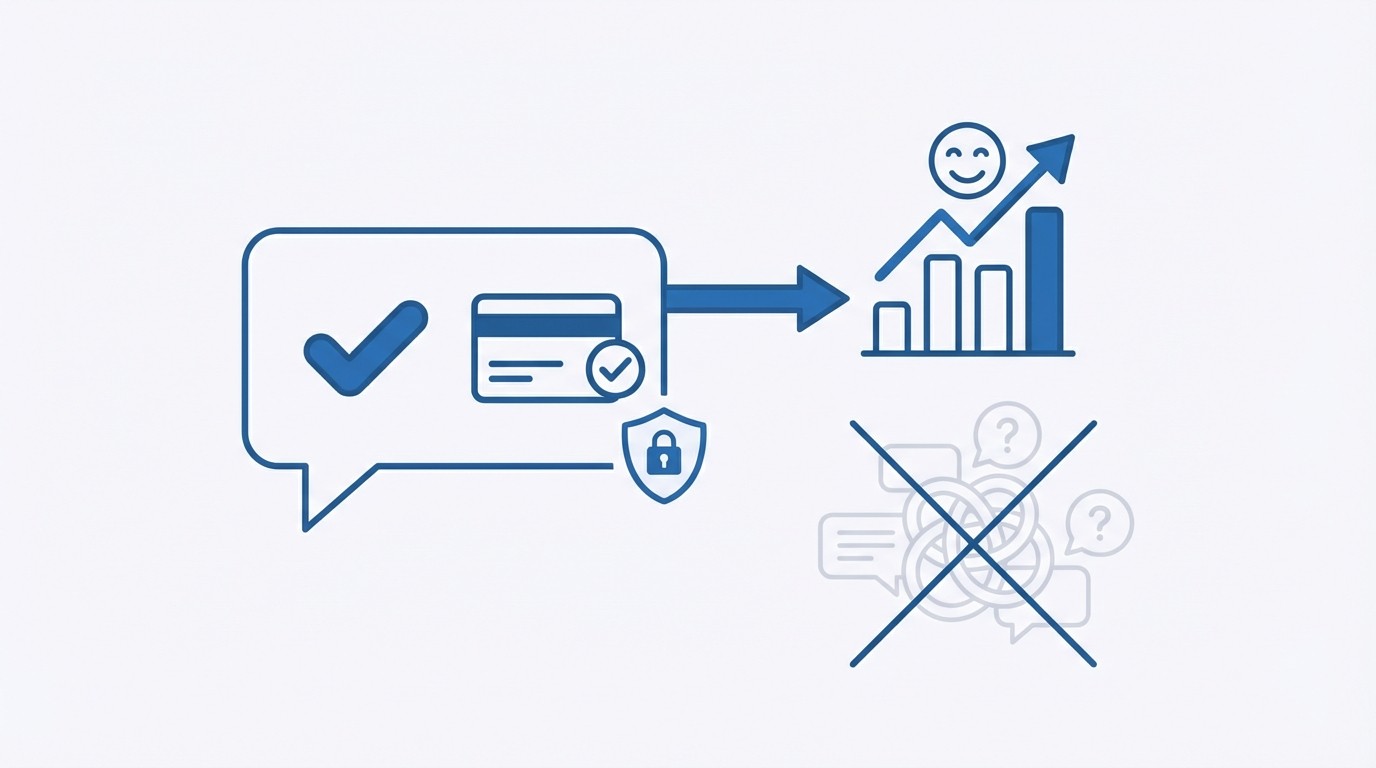
Resolution inside the message is the most reliable way to raise customer experience, cut cost, and reduce risk. Customers act faster when they can complete a payment, set a plan, or confirm details without changing channels. The moment the outcome writes back to core systems, the case is done and trust increases.
Conversations Without Completion Create Operational Debt
Conversations that do not finish the task create work you carry forward. Every portal login, form rekey, or agent transfer is a chance to fail, a place where people drop or data gets lost. You pay for that later in callbacks, manual reconciliation, and compliance reviews. The longer the loop stays open, the more it costs and the more your team struggles to explain delays.
It is also a measurement problem. Teams celebrate open rates and bot containment while customers still cannot resolve what they came to do. That gap confuses stakeholders and hides the real issue, which is missing completion. When you switch to resolution metrics, patterns jump out fast. You see which messages get action, which steps block progress, and where writebacks fail.
Measure Outcomes, Not Message Volume
Count what finishes. Completion rate, writeback success, time to resolution, and deflection tell you if experience is improving. Message volume and conversation count do not. Those are activity measures, not outcome measures. They can rise while customers still wait for a balance update.
Leaders who shift to outcome metrics make better tradeoffs. For example, fewer messages with higher completion beats more messages that push traffic to agents. Incentives change as well. Product owners start removing steps that do not move the needle, instead of adding new flows that look impressive but do not close cases.
The Hidden Bottleneck: Channel Handoffs and Missing Writebacks
Journeys often break at channel switches and at the last mile where outcomes need to write back. Each handoff increases effort, and missing writebacks undo trust. A customer who paid or updated details expects to see it reflected immediately. When they do not, they call.
Where Journeys Break: Logins, Portals, and Transfers
Most drop‑offs happen at the moment of action. You send a link, they face a login screen. Password resets fail, or the portal session times out. Some switch to a call, wait in a queue, and repeat identity checks. Every step adds friction and creates room for error.
Channel sequencing can also be wrong for the audience. Messages arrive at off hours, or on channels where consent is stale or confidence is low. So people ignore them. Even when intent is high, your system may force a detour that kills momentum. Resolve that by keeping the action where it starts, inside the message, with identity validated in place and steps limited to what policy allows.
Writeback Gaps Erode Trust and Increase Cost
Completion is not real until systems of record reflect it. That is the rule. When writebacks fail or lag, customers assume the worst. They call to confirm. Agents verify, then update fields manually, which introduces mistakes and creates audit gaps.
You can spot this failure mode in your reports. Repeated follow‑ups on accounts that show recent activity. Agent wrap‑ups that reference “manual update.” Disputes caused by stale balances. The fix is idempotent writebacks and an audit trail that shows what changed, who consented, and when. Without that, even good experiences feel wrong because the evidence is missing.
The Real Cost of Fragmented Multi-Channel Journeys
Fragmented journeys waste time, raise handling costs, and increase risk. Teams lose hours to retries and escalations when a customer cannot finish in one flow. Industry data echoes this pattern across sectors and channels.
Time, Rework, and Avoidable Support Calls
A single failed handoff can trigger a chain reaction. Customers try again, then call. Agents repeat verification, rekey data, and chase approvals. That rework steals time from complex cases. It also frustrates staff who know the process should have finished on the first pass.
Rework creates risk. Manual entry invites errors, and missing evidence weakens your audit posture. You also lose insight. When outcomes do not write back reliably, analytics skew and leaders debate the wrong levers. Fixing the last mile removes these failure points in one move, and you feel the change fast in cycle time and call volume.
Evidence From Industry Benchmarks
Multiple studies show customers prefer low‑effort, message‑native interactions and reward brands that deliver them. The 2024 State of Customer Engagement from Twilio reports that personalized, channel‑native engagement improves satisfaction and spend when it reduces friction at the moment of action. You also see higher adoption when people can act in their channel of choice, with identity and consent handled in the flow.
Twilio’s 2024 report links clear outcomes to higher loyalty when interactions are personalized and low effort. Read the Twilio State of Customer Engagement 2024 for details.
Zendesk finds that less effort correlates with higher CSAT and retention, especially when you eliminate channel switching. See the Zendesk CX Trends 2024 analysis.
McKinsey’s research shows that well‑orchestrated journeys drive higher revenue and lower cost through consistent, end‑to‑end design. Review McKinsey’s omnichannel insights.
These sources agree on the same point: finish the task where the customer already is.
What It Feels Like When Customer Experience Breaks Across Channels
Leaders see rising activity but flat resolution. Agents work harder yet clear fewer cases. Customers try to be reasonable, then repeat themselves because the system lost state. That is the daily reality of broken journeys.
Leaders Juggle Metrics That Do Not Correlate
Dashboards glow green for sends, opens, and bot retention. Escalations still climb. You review flows, add steps, and see no movement on actual completion. It is confusing and tiring. The numbers that move are the ones tied to work that never finishes: callbacks, average handle time, and case aging.
You may be asked to add channels, swap tools, or launch a new portal. None of that fixes the core mistake. You are measuring talk, not outcomes. The fix starts by switching the scoreboard to completion, writeback success, time to resolution, and deflection. When that changes, the rest follows.
Agents Handle Routine Work That Should Finish Itself
Agents spend time on identity checks, form rekeying, and policy math. None of that needs human judgment for routine, policy‑bound work. It wears people down and delays the real edge cases that do need skill and empathy.
Customers feel it too. They start on SMS, get pushed to a portal, then wait on a call. The experience feels wrong even if each step is polished. The only cure is removing the extra steps. Finish in the message and write back to the system of record so agents can focus on exceptions where they add value.
A Practical Playbook for Improving Customer Experience in Multi-Channel Environments
To improve customer experience across channels, design for secure, in‑message completion first, then orchestrate channels to drive people to that action. Identity, policy, and evidence need to live in the same flow. When the outcome writes back immediately, the case is truly done.
Design for Completion Inside the Message
Start with the highest‑volume routine tasks: payments, plan setup, contact updates, document uploads, or attestations. Define what “done” means in system fields, not in conversation notes. Build a single flow that validates identity, shows only eligible actions, captures consent, and confirms the result. The final step writes back with idempotency, so retries never double‑post.
Security and trust are essential. Use signed deep links or one‑time codes. Keep the interface in the channel where the conversation started. Limit choices to policy‑valid paths so customers do not guess or pick wrong. Then confirm the change in plain language and, when relevant, show the updated balance or plan reference.
Start Small, Prove It, Then Scale
Pick one workflow and measure it end‑to‑end. You are proving a system, not a campaign. The goal is stable completion at low effort with reliable writebacks and clean audit trails.
To run the pilot:
Define the resolution outcome in system terms, including exact fields to update.
Map identity and eligibility rules so only valid choices appear.
Instrument every step, from delivery to writeback, so you can see failure points.
Set a target for completion rate, time to resolution, and deflection, then run until stable.
When you hit targets, expand to the next workflow with similar structure. Keep the same playbook and avoid branching into exceptions until the core path is solid.
Ready for customer communication workflows on autopilot? Get in touch.
How RadMedia Enables Multi-Channel Customer Experience Resolution
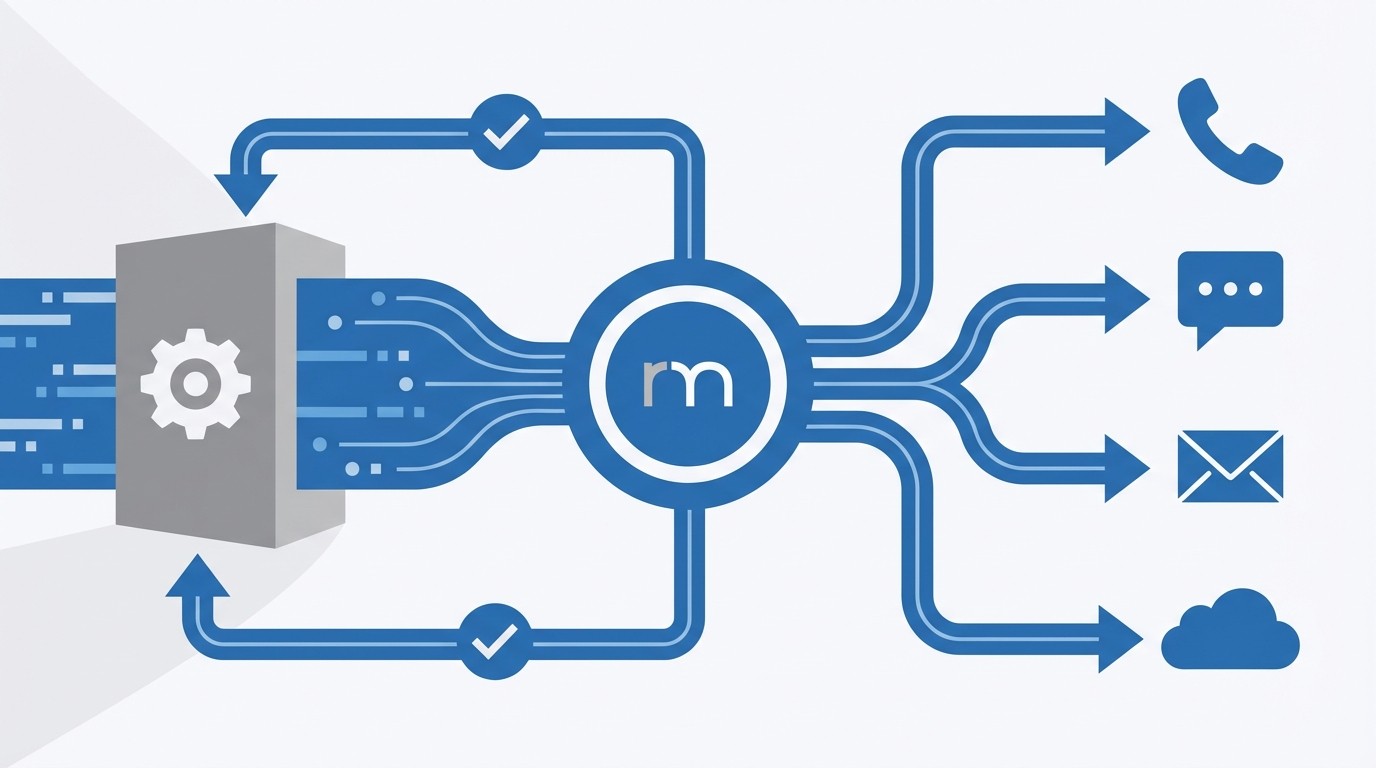
RadMedia turns the playbook above into an operational system. Managed integration connects legacy cores and modern APIs so outcomes write back safely. Channel orchestration drives action, and mini‑apps complete tasks inside the message with identity and consent handled in flow.
Managed Integration That Closes the Loop
RadMedia owns adapters, authentication, schema mapping, and error handling so operations teams do not wait on client engineering. Triggers from billing, collections, policy, and compliance feed context into outreach and self‑service. When a customer completes an action, results write back idempotently to systems of record. That removes the rework you saw earlier and cuts the risk of double‑posting under intermittent network conditions.
The benefit is real in your metrics. The minutes you used to spend reconciling fields drop because writebacks succeed. Follow‑up calls decline because balances, flags, notes, and documents update immediately. Audit confidence increases because every input and writeback has a timestamp and a trail.
Mini-Apps, Orchestration, and Autopilot Working Together
Three capabilities make resolution reliable. In‑message mini‑apps present only policy‑eligible actions, collect structured inputs, capture consent, and finalize without portal detours. Omni‑channel orchestration sequences SMS, email, and WhatsApp to reach people at the right time, on the right channel, within consent and frequency caps. The Autopilot engine encodes policy, advances valid cases, and routes exceptions to agents with context when needed.
Put together, they address the costs from earlier:
Fewer handoffs, because action stays in the message and identity is validated in flow.
Less rework, because outcomes write back idempotently to the system of record.
Faster resolution, because orchestration learns which times and channels move each workflow forward.
You do not need to rebuild your stack. RadMedia connects to your systems, emits telemetry for deliveries, actions, validations, and writebacks, and exposes exports for your data lake or SIEM. That lets leaders measure completion, time to resolution, writeback success, and deflection with confidence, then tune flows using evidence rather than guesses.
Ready for customer communication workflows on autopilot? Get in touch.
Conclusion
Improving Customer Experience in Multi-Channel Environments is not about more conversations; it is about more completions. Keep the action inside the message, validate identity, show only policy‑safe options, and write back to systems of record so the result is real. Measure resolution, not volume, and the numbers that matter will move.
If your team wants the outcomes without the integration burden, RadMedia is built for that shift. Managed back‑end integration, in‑message mini‑apps, omni‑channel orchestration, policy‑aware automation, and guaranteed writebacks work together to reduce cost‑to‑serve and raise trust. The loop closes, the evidence holds, and your queue finally reflects the work that is done.
Ready for customer communication workflows on autopilot? Get in touch.