
How to Choose the Right Customer Service Platform for Your Business
Choosing the right customer service platform hinges on its ability to resolve tasks within messages and write back to your systems. Focus on completion metrics, not just contact volume, to improve efficiency and customer satisfaction.
Choosing a customer service platform the right way starts with outcomes, not features. If you are asking How to Choose the Right Customer Service Platform for Your Business, focus on one proof: can it resolve routine tasks inside the message and write results back to systems of record. Without that, you buy conversations, not completion.
The rest follows. Identity, consent, channel reach, and reporting matter, but they exist to support safe completion and auditable writebacks. Get that right and you reduce cost-to-serve, shorten cycle times, and cut avoidable agent work. Get it wrong and you create new queues, more retries, and frustrated customers who still end up calling.
Key Takeaways:
Start with a single test: can the platform complete tasks inside the message and write back to your core systems.
Define “completion” up front and measure resolution, writeback success, and time-to-resolution, not just contact volume.
Avoid portal detours and heavy handoffs that cause drop-off, rework, and support calls.
Security, identity, and consent controls must be friction-right and auditable.
Run a time-boxed pilot on one high-volume workflow and prove outcomes before you scale.
Ask vendors to show audited writebacks and exception handling in real data, not slideware.
Favor managed integration and policy-aware orchestration over DIY toolkits that stall at the last mile.
Choosing a Customer Service Platform Starts With One Test: Resolve Inside the Message
Choosing the right customer service platform begins with a direct test: can it complete the task inside the message and write the outcome back to systems of record. Platforms that only start conversations create hidden queues and manual wrap-up. A practical example is payment remediation that posts updates immediately after a customer authorizes a card change.
Resolution Beats Conversation Metrics
Resolution is the only metric that settles the work. Contact volume, handle time, and bot containment can look healthy while completion lags. That mismatch hides cost. Every unfinished case becomes operational debt that rolls into tomorrow’s queue, increases retries, and chips away at trust.
A resolution-first view is simple to run and hard to fake. Pick one routine workflow, like overdue payment outreach. Validate identity inside the message, present only policy-eligible actions, and capture consent. When the customer acts, write the outcome back to the ledger. Measure completion rate, writeback success, and time-to-resolution. These numbers tell you if the platform actually finishes the job.
Teams often worry they will need new staffing or retraining to try this. In practice, you can fence a small segment and keep existing processes intact for the rest. The learning comes fast. You will see where customers hesitate, where policies block progress, and whether your writebacks hold under real network conditions.
What to track in this test:
Completion rate vs. send volume
Writeback success and retry counts
Time-to-resolution and deflection from agents
Why Writebacks Decide Trust
A decision only becomes real when systems of record reflect it, payments posted, plans created, attestations stored. Without confirmation in your core systems, customers feel ignored and agents lose context. The cost is double: rework to fix records and avoidable support calls from people who acted in good faith but still see stale balances.
Reliable writebacks are not only technical mechanics. They are a promise to customers and to your internal auditors. Idempotency protects against duplicates, retries guard against transient failures, and audit logs prove what happened. When these controls exist, operations leaders can move volume confidently and reduce risk in one motion.
Vendors will claim they “integrate easily.” Ask for evidence. You want to see how they map schemas, handle downstream errors, and avoid partial state. If they cannot show how outcomes land in your system of record with proofs you can audit, you have your answer.
The Root Cause Most Teams Miss: Portals and Handoffs Break Completion
The real problem is not a lack of channels or automation. It is the split between outreach in one place and action in another, which forces customers to switch context at the moment of decision. That detour creates drop-off, manual reconciliation, and slow cycles. Closing the loop inside the message fixes the last mile.
Portal Detours Create Abandonment
Customers do not abandon because they do not care. They abandon because you asked for a login, a download, or a channel switch when they were ready to act. Password resets, app stores, and extra forms add friction. Each step is a chance to lose them, and many do not return.
When action happens inside the message, momentum is preserved. Identity checks can be right-sized to the risk. Policy-eligible choices reduce confusion. Payment and document capture happen in one flow. The result is fewer missed steps, fewer retries, and fewer calls to agents who would prefer to work exceptions anyway.
Leaders sometimes assume portals are unavoidable for compliance. Identity and consent can be enforced in-message without weakening controls. The key is using signed links, one-time codes, and clear consent capture, plus writebacks and logs that satisfy audit and regulatory teams.
Integration Is the Hard Part, Not Drawing Flows
Drawing flows is easy. Wiring them to legacy cores and modern APIs without breaking under real traffic is the hard part. Many pilots stall here. Intent is detected, messaging goes out, and then a human has to step in because the last mile touches a system the toolkit cannot safely update.
The symptom looks like “the bot escalated” or “the case needs review,” but the cause is a missing adapter, weak error handling, or no idempotent writes. The fix is managed integration that owns adapters, mappings, and retries. Without it, volume means more failures, not more outcomes.
You can test this before you buy. Ask vendors to demonstrate a complete writeback on your data model, including a simulated downstream error and recovery. If they cannot, you risk buying more front-end activity with the same back-end bottleneck.
The Cost of Choosing Wrong: Longer Cycles, Higher Spend, More Risk
Choosing the wrong platform leads to longer cycles, higher support load, and greater compliance exposure. The cost shows up as abandonment during handoffs, manual wrap-up to fix partial states, and avoidable calls from customers who thought they finished. A retail bank saw abandonment jump above 50 percent when a scale-up pushed customers into long call queues.
What Abandonment Looks Like in Practice
One bank scaled an interactive campaign fourfold and routed traffic to new inbound lines. Call waits stretched to two minutes. Abandonment spiked above half of all attempts. Customers were trying to do the right thing. The system got in their way. Investment was wasted, and relationships were strained.
You do not need a call center to feel the same pain. Portals and bots create similar cliffs. A customer clicks a link, faces a login, and quits. Or a bot detects intent and then punts to email with a promise of follow-up. Meanwhile, back-end records remain unchanged, and work rolls over.
The cure is removing those cliffs. In-message action with real-time writebacks turns attempts into completions. Escalation still exists, but it is reserved for true exceptions with full context attached. That shift lowers unit cost immediately and compounds as volume grows.
Risk, Compliance, and the Price of Weak Controls
Weak identity, consent, and audit controls add risk that is easy to underestimate. If you expose actions without proper verification, you risk the wrong person taking the wrong action. If you cannot prove consent or completion later, you face disputes you cannot resolve cleanly.
Standards exist for a reason. NIST’s digital identity guidance outlines assurance levels and methods for strong yet practical verification. You can review it here: NIST SP 800-63 Digital Identity Guidelines. Payment handling should respect PCI DSS requirements to avoid costly lapses. See the overview at the PCI Security Standards Council. Consent rules on messaging channels also matter; WhatsApp’s business policy sets clear expectations you can reference at the WhatsApp Business Policy.
Tie your evaluation to these controls. Verify how identity is validated, how consent is captured, how logs are stored, and how outcomes are proven. The price of getting this wrong is measured in disputes, regulatory findings, and customer trust lost.
What It Feels Like When the Platform Fights You
Leaders and teams feel the pain quickly. The wrong platform means late-night manual wrap-up, agents stuck on routine tasks, and leaders squinting at dashboards that show activity, not outcomes. Frustration grows because the work feels busy but the numbers do not move.
Late Nights and Manual Wrap-Up
Manual wrap-up is the quiet thief. A case closes in the messaging tool, but the core system still needs an update. Someone rekeys data, chases a screenshot, and moves on. Repeat this across thousands of cases and you lose days of productive time. Morale pays the price alongside your budget.
It is not just time. Manual steps introduce errors. A mistyped amount, a missing note, or a lost attachment turns into another ticket and another call. Customers lose patience. Agents feel blamed for a process they cannot fix. That is why completion with writebacks is the line you draw early.
When you remove these steps, teams notice immediately. The queue shrinks, escalations become more interesting, and wrap-up turns into monitoring rather than rework. Confidence returns because the system holds the truth.
Agents on Routine, Customers at Logins
Agents do valuable work when they handle exceptions and judgment calls. They burn out when forced to process routine, policy-bound tasks the system should finish. Customers feel the mirror image. They stand ready to act, then hit a login wall and give up.
A better pattern matches people to edge cases and automation to rules. Customers act where they already are. Identity is verified, options are constrained by policy, and completion is recorded without handoffs. Agents see fewer repetitive tickets and have full context when a true exception arrives.
Leaders then get the right lens on performance. They can track completion, deflection, and time-to-resolution instead of guessing from proxy metrics. That clarity shapes better planning and steadier operations.
How to Choose the Right Customer Service Platform: A Resolution-First Method
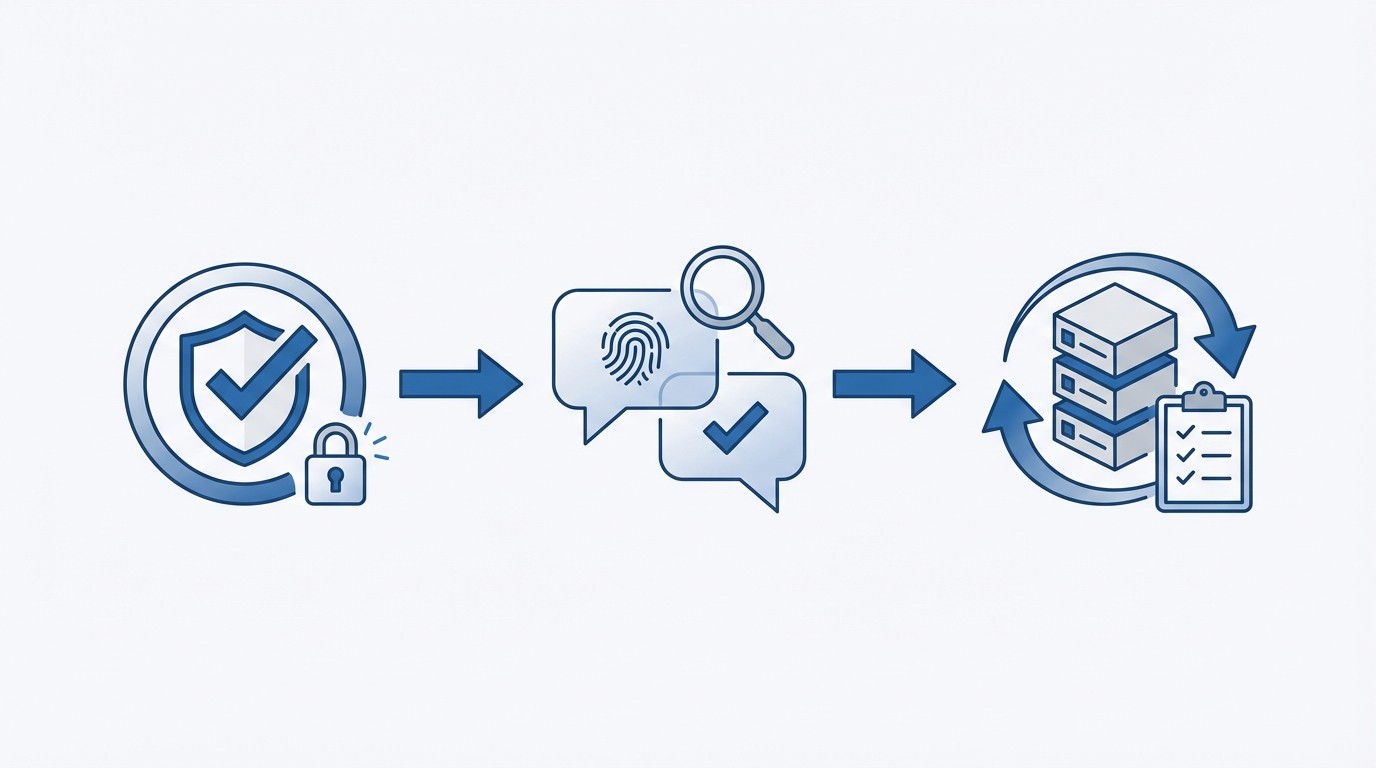
You choose the right platform by defining completion up front, testing identity and consent in-message, and proving audited writebacks in a narrow pilot. This method prioritizes resolution, not conversation, which predicts cost, speed, and customer outcomes. A 30-day test on one workflow is enough to make a confident call.
Define Completion and Proof Up Front
Start by writing a plain definition of completion for your candidate workflow. For billing remediation, it might be “payment method updated and posted to the ledger, with consent captured and audit log stored.” For compliance refresh, it might be “documents uploaded, identity verified, attestation recorded, and flags cleared.”
Turn that definition into metrics and evidence. What will you count as complete, which fields must update, which logs must exist, and how will you validate them. Without this clarity, you risk measuring conversation instead of resolution and celebrating activity that did not actually fix the problem.
Make the evidence review a habit. Sample outcomes weekly during the pilot. Confirm that records updated correctly, that consent is present, and that retries did not create duplicates. These checks surface issues early and build trust with risk and audit teams.
Evaluate Identity, Consent, and Security Controls
Identity, consent, and secure transport are not nice-to-haves. They are table stakes that protect customers and your brand. Ask how the platform validates identity in-message, how consent is captured and stored, and how links are protected against misuse. Reference established guidance like NIST SP 800-63 Digital Identity Guidelines for assurance patterns that balance risk and friction.
Payment handling should align with PCI DSS. Messaging must respect channel policies such as the WhatsApp Business Policy, including consent, frequency, and content rules. These references keep your evaluation grounded and prevent expensive rework later.
Finally, confirm auditability. You need timestamps for every key event and a secure way to export logs to your SIEM or data lake. Your security and compliance stakeholders will ask for this on day one. Bring them into the pilot early so requirements are clear.
Run a 30-Day Pilot That Measures Resolution
Set up a small, representative pilot. Keep your current process for most customers and route a limited segment into the new flow. Then measure what matters.
Define the trigger, eligible actions, and completion proof.
Configure identity, consent, and the smallest outreach sequence that moves people to act.
Verify writebacks on day one, including a simulated downstream error and recovery.
Track completion rate, time-to-resolution, writeback success, and deflection weekly.
If the numbers move the way you expect, you have a path to scale. If they do not, the pilot will show you why.
Ready to validate this approach on your highest-volume workflow? Ready for customer communication workflows on autopilot? Get in touch.
How RadMedia Enables the Resolution-First Method
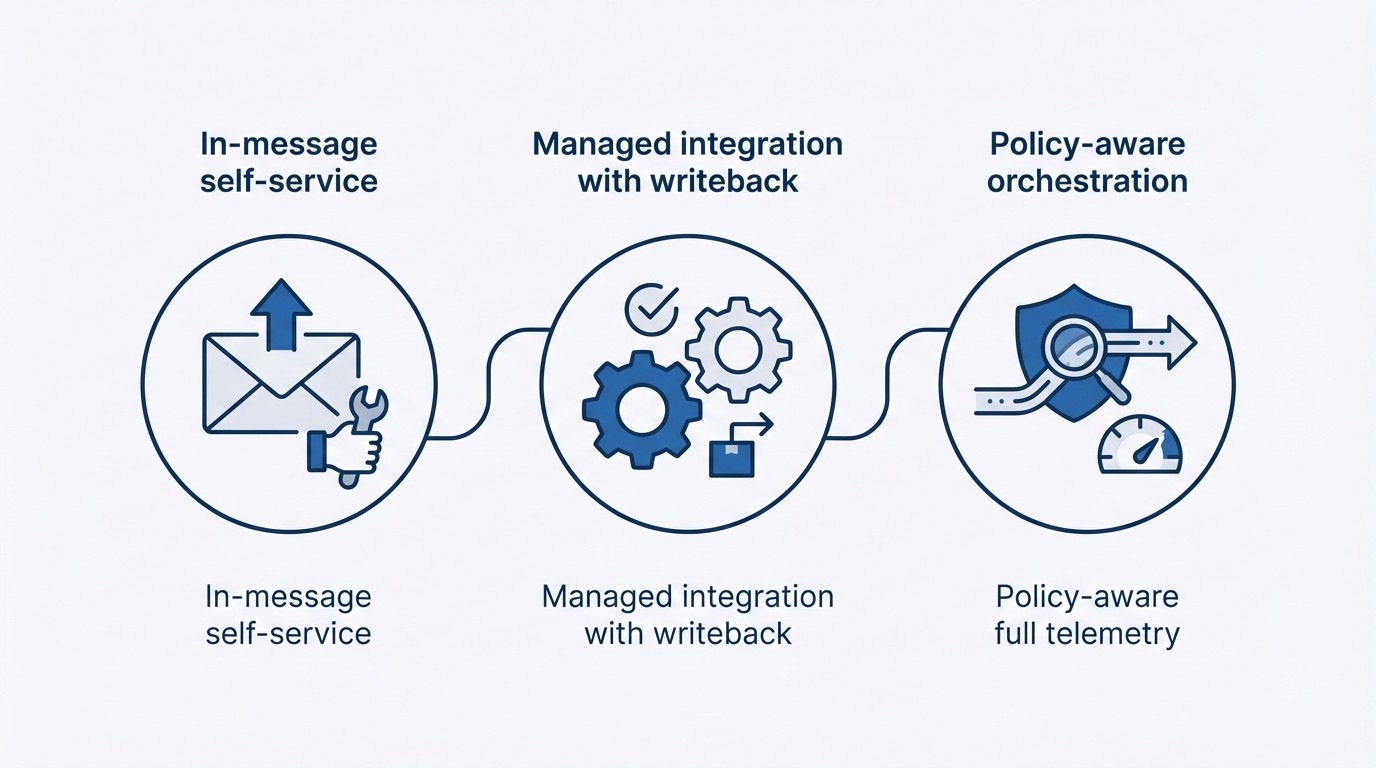
RadMedia turns the method above into standard practice by providing in-message self-service, managed integration with writeback guarantees, and policy-aware orchestration with full telemetry. The result is closed-loop resolution that reduces abandonment, cuts manual wrap-up, and gives leaders evidence they can trust.
In-Message Self-Service That Finishes the Task
RadMedia’s mini-apps live inside SMS, email, and WhatsApp so customers act where they already are. Identity is validated with one-time codes, known-fact checks, or signed deep links. The mini-app presents only policy-eligible actions, like updating a card, choosing a compliant plan, uploading documents, or signing an attestation.
When customers act, outcomes sync automatically to systems of record. That closes the loop and removes manual wrap-up that saps time and creates errors. In practice, this shift tackles the exact abandonment and rework you saw in earlier sections by eliminating portal detours and extra steps at the moment of decision.
Fewer handoffs, audited writebacks, lower unit cost. That is the operational shift leaders want to see. Ready for customer communication workflows on autopilot? Get in touch.
Managed Integration, Writebacks, and Orchestration You Can Audit
RadMedia manages back-end integration so you do not wait on scarce engineering. Adapters, authentication, schema mapping, retries, and idempotency are handled. Triggers from billing, collections, policy, and compliance systems feed context into outreach and mini-apps. When a customer acts, RadMedia writes the outcome back and preserves an audit trail for every key event.
The Autopilot Workflow Engine encodes your eligibility rules, time-based logic, and exception paths. Routine work advances without agent touch. When a rule blocks progress, the case escalates with full context so people start at the solution, not discovery. Telemetry spans deliveries, opens, actions, validations, and writebacks, so you measure resolution rather than guessing from proxy metrics.
This combination addresses the specific costs surfaced earlier. Abandonment drops because action happens in-message. Manual wrap-up shrinks because outcomes write back automatically. Compliance risk decreases because identity, consent, and audit controls are baked in. That is how RadMedia turns resolution-first from a pilot into the way you run.
Want to see audited writebacks and exception handling on your data model? Ready for customer communication workflows on autopilot? Get in touch.
Conclusion
Choosing a customer service platform is a resolution decision. Define completion, test identity and consent in-message, and demand audited writebacks that your systems of record confirm. Run a focused pilot, measure resolution, writeback success, and time-to-resolution, then scale what works.
If you want a partner that handles integration, finishes tasks inside the message, and proves outcomes with telemetry and logs, you are ready for a resolution-first rollout. Ready for customer communication workflows on autopilot? Get in touch.