
Implement Managed Back-End Integration Without Burning Engineering Cycles
Implementing Managed Back-End Integration helps reduce operational costs by ensuring successful writebacks and minimizing engineering effort. Focus on resolution metrics and offload error handling to maintain efficiency and avoid operational debt.
Most ops teams buy messaging tools, draw clean flows, and expect cost to drop. Then reality hits. Writebacks fail quietly, agents rekey outcomes, and customers still bounce between channels. If your goal is lower cost-to-serve, you need to implement Managed Back-End Integration Without Burning Engineering Cycles. The work that matters lives behind the message, not inside the visual builder.
The polarizing idea is simple. No-code tools sell speed, but the bill arrives at reconciliation time. The hard part is safe, idempotent writebacks to systems of record. Handle that well and conversations turn into completion. Handle it poorly and you accumulate operational debt with every campaign.
Key Takeaways:
Treat resolution as the primary metric and design outreach to finish inside the message
Define completion rate as: successful writebacks confirming the intended outcome ÷ initiated workflows for that outcome
Structure adapters for legacy cores with clear schemas, stable auth, and batch options to keep integrations maintainable
Use idempotency keys and backoff with jitter so writebacks never double-post or lose state
Run strong identity, audit logs, and telemetry to cut reconciliation workload for ops and risk
Start with one high-volume workflow and measure completion rate, time-to-resolution, and writeback success
Offload adapters and error handling to a managed service to protect engineering capacity
Set SLOs for writeback success (e.g., ≥99% first-write success) and alert on breaches rather than on message sends
Automation Without Safe Writebacks Increases Operational Debt
Automation that starts conversations but fails at writeback raises cost, not lowers it. Every handoff adds risk of duplication, missing records, and manual cleanup. A failed payment campaign that ends in a portal or a call means more steps, more friction, and more room for error.
Why Resolution, Not Conversation, Reduces Cost
Resolution inside the message cuts cycle time and eliminates rekeying. When outcomes write back directly to systems of record, you remove queues and shrink unit cost. A “talk to us” sequence looks busy, yet reconciliation later proves the work moved; it did not finish.
Most teams still measure contacts, handle time, and bot containment. Those numbers can look “up and to the right” while completion lags. The mistake is optimizing for dialogue while the real bottleneck sits in back-end execution. Focus on completion rate, time-to-resolution, and writeback success. That is where cost moves.
The shift changes daily habits. Writers and campaign owners point every message to an in‑message task, not a portal. Ops treats writeback telemetry as the truth, not agent notes. Leaders stop celebrating “more conversations” and start asking which workflows finish without people.
Where No‑Code Journeys Break
Visual builders rarely own adapters, authentication, schema mapping, or idempotent writes. That gap forces IT to bolt on custom code that ages poorly. When policies change or a vendor updates an API, the patchwork cracks. You feel it as weekend fixes and brittle error handling.
Common anti‑patterns include:
Posting to multiple systems without a committed order of operations
Relying on client-side dedupe instead of server-enforced idempotency
Treating transient 5xx as hard failures (or vice versa) and losing state
I’ve seen teams build clever trees that detect intent, then stall at the last mile. Payments post twice. Address updates save in one system but not another. Agents reconcile by hand and trust erodes. The diagram looked complete, yet the system of record tells a different story.
A durable solution treats integration as a product, not a project. Stable connectors, schema contracts, and tested retry paths prevent surprises. Without that base, every “quick win” becomes future cleanup.
Integration, Not Messaging, Blocks Resolution
Messaging friction hurts, but broken integration kills completion. The core problem is that legacy systems and modern APIs have different auth, schemas, and error patterns. A safe writeback must normalize all three before the message ever goes out.
The Real Bottleneck Hides Behind the UI
The first 90% looks easy; you can assemble messages and branch logic in hours. The last 10% decides if the work finishes. Identity verification, eligibility checks, transaction posting, and audit trails must align or you create inconsistent state.
Ops leaders often see symptoms first. Disputes reopen, balances drift, or compliance flags linger. Engineers then chase logs across tools to find the missing writeback. The UI never warned you, because the UI does not own the write. The root cause is unmanaged integration.
So the rule is blunt. If a tool does not guarantee writebacks to systems of record, it cannot own resolution. Use it for awareness, not completion.
What Legacy Cores Expect From Adapters
Legacy cores expect stable payloads, enforce strict sequencing, and punish timeouts with partial state. Good adapters respect that world. They validate input, map fields predictably, and recover with idempotent retries.
Strong patterns include:
Clear schema contracts with versioning, so upstream changes never surprise the core
Authentication that supports rotation and fallback without downtime
Batch and synchronous modes, selected by policy, to balance speed and safety
Circuit breakers and dead‑letter queues to contain blast radius during incidents
When adapters behave this way, your messaging layer stops guessing. It submits clean transactions and trusts the confirmation it receives.
The Measurable Cost of Broken Writebacks
Every failed or duplicated writeback creates manual work, risk exposure, and customer frustration. The costs stack fast, because teams repeat the same mistake across campaigns. Quantify it once, and the case for managed integration writes itself.
Time, Money, and Risk on the Table
Manual reconciliation consumes hours each week. For example: 5,000 events × 2% misfires = 100 fixes. At 6 minutes per fix, that is ~10 hours of agent time weekly. Those minutes convert to payroll and opportunity cost that never shows up in the original business case.
Compliance risk climbs when audit trails are thin. A consent captured in a message but not written back is a gap. A payment authorized twice is worse. Leaders feel the pressure in audits and escalations, not in the dashboard that celebrates message sends.
Noise also damages trust. Customers who “already did that” grow impatient when the system disagrees. Collections promises slip, service levels wobble, and teams lose credibility inside the org. That is a hidden tax on momentum.
The Engineering Burn Few Teams Count
Every exception route and quick fix steals time from roadmap work. Engineers babysit brittle scripts, chase intermittent 500s, and write glue code to smooth out edge cases. The team moves slower next quarter because they are still paying last quarter’s debt.
Preventing duplicates requires idempotency keys and server‑side enforcement. Stripe explains the concept well in its guidance on idempotency: https://stripe.com/docs/idempotency. Resilient retries need backoff with jitter to avoid thundering herds, which AWS details here: https://aws.amazon.com/blogs/architecture/exponential-backoff-and-jitter/. Skip either and you invite downtime, duplicate posts, or both.
The pattern is consistent. Underestimate integration, overestimate the UI, and the cleanup never ends.
The Human Experience of Reconciliation Work
People feel this problem before spreadsheets prove it. They live inside exceptions, escalations, and late-night checks. That experience is the signal you should not ignore.
What It Feels Like When Systems Disagree
It is Friday afternoon and dashboards look good. Sends are up, open rates are solid, and the campaign “worked.” Then finance flags mismatched balances. Agents jump in to fix records by hand while ops rebuild trust with customers who already took action.
Leaders race to answer simple questions. Which records did not write back? Which ones wrote twice? Where is the authoritative trail? The team searches logs across four tools and still cannot give a clean answer by Monday.
That cycle drains focus. You start planning around exceptions instead of outcomes.
Why Ops Teams Lose Confidence
Ops thrives on predictable systems. When writebacks are unreliable, teams stop believing their own metrics. They pad SLAs, escalate faster, and avoid automation for fear of silent failure. The culture shifts from proactive to defensive in a single quarter.
A better setup feels different. Identity checks succeed without hassle, actions fit policy, and outcomes appear in systems of record fast. Ops stops hedging, because the evidence is reliable.
Confidence is a leading indicator. When it returns, adoption follows.
How to Implement Managed Back-End Integration Without Burning Engineering Cycles
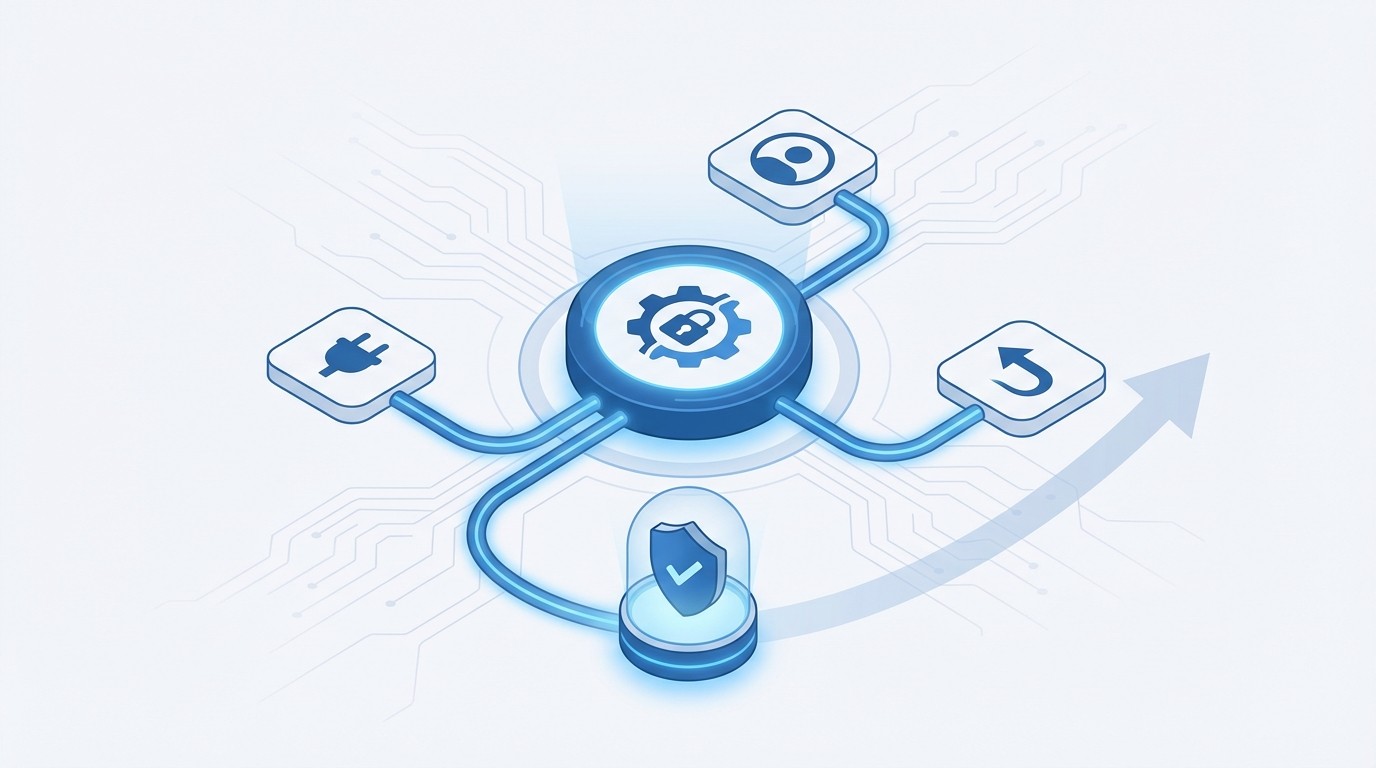
You implement managed integration by treating adapters, identity, and writebacks as a shared service with clear contracts, not as scattered project tasks. The approach starts small, locks down safety, and proves resolution outcomes before scale.
Start With One High‑Volume Workflow
Pick a routine workflow with measurable outcomes, for example failed payment remediation or address updates. Define the exact resolution states, the required fields, and the acceptable timing for writes. This creates a clear target that engineering and ops both understand.
Then map current triggers and systems of record. Identify where data originates, where it must land, and which policies gate the action. Most teams discover gaps here that explain past failures. Closing those gaps first prevents wasted work later.
With that preparation, a pilot can focus on completion, not experiments.
A short numbered playbook helps:
Define completion states and evidence required for audit
Map source systems, payloads, and target schemas with version control
Choose identity checks proportionate to risk, then test failure paths
Implement idempotency keys and retries with jitter on all writes
Establish SLIs/SLOs for writeback success and time-to-resolution; alert on SLO breach
Roll out to a small segment, measure completion and writeback success, then expand
Design Idempotent Writebacks and Resilient Retries
Idempotency means the same request can be sent many times but only applied once. Use strong keys that combine business identifiers with timestamps or sequence numbers. Validate server responses against those keys before acknowledging success. Enforce idempotency on the server side, don’t rely solely on clients.
Retries should be patient and randomized. Backoff with jitter reduces collision risk during outages. AWS outlines why jitter matters: https://aws.amazon.com/blogs/architecture/exponential-backoff-and-jitter/. Combine that with circuit breakers and timeouts to protect downstream stability during incidents. Capture correlation IDs so you can trace a request across systems during investigation.
Done well, these patterns eliminate duplicate transactions and lost writes. They also make incidents less chaotic to manage.
Strengthen Identity, Audit, and Telemetry
Identity controls must match the action’s risk. For many workflows, one‑time codes and known‑fact checks strike the right balance. NIST’s digital identity guidance offers useful context in SP 800‑63‑3: https://pages.nist.gov/800-63-3/. Keep it simple for routine tasks, stronger when money moves.
Audit logs should capture who did what, when, and with what outcome. Telemetry should expose deliveries, opens, actions, validations, and writebacks. Define authoritative sources for each signal and avoid double-counting. That is how you prove resolution and find issues fast without spelunking across tools.
How RadMedia Enables Managed Integration and Closed‑Loop Resolution
RadMedia turns the methodology above into an operational system. It manages back‑end adapters, orchestrates omni‑channel outreach, enables in‑message self‑service, drives policy‑aware progression with Autopilot, and guarantees closed‑loop writebacks with full auditability. The result is resolution inside the message and fewer engineering hours spent on glue code.

Managed Back‑End Integration You Do Not Have to Build
RadMedia owns adapters, authentication, schema mapping, and error handling so workflows transact safely. Triggers from billing, collections, policy, and compliance systems feed context into outreach and mini‑apps, then outcomes write back idempotently to systems of record. That eliminates the manual reconciliation highlighted earlier and preserves consistency even when networks misbehave.
Teams avoid custom scripts and brittle middleware. The integration layer is productized, versioned, and monitored, so changes in policy or vendor APIs do not become emergencies.
In‑Message Self‑Service and Autopilot Orchestration
Customers complete tasks where they already are, inside SMS, email, or WhatsApp, using secure, no‑download mini‑apps. Identity is verified with one‑time codes, known‑fact checks, or signed deep links. The app only presents policy‑eligible actions like update card, authorize a payment, choose a compliant plan, confirm details, upload documents, or sign an attestation.
Autopilot advances each case from trigger to completion using policy‑aware rules, time‑based logic, and exception routing. If a rule blocks completion, the case escalates to an agent with full context. This removes variability, eliminates rekeying, and keeps people focused on edge cases rather than routine work.
Closed‑Loop Writebacks, Security, and Telemetry
When customers complete a mini‑app, RadMedia writes outcomes directly to systems of record, updating balances, posting arrangements, clearing flags, and attaching notes and documents. Idempotent writebacks, retries with backoff, and circuit breakers protect downstream stability. Security controls include TLS in transit, encryption at rest, role‑based access, SSO options, signed deep links, and full audit logging, so regulated teams can move fast without risk.
Telemetry tracks deliveries, opens, actions, validations, writebacks, and time‑to‑resolution. Leaders see completion rate improve while agent deflection rises. That directly addresses the time, money, and risk costs outlined earlier.
Fewer escalations and faster writebacks. That is what RadMedia delivers.
Conclusion
The gap between “looks automated” and “is automated” lives in integration. Manage adapters, identity, and idempotent writebacks as a product and you stop paying the reconciliation tax. Start with one high‑volume workflow, prove resolution, and protect engineering time for work that moves the business. RadMedia is built for that outcome.
RadMedia’s managed back‑end integration, in‑message self‑service, Autopilot rules, and closed‑loop writebacks let you finish the task inside the message and record it safely in systems of record. Stand up a managed integration for one core system, target idempotent writebacks with at least 99% first‑write success, and cut internal engineering integration hours by 75% or more for that workflow in the first quarter. When resolution becomes the metric, cost and customer experience both improve.
Stop stitching tools and start measuring completion. Ready for customer communication workflows on autopilot? Ready for customer communication workflows on autopilot? Get in touch.