
Common Pitfalls in Automated Customer Interactions
Automated customer interactions often stall due to poor handoffs and missing writebacks, leading to rising costs. Focus on measuring completion, not conversation volume, to enhance outcomes and reduce errors in billing, collections, and compliance.
Most teams start with good intent and end with rising costs. The pattern repeats across channels. You automate messages, add a bot, and send more reminders, yet completion stalls. We’ll walk you through the Common Pitfalls in Automated Customer Interactions, why they persist, and a practical path that finishes tasks inside the message and writes outcomes back to your systems.
We’ll discuss the specific ways handoffs, weak identity checks, and missing writebacks create waste. We’ll also show a resolution‑first method that cuts steps, reduces risk, and moves your metrics from conversation volume to completed outcomes. If you run billing, collections, or compliance, you’ll see where the leaks start and how to plug them for good.
Key Takeaways:
Stop measuring conversation volume and measure completion inside the message
The root cause is handoffs and missing writebacks, not channel choice
Identity, policy validation, and idempotent writebacks prevent costly errors
Most volume is routine and policy‑bound, so design for straight‑through outcomes
Teach the system your rules, then let humans handle true exceptions
Start with one high‑volume workflow to prove deflection and cost reduction fast
The Cost of Conversations Without Completion in Automated Customer Interactions
Conversations without completion raise cost, extend cycle time, and erode trust. Message volume can look like progress, yet every channel switch, login, or manual wrap‑up adds delay and risk. The fix is measuring, and improving, completion inside the message. Billing remediation and KYC refreshes are prime examples.
Why conversation volume hides the real problem
Conversation metrics create a false sense of momentum. Contact volume, handle time, and bot containment can all improve while core outcomes stall. Customers still change channels at the moment of decision, reset passwords, sit on hold, and repeat details. Your team then spends hours reconciling partial results across tools.
Completion, not chat volume, changes unit economics. When the action happens inside the message and writes back to the system of record, you remove the last‑mile cliff where customers drop. Fewer steps reduce abandonment. Automatic writebacks remove manual errors. The queue shrinks because routine cases never reach agents.
Leaders often ask where to start. Pick the workflow where failure hurts daily performance. Failed payments, plan setup, address updates, and compliance attestations are high‑leverage because they are frequent, structured, and policy‑bound. Fix completion there and you move both cost and customer outcomes in weeks, not quarters.
Completion inside the message is the metric that matters
Completion inside the message is a clear, hard metric. It answers a simple question: did the customer finish the task in one flow, without switching channels, and did the outcome write back successfully? That is a yes‑or‑no check. It is honest and it aligns with cost‑to‑serve.
Set your KPIs to reflect that truth. Track completion rate, time to resolution, writeback success, and deflection from agents. Those numbers tell you if automation is working or just moving work around. Team morale also improves when agents see fewer repeats and more context on real exceptions.
A resolution‑first scorecard turns decisions into experiments you can trust. Change a step; watch completion. Adjust identity; watch writebacks. Tune cadence; watch deflection. Momentum comes from proof, not from more conversations.
Completion rate: percent of cases finished inside the message
Time to resolution: minutes from trigger to writeback
Writeback success: percent of outcomes posted without retries
Deflection: percent of routine cases that never reach agents
The Real Problem: Handoffs, Not Channels
Handoffs, not channel choice, cause most failure in automated interactions. Every time you switch context from message to portal or agent, you invite drop‑off, rework, and mistakes. The hidden cost comes from outcomes that never write back, so cases reopen and customers repeat steps.
Where handoffs leak time and trust
Handoffs create friction at the worst moment. A customer is ready to act, then meets a login, a password reset, or a transfer to voice. Each added step increases abandonment risk. Even when customers persist, you lose data fidelity as inputs move between systems and people type free‑form notes.
Customers also judge you by that last mile. A clean, in‑message flow feels modern and safe. A bounce to a portal or long hold time feels broken. Trust drops and future outreach underperforms because people learn that acting takes effort. That is preventable with channel‑native self‑service and strong identity.
Teams can map these leaks in a day. Draw the path from trigger to writeback and circle every handoff. Those circles are where completion goes to die. Fix them first.
Message to portal login
Portal to app download
Bot to live agent
Agent to back‑office queue
Back‑office to manual writeback
Integration and writebacks are the bottleneck
Most tooling can send messages. Few stacks can finish a transaction and guarantee the writeback. Safe integration with legacy cores and modern APIs is the hard part many teams underestimate. Without idempotent writebacks, retries, and circuit breakers, outcomes remain fragile under real‑world conditions.
Policy validation is also critical. Systems need to know which options are eligible for which customer in which state. If rules live in slide decks or agent minds, automation will fail or escalate too often. Encode those rules so the system offers only valid actions and can post results with confidence.
Leaders often try to cover gaps with more staff or more channels. That treats symptoms. The fix is simple to say and hard to build. Validate identity, enforce policy in flow, and post outcomes safely to systems of record. The rest is plumbing.
Use idempotency to prevent duplicate postings, as documented in AWS Prescriptive Guidance on idempotency: https://docs.aws.amazon.com/prescriptive-guidance/latest/patterns/implement-idempotency-in-distributed-systems.html
Respect consent, templates, and quiet hours per WhatsApp Business Policy: https://www.whatsapp.com/legal/business-policy/
Keep rules in one place so every path is valid by design
Common Pitfalls in Automated Customer Interactions You Can Measure
Common pitfalls in automated customer interactions show up in your data. You will see high drop‑offs at logins, low writeback success, and long resolution times. You can fix these with identity that fits the channel, policy‑aware flows, and safe integrations that close the loop.
Seven failure modes that inflate cost
You can predict where many projects stumble. Identity checks that force a portal detour, bots that detect intent but cannot transact, and rigid sequences that ignore consent windows all raise abandonment. Each misstep wastes budget, drags out cycles, and sends more routine work to agents.
Writeback fragility is another frequent weakness. Systems need retries with backoff, idempotency keys, and circuit breakers to stay consistent when a downstream endpoint blips. Without those protections, teams rework cases and reconcile data by hand. Compliance risk grows when evidence is scattered and timestamps are missing.
Personalization that stops at a name also hurts results. People act when messages carry context that matters, like amounts, dates, and eligibility. Generic nudges invite delay. All of this is measurable and fixable with the right design.
Portal logins at the moment of action
Bots that escalate on any transaction
Weak identity that scares risk and stalls users
No idempotent writebacks, so duplicates or misses
Rigid timing that ignores consent or quiet hours
Generic content that lacks personal context
Evidence scattered across tools without audit trails
Signals that show automation is working
Working automation looks boring in the best way. Cycle times compress. Completion rises. Agents handle fewer routine cases and spend more time on edge cases where judgment matters. Customers act inside the message and receive clear confirmations. Systems of record reflect results without manual wrap‑up.
Leaders should track a tight set of KPIs and review them weekly. Completion rate, time to resolution, writeback success, and deflection tell a full story. You can add first‑touch resolution and exception rate to see where rules need refinement. A narrow scorecard beats a dashboard full of vanity charts.
Independent research backs the shift to digital self‑service, especially when it removes steps. Enterprises that simplify journeys and reduce handoffs cut cost and raise satisfaction, as shown in McKinsey’s 2023 State of Customer Care: https://www.mckinsey.com/capabilities/operations/our-insights/the-state-of-customer-care-in-2023. The lesson is clear: fewer steps win.
Completion rate above target and rising
Writeback success above 99 percent with retries
Agent deflection on routine cases above plan
Shorter median time to resolution, not just outliers
What It Feels Like When Automation Misses the Last Mile
Broken last‑mile automation feels like chasing your tail. Customers try to act, then bounce between channels. Your team works hard, yet reconciliation drags and exceptions pile up. People lose trust and future outreach underperforms. You pay twice, once in time and once in reputation.
For your team
Teams feel the cost first. Analysts stitch logs together to find what actually happened. Managers pull agents to clear queues after a failed push. Risk and compliance ask for evidence that is spread across inboxes and tickets. Even strong performers burn out when success depends on heroics.
Leaders want predictable systems, not late‑night fire drills. Reliable writebacks, clear exception paths, and audit trails calm the room. The work shifts from rework to improvement. People focus on edge cases where they add real value, not on typing the same note into three tools.
We have seen this shift unlock capacity fast. Simple rule changes and stronger identity can turn a queue from frantic to quiet in days. That is why the right first workflow matters.
For your customers
Customers feel friction as uncertainty. A link that sends them to a login, a long hold, or a request to repeat details tells them action will take effort. Many will delay. Some will ignore you until the next escalation. A few will try again, but patience wears thin.
Channel‑native actions change that story. A clear message, a secure link, and just the eligible options make the next step obvious and safe. A fast confirmation builds trust for the next contact. Over time, more people act on the first touch, and tone improves on the hard conversations that remain.
Leaders often hear the change before they see it. Angry calls turn into quick clarifications. Surveys mention ease. The data then catches up as completion rises and time drops.
A Resolution‑First Method for Automated Customer Interactions
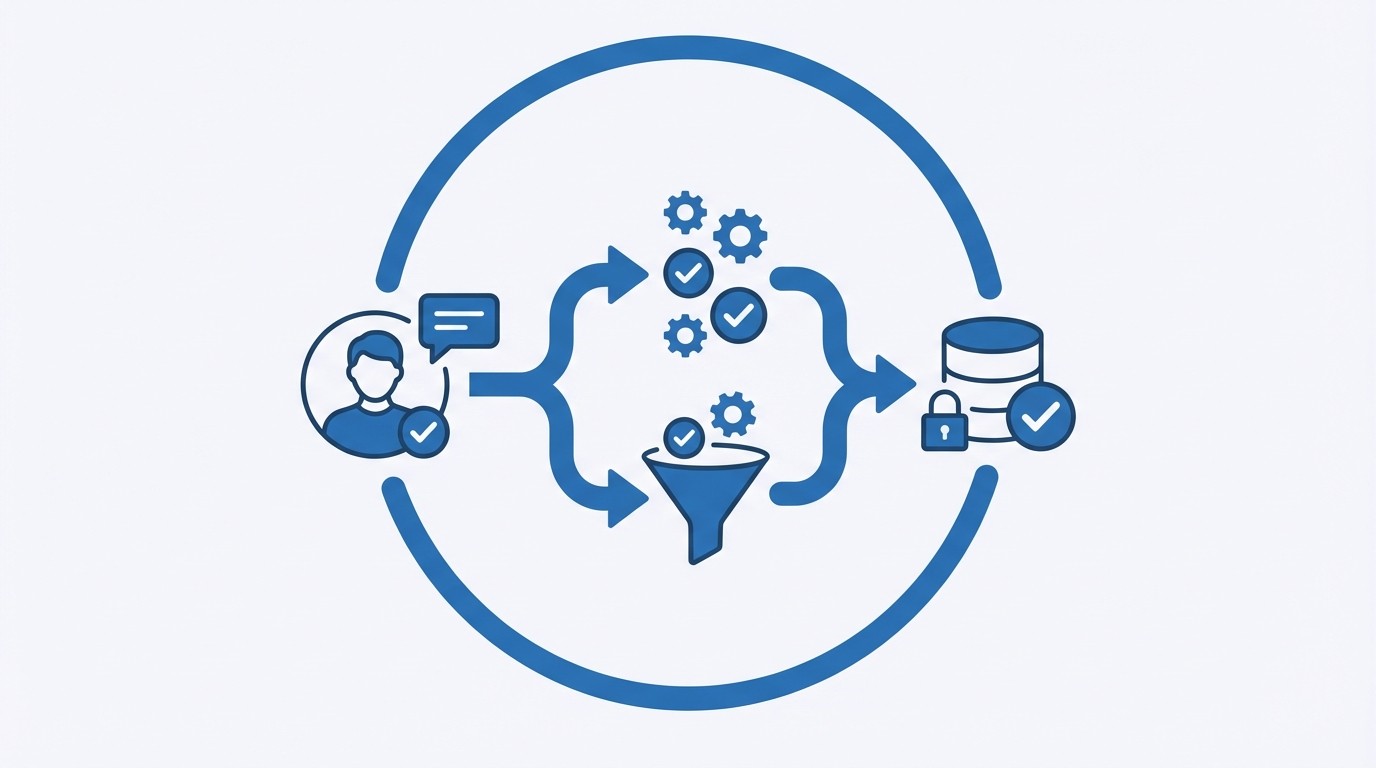
A resolution‑first method removes handoffs, encodes rules, and guarantees safe writebacks. Start with identity that fits the channel, present only valid options, and finish where you start. Use a narrow scorecard so progress is obvious. One high‑volume workflow proves the model and funds the next.
Design principles that prevent failure
Principles matter because they prevent the same mistakes from returning in a new form. Identity needs to be strong and simple in channel. Offer only policy‑eligible actions based on the trigger. Treat the message as the app so customers never have to jump a login wall at the moment of decision.
Writebacks must be safe by design. That means idempotency, retries with backoff, and circuit breakers to protect downstream systems. Every step should emit telemetry so you can measure completion, resolution time, and deflection. Evidence matters, so capture consent and inputs with timestamps for audit.
Teams that hold to these principles build systems that survive spikes and change. Rules evolve. Channels add features. Cores change versions. The method still stands because it reduces the problem to identity, policy, and safe transactions.
Validate identity in channel with one‑time codes or known‑fact checks
Show only eligible actions tied to the trigger and policy
Treat the message as the place where the task completes
Guarantee writebacks with idempotent operations and retries
Emit telemetry for deliveries, actions, validations, and outcomes
Implementation sequence that actually sticks
Order matters. A clean sequence lets you move fast without breaking trust. Start with a current‑state map that shows every handoff and writeback. Define what completion means in business terms. Encode rules. Then pilot on one high‑volume workflow where routine cases dominate and policy is clear.
Move to omni‑channel outreach with consent, timing, and preference respected. Point messages to secure, no‑download mini‑apps that present only valid options. Capture evidence and post results back to systems of record. Measure a narrow set of KPIs weekly and adjust where data shows friction.
Scale only after the first workflow hits target completion and writeback success. The next one gets easier because the hard parts are already in place. That is how you build momentum without adding operational debt.
Map the journey and define completion in business terms
Encode policy, eligibility, and exception paths
Stand up identity that fits SMS, WhatsApp, and email
Orchestrate outreach tuned for action, not volume
Deliver in‑message mini‑apps and guarantee writebacks
Measure completion, time, writeback success, and deflection
Ready to turn conversation into completion on your first workflow? If you want to explore a pilot, get in touch: Ready for customer communication workflows on autopilot? Get in touch.
How RadMedia Delivers Closed‑Loop Resolution in Financial Services
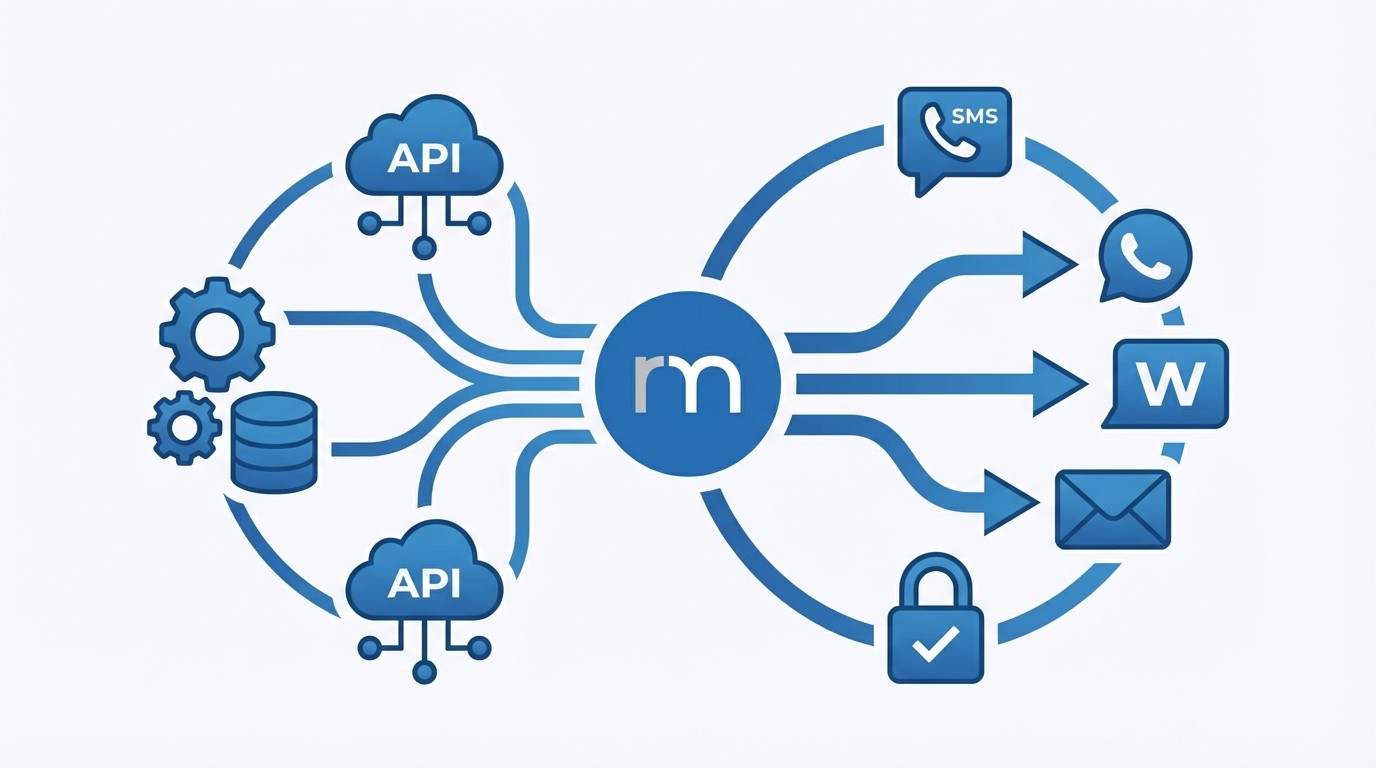
RadMedia implements the method above for financial services operations. The service connects to legacy cores and modern APIs, orchestrates SMS, WhatsApp, and email, delivers secure in‑message mini‑apps, and writes outcomes back with idempotent guarantees. You get resolution inside the message with audit‑ready evidence and predictable cycle times.
Managed integration and policy‑aware orchestration
RadMedia’s managed back‑end integration removes the hardest part of automation. The team owns adapters, authentication, schema mapping, and error handling, so triggers from billing, collections, policy, and compliance systems flow into outreach and mini‑apps. When customers act, outcomes write back idempotently to systems of record.
The Autopilot Workflow Engine links back‑end events to outreach sequences and in‑message interactions. Eligibility thresholds, arrangement policies, and compliance checks are modeled so only valid paths appear. If a block occurs, the case follows a defined exception path and lands with an agent with full context. That shifts people to judgment, not data entry.
Omni‑channel messaging orchestration respects consent and preferences while tuning timing and cadence for action. Messages carry the right context so customers see amounts, dates, or eligibility that matter. The result is fewer touches and higher completion without channel fatigue.
Managed Back‑End Integration: adapters, schema mapping, and safe writebacks handled for you
Autopilot Workflow Engine: policy‑aware rules, time logic, and exception routing
Omni‑Channel Messaging Orchestration: SMS, email, and WhatsApp tuned for completion
In‑message self‑service with guaranteed writebacks
In‑message self‑service mini‑apps let customers complete tasks in one flow. Identity is validated with one‑time codes, known‑fact checks, or signed deep links. The mini‑app then shows only policy‑eligible actions like update card, authorize a payment, choose a plan, confirm details, upload documents, or sign an attestation. Inputs are validated and consent is captured with timestamps.
Closed‑loop resolution and writeback finish the job. Outcomes post to systems of record with idempotency and retries, and every step is logged for audit. Security, identity, and audit controls cover TLS in transit, encryption at rest, role‑based access, and optional SSO. Telemetry and data export let you track completion, time to resolution, writeback success, and deflection, then push logs to your lake or SIEM.
RadMedia ties directly back to the costs you feel today. Manual wrap‑up disappears because writebacks are automatic. Time to resolution drops because customers act in channel. Deflection rises because routine cases never reach agents. That is the shift from conversation volume to outcome metrics.
In‑Message Self‑Service Mini‑Apps: secure, no‑download actions inside the message
Closed‑Loop Resolution and Writeback: idempotent outcomes posted with audit trails
Security, Identity, and Audit Controls: verification and evidence by default
Telemetry, Reliability, and Data Export: visibility for continuous improvement
Want to see closed‑loop resolution running on a real workflow? You can reach the team here: Ready for customer communication workflows on autopilot? Get in touch.
Before you wrap planning for the quarter, line up a pilot where completion and deflection can move in 30 days. If helpful, start the conversation here: Ready for customer communication workflows on autopilot? Get in touch.
Conclusion
Common pitfalls in automated customer interactions come from handoffs, weak identity, and missing writebacks. The fix is a resolution‑first method that treats the message as the place where work completes, encodes policy, and guarantees safe outcomes written back to systems of record. Start with one high‑volume workflow, measure completion, time, writeback success, and deflection, then scale what works.