
Designing End-to-End Customer Communication Workflows as a Service
Designing customer communication workflows as a service requires an outcome-first approach. Define completion and writeback processes early to reduce customer drop-offs and streamline tasks, resulting in fewer conversations and more resolved issues.
Most ops leaders have improved messaging output, but still see the same queues, reconciliation work, and customer drop‑offs. The reason is simple. Customer communication workflows as a service only work when completion and writebacks happen inside the message. We will walk you through a clear blueprint you can run without heavy engineering.
We will discuss the specific ways to model outcomes, map triggers, encode policy, and deliver in‑message self‑service that actually completes the task. You will also see how a managed integration layer and idempotent writebacks cut cost, risk, and cycle time. The result is fewer conversations and more finished work.
Key Takeaways:
Start from the writeback, not the copy: define fields, idempotency keys, and failure states first.
Treat the message as the app so customers act in place, without logins or portal hops.
Measure completion rate, time to resolution, writeback success, and deflection, not contact volume.
Plan integration early: adapters, payload mapping, retries, and credential governance decide success.
Quantify hidden cost: handoffs, rework, and manual wrap‑up errors add up fast.
Encode policy in rules, present only eligible actions, and capture evidence automatically.
Close the loop with guaranteed writebacks so routine cases resolve without agents.
Why Starting With Outreach Breaks Customer Communication Workflows as a Service
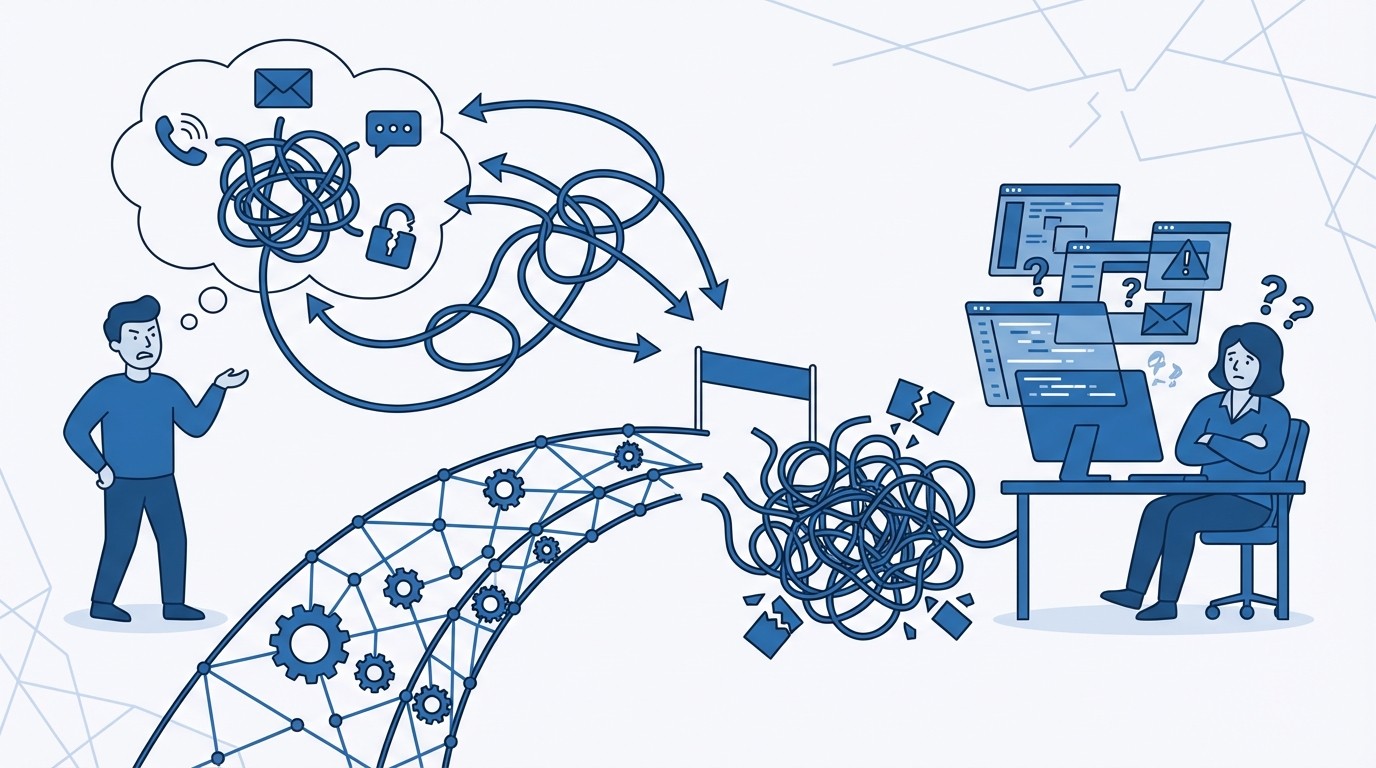
Outreach-first projects fail because they start conversations that systems cannot finish. The message sends, the user clicks, then the journey breaks on logins or brittle integrations. The fix is outcome-first design: define completion and writeback contracts before you write a subject line or pick a channel.
Define the writeback contract first
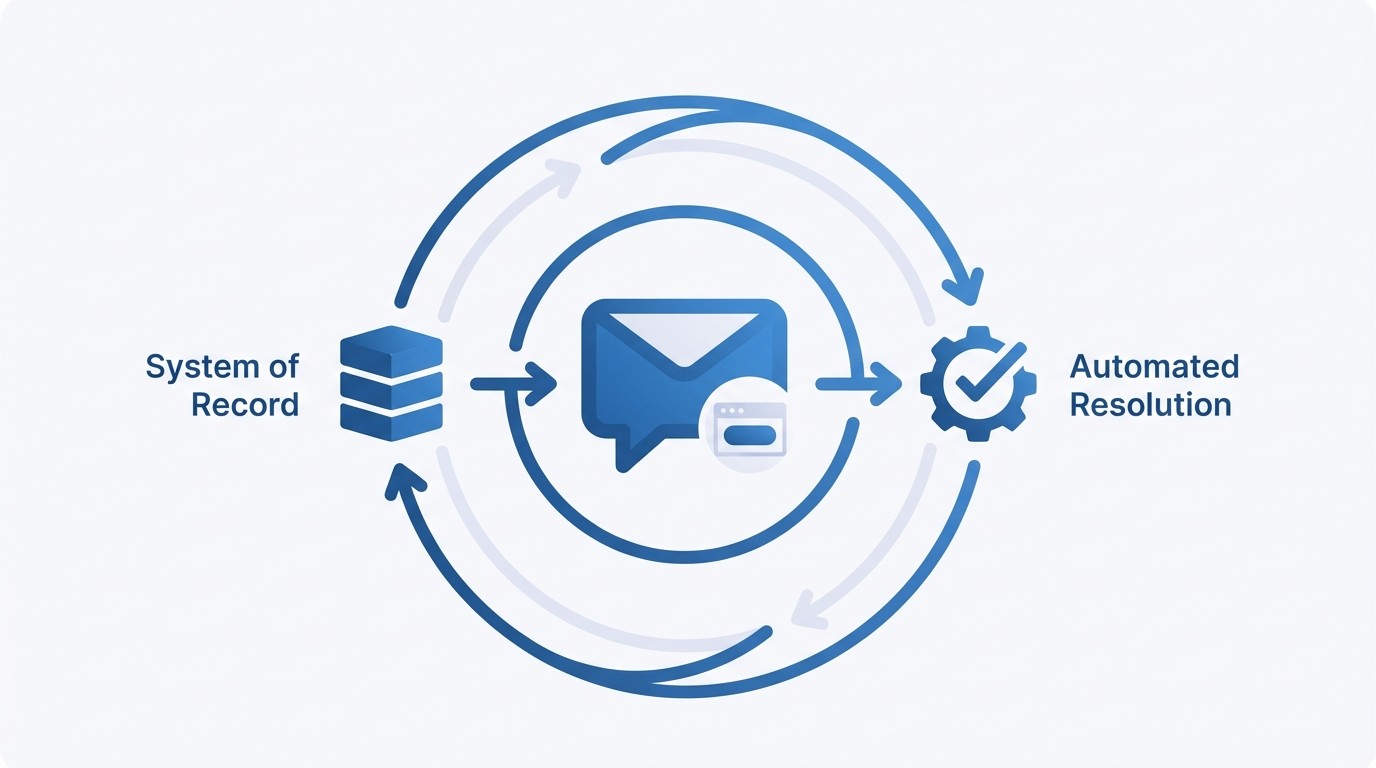
If completion is not explicit, you create reconciliation work and risk. Begin with the system of record and define the success contract in detail. List the exact fields that must update, the idempotency key to prevent duplicates, and acceptable failure states with retry rules. This turns a vague “task done” into clear database changes you can test.
When you define writeback fields, you also define which inputs must be collected in-flow. That guides every decision that follows, from UI to copy to validation. It also exposes gaps early, like missing identifiers or schema mismatches, before you scale a broken path. Most teams skip this step and pay later in rework and errors.
Elements to include after the prose is clear:
Target tables and fields to update
Idempotency key source and lifespan
Retry policy and backoff thresholds
Reconcile path for partial success and timeouts
What changes when the message is the app?
Treat the conversation as the execution surface. Instead of pushing people to a portal, present a secure mini app inside SMS, email, or WhatsApp. Identity is verified in flow, actions are constrained by policy, and progress is visible. Customers complete the task where they already are, so you reduce context switching and improve completion.
This design also enables straight‑through processing. Payments process, plans schedule, documents upload, and consent is captured without handoffs. It is not about flashy UI. It is about removing friction that causes drop‑offs and manual follow‑up. For context on service workflow building blocks, the overview from Salesforce on customer service workflow is a helpful frame, even though your goal is resolution inside the message.
What Ops Teams Are Really Solving: Close the Loop or Pay the Operations Tax
The real problem is unfinished tasks that leak across channels. If your stack can send a message but cannot complete the transaction and write back automatically, you will pay the operations tax in delay, rework, and error. Success shifts from “how many contacts” to “how many completions with guaranteed writebacks.”
Symptom versus root cause
High contact volume looks like engagement, but it often signals leakage. A failed payment email drives portal logins, then password resets, then calls. Agents rekey data, chase approvals, and update notes by hand. The symptom is conversation volume. The root cause is that the task did not finish where it started.
That difference matters. Until the outcome writes back to the system of record automatically, you are pushing work from channel to channel. You also increase risk. Each handoff is a chance to miss consent, lose documents, or write the wrong field. Reframe success as completion rate, time to resolution, writeback success, and deflection.
Why the integration layer decides success
Drawing flows is easy. Closing the loop across legacy cores, policy engines, and modern APIs is where projects fail. Plan adapters, payload mapping, credential governance, retries, and idempotency up front. When the communication layer owns these responsibilities, exceptions shrink and scale holds. Ignore them and your pilot will stall at volume.
This is also where teams underestimate cost. DIY builds seem flexible, then slow down when schemas shift or policies change. A simple flow breaks on a SOAP edge case or a batch timing gap. For a broad view on workflow pitfalls, see this primer on customer service workflows. Your guardrails must live in the integration layer, not in a slide.
The Hidden Costs When Customer Communication Workflows as a Service Stop Short
Handoffs, retries, and manual wrap‑up waste time and money. Each step adds minutes and risk. Across thousands of accounts, those small misses compound into lost weeks of throughput and higher unit cost. Quantify them so change becomes non‑negotiable.
Quantify waste from handoffs and retries
Start by measuring minutes per handoff, retries per transaction, and the share of cases that bounce to agents because context is missing. You will likely find repeat patterns: a login step that fails, a payment method error that is never retried, or a document flow that times out. Each pattern is a fixable leak.
Put numbers to it. Ten extra minutes per routine case across ten thousand cases is more than 1,600 hours in a month. That is not a rounding error, it is headcount. Track where retries succeed and where they fail. Then target the biggest leaks first. For broader workflow benchmarks, see OpsDog’s customer service workflows.
Metrics to track after you have context:
Minutes per handoff and total handoffs per case
Retry count by failure type and success rate
Percent of cases deflected from agents
Time to resolution by workflow
Measure error and compliance risk from manual wrap‑up
Manual wrap‑up invites wrong fields, missing documents, and inconsistent attestations. Define measurable error classes and audit coverage. Then design writebacks to remove those failure modes. Idempotent operations, digital consent capture, and automatic document attachment reduce both risk and cost.
Make the controls visible. Show that consent has timestamps, that documents are stored alongside case records, and that updates are consistent across systems. This is not just good hygiene. It is the difference between a clean audit and a painful remediation. A practical overview of workflow themes is in Sprinklr’s guide to customer service workflows. Your implementation should prevent errors rather than detect them after the fact.
What It Feels Like When Resolution Fails at the Last Mile
Resolution failures are felt by people first. Customers bounce between channels, reset passwords, and repeat information. Agents juggle screens to patch gaps. Both sides lose time on predictable tasks. The outcome is frustration, slow cycle times, and avoidable escalations.
The human cost of context switching
Password resets, portal detours, and repeated verification look small on paper. In practice they create friction that breaks momentum. Customers stall, then ignore the next nudge. Agents inherit the case and spend minutes rediscovering context, which is a poor use of skilled time. Those minutes add up and morale drops.
Naming these moments helps you remove them. Identify where identity checks fail, where links force a login, and where a payment path dead‑ends. Then replace those steps with in‑message actions and clear progress cues. People respond when the path is simple and the end is near. Bad paths create churn and cost.
How do you make exceptions feel respectful, not punitive?
Escalations should preserve trust and momentum. When a case needs a person, hand off with full history so agents start at problem‑solving, not discovery. Tell the customer what happens next, what data you already have, and when they will hear back. Treat them like a partner, not a ticket.
Design this flow intentionally. Capture the inputs you already collected. Present a single next step and a timeframe. Give the agent the full trail, including messages sent, validation results, and attempted writebacks. That approach protects CSAT while the system resolves the majority of routine cases automatically.
Blueprint to Design Customer Communication Workflows as a Service That Resolve
A reliable design follows one path: define completion, encode policy, map triggers and data contracts, present in‑message actions, and guarantee writebacks. Everything else supports that sequence. Your goal is straight‑through processing for routine work and respectful escalation for the rest.
How do you model completion and encode policy?
Write a resolution blueprint that defines completion states, required data, and exception paths. Encode policy in a rules engine instead of agent scripts so rules are consistent and easy to change. Specify what evidence to capture, like consent timestamps and required documents, so audits are simple and reliable.
This makes the workflow safe and measurable. It also shrinks variance across cases because the system enforces the same checks every time. By modeling eligibility and outcomes up front, you prevent the classic mistake of building a pretty flow that cannot write back safely. The result is fewer errors and higher deflection.
A compact sequence after the narrative:
Define completion fields and evidence to capture
Encode eligibility and policy rules in the engine
Specify exception branches with clear exit criteria
Map writeback targets and idempotency behavior
Map triggers and data contracts with precision
Catalog actionable triggers such as failed payments, due‑date thresholds, and KYC windows. For each trigger, define payload shape, identity keys, and personalization fields. Align those contracts with back‑end schemas so you avoid translation errors that cause retries and manual fixes.
Precise contracts drive better outreach and cleaner writebacks. They also make monitoring easier because you know exactly what should arrive and what should change. This is where teams often miss small details and pay with hidden cost later. Clean contracts cut noise and speed resolution.
Design in-message self-service that removes friction
Use secure, no‑download mini apps to present only eligible actions based on context. Validate identity in flow, collect structured inputs, process payments, and capture documents. Make progress visible and handle errors with targeted retries. When the customer finishes, commit the outcome to systems of record and confirm completion inside the conversation.
Keep it simple. Fewer screens, clear labels, and only the actions that match policy. Most people do not want another app. They want the task done. For a broader view of workflow patterns, this explainer on customer workflows offers a helpful lens while you keep the task inside the message.
How RadMedia Delivers Closed-Loop Customer Communication Workflows as a Service
RadMedia closes the loop by owning the integration layer, the in‑message experience, and the writeback guarantees. Outcomes write back to systems of record, so routine cases resolve without agents. This addresses the costs you quantified earlier, from handoff minutes to wrap‑up errors, by making resolution the default path.
Managed integration and writeback guarantees that cut cycle time
RadMedia connects to legacy cores and modern APIs and manages authentication, schema mapping, and payload validation. Idempotent writebacks and retries ensure consistency, even when downstream systems are slow or flaky. When a workflow completes, balances update, flags clear, notes and documents attach, and the case closes automatically.
This is where unit cost drops. There is no manual wrap‑up, no double entry, and far fewer exceptions for agents to triage. The transformation is direct. The minutes you tracked per handoff disappear because the system writes back safely the first time. Time to resolution shrinks and audit readiness improves.
In-message self-service and autopilot orchestration that deflect routine work
RadMedia composes omni‑channel outreach tied to triggers, then launches secure in‑message mini apps so customers act on the spot. The autopilot engine advances steps based on inputs and time, enforces policy, and escalates only when needed with full context. Exceptions reach people who can help, while the majority resolve automatically.
You can see the impact in routine billing, collections, and compliance. Fewer tickets open, more tasks finish in hours instead of days, and agent queues thin because predictable work never arrives. For additional perspective, review this overview of customer service workflows and apply it to a resolution‑first pattern where the message is the app.
Key capabilities after the narrative context:
Managed back‑end integration: adapters, mapping, credentials, and monitoring handled for you
Idempotent writebacks: safe updates with retries and clear audit logs
In‑message apps: identity, forms, payments, and documents completed in place
Autopilot rules: policy enforcement, timing, and exception routing with full history
Conclusion
If your workflows start with outreach instead of writebacks, you will keep paying in waste, risk, and slow cycle times. Flip the design. Define completion first, encode policy, map precise triggers, and let customers act inside the message. Then guarantee the writeback.
You will measure progress in completion rate, time to resolution, writeback success, and deflection. Most importantly, your teams will feel the difference. Less reconciliation. Fewer escalations. More finished work. That is how customer communication workflows as a service deliver real outcomes without adding headcount.
Design effective customer communication workflows as a service. Learn to model outcomes and guarantee writebacks without heavy engineering effort.
Designing End-to-End Customer Communication Workflows as a Service - RadMedia professional guide illustration
[{"q":"How do I set up automated workflows with RadMedia?","a":"To set up automated workflows using RadMedia, start by defining your desired outcomes. Identify the specific actions you want customers to take, such as updating payment details or confirming identity. Next, connect your back-end systems to RadMedia, allowing it to handle integration seamlessly. This way, when a trigger occurs—like a failed payment—the system can automatically reach out to customers via their preferred channels. Finally, utilize RadMedia's in-message self-service apps to ensure customers can complete tasks without leaving the conversation. This approach helps streamline operations and improve customer experience."},{"q":"What if my customers need assistance during a workflow?","a":"If customers require assistance during a workflow, RadMedia has built-in escalation features. When a customer encounters an issue that prevents them from completing a task, the system can automatically escalate the case to an agent. This escalation includes all relevant context, such as previous messages and actions taken, so agents can quickly understand the situation. Additionally, ensure that your workflows are designed to deflect routine cases to minimize the need for agent involvement, allowing them to focus on more complex issues."},{"q":"Can I measure the success of my communication workflows?","a":"Yes, you can measure the success of your communication workflows with RadMedia by tracking key metrics such as completion rates, time to resolution, and writeback success. These metrics will give you insights into how effectively your workflows are functioning. To get started, set up a monitoring system within RadMedia to collect data on these metrics. Regularly review this data to identify areas for improvement and make adjustments to your workflows as needed. This focus on measurement will help you continuously enhance customer experiences and operational efficiency."},{"q":"When should I implement in-message self-service options?","a":"You should implement in-message self-service options when you aim to streamline customer interactions and reduce friction. These options are particularly effective for high-volume scenarios like payment updates or document submissions. By allowing customers to complete tasks directly within the message, you eliminate the need for them to navigate to a separate portal or app. This approach typically leads to higher completion rates and improved customer satisfaction. Start with one high-volume use case to test the effectiveness of in-message self-service before rolling it out more broadly."},{"q":"Why does my workflow need to finish inside the message?","a":"Finishing workflows inside the message is crucial because it minimizes customer friction and enhances completion rates. When customers can take action without switching contexts—like logging into a portal or downloading an app—they're more likely to complete the task. RadMedia is designed to ensure that once a customer interacts with a message, the outcome writes back to your systems automatically. This closed-loop resolution not only streamlines operations but also reduces the need for manual follow-ups, ultimately saving time and resources."}]
05 Feb 2026
8515f8c8-2e27-4840-8608-9e03a3f4a87e
{"@graph":[{"@id":"https://radmedia.co.za/designing-end-to-end-customer-communication-workflows-as-a-service#article","@type":"Article","image":"https://jdbrszggncetflrhtwcd.supabase.co/storage/v1/object/public/article-images/6dca98ae-107d-47b7-832f-ee543e4b5364/designing-end-to-end-customer-communication-workflows-as-a-service-hero-1770249987447.png","author":{"name":"RadMedia","@type":"Organization"},"headline":"Designing End-to-End Customer Communication Workflows as a Service","keywords":"Customer Communication Workflows as a Service","publisher":{"name":"RadMedia","@type":"Organization"},"wordCount":2215,"description":"Designing End-to-End Customer Communication Workflows as a Service","dateModified":"2026-02-05T00:06:09.204+00:00","datePublished":"2026-02-05T00:02:00.587064+00:00","mainEntityOfPage":{"@id":"https://radmedia.co.za/designing-end-to-end-customer-communication-workflows-as-a-service","@type":"WebPage"}},{"@id":"https://radmedia.co.za/designing-end-to-end-customer-communication-workflows-as-a-service#howto","name":"Designing End-to-End Customer Communication Workflows as a Service","step":[{"name":"Why Starting With Outreach Breaks Customer Communication Workflows as a Service","text":"Outreach-first projects fail because they start conversations that systems cannot finish. The message sends, the user clicks, then the journey breaks on logins or brittle integrations. The fix is outcome-first design: define completion and writeback contracts before you write a subject line or pick a channel. !What It Feels Like When Resolution Fails at the Last Mile concept illustration - RadMedia","@type":"HowToStep","position":1},{"name":"Define the writeback contract first","text":"If completion is not explicit, you create reconciliation work and risk. Begin with the system of record and define the success contract in detail. List the exact fields that must update, the idempotency key to prevent duplicates, and acceptable failure states with retry rules. This turns a vague “task done” into clear database changes you can test. When you define writeback fields, you also define which inputs must be collected in-flow. That guides every decision that follows, from UI to copy to","@type":"HowToStep","position":2},{"name":"What changes when the message is the app?","text":"Treat the conversation as the execution surface. Instead of pushing people to a portal, present a secure mini app inside SMS, email, or WhatsApp. Identity is verified in flow, actions are constrained by policy, and progress is visible. Customers complete the task where they already are, so you reduce context switching and improve completion. This design also enables straight‑through processing. Payments process, plans schedule, documents upload, and consent is captured without handoffs. It is no","@type":"HowToStep","position":3},{"name":"What Ops Teams Are Really Solving: Close the Loop or Pay the Operations Tax","text":"The real problem is unfinished tasks that leak across channels. If your stack can send a message but cannot complete the transaction and write back automatically, you will pay the operations tax in delay, rework, and error. Success shifts from “how many contacts” to “how many completions with guaranteed writebacks.” !How RadMedia Delivers Closed-Loop Customer Communication Workflows as a Service concept illustration - RadMedia","@type":"HowToStep","position":4},{"name":"Symptom versus root cause","text":"High contact volume looks like engagement, but it often signals leakage. A failed payment email drives portal logins, then password resets, then calls. Agents rekey data, chase approvals, and update notes by hand. The symptom is conversation volume. The root cause is that the task did not finish where it started. That difference matters. Until the outcome writes back to the system of record automatically, you are pushing work from channel to channel. You also increase risk. Each handoff is a cha","@type":"HowToStep","position":5},{"name":"Why the integration layer decides success","text":"Drawing flows is easy. Closing the loop across legacy cores, policy engines, and modern APIs is where projects fail. Plan adapters, payload mapping, credential governance, retries, and idempotency up front. When the communication layer owns these responsibilities, exceptions shrink and scale holds. Ignore them and your pilot will stall at volume. This is also where teams underestimate cost. DIY builds seem flexible, then slow down when schemas shift or policies change. A simple flow breaks on a ","@type":"HowToStep","position":6},{"name":"The Hidden Costs When Customer Communication Workflows as a Service Stop Short","text":"Handoffs, retries, and manual wrap‑up waste time and money. Each step adds minutes and risk. Across thousands of accounts, those small misses compound into lost weeks of throughput and higher unit cost. Quantify them so change becomes non‑negotiable.","@type":"HowToStep","position":7},{"name":"Quantify waste from handoffs and retries","text":"Start by measuring minutes per handoff, retries per transaction, and the share of cases that bounce to agents because context is missing. You will likely find repeat patterns: a login step that fails, a payment method error that is never retried, or a document flow that times out. Each pattern is a fixable leak. Put numbers to it. Ten extra minutes per routine case across ten thousand cases is more than 1,600 hours in a month. That is not a rounding error, it is headcount. Track where retries su","@type":"HowToStep","position":8},{"name":"Measure error and compliance risk from manual wrap‑up","text":"Manual wrap‑up invites wrong fields, missing documents, and inconsistent attestations. Define measurable error classes and audit coverage. Then design writebacks to remove those failure modes. Idempotent operations, digital consent capture, and automatic document attachment reduce both risk and cost. Make the controls visible. Show that consent has timestamps, that documents are stored alongside case records, and that updates are consistent across systems. This is not just good hygiene. It is th","@type":"HowToStep","position":9},{"name":"What It Feels Like When Resolution Fails at the Last Mile","text":"Resolution failures are felt by people first. Customers bounce between channels, reset passwords, and repeat information. Agents juggle screens to patch gaps. Both sides lose time on predictable tasks. The outcome is frustration, slow cycle times, and avoidable escalations.","@type":"HowToStep","position":10},{"name":"The human cost of context switching","text":"Password resets, portal detours, and repeated verification look small on paper. In practice they create friction that breaks momentum. Customers stall, then ignore the next nudge. Agents inherit the case and spend minutes rediscovering context, which is a poor use of skilled time. Those minutes add up and morale drops. Naming these moments helps you remove them. Identify where identity checks fail, where links force a login, and where a payment path dead‑ends. Then replace those steps with in‑me","@type":"HowToStep","position":11},{"name":"How do you make exceptions feel respectful, not punitive?","text":"Escalations should preserve trust and momentum. When a case needs a person, hand off with full history so agents start at problem‑solving, not discovery. Tell the customer what happens next, what data you already have, and when they will hear back. Treat them like a partner, not a ticket. Design this flow intentionally. Capture the inputs you already collected. Present a single next step and a timeframe. Give the agent the full trail, including messages sent, validation results, and attempted wr","@type":"HowToStep","position":12},{"name":"Blueprint to Design Customer Communication Workflows as a Service That Resolve","text":"A reliable design follows one path: define completion, encode policy, map triggers and data contracts, present in‑message actions, and guarantee writebacks. Everything else supports that sequence. Your goal is straight‑through processing for routine work and respectful escalation for the rest.","@type":"HowToStep","position":13},{"name":"How do you model completion and encode policy?","text":"Write a resolution blueprint that defines completion states, required data, and exception paths. Encode policy in a rules engine instead of agent scripts so rules are consistent and easy to change. Specify what evidence to capture, like consent timestamps and required documents, so audits are simple and reliable. This makes the workflow safe and measurable. It also shrinks variance across cases because the system enforces the same checks every time. By modeling eligibility and outcomes up front,","@type":"HowToStep","position":14},{"name":"Map triggers and data contracts with precision","text":"Catalog actionable triggers such as failed payments, due‑date thresholds, and KYC windows. For each trigger, define payload shape, identity keys, and personalization fields. Align those contracts with back‑end schemas so you avoid translation errors that cause retries and manual fixes. Precise contracts drive better outreach and cleaner writebacks. They also make monitoring easier because you know exactly what should arrive and what should change. This is where teams often miss small details and","@type":"HowToStep","position":15},{"name":"Design in-message self-service that removes friction","text":"Use secure, no‑download mini apps to present only eligible actions based on context. Validate identity in flow, collect structured inputs, process payments, and capture documents. Make progress visible and handle errors with targeted retries. When the customer finishes, commit the outcome to systems of record and confirm completion inside the conversation. Keep it simple. Fewer screens, clear labels, and only the actions that match policy. Most people do not want another app. They want the task ","@type":"HowToStep","position":16},{"name":"How RadMedia Delivers Closed-Loop Customer Communication Workflows as a Service","text":"RadMedia closes the loop by owning the integration layer, the in‑message experience, and the writeback guarantees. Outcomes write back to systems of record, so routine cases resolve without agents. This addresses the costs you quantified earlier, from handoff minutes to wrap‑up errors, by making resolution the default path.","@type":"HowToStep","position":17},{"name":"Managed integration and writeback guarantees that cut cycle time","text":"RadMedia connects to legacy cores and modern APIs and manages authentication, schema mapping, and payload validation. Idempotent writebacks and retries ensure consistency, even when downstream systems are slow or flaky. When a workflow completes, balances update, flags clear, notes and documents attach, and the case closes automatically. This is where unit cost drops. There is no manual wrap‑up, no double entry, and far fewer exceptions for agents to triage. The transformation is direct. The min","@type":"HowToStep","position":18},{"name":"In-message self-service and autopilot orchestration that deflect routine work","text":"RadMedia composes omni‑channel outreach tied to triggers, then launches secure in‑message mini apps so customers act on the spot. The autopilot engine advances steps based on inputs and time, enforces policy, and escalates only when needed with full context. Exceptions reach people who can help, while the majority resolve automatically. You can see the impact in routine billing, collections, and compliance. Fewer tickets open, more tasks finish in hours instead of days, and agent queues thin bec","@type":"HowToStep","position":19}],"@type":"HowTo","image":"https://jdbrszggncetflrhtwcd.supabase.co/storage/v1/object/public/article-images/6dca98ae-107d-47b7-832f-ee543e4b5364/designing-end-to-end-customer-communication-workflows-as-a-service-hero-1770249987447.png","totalTime":"PT15M","description":"Designing End-to-End Customer Communication Workflows as a Service"},{"@id":"https://radmedia.co.za/designing-end-to-end-customer-communication-workflows-as-a-service#breadcrumb","@type":"BreadcrumbList","itemListElement":[{"item":"https://radmedia.co.za","name":"Home","@type":"ListItem","position":1},{"item":"https://radmedia.co.za/designing-end-to-end-customer-communication-workflows-as-a-service","name":"Designing End-to-End Customer Communication Workflows as a S","@type":"ListItem","position":2}]}],"@context":"https://schema.org"}
[{"url":"https://jdbrszggncetflrhtwcd.supabase.co/storage/v1/object/public/article-images/6dca98ae-107d-47b7-832f-ee543e4b5364/designing-end-to-end-customer-communication-workflows-as-a-service-inline-0-1770250011578.png","alt":"What It Feels Like When Resolution Fails at the Last Mile concept illustration - RadMedia","filename":"designing-end-to-end-customer-communication-workflows-as-a-service-inline-0-1770250011578.png","position":"after_h2_1","asset_id":null,"type":"ai_generated","dimensions":{"width":1024,"height":1024}},{"url":"https://jdbrszggncetflrhtwcd.supabase.co/storage/v1/object/public/article-images/6dca98ae-107d-47b7-832f-ee543e4b5364/designing-end-to-end-customer-communication-workflows-as-a-service-inline-1-1770250026428.png","alt":"How RadMedia Delivers Closed-Loop Customer Communication Workflows as a Service concept illustration - RadMedia","filename":"designing-end-to-end-customer-communication-workflows-as-a-service-inline-1-1770250026428.png","position":"after_h2_2","asset_id":null,"type":"ai_generated","dimensions":{"width":1024,"height":1024}}]
87
2215
Most ops leaders have improved messaging output, but still see the same queues, reconciliation work, and customer drop‑offs. The reason is simple. Customer communication workflows as a service only work when completion and writebacks happen inside the message. We will walk you through a clear blueprint you can run without heavy engineering.
We will discuss the specific ways to model outcomes, map triggers, encode policy, and deliver in‑message self‑service that actually completes the task. You will also see how a managed integration layer and idempotent writebacks cut cost, risk, and cycle time. The result is fewer conversations and more finished work.
Key Takeaways:
Start from the writeback, not the copy: define fields, idempotency keys, and failure states first.
Treat the message as the app so customers act in place, without logins or portal hops.
Measure completion rate, time to resolution, writeback success, and deflection, not contact volume.
Plan integration early: adapters, payload mapping, retries, and credential governance decide success.
Quantify hidden cost: handoffs, rework, and manual wrap‑up errors add up fast.
Encode policy in rules, present only eligible actions, and capture evidence automatically.
Close the loop with guaranteed writebacks so routine cases resolve without agents.
Why Starting With Outreach Breaks Customer Communication Workflows as a Service
Outreach-first projects fail because they start conversations that systems cannot finish. The message sends, the user clicks, then the journey breaks on logins or brittle integrations. The fix is outcome-first design: define completion and writeback contracts before you write a subject line or pick a channel.

Define the writeback contract first
If completion is not explicit, you create reconciliation work and risk. Begin with the system of record and define the success contract in detail. List the exact fields that must update, the idempotency key to prevent duplicates, and acceptable failure states with retry rules. This turns a vague “task done” into clear database changes you can test.
When you define writeback fields, you also define which inputs must be collected in-flow. That guides every decision that follows, from UI to copy to validation. It also exposes gaps early, like missing identifiers or schema mismatches, before you scale a broken path. Most teams skip this step and pay later in rework and errors.
Elements to include after the prose is clear:
Target tables and fields to update
Idempotency key source and lifespan
Retry policy and backoff thresholds
Reconcile path for partial success and timeouts
What changes when the message is the app?
Treat the conversation as the execution surface. Instead of pushing people to a portal, present a secure mini app inside SMS, email, or WhatsApp. Identity is verified in flow, actions are constrained by policy, and progress is visible. Customers complete the task where they already are, so you reduce context switching and improve completion.
This design also enables straight‑through processing. Payments process, plans schedule, documents upload, and consent is captured without handoffs. It is not about flashy UI. It is about removing friction that causes drop‑offs and manual follow‑up. For context on service workflow building blocks, the overview from Salesforce on customer service workflow is a helpful frame, even though your goal is resolution inside the message.
What Ops Teams Are Really Solving: Close the Loop or Pay the Operations Tax
The real problem is unfinished tasks that leak across channels. If your stack can send a message but cannot complete the transaction and write back automatically, you will pay the operations tax in delay, rework, and error. Success shifts from “how many contacts” to “how many completions with guaranteed writebacks.”

Symptom versus root cause
High contact volume looks like engagement, but it often signals leakage. A failed payment email drives portal logins, then password resets, then calls. Agents rekey data, chase approvals, and update notes by hand. The symptom is conversation volume. The root cause is that the task did not finish where it started.
That difference matters. Until the outcome writes back to the system of record automatically, you are pushing work from channel to channel. You also increase risk. Each handoff is a chance to miss consent, lose documents, or write the wrong field. Reframe success as completion rate, time to resolution, writeback success, and deflection.
Why the integration layer decides success
Drawing flows is easy. Closing the loop across legacy cores, policy engines, and modern APIs is where projects fail. Plan adapters, payload mapping, credential governance, retries, and idempotency up front. When the communication layer owns these responsibilities, exceptions shrink and scale holds. Ignore them and your pilot will stall at volume.
This is also where teams underestimate cost. DIY builds seem flexible, then slow down when schemas shift or policies change. A simple flow breaks on a SOAP edge case or a batch timing gap. For a broad view on workflow pitfalls, see this primer on customer service workflows. Your guardrails must live in the integration layer, not in a slide.
The Hidden Costs When Customer Communication Workflows as a Service Stop Short
Handoffs, retries, and manual wrap‑up waste time and money. Each step adds minutes and risk. Across thousands of accounts, those small misses compound into lost weeks of throughput and higher unit cost. Quantify them so change becomes non‑negotiable.
Quantify waste from handoffs and retries
Start by measuring minutes per handoff, retries per transaction, and the share of cases that bounce to agents because context is missing. You will likely find repeat patterns: a login step that fails, a payment method error that is never retried, or a document flow that times out. Each pattern is a fixable leak.
Put numbers to it. Ten extra minutes per routine case across ten thousand cases is more than 1,600 hours in a month. That is not a rounding error, it is headcount. Track where retries succeed and where they fail. Then target the biggest leaks first. For broader workflow benchmarks, see OpsDog’s customer service workflows.
Metrics to track after you have context:
Minutes per handoff and total handoffs per case
Retry count by failure type and success rate
Percent of cases deflected from agents
Time to resolution by workflow
Measure error and compliance risk from manual wrap‑up
Manual wrap‑up invites wrong fields, missing documents, and inconsistent attestations. Define measurable error classes and audit coverage. Then design writebacks to remove those failure modes. Idempotent operations, digital consent capture, and automatic document attachment reduce both risk and cost.
Make the controls visible. Show that consent has timestamps, that documents are stored alongside case records, and that updates are consistent across systems. This is not just good hygiene. It is the difference between a clean audit and a painful remediation. A practical overview of workflow themes is in Sprinklr’s guide to customer service workflows. Your implementation should prevent errors rather than detect them after the fact.
What It Feels Like When Resolution Fails at the Last Mile
Resolution failures are felt by people first. Customers bounce between channels, reset passwords, and repeat information. Agents juggle screens to patch gaps. Both sides lose time on predictable tasks. The outcome is frustration, slow cycle times, and avoidable escalations.
The human cost of context switching
Password resets, portal detours, and repeated verification look small on paper. In practice they create friction that breaks momentum. Customers stall, then ignore the next nudge. Agents inherit the case and spend minutes rediscovering context, which is a poor use of skilled time. Those minutes add up and morale drops.
Naming these moments helps you remove them. Identify where identity checks fail, where links force a login, and where a payment path dead‑ends. Then replace those steps with in‑message actions and clear progress cues. People respond when the path is simple and the end is near. Bad paths create churn and cost.
How do you make exceptions feel respectful, not punitive?
Escalations should preserve trust and momentum. When a case needs a person, hand off with full history so agents start at problem‑solving, not discovery. Tell the customer what happens next, what data you already have, and when they will hear back. Treat them like a partner, not a ticket.
Design this flow intentionally. Capture the inputs you already collected. Present a single next step and a timeframe. Give the agent the full trail, including messages sent, validation results, and attempted writebacks. That approach protects CSAT while the system resolves the majority of routine cases automatically.
Blueprint to Design Customer Communication Workflows as a Service That Resolve
A reliable design follows one path: define completion, encode policy, map triggers and data contracts, present in‑message actions, and guarantee writebacks. Everything else supports that sequence. Your goal is straight‑through processing for routine work and respectful escalation for the rest.
How do you model completion and encode policy?
Write a resolution blueprint that defines completion states, required data, and exception paths. Encode policy in a rules engine instead of agent scripts so rules are consistent and easy to change. Specify what evidence to capture, like consent timestamps and required documents, so audits are simple and reliable.
This makes the workflow safe and measurable. It also shrinks variance across cases because the system enforces the same checks every time. By modeling eligibility and outcomes up front, you prevent the classic mistake of building a pretty flow that cannot write back safely. The result is fewer errors and higher deflection.
A compact sequence after the narrative:
Define completion fields and evidence to capture
Encode eligibility and policy rules in the engine
Specify exception branches with clear exit criteria
Map writeback targets and idempotency behavior
Map triggers and data contracts with precision
Catalog actionable triggers such as failed payments, due‑date thresholds, and KYC windows. For each trigger, define payload shape, identity keys, and personalization fields. Align those contracts with back‑end schemas so you avoid translation errors that cause retries and manual fixes.
Precise contracts drive better outreach and cleaner writebacks. They also make monitoring easier because you know exactly what should arrive and what should change. This is where teams often miss small details and pay with hidden cost later. Clean contracts cut noise and speed resolution.
Design in-message self-service that removes friction
Use secure, no‑download mini apps to present only eligible actions based on context. Validate identity in flow, collect structured inputs, process payments, and capture documents. Make progress visible and handle errors with targeted retries. When the customer finishes, commit the outcome to systems of record and confirm completion inside the conversation.
Keep it simple. Fewer screens, clear labels, and only the actions that match policy. Most people do not want another app. They want the task done. For a broader view of workflow patterns, this explainer on customer workflows offers a helpful lens while you keep the task inside the message.
How RadMedia Delivers Closed-Loop Customer Communication Workflows as a Service
RadMedia closes the loop by owning the integration layer, the in‑message experience, and the writeback guarantees. Outcomes write back to systems of record, so routine cases resolve without agents. This addresses the costs you quantified earlier, from handoff minutes to wrap‑up errors, by making resolution the default path.
Managed integration and writeback guarantees that cut cycle time
RadMedia connects to legacy cores and modern APIs and manages authentication, schema mapping, and payload validation. Idempotent writebacks and retries ensure consistency, even when downstream systems are slow or flaky. When a workflow completes, balances update, flags clear, notes and documents attach, and the case closes automatically.
This is where unit cost drops. There is no manual wrap‑up, no double entry, and far fewer exceptions for agents to triage. The transformation is direct. The minutes you tracked per handoff disappear because the system writes back safely the first time. Time to resolution shrinks and audit readiness improves.
In-message self-service and autopilot orchestration that deflect routine work
RadMedia composes omni‑channel outreach tied to triggers, then launches secure in‑message mini apps so customers act on the spot. The autopilot engine advances steps based on inputs and time, enforces policy, and escalates only when needed with full context. Exceptions reach people who can help, while the majority resolve automatically.
You can see the impact in routine billing, collections, and compliance. Fewer tickets open, more tasks finish in hours instead of days, and agent queues thin because predictable work never arrives. For additional perspective, review this overview of customer service workflows and apply it to a resolution‑first pattern where the message is the app.
Key capabilities after the narrative context:
Managed back‑end integration: adapters, mapping, credentials, and monitoring handled for you
Idempotent writebacks: safe updates with retries and clear audit logs
In‑message apps: identity, forms, payments, and documents completed in place
Autopilot rules: policy enforcement, timing, and exception routing with full history
Conclusion
If your workflows start with outreach instead of writebacks, you will keep paying in waste, risk, and slow cycle times. Flip the design. Define completion first, encode policy, map precise triggers, and let customers act inside the message. Then guarantee the writeback.
You will measure progress in completion rate, time to resolution, writeback success, and deflection. Most importantly, your teams will feel the difference. Less reconciliation. Fewer escalations. More finished work. That is how customer communication workflows as a service deliver real outcomes without adding headcount.
