
Choosing a Vendor: Questions to Ask About Integration, Security and Resolution

When choosing a vendor, prioritize proof of resolution over polished demos. Demand specifics on integration, security, and outcomes to minimize risks and avoid costly manual work. Focus on metrics like completion rates and writeback success for true validation.

Most billing and collections teams buy demos that look polished and still miss the only result that matters: closed cases that update systems automatically. A vendor worth your time proves resolution, not conversation. We’ll walk you through the questions that surface real capability early, so you avoid hidden integration risk and the cost of manual cleanup.

You’re in evaluation mode, not procurement yet. That’s the right place to demand specifics. We’ll discuss the specific ways to test writebacks, idempotency, identity security, and telemetry before any contract. The goal is simple: reduce risk, prevent reconciliation work, and only pay for outcomes you can verify.

Key Takeaways:

  • Require proof of resolution: completion rate, time to resolution, writeback success, and deflection

  • Test idempotent writebacks with retries and final-state checks using real, representative data

  • Validate adapter coverage across REST, SOAP, queues, and SFTP with clear ownership

  • Demand secure identity, consent capture, and durable audit logs inside the message

  • Export near real-time telemetry and outcomes to your SIEM, not just a vendor UI

  • Choose managed integration over DIY to lower risk and accelerate rollout

  • Bind pilot success criteria and phased rollout obligations in the contract

Stop Treating Demos as Proof of Resolution

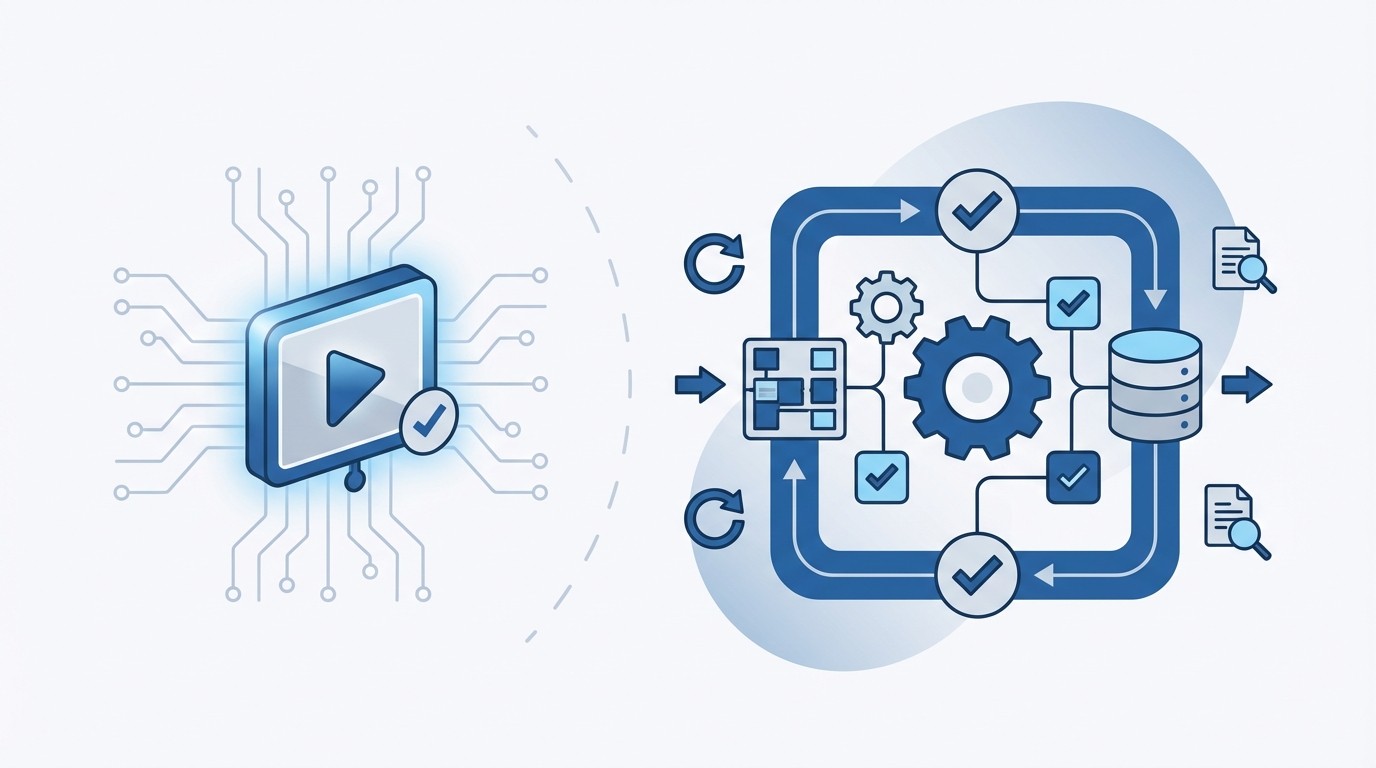
Demos do not prove resolution. Resolution requires evidence that tasks complete inside the message and write back to your systems with accuracy, retries, and audit trails. Ask for anonymized, production-like pilot data that shows completion rate, time to resolution, writeback success, and deflection. Anything less is a nice slide, not validation.

Measure Resolution, Not Conversation Metrics

Conversation volume, bot containment, and handle time can look good while unit cost climbs. What lowers cost is completion inside the message and clean writebacks. We often see teams celebrate containment while agents still reconcile outcomes by hand. That gap is the hidden cost that hurts budgets and morale.

Ask vendors to share pilot or customer data for the four outcome metrics. Push for exact definitions and measurement windows. If they can’t explain how they calculate completion or writeback success, you risk paying for activity, not results.

After you see the numbers, ask how they generalize across use cases. Billing remediation behaves differently than KYC refreshes. A credible vendor explains variance by trigger, policy, and population, then shows how they adjust sequences and rules to protect outcomes.

  • Resolution metrics to require: completion rate, time to resolution, writeback success, deflection

Prove Writebacks, Not Screenshots

Screenshots hide the hard part. You need verified writebacks into systems of record. That means idempotency keys, duplicate suppression, retries with backoff, and final-state checks. Without this, you inherit reconciliation work and the risk of data drift.

Ask the vendor to run a failed payment recovery end to end in a non-production environment. Watch the balance, flags, and notes update. Inspect logs that show a retried write and a verified final state. If they only show UI screens, you’re missing the truth.

This is where many pilots fail quietly. A payment posts, but an arrangement flag does not. Weeks later, the team discovers mismatched records and pays the cost. Prevent that with a writeback proof during evaluation.

  • Evidence to see: writeback logs, idempotency key usage, retry outcomes, final-state verification

Why Vendor Evaluation Questions Beat Feature Checklists

Feature checklists create a false sense of safety. They rarely expose failure modes. Targeted questions reveal integration gaps, error handling, and operational discipline. Start with adapters, retry logic, and SIEM exports, then drill down into exact mechanisms and artifacts.

This approach surfaces red flags early, while the cost to switch is low. It also gives your team a shared, objective standard for what “good” looks like. If you need a useful reference, review best practices like Vendor Selection Best Practices and adapt them to resolution-first outcomes.

  • Questions to prioritize: adapter coverage, idempotency strategy, reconciliation reporting, SIEM export formats

Integration Is the Risk You Cannot Ignore

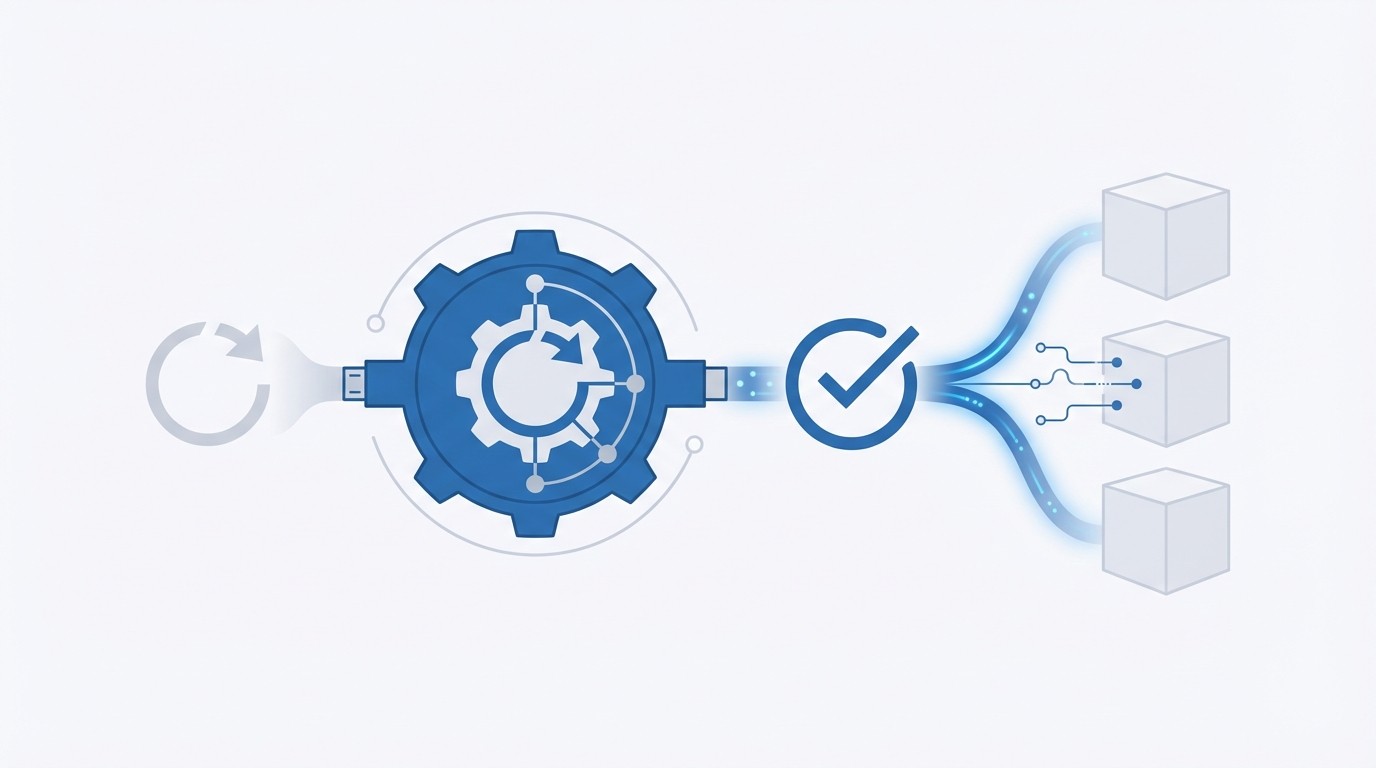
Integration is where most projects fail. Many tools can send messages, but few can transact safely against legacy cores and modern APIs while guaranteeing consistent writebacks. Probe idempotency, batch adapters, and schema evolution now, or plan for costly surprises later.
How RadMedia Proves Resolution and Integration Guarantees concept illustration - RadMedia

Writebacks and Idempotency Are the Hard Part

Idempotency sounds simple and fails in edge cases. You need deterministic request shaping, stable keys, duplicate suppression, and final-state checks. Without them, retries can produce double posting or missed updates. That mistake is expensive to unwind at scale.

Ask for exact mechanisms and see them in logs. Look for evidence that retries back off, circuit breakers protect downstream systems, and reconciliation jobs detect partial writes. If the answers are vague, you’re accepting real risk.

Make sure the vendor validates both the transactional outcome and the recorded state. It is not enough to process a payment if flags, notes, and documents don’t align.

Legacy Cores and Batch Flows Demand Managed Adapters

Financial systems still rely on SOAP services, message queues, and SFTP batches. Adapters must handle schema mapping, authentication quirks, and version drift. If your team owns adapter maintenance, you’ll pay in delays and rework.

Clarify who builds, monitors, and updates adapters. Ask how schema changes are detected and rolled out. Verify that the vendor supports event subscriptions and batch ingestion with predictable SLAs. Managed adapters reduce failure points and keep your operation stable.

If you need a framework for risk questions in this area, see How To Streamline Vendor Selection.

Vendor Evaluation Questions for Integration and Writebacks

You can reduce integration risk by asking precise questions that uncover failure modes. Focus on idempotent writebacks, adapter coverage, and observability. The goal is to avoid data inconsistency, missed updates, and manual reconciliation.
Stop Treating Demos as Proof of Resolution concept illustration - RadMedia

What Guarantees Do You Provide on Idempotent Writebacks?

Ask how the vendor prevents duplicate updates and missed writes. Look for idempotency keys, deterministic request shapes, and conflict resolution strategies. Require logs that show retries, exponential backoff, and a verified final state before the workflow closes.

You’ll want proof that writebacks are atomic where needed, and that partial failures are detected and surfaced to operations. Few teams instrument this well, which is why reconciliation work quietly grows over time. An honest vendor welcomes this scrutiny.

Make sure the answer covers both the transactional write and the evidence trail. Auditors and internal review teams will ask for the same thing later.

  1. Ask for sample logs that include idempotency keys and retry outcomes

  2. Review final-state verification steps before case closure

  3. Confirm visibility into exceptions and escalation paths

Supported Adapters and Data Transfer Modes

Request a published list of supported adapters and data modes. You want REST, SOAP, webhooks, message queues, and SFTP ingestion, plus clear authentication and credential rotation practices. If coverage is “custom only” or “coming soon,” plan for delays and budget risk.

Probe schema evolution. How are changes detected, tested, and deployed without breaking flows? Ask for examples from past rollouts. The few who do this well can show a change plan with staging tests and cutover windows.

  • Modes to confirm: REST, SOAP, webhooks, queues, SFTP

  • Security details: key rotation, MFA for consoles, secrets handling

  • Evolution plan: schema versioning, backward compatibility, test harnesses

Vendor Evaluation Questions for Security, Compliance and Telemetry

Security and compliance are non-negotiable. Ask for current certifications, encryption specifics, and identity flows inside the message. Then confirm you can export near real-time telemetry and outcomes to your SIEM. Blind spots increase risk and slow investigations.

Certifications, Encryption, and Key Management Specifics

Ask for SOC 2 or ISO 27001 reports and confirm encryption at rest and in transit. Check key management practices, MFA, SSO, and role-based access. Get breach notification windows and patching cadence commitments in writing. Missing or outdated evidence raises risk.

Verify how the vendor isolates tenants and protects secrets. If those answers are unclear, you may face both security and audit problems. A quick primer on third-party risk areas is available in Vendor Third Party Risk Management.

Identity, Consent, and Audit Logging

Identity should be secured inside the message using signed links, one-time codes, or known-fact validation. Consent must be captured with timestamps and stored with the case record. Without durable audit logs, you lose defensibility during reviews.

Ask to see how evidence is stored and exported. You should be able to retrieve who did what, when, and with which device or channel. If evidence spreads across tools, investigations become slow and error-prone.

What Telemetry and Exports Can My SIEM Consume in Real Time?

You need structured, near real-time exports of outcomes, logs, and alerts to your SIEM or data lake. Confirm field-level masking for PII and retention controls. Telemetry locked behind a vendor UI leaves operations blind.

Ask for sample export schemas and test ingestion during evaluation. Also, request alert routing examples and dead-letter queue views. For a helpful checklist of security signals to assess, see 10 Cybersecurity Criteria For Smarter Vendor Selection.

Vendor Evaluation Questions for Service Model, Pilots and Contracts

Service model and contracts determine who owns the heavy lifting. Define a managed integration scope, bind pilots to outcome metrics, and phase rollout to reduce risk. This keeps surprises small and measurable.

Managed Service Versus DIY Integration Ownership

Clarify who builds and maintains adapters, orchestration, and error handling. If the answer is your team, expect delays and hidden cost. A managed model reduces failure points and protects continuity when schemas or policies change.

Ask for examples where the vendor owned an integration fix during a live incident. You want proof of accountability, not promises. Also confirm support hours, escalation paths, and local coverage for critical windows.

How Will the Pilot Be Structured and What Success Criteria Are Binding?

Define pilot success upfront using resolution metrics. Completion rate, time to resolution, writeback success, and deflection should drive go or no-go decisions. If a vendor resists measurable criteria or pushes soft metrics, you risk paying for work that doesn’t move outcomes.

Run pilots with representative data, real triggers, and writebacks into non-production systems. Measure error rates and reconciliation effort. For more guidance on structuring selection steps, scan 10 Best Practices For A Better Vendor Selection Process.

SLAs, Safeguards, and Phased Rollout Commitments

Protect your operation in the contract. Require breach notification windows, the right to audit, change management obligations, and maintenance of external security ratings. Add completion SLAs and writeback reliability targets tied to pilot baselines.

A phased rollout reduces deployment risk. Pilot one high-volume workflow, then expand by channel or segment. This approach catches integration mistakes early without widespread impact.

How RadMedia Proves Resolution and Integration Guarantees

RadMedia is built for resolution. We own back-end adapters, deliver in-message self-service with secure identity and consent, and stream outcome telemetry to your systems. The result is higher completion, fewer escalations, and clean writebacks that eliminate reconciliation work.

Managed Back End Integration With Writeback Guarantees

RadMedia provides and maintains adapters for REST, SOAP, message queues, and SFTP batch ingestion. Our team handles authentication, schema mapping, and change management so your operation isn’t stuck waiting on internal engineering. Writebacks use idempotency keys, retries with backoff, and final-state verification before closure.

This removes the integration tax you saw earlier. Balances, flags, notes, and documents update consistently, which prevents manual cleanup. Teams report faster cycle times because outcomes sync across systems without human wrap-up.

  • Specific capabilities:

  • Idempotent writebacks with duplicate suppression and final checks

  • Managed adapters across REST, SOAP, queues, and SFTP

  • Error handling with circuit breaking, retries, and reconciliation reporting

In-Message Self Service With Secure Identity and Consent

RadMedia delivers secure, no-download mini apps inside SMS, email, and WhatsApp. Customers update details, select plans, or submit documents without leaving the conversation. Identity is verified using one-time codes, known-fact checks, or signed links, and consent is captured with timestamps.

This reduces time to resolution and raises deflection, since routine work finishes where it starts. It also lowers abandonment by removing logins and portal detours. The audit record travels with the case for defensibility during reviews.

RadMedia’s approach keeps exceptions rare and well-documented. When a rule blocks completion, cases escalate to agents with full context, not guesswork.

Telemetry, Analytics, and Outcome SLAs Buyers Can Trust

RadMedia streams structured outcomes and logs to your SIEM or data lake. You can track completion, writeback success, and deflection without relying on our UI. Field-level masking and retention controls protect sensitive data while giving operations the visibility they need.

We tie SLAs to the metrics that matter. That includes writeback reliability and time to resolution targets that mirror pilot baselines. If you want a broader lens on selection discipline, see How To Streamline Vendor Selection.

RadMedia turns the earlier risks into managed, measurable behaviors. The transformation is simple to describe and hard to fake: fewer conversations, more completed tasks, and systems that stay in sync without manual effort.

Conclusion

Treat vendor selection as a proof-of-resolution exercise. Ask targeted questions that expose integration, security, and telemetry gaps before they become your problem. Bind pilots to outcome metrics and phase rollouts, so learning is fast and contained.

If a vendor can’t show idempotent writebacks, secure identity in-message, and real-time exports to your SIEM, the risk is too high. Start with one high-volume workflow, measure completion and writeback success, and make decisions from data, not demos. That is how you cut cost, reduce risk, and improve outcomes with confidence.

Discover key vendor selection questions for billing and collections. Ensure integration, security, and resolution capabilities to optimize workflows.

Choosing a Vendor: Questions to Ask About Integration, Security and Resolution - RadMedia professional guide illustration

[{"q":"How do I ensure data security during integration?","a":"To ensure data security during integration, start by implementing role-based access controls and single sign-on (SSO) support. These features help manage who can access sensitive information. Additionally, ensure that data is encrypted both in transit and at rest to protect it from unauthorized access. Using RadMedia, you can take advantage of built-in security features like TLS encryption and audit logs, which provide a comprehensive security framework while integrating your systems."},{"q":"What if I need to track the success of my workflows?","a":"If you want to track the success of your workflows, focus on key metrics like completion rate, time to resolution, and writeback success. These metrics will give you a clear picture of how effectively your workflows are performing. With RadMedia, you can automate the collection of these metrics as outcomes are written back to your systems, allowing you to measure your operational efficiency without manual intervention."},{"q":"Can I integrate legacy systems with new APIs?","a":"Yes, you can integrate legacy systems with new APIs using RadMedia. The platform offers managed back-end integration that connects to both legacy systems and modern APIs, handling the complexities of authentication and schema mapping for you. This means you can seamlessly link your existing systems with new technologies without needing extensive client-side engineering, allowing for a smoother transition and improved operational efficiency."},{"q":"When should I consider a phased rollout?","a":"Consider a phased rollout when you want to minimize risk and ensure smooth adoption of new workflows. This approach allows you to test and validate each phase before full deployment. With RadMedia, you can implement a phased rollout strategy that aligns with your operational goals, ensuring that you can address any issues that arise in the early stages without overwhelming your teams or systems."},{"q":"Why does my customer service process need automation?","a":"Your customer service process needs automation to reduce manual workloads and improve efficiency. By automating routine tasks, you can free up your agents to focus on more complex issues that require human intervention. RadMedia's closed-loop resolution capabilities allow for automated workflows that complete tasks within the messaging context, ensuring that most cases resolve without needing agent involvement, which in turn enhances customer satisfaction."}]

06 Feb 2026

c12984e7-fb70-4a3a-9b8d-6b3dbbf4f0f3

{"@graph":[{"@id":"https://radmedia.co.za/choosing-a-vendor-questions-to-ask-about-integration-security-and-resolution-r1#article","@type":"Article","image":"https://jdbrszggncetflrhtwcd.supabase.co/storage/v1/object/public/article-images/6dca98ae-107d-47b7-832f-ee543e4b5364/choosing-a-vendor-questions-to-ask-about-integration-security-and-resolution-r1-hero-1770398213397.png","author":{"name":"RadMedia","@type":"Organization"},"headline":"Choosing a Vendor: Questions to Ask About Integration, Security and Resolution","keywords":"vendor selection customer communication workflow service","publisher":{"name":"RadMedia","@type":"Organization"},"wordCount":2205,"description":"Choosing a Vendor: Questions to Ask About Integration, Security and Resolution","dateModified":"2026-02-06T17:16:36.805+00:00","datePublished":"2026-02-06T00:12:19.479305+00:00","mainEntityOfPage":{"@id":"https://radmedia.co.za/choosing-a-vendor-questions-to-ask-about-integration-security-and-resolution-r1","@type":"WebPage"}},{"@id":"https://radmedia.co.za/choosing-a-vendor-questions-to-ask-about-integration-security-and-resolution-r1#itemlist","name":"Choosing a Vendor: Questions to Ask About Integration, Security and Resolution","@type":"ItemList","itemListElement":[{"name":"Stop Treating Demos as Proof of Resolution","@type":"ListItem","position":1},{"name":"Integration Is the Risk You Cannot Ignore","@type":"ListItem","position":2},{"name":"Vendor Evaluation Questions for Integration and Writebacks","@type":"ListItem","position":3},{"name":"Ask for sample logs that include idempotency keys and retry outcomes","@type":"ListItem","position":4},{"name":"Review final-state verification steps before case closure","@type":"ListItem","position":5},{"name":"Confirm visibility into exceptions and escalation paths","@type":"ListItem","position":6},{"name":"Vendor Evaluation Questions for Security, Compliance and Telemetry","@type":"ListItem","position":7},{"name":"Vendor Evaluation Questions for Service Model, Pilots and Contracts","@type":"ListItem","position":8},{"name":"How RadMedia Proves Resolution and Integration Guarantees","@type":"ListItem","position":9}]},{"@id":"https://radmedia.co.za/choosing-a-vendor-questions-to-ask-about-integration-security-and-resolution-r1#breadcrumb","@type":"BreadcrumbList","itemListElement":[{"item":"https://radmedia.co.za","name":"Home","@type":"ListItem","position":1},{"item":"https://radmedia.co.za/choosing-a-vendor-questions-to-ask-about-integration-security-and-resolution-r1","name":"Choosing a Vendor: Questions to Ask About Integration, Secur","@type":"ListItem","position":2}]}],"@context":"https://schema.org"}

[{"url":"https://jdbrszggncetflrhtwcd.supabase.co/storage/v1/object/public/article-images/6dca98ae-107d-47b7-832f-ee543e4b5364/choosing-a-vendor-questions-to-ask-about-integration-security-and-resolution-r1-inline-0-1770398235565.png","alt":"How RadMedia Proves Resolution and Integration Guarantees concept illustration - RadMedia","filename":"choosing-a-vendor-questions-to-ask-about-integration-security-and-resolution-r1-inline-0-1770398235565.png","position":"after_h2_2","asset_id":null,"type":"ai_generated","dimensions":{"width":1024,"height":1024}},{"url":"https://jdbrszggncetflrhtwcd.supabase.co/storage/v1/object/public/article-images/6dca98ae-107d-47b7-832f-ee543e4b5364/choosing-a-vendor-questions-to-ask-about-integration-security-and-resolution-r1-inline-1-1770398252258.png","alt":"Stop Treating Demos as Proof of Resolution concept illustration - RadMedia","filename":"choosing-a-vendor-questions-to-ask-about-integration-security-and-resolution-r1-inline-1-1770398252258.png","position":"after_h2_3","asset_id":null,"type":"ai_generated","dimensions":{"width":1024,"height":1024}}]

87

2205

Most billing and collections teams buy demos that look polished and still miss the only result that matters: closed cases that update systems automatically. A vendor worth your time proves resolution, not conversation. We’ll walk you through the questions that surface real capability early, so you avoid hidden integration risk and the cost of manual cleanup.

You’re in evaluation mode, not procurement yet. That’s the right place to demand specifics. We’ll discuss the specific ways to test writebacks, idempotency, identity security, and telemetry before any contract. The goal is simple: reduce risk, prevent reconciliation work, and only pay for outcomes you can verify.

Key Takeaways:

  • Require proof of resolution: completion rate, time to resolution, writeback success, and deflection

  • Test idempotent writebacks with retries and final-state checks using real, representative data

  • Validate adapter coverage across REST, SOAP, queues, and SFTP with clear ownership

  • Demand secure identity, consent capture, and durable audit logs inside the message

  • Export near real-time telemetry and outcomes to your SIEM, not just a vendor UI

  • Choose managed integration over DIY to lower risk and accelerate rollout

  • Bind pilot success criteria and phased rollout obligations in the contract

Stop Treating Demos as Proof of Resolution

Demos do not prove resolution. Resolution requires evidence that tasks complete inside the message and write back to your systems with accuracy, retries, and audit trails. Ask for anonymized, production-like pilot data that shows completion rate, time to resolution, writeback success, and deflection. Anything less is a nice slide, not validation.

Measure Resolution, Not Conversation Metrics

Conversation volume, bot containment, and handle time can look good while unit cost climbs. What lowers cost is completion inside the message and clean writebacks. We often see teams celebrate containment while agents still reconcile outcomes by hand. That gap is the hidden cost that hurts budgets and morale.

Ask vendors to share pilot or customer data for the four outcome metrics. Push for exact definitions and measurement windows. If they can’t explain how they calculate completion or writeback success, you risk paying for activity, not results.

After you see the numbers, ask how they generalize across use cases. Billing remediation behaves differently than KYC refreshes. A credible vendor explains variance by trigger, policy, and population, then shows how they adjust sequences and rules to protect outcomes.

  • Resolution metrics to require: completion rate, time to resolution, writeback success, deflection

Prove Writebacks, Not Screenshots

Screenshots hide the hard part. You need verified writebacks into systems of record. That means idempotency keys, duplicate suppression, retries with backoff, and final-state checks. Without this, you inherit reconciliation work and the risk of data drift.

Ask the vendor to run a failed payment recovery end to end in a non-production environment. Watch the balance, flags, and notes update. Inspect logs that show a retried write and a verified final state. If they only show UI screens, you’re missing the truth.

This is where many pilots fail quietly. A payment posts, but an arrangement flag does not. Weeks later, the team discovers mismatched records and pays the cost. Prevent that with a writeback proof during evaluation.

  • Evidence to see: writeback logs, idempotency key usage, retry outcomes, final-state verification

Why Vendor Evaluation Questions Beat Feature Checklists

Feature checklists create a false sense of safety. They rarely expose failure modes. Targeted questions reveal integration gaps, error handling, and operational discipline. Start with adapters, retry logic, and SIEM exports, then drill down into exact mechanisms and artifacts.

This approach surfaces red flags early, while the cost to switch is low. It also gives your team a shared, objective standard for what “good” looks like. If you need a useful reference, review best practices like Vendor Selection Best Practices and adapt them to resolution-first outcomes.

  • Questions to prioritize: adapter coverage, idempotency strategy, reconciliation reporting, SIEM export formats

Integration Is the Risk You Cannot Ignore

Integration is where most projects fail. Many tools can send messages, but few can transact safely against legacy cores and modern APIs while guaranteeing consistent writebacks. Probe idempotency, batch adapters, and schema evolution now, or plan for costly surprises later.

How RadMedia Proves Resolution and Integration Guarantees concept illustration - RadMedia

Writebacks and Idempotency Are the Hard Part

Idempotency sounds simple and fails in edge cases. You need deterministic request shaping, stable keys, duplicate suppression, and final-state checks. Without them, retries can produce double posting or missed updates. That mistake is expensive to unwind at scale.

Ask for exact mechanisms and see them in logs. Look for evidence that retries back off, circuit breakers protect downstream systems, and reconciliation jobs detect partial writes. If the answers are vague, you’re accepting real risk.

Make sure the vendor validates both the transactional outcome and the recorded state. It is not enough to process a payment if flags, notes, and documents don’t align.

Legacy Cores and Batch Flows Demand Managed Adapters

Financial systems still rely on SOAP services, message queues, and SFTP batches. Adapters must handle schema mapping, authentication quirks, and version drift. If your team owns adapter maintenance, you’ll pay in delays and rework.

Clarify who builds, monitors, and updates adapters. Ask how schema changes are detected and rolled out. Verify that the vendor supports event subscriptions and batch ingestion with predictable SLAs. Managed adapters reduce failure points and keep your operation stable.

If you need a framework for risk questions in this area, see How To Streamline Vendor Selection.

Vendor Evaluation Questions for Integration and Writebacks

You can reduce integration risk by asking precise questions that uncover failure modes. Focus on idempotent writebacks, adapter coverage, and observability. The goal is to avoid data inconsistency, missed updates, and manual reconciliation.

Stop Treating Demos as Proof of Resolution concept illustration - RadMedia

What Guarantees Do You Provide on Idempotent Writebacks?

Ask how the vendor prevents duplicate updates and missed writes. Look for idempotency keys, deterministic request shapes, and conflict resolution strategies. Require logs that show retries, exponential backoff, and a verified final state before the workflow closes.

You’ll want proof that writebacks are atomic where needed, and that partial failures are detected and surfaced to operations. Few teams instrument this well, which is why reconciliation work quietly grows over time. An honest vendor welcomes this scrutiny.

Make sure the answer covers both the transactional write and the evidence trail. Auditors and internal review teams will ask for the same thing later.

  1. Ask for sample logs that include idempotency keys and retry outcomes

  2. Review final-state verification steps before case closure

  3. Confirm visibility into exceptions and escalation paths

Supported Adapters and Data Transfer Modes

Request a published list of supported adapters and data modes. You want REST, SOAP, webhooks, message queues, and SFTP ingestion, plus clear authentication and credential rotation practices. If coverage is “custom only” or “coming soon,” plan for delays and budget risk.

Probe schema evolution. How are changes detected, tested, and deployed without breaking flows? Ask for examples from past rollouts. The few who do this well can show a change plan with staging tests and cutover windows.

  • Modes to confirm: REST, SOAP, webhooks, queues, SFTP

  • Security details: key rotation, MFA for consoles, secrets handling

  • Evolution plan: schema versioning, backward compatibility, test harnesses

Vendor Evaluation Questions for Security, Compliance and Telemetry

Security and compliance are non-negotiable. Ask for current certifications, encryption specifics, and identity flows inside the message. Then confirm you can export near real-time telemetry and outcomes to your SIEM. Blind spots increase risk and slow investigations.

Certifications, Encryption, and Key Management Specifics

Ask for SOC 2 or ISO 27001 reports and confirm encryption at rest and in transit. Check key management practices, MFA, SSO, and role-based access. Get breach notification windows and patching cadence commitments in writing. Missing or outdated evidence raises risk.

Verify how the vendor isolates tenants and protects secrets. If those answers are unclear, you may face both security and audit problems. A quick primer on third-party risk areas is available in Vendor Third Party Risk Management.

Identity, Consent, and Audit Logging

Identity should be secured inside the message using signed links, one-time codes, or known-fact validation. Consent must be captured with timestamps and stored with the case record. Without durable audit logs, you lose defensibility during reviews.

Ask to see how evidence is stored and exported. You should be able to retrieve who did what, when, and with which device or channel. If evidence spreads across tools, investigations become slow and error-prone.

What Telemetry and Exports Can My SIEM Consume in Real Time?

You need structured, near real-time exports of outcomes, logs, and alerts to your SIEM or data lake. Confirm field-level masking for PII and retention controls. Telemetry locked behind a vendor UI leaves operations blind.

Ask for sample export schemas and test ingestion during evaluation. Also, request alert routing examples and dead-letter queue views. For a helpful checklist of security signals to assess, see 10 Cybersecurity Criteria For Smarter Vendor Selection.

Vendor Evaluation Questions for Service Model, Pilots and Contracts

Service model and contracts determine who owns the heavy lifting. Define a managed integration scope, bind pilots to outcome metrics, and phase rollout to reduce risk. This keeps surprises small and measurable.

Managed Service Versus DIY Integration Ownership

Clarify who builds and maintains adapters, orchestration, and error handling. If the answer is your team, expect delays and hidden cost. A managed model reduces failure points and protects continuity when schemas or policies change.

Ask for examples where the vendor owned an integration fix during a live incident. You want proof of accountability, not promises. Also confirm support hours, escalation paths, and local coverage for critical windows.

How Will the Pilot Be Structured and What Success Criteria Are Binding?

Define pilot success upfront using resolution metrics. Completion rate, time to resolution, writeback success, and deflection should drive go or no-go decisions. If a vendor resists measurable criteria or pushes soft metrics, you risk paying for work that doesn’t move outcomes.

Run pilots with representative data, real triggers, and writebacks into non-production systems. Measure error rates and reconciliation effort. For more guidance on structuring selection steps, scan 10 Best Practices For A Better Vendor Selection Process.

SLAs, Safeguards, and Phased Rollout Commitments

Protect your operation in the contract. Require breach notification windows, the right to audit, change management obligations, and maintenance of external security ratings. Add completion SLAs and writeback reliability targets tied to pilot baselines.

A phased rollout reduces deployment risk. Pilot one high-volume workflow, then expand by channel or segment. This approach catches integration mistakes early without widespread impact.

How RadMedia Proves Resolution and Integration Guarantees

RadMedia is built for resolution. We own back-end adapters, deliver in-message self-service with secure identity and consent, and stream outcome telemetry to your systems. The result is higher completion, fewer escalations, and clean writebacks that eliminate reconciliation work.

Managed Back End Integration With Writeback Guarantees

RadMedia provides and maintains adapters for REST, SOAP, message queues, and SFTP batch ingestion. Our team handles authentication, schema mapping, and change management so your operation isn’t stuck waiting on internal engineering. Writebacks use idempotency keys, retries with backoff, and final-state verification before closure.

This removes the integration tax you saw earlier. Balances, flags, notes, and documents update consistently, which prevents manual cleanup. Teams report faster cycle times because outcomes sync across systems without human wrap-up.

  • Specific capabilities:

  • Idempotent writebacks with duplicate suppression and final checks

  • Managed adapters across REST, SOAP, queues, and SFTP

  • Error handling with circuit breaking, retries, and reconciliation reporting

In-Message Self Service With Secure Identity and Consent

RadMedia delivers secure, no-download mini apps inside SMS, email, and WhatsApp. Customers update details, select plans, or submit documents without leaving the conversation. Identity is verified using one-time codes, known-fact checks, or signed links, and consent is captured with timestamps.

This reduces time to resolution and raises deflection, since routine work finishes where it starts. It also lowers abandonment by removing logins and portal detours. The audit record travels with the case for defensibility during reviews.

RadMedia’s approach keeps exceptions rare and well-documented. When a rule blocks completion, cases escalate to agents with full context, not guesswork.

Telemetry, Analytics, and Outcome SLAs Buyers Can Trust

RadMedia streams structured outcomes and logs to your SIEM or data lake. You can track completion, writeback success, and deflection without relying on our UI. Field-level masking and retention controls protect sensitive data while giving operations the visibility they need.

We tie SLAs to the metrics that matter. That includes writeback reliability and time to resolution targets that mirror pilot baselines. If you want a broader lens on selection discipline, see How To Streamline Vendor Selection.

RadMedia turns the earlier risks into managed, measurable behaviors. The transformation is simple to describe and hard to fake: fewer conversations, more completed tasks, and systems that stay in sync without manual effort.

Conclusion

Treat vendor selection as a proof-of-resolution exercise. Ask targeted questions that expose integration, security, and telemetry gaps before they become your problem. Bind pilots to outcome metrics and phase rollouts, so learning is fast and contained.

If a vendor can’t show idempotent writebacks, secure identity in-message, and real-time exports to your SIEM, the risk is too high. Start with one high-volume workflow, measure completion and writeback success, and make decisions from data, not demos. That is how you cut cost, reduce risk, and improve outcomes with confidence.