
7 KPIs Operations Managers Must Track to Measure Automated Resolution Success

Focus on 7 key KPIs to measure automated resolution success: prioritize completion rates and writeback success, demote irrelevant metrics, and set clear targets to optimize efficiency and reduce costs in operations.

Most operations teams still report on conversations, even when cases stall at the last mile. The right move is to measure whether work finishes inside the message and writes back to your system of record automatically. That’s automated resolution success. We’ll walk you through the KPI stack that proves it and how to instrument each metric with confidence.

You don’t need more dashboards. You need a smaller set of measures that tie to resolved cases, lower unit cost, and tighter SLAs. We’ll discuss the specific ways activity metrics hide failure, the costs you’re already paying, and the seven KPIs that give you a defensible view of performance in billing, collections, and compliance.

Key Takeaways:

  • Make completion rate, paired with writeback success, your north star for automated resolution success

  • Demote conversation volume, handle time, and bot containment to diagnostics, not leadership KPIs

  • Quantify waste by mapping handoffs, logins, and manual wrap up per workflow

  • Set pragmatic targets: 95%+ writeback success, 30%+ deflection in quarter one, and 20% time-to-resolution reduction

  • Instrument outcomes with back end acknowledgements, idempotent writebacks, and complete audit logs

  • Track seven KPIs weekly by workflow and cohort, then assign owners to red metrics

  • Reserve agents for exceptions, not routine, policy-bound tasks

Stop Celebrating Conversations, Optimize for Automated Resolution Success

Automated resolution success means the task finishes inside the message and the outcome writes back to source systems without manual wrap up. That’s what reduces cost, error, and cycle time. If a metric can’t be tied to a completed case with a verified writeback, it won’t help you run operations well.
What It Feels Like to Operate Without Automated Resolution Success concept illustration - RadMediaHow RadMedia Operationalizes Automated Resolution Success concept illustration - RadMedia

Why conversation metrics fail billing and collections

Conversation volume, handle time, and bot containment are activity proxies, not outcome proof. They often look healthy while customers bounce between channels or stall at a portal login. Agents then rekey outcomes and reconcile records manually, which inflates unit cost and erodes quality.

We’ve seen billing teams celebrate rising bot containment while delinquency rates barely move. The reason is simple. If completion doesn’t happen inside the message, you shift work rather than finish it. Treat conversation metrics like telemetry that helps you debug, not success signals that drive your business review.

  • Use activity metrics to diagnose funnel friction, not to claim success

  • Require a verified writeback to count any case as resolved

  • Trend activity-to-outcome ratios to spot where automation breaks

What is automated resolution success, and why does it matter?

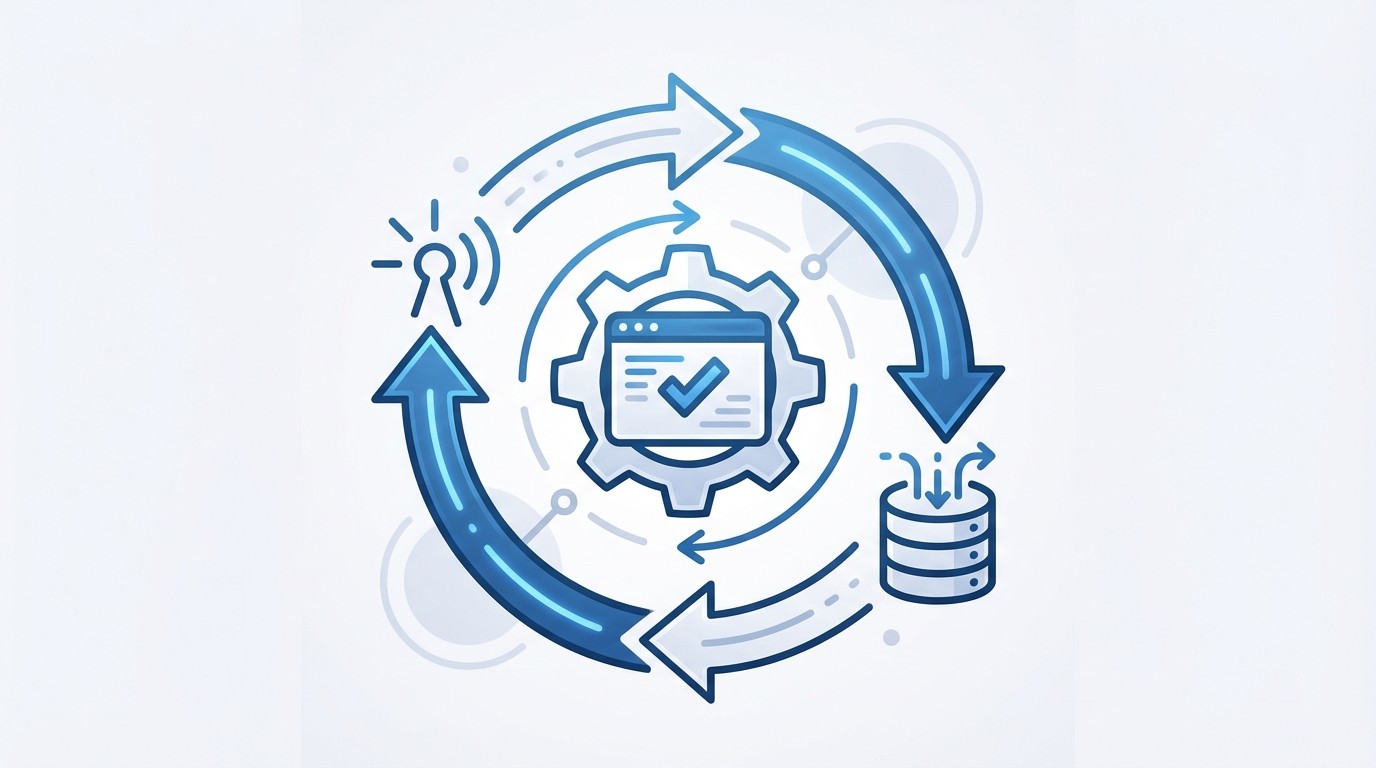
Automated resolution success is a closed loop: the customer acts in channel, the workflow enforces policy, and the outcome writes back to systems of record automatically. It matters because it removes handoffs, reduces errors, and gives you auditable proof of completion.

Define resolution per workflow before you instrument it. For billing, it might be paid balance or plan established. For compliance, it might be identity verified or documents captured. Then build your measurement so each completion has both the customer action and a back end acknowledgement attached.

The KPI north star: completion that writes back automatically

Completion rate should lead your dashboard, paired with writeback success. One without the other is a false positive. You want to know that a case appears complete to the customer and that the system of record reflects the same truth.

Track both at the workflow and cohort level. Weekly trending exposes regression early and gives you the confidence to scale a pilot. It also aligns teams on what matters: finished work with clean data and fewer manual touches.

The Real Bottleneck: Why Vanity Metrics Hide Automated Resolution Success

Vanity metrics hide failure because they measure motion, not resolution. Channel hops and handoffs introduce delay, drop off, and reconciliation effort that never show up in simple activity counts. Fix the loop in-message first, then size staffing based on verified completion data.

Symptom versus root cause in financial operations

Queues, escalations, and abandoned tasks look like staffing or training problems. The root cause is fragmented workflows that start in messaging but finish in portals or with agents. Every context switch raises the risk of drop off and forces manual wrap up.

Most teams add channels or scripts and hope volume spreads evenly. It doesn’t. Without closed loop execution and writebacks, you create parallel queues that multiply work. Start by mapping where the task should finish and whether the outcome writes back cleanly. That single change reframes the problem.

The hidden cost of channel hops and manual wrap up

When outcomes don’t write back automatically, agents rekey data, notes scatter, and audit evidence goes missing. Those minutes add up across high-volume work, turning small inefficiencies into material monthly cost and compliance risk.

Quantify it. Count handoffs, logins, and copy-paste moments for one workflow. Convert each to minutes and fully loaded cost. You’ll likely find double-digit percentages of time wasted on tasks that a closed loop workflow would finish in-message with higher accuracy and complete logs.

  • Map last-mile steps and tally preventable touches

  • Attach a dollar value per manual minute to show true cost

  • Flag any outcome without a system acknowledgement as incomplete

The Cost of Getting It Wrong: Quantifying Missed Automated Resolution Success

Missed automated resolution success shows up as wasted minutes, higher unit cost, and rising risk. Each extra step or manual touch compounds across thousands of accounts. Putting numbers to that waste builds an objective case for change and sets targets teams can defend.

Time and money you lose every month

Small delays aren’t small at scale. If a routine case requires an extra two minutes of wrap up and you process 50,000 of them, that’s more than 1,600 hours of labor in a month. Tie that to fully loaded cost and the number will get attention in any review.

Measure time to resolution by workflow and identify where manual touches persist. Then baseline cost per resolved case using verified writebacks, not conversation ends. This gives finance a clear line of sight from operational gains to budget impact and helps you forecast savings credibly.

  • Build a time-to-resolution baseline with verified completions

  • Convert manual touches into monthly cost with clear assumptions

  • Prioritize fixes with the highest savings per engineering hour

Error and risk exposure you can’t afford

Manual wrap up invites mistakes: missing documents, wrong flags, inconsistent notes. Those errors drive disputes, rework, and regulatory exposure. Instrument writeback success, audit log completeness, and SLA breach rate to surface risk fast.

Set thresholds that trigger rollback or escalation when reliability dips. Weekly compliance health makes the risk visible and forces action. It’s far better to catch a drop in writeback integrity this week than to explain a pattern of inconsistent records in an audit next quarter.

  • Track writeback success alongside completion for every workflow

  • Require digital evidence: timestamps, consent, identity checks

  • Publish SLA breach trends to keep attention on reliability

Reference frameworks on KPI design can help you structure targets and governance. For a concise overview, see A Best-in-Class Approach to Managing Operational KPIs.

What It Feels Like to Operate Without Automated Resolution Success

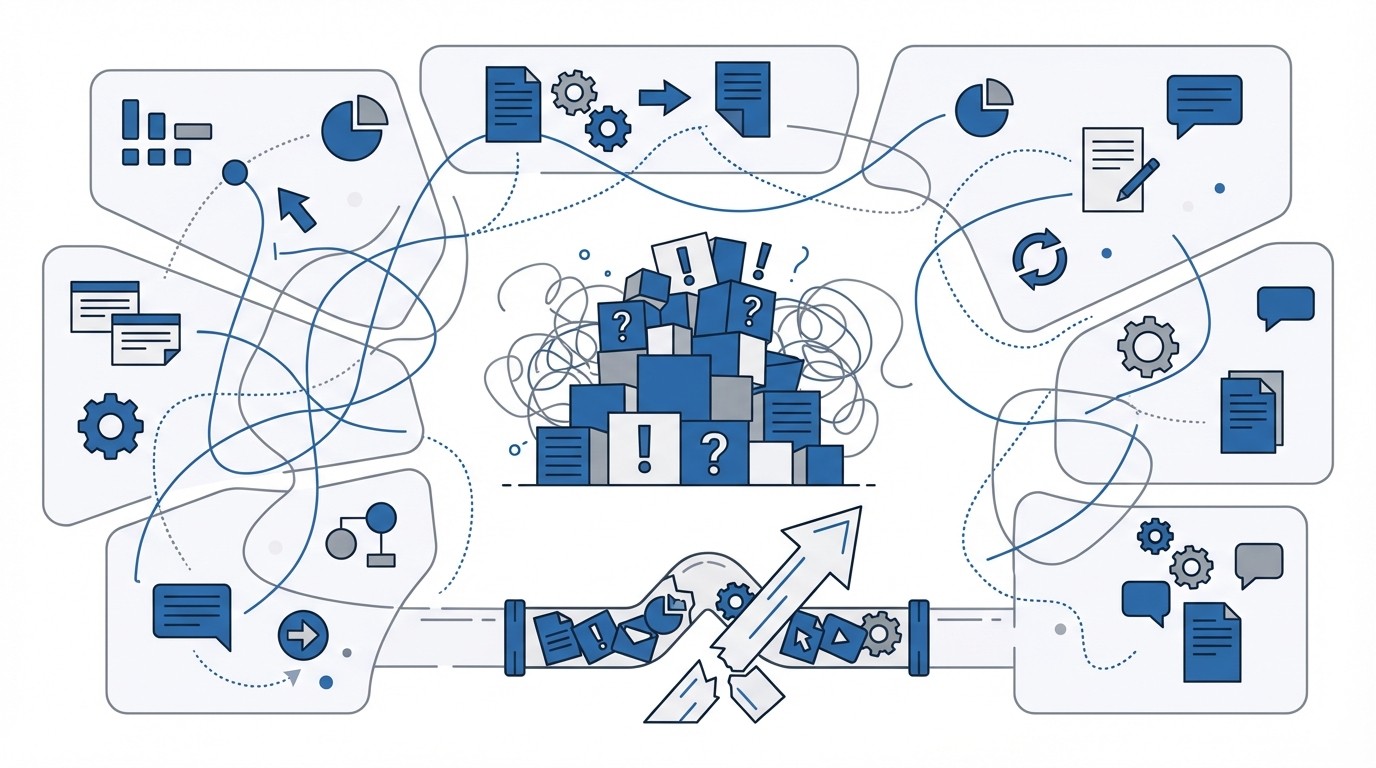
Operating without automated resolution success feels chaotic. Work spreads across tools, exceptions lack context, and reports celebrate motion while backlogs grow. Teams work hard but can’t point to consistent, auditable resolution at scale. That gap drains morale and budget.

A day in the life of an ops manager stuck in parallel queues

You start the day with growing backlogs across SMS, WhatsApp, email, and your helpdesk. Outreach ran, but outcomes trickle in through different systems. Agents toggle between screens to reconcile records and chase customers who stalled at a portal login. The board slide shows activity, not resolution.

You know the pattern is wrong. You also know your team isn’t the problem. They’re processing routine, policy-bound tasks that a closed loop workflow should finish automatically. That’s why the same issues return week after week despite sincere effort and long hours.

How teams burn out while budgets creep upward

Even top agents make errors under pressure. They shouldn’t be rekeying outcomes or hunting for documents across tools. Leaders add channels and headcount, but deflection stays low because completion still depends on people for the last mile.

Morale drops when effort doesn’t translate into measurable wins. To turn it, reserve humans for exceptions that truly need judgment. Let the system walk routine cases to completion, write back the outcome, and provide clean logs. Then your weekly metrics start to reflect real progress.

  • Escalate only when rules require human decision

  • Send exceptions with full context so agents start at resolution

  • Use exception escape rate to verify that your improvements stick

For additional perspective on core KPI categories in operations, see KPIs for Operations.

The Playbook: KPIs and Instrumentation for Automated Resolution Success

A completion-first KPI stack measures finished work with verified writebacks and the speed and economics around it. Seven KPIs cover the loop end to end. Track them weekly by workflow and cohort to focus teams on the changes that move cost, risk, and CX.

The seven KPIs that prove completion at scale

Measuring the right seven tells you whether automation is working and where it fails. Each KPI should roll up by workflow and segment so you can compare like with like and run precise fixes.

Define and publish these weekly:

  1. Completion rate: share of initiated cases that finish in-message

  2. Writeback success: percent of completions with verified system updates

  3. Deflection rate: percent resolved without an agent

  4. Time to resolution: median minutes from trigger to writeback

  5. SLA breach rate: percent missing time or policy targets

  6. Cost per resolved case: fully loaded cost divided by verified completions

  7. Exception escape rate: percent of exceptions that loop back to agents after first pass

Instrumentation blueprint: telemetry, back end acknowledgements, audit logs

Activity telemetry is useful, but outcomes need proof. Confirm customer action with mini-app events and confirm completion with back end acknowledgements and idempotent writebacks. Store digital evidence so every resolved case has a clean audit trail.

Join these signals in your data model. The goal is simple: for each completed case, you can point to who acted, what they did, when it happened, and how the system of record updated. When that’s consistent, weekly reporting becomes credible and actionable.

  • Treat opens, clicks, and steps as diagnostics

  • Rely on system acknowledgements to count completion

  • Store timestamps, consent, identity checks, and documents as evidence

For a broader lens on measuring automation performance, this overview is helpful: Measure Automation Success.

Targets and red flags for billing, collections, and compliance

Start with targets you can hit without heroics. For most teams, 95 percent or higher writeback success is both necessary and achievable. Deflection above 30 percent in quarter one is a reasonable bar. Time to resolution should drop 20 to 30 percent as you remove handoffs.

Set clear red flags. If writeback success dips below 95 percent, pause the change and run root cause analysis. If deflection stalls below 30 percent, suspect UI friction, missing eligibility paths, or channel timing. Publish these rules so everyone knows what triggers rollback or escalation.

How RadMedia Operationalizes Automated Resolution Success

A managed, closed loop approach makes the new KPI stack achievable. RadMedia connects triggers to in-message self-service, executes rules on autopilot, and writes outcomes back to your systems with audit trails. That removes manual wrap up, reduces cost per resolved case, and stabilizes SLA performance.

Closed loop writebacks with audit trails

RadMedia manages integrations and writebacks to systems of record and captures idempotency keys, timestamps, identity checks, consent, and documents as digital evidence. This combination lifts writeback success and reduces reconciliation risk dramatically.

It also addresses the costs you quantified earlier. Less rekeying means fewer errors and faster cycle times. When every completion has a verified writeback and a complete audit log, compliance reviews become simpler and exceptions stop bouncing between teams.

  • Managed connectivity for REST, SOAP, webhooks, queues, and secure batch

  • Writeback guarantees with retries and idempotency controls

  • Exportable logs for data lakes and SIEM to support oversight

In-message self-service and deflection tuning

RadMedia delivers secure, no-download mini-apps inside the message so customers can pay now, start a plan, confirm identity, or upload documents without a portal detour. Identity is verified in flow and consent is captured digitally.

Channel mix and cadence are tuned to lift deflection. As routine cases resolve without agents, time to resolution drops and queues thin. The result is a measurable shift in your KPIs: higher completion, stable writeback success, and lower cost per resolved case.

  • Channel orchestration across SMS, email, and WhatsApp

  • Personalization from trigger data to reduce friction

  • Quiet-hour and window controls to respect timing and improve response

Autopilot orchestration and exception handling

RadMedia’s workflow engine links triggers to outreach and in-channel actions, executes policy rules, and escalates only when human judgment is required. Exceptions arrive with full context, including messages sent, steps completed, validation results, and attempted writebacks.

That context reduces exception escape rate and protects SLA targets. Your weekly metrics stop swinging with staffing and training variability because the system handles the routine with consistency, and people focus on the edge cases that truly need them.

  • Rules-driven orchestration aligned to your policies

  • Exception routing with complete histories for faster resolution

  • Telemetry at every step to support monitoring and continuous improvement

For leaders aligning operating models to measurable outcomes, see this perspective on KPI design at scale: Product Operating Model KPIs and Metrics to Measure Success.

Conclusion

If your dashboards celebrate conversations, you’re likely missing the truth that runs your business. Automated resolution success is simple to define and powerful to measure: finish the task in-message and verify the writeback. Build your KPI stack around that loop, instrument it with system acknowledgements and audit evidence, and publish trends weekly. You’ll cut waste, reduce risk, and give your teams a clear target that rewards real progress.

Discover the 7 automated resolution KPIs that operations managers must track for billing, collections, and compliance success. Optimize your metrics today!

7 KPIs Operations Managers Must Track to Measure Automated Resolution Success - RadMedia professional guide illustration

[{"q":"How do I track the completion rate for automated resolutions?","a":"To track the completion rate for automated resolutions, first define what 'completion' means for your specific workflows. This could be a successfully processed payment or a verified document submission. Next, use RadMedia's in-message self-service apps to allow customers to complete tasks directly within the communication channel, ensuring that each action is logged. Finally, regularly review the data to measure how many tasks are completed successfully versus those that require manual intervention. This approach helps you pinpoint areas for improvement and ensures that you’re focusing on metrics that truly reflect operational success."},{"q":"What if my customers prefer different communication channels?","a":"If your customers prefer different communication channels, you can leverage RadMedia's omni-channel messaging capabilities. Start by gathering data on customer preferences through initial interactions or surveys. Then, configure RadMedia to send messages via SMS, email, or WhatsApp based on these preferences. This way, you can ensure that outreach is tailored to individual customer needs, increasing engagement and the likelihood of task completion. By optimizing your communication strategy, you’ll reduce friction and enhance the overall customer experience."},{"q":"Can I automate compliance tasks with RadMedia?","a":"Yes, you can automate compliance tasks using RadMedia. Begin by identifying the specific compliance requirements you need to address, such as KYC or AML attestations. Use RadMedia’s in-message self-service apps to allow customers to verify their identity and submit necessary documents directly within the communication. This approach not only streamlines the process but also ensures that all actions are logged for audit purposes. By automating these tasks, you reduce manual workload and improve compliance accuracy."},{"q":"When should I escalate a case to a human agent?","a":"You should consider escalating a case to a human agent when an exception occurs that cannot be resolved through the automated workflow. RadMedia’s system is designed to handle most routine tasks automatically, but if a customer encounters an issue—like a payment decline or missing information—the workflow can escalate to an agent with all relevant context. This ensures that agents can start from a place of understanding rather than having to gather information from scratch, leading to faster resolutions for complex cases."},{"q":"Why does tracking time-to-resolution matter?","a":"Tracking time-to-resolution is crucial because it directly impacts customer satisfaction and operational efficiency. By measuring how long it takes to resolve issues, you can identify bottlenecks in your processes. With RadMedia, you can automate many routine tasks, which typically reduces time-to-resolution significantly. Regularly reviewing this metric allows you to set realistic targets and make informed adjustments to your workflows, ultimately leading to better service outcomes and reduced operational costs."}]

16 Feb 2026

ca475a45-3177-4bc2-90c4-56ec8682c04e

{"@graph":[{"@id":"https://radmedia.co.za/7-kpis-operations-managers-must-track-to-measure-automated-resolution-success#article","@type":"Article","image":"https://jdbrszggncetflrhtwcd.supabase.co/storage/v1/object/public/article-images/6dca98ae-107d-47b7-832f-ee543e4b5364/7-kpis-operations-managers-must-track-to-measure-automated-resolution-success-hero-1771249245105.png","author":{"name":"RadMedia","@type":"Organization"},"headline":"7 KPIs Operations Managers Must Track to Measure Automated Resolution Success","keywords":"automated resolution KPIs","publisher":{"name":"RadMedia","@type":"Organization"},"wordCount":2318,"description":"7 KPIs Operations Managers Must Track to Measure Automated Resolution Success","dateModified":"2026-02-16T13:40:23.472+00:00","datePublished":"2026-02-16T13:37:05.398468+00:00","mainEntityOfPage":{"@id":"https://radmedia.co.za/7-kpis-operations-managers-must-track-to-measure-automated-resolution-success","@type":"WebPage"}},{"@id":"https://radmedia.co.za/7-kpis-operations-managers-must-track-to-measure-automated-resolution-success#itemlist","name":"7 KPIs Operations Managers Must Track to Measure Automated Resolution Success","@type":"ItemList","itemListElement":[{"name":"Stop Celebrating Conversations, Optimize for Automated Resolution Success","@type":"ListItem","position":1},{"name":"The Real Bottleneck: Why Vanity Metrics Hide Automated Resolution Success","@type":"ListItem","position":2},{"name":"The Cost of Getting It Wrong: Quantifying Missed Automated Resolution Success","@type":"ListItem","position":3},{"name":"What It Feels Like to Operate Without Automated Resolution Success","@type":"ListItem","position":4},{"name":"The Playbook: KPIs and Instrumentation for Automated Resolution Success","@type":"ListItem","position":5},{"name":"Completion rate: share of initiated cases that finish in-message","@type":"ListItem","position":6},{"name":"Writeback success: percent of completions with verified system updates","@type":"ListItem","position":7},{"name":"Deflection rate: percent resolved without an agent","@type":"ListItem","position":8},{"name":"Time to resolution: median minutes from trigger to writeback","@type":"ListItem","position":9},{"name":"SLA breach rate: percent missing time or policy targets","@type":"ListItem","position":10},{"name":"Cost per resolved case: fully loaded cost divided by verified completions","@type":"ListItem","position":11},{"name":"Exception escape rate: percent of exceptions that loop back to agents after first pass","@type":"ListItem","position":12},{"name":"How RadMedia Operationalizes Automated Resolution Success","@type":"ListItem","position":13}]},{"@id":"https://radmedia.co.za/7-kpis-operations-managers-must-track-to-measure-automated-resolution-success#breadcrumb","@type":"BreadcrumbList","itemListElement":[{"item":"https://radmedia.co.za","name":"Home","@type":"ListItem","position":1},{"item":"https://radmedia.co.za/7-kpis-operations-managers-must-track-to-measure-automated-resolution-success","name":"7 KPIs Operations Managers Must Track to Measure Automated R","@type":"ListItem","position":2}]}],"@context":"https://schema.org"}

[{"url":"https://jdbrszggncetflrhtwcd.supabase.co/storage/v1/object/public/article-images/6dca98ae-107d-47b7-832f-ee543e4b5364/7-kpis-operations-managers-must-track-to-measure-automated-resolution-success-inline-0-1771249272371.png","alt":"How RadMedia Operationalizes Automated Resolution Success concept illustration - RadMedia","filename":"7-kpis-operations-managers-must-track-to-measure-automated-resolution-success-inline-0-1771249272371.png","position":"after_h2_1","asset_id":null,"type":"ai_generated","dimensions":{"width":1024,"height":1024}},{"url":"https://jdbrszggncetflrhtwcd.supabase.co/storage/v1/object/public/article-images/6dca98ae-107d-47b7-832f-ee543e4b5364/7-kpis-operations-managers-must-track-to-measure-automated-resolution-success-inline-1-1771249287804.png","alt":"What It Feels Like to Operate Without Automated Resolution Success concept illustration - RadMedia","filename":"7-kpis-operations-managers-must-track-to-measure-automated-resolution-success-inline-1-1771249287804.png","position":"after_h2_1","asset_id":null,"type":"ai_generated","dimensions":{"width":1024,"height":1024}}]

93

2318

Most operations teams still report on conversations, even when cases stall at the last mile. The right move is to measure whether work finishes inside the message and writes back to your system of record automatically. That’s automated resolution success. We’ll walk you through the KPI stack that proves it and how to instrument each metric with confidence.

You don’t need more dashboards. You need a smaller set of measures that tie to resolved cases, lower unit cost, and tighter SLAs. We’ll discuss the specific ways activity metrics hide failure, the costs you’re already paying, and the seven KPIs that give you a defensible view of performance in billing, collections, and compliance.

Key Takeaways:

  • Make completion rate, paired with writeback success, your north star for automated resolution success

  • Demote conversation volume, handle time, and bot containment to diagnostics, not leadership KPIs

  • Quantify waste by mapping handoffs, logins, and manual wrap up per workflow

  • Set pragmatic targets: 95%+ writeback success, 30%+ deflection in quarter one, and 20% time-to-resolution reduction

  • Instrument outcomes with back end acknowledgements, idempotent writebacks, and complete audit logs

  • Track seven KPIs weekly by workflow and cohort, then assign owners to red metrics

  • Reserve agents for exceptions, not routine, policy-bound tasks

Stop Celebrating Conversations, Optimize for Automated Resolution Success

Automated resolution success means the task finishes inside the message and the outcome writes back to source systems without manual wrap up. That’s what reduces cost, error, and cycle time. If a metric can’t be tied to a completed case with a verified writeback, it won’t help you run operations well.

What It Feels Like to Operate Without Automated Resolution Success concept illustration - RadMediaHow RadMedia Operationalizes Automated Resolution Success concept illustration - RadMedia

Why conversation metrics fail billing and collections

Conversation volume, handle time, and bot containment are activity proxies, not outcome proof. They often look healthy while customers bounce between channels or stall at a portal login. Agents then rekey outcomes and reconcile records manually, which inflates unit cost and erodes quality.

We’ve seen billing teams celebrate rising bot containment while delinquency rates barely move. The reason is simple. If completion doesn’t happen inside the message, you shift work rather than finish it. Treat conversation metrics like telemetry that helps you debug, not success signals that drive your business review.

  • Use activity metrics to diagnose funnel friction, not to claim success

  • Require a verified writeback to count any case as resolved

  • Trend activity-to-outcome ratios to spot where automation breaks

What is automated resolution success, and why does it matter?

Automated resolution success is a closed loop: the customer acts in channel, the workflow enforces policy, and the outcome writes back to systems of record automatically. It matters because it removes handoffs, reduces errors, and gives you auditable proof of completion.

Define resolution per workflow before you instrument it. For billing, it might be paid balance or plan established. For compliance, it might be identity verified or documents captured. Then build your measurement so each completion has both the customer action and a back end acknowledgement attached.

The KPI north star: completion that writes back automatically

Completion rate should lead your dashboard, paired with writeback success. One without the other is a false positive. You want to know that a case appears complete to the customer and that the system of record reflects the same truth.

Track both at the workflow and cohort level. Weekly trending exposes regression early and gives you the confidence to scale a pilot. It also aligns teams on what matters: finished work with clean data and fewer manual touches.

The Real Bottleneck: Why Vanity Metrics Hide Automated Resolution Success

Vanity metrics hide failure because they measure motion, not resolution. Channel hops and handoffs introduce delay, drop off, and reconciliation effort that never show up in simple activity counts. Fix the loop in-message first, then size staffing based on verified completion data.

Symptom versus root cause in financial operations

Queues, escalations, and abandoned tasks look like staffing or training problems. The root cause is fragmented workflows that start in messaging but finish in portals or with agents. Every context switch raises the risk of drop off and forces manual wrap up.

Most teams add channels or scripts and hope volume spreads evenly. It doesn’t. Without closed loop execution and writebacks, you create parallel queues that multiply work. Start by mapping where the task should finish and whether the outcome writes back cleanly. That single change reframes the problem.

The hidden cost of channel hops and manual wrap up

When outcomes don’t write back automatically, agents rekey data, notes scatter, and audit evidence goes missing. Those minutes add up across high-volume work, turning small inefficiencies into material monthly cost and compliance risk.

Quantify it. Count handoffs, logins, and copy-paste moments for one workflow. Convert each to minutes and fully loaded cost. You’ll likely find double-digit percentages of time wasted on tasks that a closed loop workflow would finish in-message with higher accuracy and complete logs.

  • Map last-mile steps and tally preventable touches

  • Attach a dollar value per manual minute to show true cost

  • Flag any outcome without a system acknowledgement as incomplete

The Cost of Getting It Wrong: Quantifying Missed Automated Resolution Success

Missed automated resolution success shows up as wasted minutes, higher unit cost, and rising risk. Each extra step or manual touch compounds across thousands of accounts. Putting numbers to that waste builds an objective case for change and sets targets teams can defend.

Time and money you lose every month

Small delays aren’t small at scale. If a routine case requires an extra two minutes of wrap up and you process 50,000 of them, that’s more than 1,600 hours of labor in a month. Tie that to fully loaded cost and the number will get attention in any review.

Measure time to resolution by workflow and identify where manual touches persist. Then baseline cost per resolved case using verified writebacks, not conversation ends. This gives finance a clear line of sight from operational gains to budget impact and helps you forecast savings credibly.

  • Build a time-to-resolution baseline with verified completions

  • Convert manual touches into monthly cost with clear assumptions

  • Prioritize fixes with the highest savings per engineering hour

Error and risk exposure you can’t afford

Manual wrap up invites mistakes: missing documents, wrong flags, inconsistent notes. Those errors drive disputes, rework, and regulatory exposure. Instrument writeback success, audit log completeness, and SLA breach rate to surface risk fast.

Set thresholds that trigger rollback or escalation when reliability dips. Weekly compliance health makes the risk visible and forces action. It’s far better to catch a drop in writeback integrity this week than to explain a pattern of inconsistent records in an audit next quarter.

  • Track writeback success alongside completion for every workflow

  • Require digital evidence: timestamps, consent, identity checks

  • Publish SLA breach trends to keep attention on reliability

Reference frameworks on KPI design can help you structure targets and governance. For a concise overview, see A Best-in-Class Approach to Managing Operational KPIs.

What It Feels Like to Operate Without Automated Resolution Success

Operating without automated resolution success feels chaotic. Work spreads across tools, exceptions lack context, and reports celebrate motion while backlogs grow. Teams work hard but can’t point to consistent, auditable resolution at scale. That gap drains morale and budget.

A day in the life of an ops manager stuck in parallel queues

You start the day with growing backlogs across SMS, WhatsApp, email, and your helpdesk. Outreach ran, but outcomes trickle in through different systems. Agents toggle between screens to reconcile records and chase customers who stalled at a portal login. The board slide shows activity, not resolution.

You know the pattern is wrong. You also know your team isn’t the problem. They’re processing routine, policy-bound tasks that a closed loop workflow should finish automatically. That’s why the same issues return week after week despite sincere effort and long hours.

How teams burn out while budgets creep upward

Even top agents make errors under pressure. They shouldn’t be rekeying outcomes or hunting for documents across tools. Leaders add channels and headcount, but deflection stays low because completion still depends on people for the last mile.

Morale drops when effort doesn’t translate into measurable wins. To turn it, reserve humans for exceptions that truly need judgment. Let the system walk routine cases to completion, write back the outcome, and provide clean logs. Then your weekly metrics start to reflect real progress.

  • Escalate only when rules require human decision

  • Send exceptions with full context so agents start at resolution

  • Use exception escape rate to verify that your improvements stick

For additional perspective on core KPI categories in operations, see KPIs for Operations.

The Playbook: KPIs and Instrumentation for Automated Resolution Success

A completion-first KPI stack measures finished work with verified writebacks and the speed and economics around it. Seven KPIs cover the loop end to end. Track them weekly by workflow and cohort to focus teams on the changes that move cost, risk, and CX.

The seven KPIs that prove completion at scale

Measuring the right seven tells you whether automation is working and where it fails. Each KPI should roll up by workflow and segment so you can compare like with like and run precise fixes.

Define and publish these weekly:

  1. Completion rate: share of initiated cases that finish in-message

  2. Writeback success: percent of completions with verified system updates

  3. Deflection rate: percent resolved without an agent

  4. Time to resolution: median minutes from trigger to writeback

  5. SLA breach rate: percent missing time or policy targets

  6. Cost per resolved case: fully loaded cost divided by verified completions

  7. Exception escape rate: percent of exceptions that loop back to agents after first pass

Instrumentation blueprint: telemetry, back end acknowledgements, audit logs

Activity telemetry is useful, but outcomes need proof. Confirm customer action with mini-app events and confirm completion with back end acknowledgements and idempotent writebacks. Store digital evidence so every resolved case has a clean audit trail.

Join these signals in your data model. The goal is simple: for each completed case, you can point to who acted, what they did, when it happened, and how the system of record updated. When that’s consistent, weekly reporting becomes credible and actionable.

  • Treat opens, clicks, and steps as diagnostics

  • Rely on system acknowledgements to count completion

  • Store timestamps, consent, identity checks, and documents as evidence

For a broader lens on measuring automation performance, this overview is helpful: Measure Automation Success.

Targets and red flags for billing, collections, and compliance

Start with targets you can hit without heroics. For most teams, 95 percent or higher writeback success is both necessary and achievable. Deflection above 30 percent in quarter one is a reasonable bar. Time to resolution should drop 20 to 30 percent as you remove handoffs.

Set clear red flags. If writeback success dips below 95 percent, pause the change and run root cause analysis. If deflection stalls below 30 percent, suspect UI friction, missing eligibility paths, or channel timing. Publish these rules so everyone knows what triggers rollback or escalation.

How RadMedia Operationalizes Automated Resolution Success

A managed, closed loop approach makes the new KPI stack achievable. RadMedia connects triggers to in-message self-service, executes rules on autopilot, and writes outcomes back to your systems with audit trails. That removes manual wrap up, reduces cost per resolved case, and stabilizes SLA performance.

Closed loop writebacks with audit trails

RadMedia manages integrations and writebacks to systems of record and captures idempotency keys, timestamps, identity checks, consent, and documents as digital evidence. This combination lifts writeback success and reduces reconciliation risk dramatically.

It also addresses the costs you quantified earlier. Less rekeying means fewer errors and faster cycle times. When every completion has a verified writeback and a complete audit log, compliance reviews become simpler and exceptions stop bouncing between teams.

  • Managed connectivity for REST, SOAP, webhooks, queues, and secure batch

  • Writeback guarantees with retries and idempotency controls

  • Exportable logs for data lakes and SIEM to support oversight

In-message self-service and deflection tuning

RadMedia delivers secure, no-download mini-apps inside the message so customers can pay now, start a plan, confirm identity, or upload documents without a portal detour. Identity is verified in flow and consent is captured digitally.

Channel mix and cadence are tuned to lift deflection. As routine cases resolve without agents, time to resolution drops and queues thin. The result is a measurable shift in your KPIs: higher completion, stable writeback success, and lower cost per resolved case.

  • Channel orchestration across SMS, email, and WhatsApp

  • Personalization from trigger data to reduce friction

  • Quiet-hour and window controls to respect timing and improve response

Autopilot orchestration and exception handling

RadMedia’s workflow engine links triggers to outreach and in-channel actions, executes policy rules, and escalates only when human judgment is required. Exceptions arrive with full context, including messages sent, steps completed, validation results, and attempted writebacks.

That context reduces exception escape rate and protects SLA targets. Your weekly metrics stop swinging with staffing and training variability because the system handles the routine with consistency, and people focus on the edge cases that truly need them.

  • Rules-driven orchestration aligned to your policies

  • Exception routing with complete histories for faster resolution

  • Telemetry at every step to support monitoring and continuous improvement

For leaders aligning operating models to measurable outcomes, see this perspective on KPI design at scale: Product Operating Model KPIs and Metrics to Measure Success.

Conclusion

If your dashboards celebrate conversations, you’re likely missing the truth that runs your business. Automated resolution success is simple to define and powerful to measure: finish the task in-message and verify the writeback. Build your KPI stack around that loop, instrument it with system acknowledgements and audit evidence, and publish trends weekly. You’ll cut waste, reduce risk, and give your teams a clear target that rewards real progress.