
Stop Celebrating Conversations: Reframe Metrics to Resolution and Cost‑to‑Serve
Shift focus from counting conversations to measuring completion rates and cost to serve. By identifying and removing inefficiencies, you can enhance outcomes while reducing costs. Implement a resolution-first approach to drive better operational efficiency.
Most operations teams are asked to reduce cost to serve while keeping outcomes steady. The fastest path is not more channels or more talk. It is measuring completion where work actually finishes, then removing the steps that add minutes, errors, and rework. We will walk you through how to make that shift and prove savings quickly.
We will discuss the specific ways volume metrics mask failure and how a resolution-first KPI set changes behavior. You will see where writebacks fail, how to calculate unit cost and leakage, what fatigue feels like on the floor, and how to design a simple dashboard tied to budget lines. Clarity over cleverness, practical over hype.
Key Takeaways:
Replace conversation counts with completion rate, time to resolution, writeback success, and agent deflection
Tie cost to serve to the whole journey, from trigger to confirmed writeback
Find failure at the writeback layer, not the chatbot script
Quantify human minutes, rework, and leakage, then remove steps customers never needed
Build a one-page dashboard with thresholds and owner actions that prevent drift to vanity metrics
Start with one high-volume workflow, prove deflection, then scale
More Conversations Do Not Mean Success: Measure Completion and Cost to Serve
Conversations do not equal success, completion does. Cost to serve drops when customers finish tasks in the message and outcomes write back to systems automatically. Counting calls or chats can rise while unit cost and delays rise too, because handoffs, logins, and wrap-ups still burn minutes.
What Cost to Serve Means in Operations Terms
Cost to serve is the fully loaded unit cost to move a case from trigger to confirmed writeback. It includes agent minutes, escalations, verification checks, retries, reconciliation time, platform fees, and leakage from abandoned cases. Finance sees a line item, but operations feels the drag in queues, rework, and brittle exceptions.
Most teams undercount the human minutes outside obvious handle time. Identity checks, portal resets, payment retries, and manual notes all accrue in the background. They also miss reconciliation passes when systems disagree. This is where cost hides. Tie cost to the end-to-end path so minutes and fees track the actual journey, not a single touchpoint.
When you do this, a surprising pattern appears. Conversation volume looks healthy, yet completion stalls at the last mile. You see customers bounce between channels and agents rekey outcomes. That is not progress. It is expensive motion.
Replace Vanity Counts With Resolution Metrics That Tie to Outcomes
Volume metrics like contact count, AHT, or bot containment are easy to pull, but they are weak predictors of real outcomes. A resolution-first set changes the target and the behavior. It focuses teams on finishing the task inside the message so there is nothing left to reconcile.
In practice, this means you track four things and make them visible:
Completion rate: percent of cases that finished in message without agent work
Time to resolution: median and 90th percentile from trigger to confirmed writeback
Writeback success: percent of outcomes posted to system of record on first attempt
Agent deflection: percent of routine cases that never reached a queue
Higher conversation counts can coexist with worse outcomes. Research on workplace communication shows that more talk often correlates with delays and errors when resolution paths are unclear, which raises costs over time. See the analysis in Crucial Learning’s report on costly conversations. Audit one workflow this quarter using these four measures and compare against your current volume dashboard.
The Hidden Drivers of Cost to Serve in Fragmented Journeys
Writebacks fail at the edges, and that failure drives cost. Every context switch, login, schema mismatch, or manual wrap-up adds minutes and risks an error. The fix is collapsing action into the message and guaranteeing outcomes write back to your systems without human reconciliation.
Where Writeback Fails in Real Flows
Most stacks split outreach from action. A trigger sends a message that points to a portal. The customer needs a password, so they call. An agent verifies identity, toggles between systems, and rekeys updates. Later, someone reconciles records because one system did not update. Minutes pile up, and so do mistakes.
Authentication often breaks flow. One-time codes arrive on a different channel, security questions mismatch, or sessions expire. Data quality issues also stall outcomes. Required fields are missing, formats differ, or downstream validation fails silently. Each miss adds retries or hands the case to an agent who now acts as glue.
Manual wrap-up is the hidden tax. Notes are free text, documents land in shared drives, and audit trails scatter. When regulators or auditors ask how a decision was made, teams scramble. That scramble is cost. A clean writeback with evidence attached prevents this scramble entirely.
Leadership literature on execution risk highlights how unclear paths from talk to action create waste and failure. The pattern holds here too. See the PMI discussion on crucial conversations and project execution for context on how misalignment creates costly delays.
Messaging Is Outreach, Portals Are Action, That Split Is the Problem
When you separate conversation from transaction, you lose people at the moment that matters. The customer hits a link, faces a login, and postpones. Or they call, and your queue grows. Your unit cost rises because you designed a hop. You did not design completion.
Collapse action into the message. Use secure, in-message mini apps so the customer updates a card, sets a plan, or submits a document without leaving the thread. Validate identity in flow. Present only actions that match policy and context, then write the outcome back to your systems. Now the case closes without a portal or a person.
This also reduces compliance risk. Digital consent, timestamps, and documents stay attached to the case with a consistent schema. Auditors see how the outcome was reached. Agents see history only when they need to step in. You prevent error and waste by removing unnecessary steps.
Rational Math: How Conversation-First Ops Inflate Cost to Serve
Unit cost is not a mystery. It is human minutes per case times fully loaded cost per minute, plus platform fees per case, plus rework minutes. Leakage is abandoned cases times monetary impact per miss. Map the full journey to see where volume-first design inserts waste and risk.
How to Calculate Unit Cost and Leakage
Start with human minutes per completed case, not just handle time. Add time for identity checks, retries, follow-ups, and manual notes. Multiply by fully loaded cost per minute. Add per-case platform fees. Then add rework minutes from reconciliation passes. That is your unit cost.
Leakage sits next to it. Tally abandoned cases at each hop. Multiply by the value at risk per miss, such as lost payment, missed attestation, or delayed compliance. Leakage plus unit cost is the real cost to serve for that workflow. It is often higher than the dashboard suggests.
Teams often talk more when paths are unclear, which raises delay and error risk. Studies on communication gaps link poor resolution paths to measurable cost. See the ATD summary on the cost of poor conversations for a broader view.
Build a Baseline Time-to-Resolution Model That Exposes Waste
Start a timer at the system trigger. Stop it at confirmed writeback. Account for every wait state and hop: message sent, link clicked, identity verified, action taken, payment processed, writeback confirmed. Capture retries and their probabilities. This is your baseline.
Quantify each step in minutes and failure probability. A single login step with a small failure rate can still add hours across thousands of cases. A payment retry with a modest failure rate can flood your queues with avoidable calls. The model will show you which steps add the most delay and risk.
Once you see it, target automation that removes hops and guarantees writebacks. The goal is not faster talk. It is fewer steps and fewer failures. Cut minutes at the edges and your median and 90th percentile time to resolution will fall. Your cost to serve follows.
Common Undercounting Mistakes to Avoid
Teams miss three costs regularly. First, reconciliation time when systems disagree. Second, the back-and-forth to collect missing fields. Third, agent context switching between tools without integrated notes or audit logs. Each looks small alone. Together, they are material.
Undercounting these costs leads to wrong bets. You celebrate more chats while bleeding time on the side. Fix the accounting and the right investments become obvious. Remove steps, raise writeback success, and leakage drops.
What It Feels Like When Volume KPIs Drive Cost to Serve
It feels busy, but nothing finishes. Agents bounce between five screens. Customers start in SMS, hit a portal, then call. Managers chase exceptions that never should have existed. Error rates rise, attestations go missing, and audits feel risky. That is the cost of optimizing for activity, not outcomes.
Agent Fatigue, Customer Friction, and Compliance Anxiety
When work is fragmented, agents act as integrators. They look up policy, verify identity, rekey details, and paste notes. Even experienced teams miss steps under pressure. Fatigue sets in. Quality dips. It is not a talent problem. It is a system design problem.
Customers feel the friction too. They receive reminders, then face logins or long queues. Many intend to act but get lost at the last mile. Each extra step shrinks conversion. It also invites mistakes. Compliance suffers when evidence scatters across channels and tools.
You can hear this in floor feedback. “We spend more time updating systems than helping customers.” “We keep asking for the same documents.” “I cannot trace how this plan was set.” These are system signals. They point to a resolution problem, not a volume problem.
Leadership Blind Spots Created by Conversation Volume KPIs
When you celebrate conversations, teams chase talk. They optimize scripts, add channels, and fight for faster replies. Outcomes do not move. Costs do. Worse, this conditioning makes it harder to see the root cause. The wrong metric is not neutral. It is harmful.
Replace conversation targets with resolution SLAs and writeback thresholds. Make time to resolution and writeback success the decision triggers. Culture research shows the price of avoiding hard changes, like retiring pet metrics, can be steep. For a broader view on the cost of avoidance, see the Cultural Cost of Avoiding Difficult Conversations.
Design the New Dashboard: Resolution, Time to Resolution, and Cost to Serve
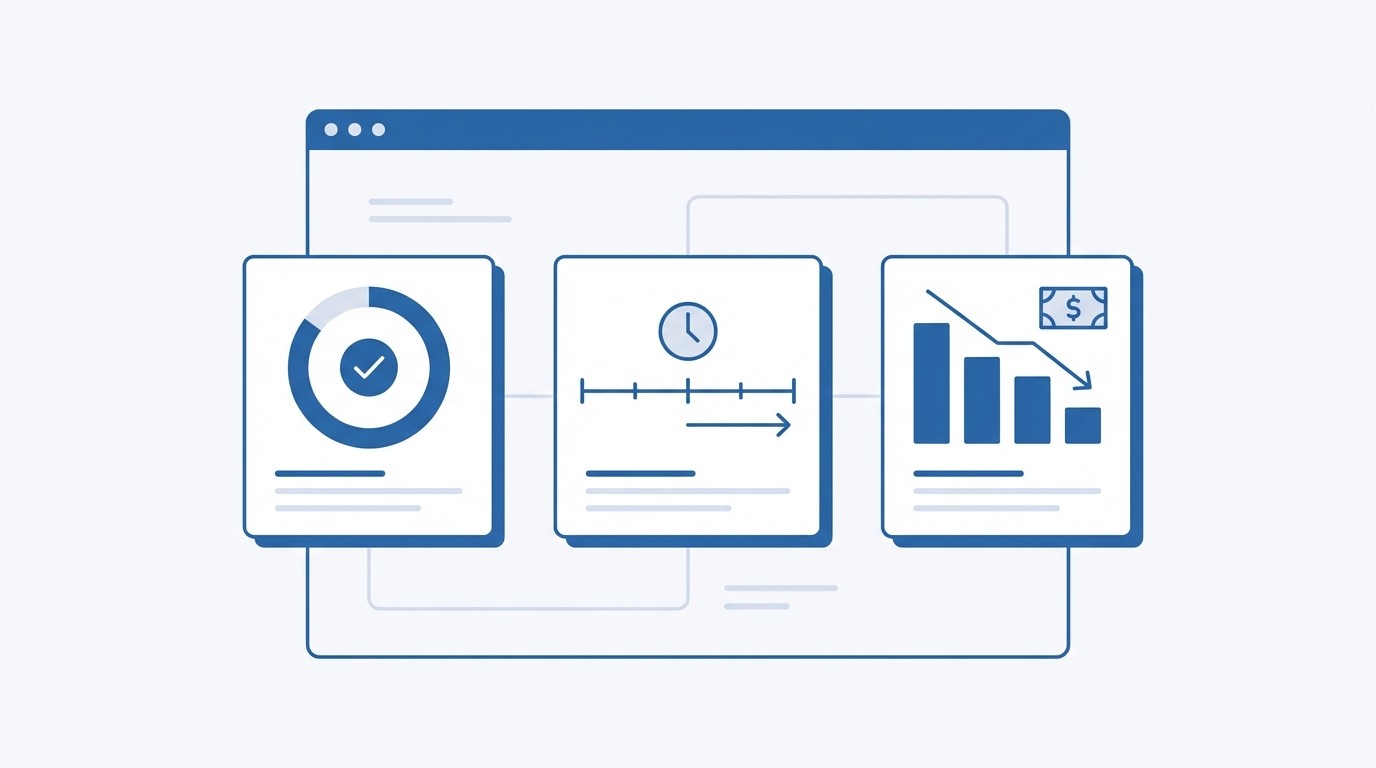
A useful dashboard is short and decisive. It shows completion rate, time to resolution, writeback success, agent deflection, and unit cost trend, broken down by workflow and segment. It adds thresholds that trigger action, not just observation.
Define the Resolution-First KPI Set and Decision Triggers
Build from outcomes. For each workflow, track completion rate and median and 90th percentile time to resolution. Add writeback success on first attempt and agent deflection for routine cases. Tie unit cost trend to these metrics so budget lines reflect operational reality.
Add triggers that force decisions. If writeback success drops below threshold, pause outreach and route to exception handling. If time to resolution at the 90th percentile rises week over week, review failure points. If deflection falls, inspect channel mix and identity checks.
When leaders see these metrics, behavior changes. Teams stop chasing volume and start removing steps. The dashboard becomes a control panel, not a scorecard.
Build the Cost to Serve Dashboard Leaders Will Actually Use
Keep it to one page. Connect data sources so outcomes, timestamps, and audit evidence arrive in a standard schema. Capture digital consent and attach documents at the case level. Publish weekly views with owner actions for any metric outside threshold.
Instrument the few things that matter:
Outcome events with timestamps and user context
Writeback attempts with success and failure reasons
Channel sequence and timing by customer segment
Exception routes with agent handle minutes and resolution
Leaders want cost reduction, better outcomes, and a modern experience. A clean dashboard that ties each to a workflow does that. If you want a framing of the economic drag from poor conversation-to-action paths, see the Cost of the Conversation Gap.
A 30-60-90 Rollout That Proves Impact Fast
Start small, then scale. Pick one high-volume, policy-bound workflow that is easy to measure. Prove completion and deflection, then expand to adjacent journeys. Keep the bar high: resolution in message and confirmed writeback, or it does not count.
Then execute this plan:
First 30 days: Instrument current state, publish the new dashboard, and baseline cost to serve and leakage
Days 31–60: Launch in-message completion for the pilot workflow and enforce writeback guarantees
Days 61–90: Compare before and after, tune identity checks and channel mix, and prepare the next two workflows
How RadMedia Cuts Cost to Serve With Resolution-First Workflows
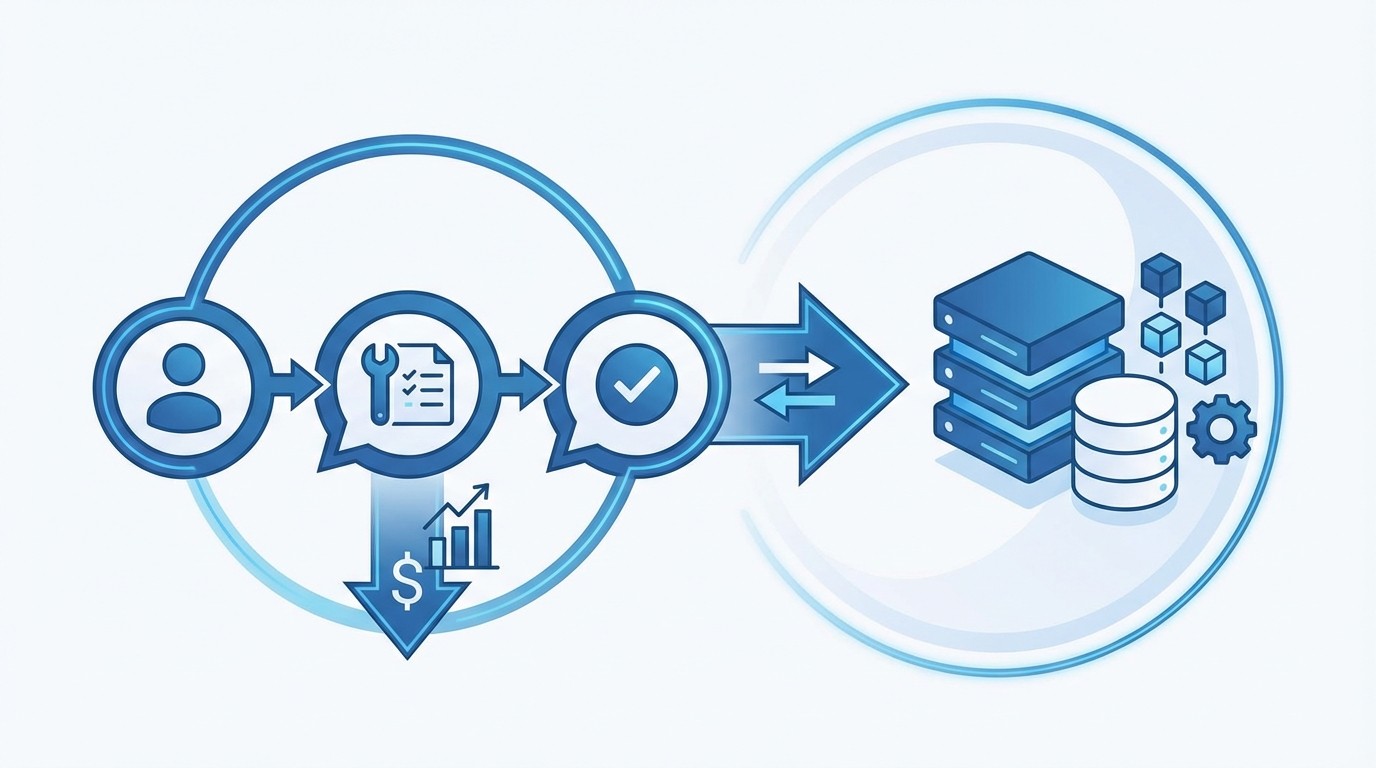
RadMedia reduces cost to serve by finishing tasks inside the message and writing outcomes back to your systems automatically. In-message self-service removes hops. Idempotent writebacks and retries prevent rework. Autopilot orchestration links triggers to action and escalates only true exceptions. Minutes fall. Completion rises.
In-Message Self-Service and Guaranteed Writebacks
RadMedia embeds secure mini apps inside SMS, email, and WhatsApp so customers complete tasks without a portal. Identity is verified in flow. The app presents only actions allowed by policy, such as update card, set a plan, confirm details, or upload a document.
When the customer acts, RadMedia posts results to systems of record with idempotency keys and retry policies. Balances update, flags clear, notes and documents attach, and digital consent stores with timestamps. This eliminates manual wrap-up and reconciliation passes, which cuts human minutes per case and error risk.
Teams that moved action in message saw deflection climb and time to resolution drop. In one collections program, resolution scaled to thousands of customers without agent involvement, while specialists focused on real disputes. That is how you pull unit cost down without blunt cuts.
Autopilot Orchestration and Managed Integration Reduce Risk and Spend
RadMedia connects to legacy cores and modern APIs, manages adapters and authentication, and subscribes to events like failed payments or KYC refresh windows. Triggers drive outreach across SMS, email, and WhatsApp with smart sequencing that respects consent and timing.
The Autopilot engine executes rules, advances steps based on customer actions, and handles exceptions with full context when needed. Most cases resolve straight through. Exceptions reach agents with history and validation results so they start at context, not discovery. This combination removes hidden engineering work and the daily reconciliation tax.
The before and after is tangible. Minutes per case down, writeback success up, deflection up, and median and 90th percentile time to resolution down within a quarter. That is real movement in cost to serve tied to outcomes, not activity.
Proving Impact Quarter Over Quarter
We will walk you through an outcome-first rollout. Start with one high-volume workflow. Use RadMedia to model completion, encode policy, enable in-message action, and guarantee writebacks. Publish the dashboard weekly. Compare human minutes, leakage, and time to resolution before and after.
With each workflow that moves to closed-loop execution, the pattern compounds. Agent queues thin because routine cases never arrive. Compliance improves because evidence is captured consistently. Customers act where they already are. RadMedia provides the managed integration, orchestration, and in-message apps that make this sustainable at scale.
Conclusion
If your dashboard celebrates conversations, you will optimize for talk and miss the finish. The path to lower cost to serve is clear. Measure completion where it happens, guarantee writebacks, and design flows that resolve inside the message. Start with one workflow, prove deflection and time-to-resolution gains, then scale what works.
Discover how resolution-first metrics can transform your operations. Cut costs and improve outcomes by measuring what truly matters. Learn more!
Stop Celebrating Conversations: Reframe Metrics to Resolution and Cost‑to‑Serve - RadMedia professional guide illustration
[{"q":"How do I start implementing a resolution-first approach?","a":"To start implementing a resolution-first approach, first identify a high-volume workflow that often leads to customer frustration, like failed payments. Next, map out the desired outcomes for this workflow, ensuring it includes specific actions customers can take within the message. You can use RadMedia to create in-message self-service apps that allow customers to update payment details or set payment plans without leaving the conversation. Finally, measure key metrics such as completion rate and time-to-resolution to assess the effectiveness of your new approach."},{"q":"What if my current metrics focus on conversation counts?","a":"If your current metrics focus on conversation counts, it’s time to shift your focus to completion metrics instead. Start by defining what successful completion looks like for your workflows, such as a processed payment or a completed KYC refresh. RadMedia can help you track these metrics effectively, allowing you to measure time-to-resolution and writeback success. This change will provide a clearer picture of your operational efficiency and help reduce costs associated with unnecessary conversations."},{"q":"Can I automate customer communications for overdue accounts?","a":"Yes, you can automate customer communications for overdue accounts using RadMedia. Begin by setting up triggers for overdue accounts, which can initiate outreach via SMS or email. RadMedia's managed integration allows you to create tailored messages that include secure links to in-message apps, where customers can quickly make payments or set up payment plans. This not only improves customer experience but also reduces the workload on your agents, allowing them to focus on more complex cases."},{"q":"When should I consider using in-message self-service apps?","a":"Consider using in-message self-service apps when you have routine tasks that customers frequently need to complete, such as updating payment information or verifying their identity. These apps can streamline the process by allowing customers to take action directly within the message, reducing the need for them to switch channels or log into portals. RadMedia provides these secure, no-download mini-apps, which enhance customer engagement and improve completion rates for your workflows."},{"q":"Why does my team struggle with fragmented customer journeys?","a":"Your team may struggle with fragmented customer journeys because traditional systems often require customers to switch between multiple channels, leading to confusion and delays. To combat this, implement a resolution-first strategy that keeps customers engaged within a single messaging platform. RadMedia can help by integrating your back-end systems and enabling in-message self-service, ensuring that tasks can be completed without unnecessary handoffs or logins. This approach minimizes friction and improves overall customer satisfaction."}]
18 Feb 2026
164f673f-761c-4452-b701-e82467025882
{"@graph":[{"@id":"https://radmedia.co.za/stop-celebrating-conversations-reframe-metrics-to-resolution-and-cost-to-serve#article","@type":"Article","image":"https://jdbrszggncetflrhtwcd.supabase.co/storage/v1/object/public/article-images/6dca98ae-107d-47b7-832f-ee543e4b5364/stop-celebrating-conversations-reframe-metrics-to-resolution-and-cost-to-serve-hero-1771373358682.png","author":{"name":"RadMedia","@type":"Organization"},"headline":"Stop Celebrating Conversations: Reframe Metrics to Resolution and Cost‑to‑Serve","keywords":"resolution-first metrics","publisher":{"name":"RadMedia","@type":"Organization"},"wordCount":2574,"description":"Stop Celebrating Conversations: Reframe Metrics to Resolution and Cost‑to‑Serve","dateModified":"2026-02-18T00:09:01.286+00:00","datePublished":"2026-02-18T00:04:31.802307+00:00","mainEntityOfPage":{"@id":"https://radmedia.co.za/stop-celebrating-conversations-reframe-metrics-to-resolution-and-cost-to-serve","@type":"WebPage"}},{"@id":"https://radmedia.co.za/stop-celebrating-conversations-reframe-metrics-to-resolution-and-cost-to-serve#breadcrumb","@type":"BreadcrumbList","itemListElement":[{"item":"https://radmedia.co.za","name":"Home","@type":"ListItem","position":1},{"item":"https://radmedia.co.za/stop-celebrating-conversations-reframe-metrics-to-resolution-and-cost-to-serve","name":"Stop Celebrating Conversations: Reframe Metrics to Resolutio","@type":"ListItem","position":2}]}],"@context":"https://schema.org"}
[{"url":"https://jdbrszggncetflrhtwcd.supabase.co/storage/v1/object/public/article-images/6dca98ae-107d-47b7-832f-ee543e4b5364/stop-celebrating-conversations-reframe-metrics-to-resolution-and-cost-to-serve-inline-0-1771373375963.png","alt":"How RadMedia Cuts Cost to Serve With Resolution-First Workflows concept illustration - RadMedia","filename":"stop-celebrating-conversations-reframe-metrics-to-resolution-and-cost-to-serve-inline-0-1771373375963.png","position":"after_h2_1","asset_id":null,"type":"ai_generated","dimensions":{"width":1024,"height":1024}},{"url":"https://jdbrszggncetflrhtwcd.supabase.co/storage/v1/object/public/article-images/6dca98ae-107d-47b7-832f-ee543e4b5364/stop-celebrating-conversations-reframe-metrics-to-resolution-and-cost-to-serve-inline-1-1771373390084.png","alt":"Design the New Dashboard: Resolution, Time to Resolution, and Cost to Serve concept illustration - RadMedia","filename":"stop-celebrating-conversations-reframe-metrics-to-resolution-and-cost-to-serve-inline-1-1771373390084.png","position":"after_h2_2","asset_id":null,"type":"ai_generated","dimensions":{"width":1024,"height":1024}}]
89
2574
Most operations teams are asked to reduce cost to serve while keeping outcomes steady. The fastest path is not more channels or more talk. It is measuring completion where work actually finishes, then removing the steps that add minutes, errors, and rework. We will walk you through how to make that shift and prove savings quickly.
We will discuss the specific ways volume metrics mask failure and how a resolution-first KPI set changes behavior. You will see where writebacks fail, how to calculate unit cost and leakage, what fatigue feels like on the floor, and how to design a simple dashboard tied to budget lines. Clarity over cleverness, practical over hype.
Key Takeaways:
Replace conversation counts with completion rate, time to resolution, writeback success, and agent deflection
Tie cost to serve to the whole journey, from trigger to confirmed writeback
Find failure at the writeback layer, not the chatbot script
Quantify human minutes, rework, and leakage, then remove steps customers never needed
Build a one-page dashboard with thresholds and owner actions that prevent drift to vanity metrics
Start with one high-volume workflow, prove deflection, then scale
More Conversations Do Not Mean Success: Measure Completion and Cost to Serve
Conversations do not equal success, completion does. Cost to serve drops when customers finish tasks in the message and outcomes write back to systems automatically. Counting calls or chats can rise while unit cost and delays rise too, because handoffs, logins, and wrap-ups still burn minutes.

What Cost to Serve Means in Operations Terms
Cost to serve is the fully loaded unit cost to move a case from trigger to confirmed writeback. It includes agent minutes, escalations, verification checks, retries, reconciliation time, platform fees, and leakage from abandoned cases. Finance sees a line item, but operations feels the drag in queues, rework, and brittle exceptions.
Most teams undercount the human minutes outside obvious handle time. Identity checks, portal resets, payment retries, and manual notes all accrue in the background. They also miss reconciliation passes when systems disagree. This is where cost hides. Tie cost to the end-to-end path so minutes and fees track the actual journey, not a single touchpoint.
When you do this, a surprising pattern appears. Conversation volume looks healthy, yet completion stalls at the last mile. You see customers bounce between channels and agents rekey outcomes. That is not progress. It is expensive motion.
Replace Vanity Counts With Resolution Metrics That Tie to Outcomes
Volume metrics like contact count, AHT, or bot containment are easy to pull, but they are weak predictors of real outcomes. A resolution-first set changes the target and the behavior. It focuses teams on finishing the task inside the message so there is nothing left to reconcile.
In practice, this means you track four things and make them visible:
Completion rate: percent of cases that finished in message without agent work
Time to resolution: median and 90th percentile from trigger to confirmed writeback
Writeback success: percent of outcomes posted to system of record on first attempt
Agent deflection: percent of routine cases that never reached a queue
Higher conversation counts can coexist with worse outcomes. Research on workplace communication shows that more talk often correlates with delays and errors when resolution paths are unclear, which raises costs over time. See the analysis in Crucial Learning’s report on costly conversations. Audit one workflow this quarter using these four measures and compare against your current volume dashboard.
The Hidden Drivers of Cost to Serve in Fragmented Journeys
Writebacks fail at the edges, and that failure drives cost. Every context switch, login, schema mismatch, or manual wrap-up adds minutes and risks an error. The fix is collapsing action into the message and guaranteeing outcomes write back to your systems without human reconciliation.

Where Writeback Fails in Real Flows
Most stacks split outreach from action. A trigger sends a message that points to a portal. The customer needs a password, so they call. An agent verifies identity, toggles between systems, and rekeys updates. Later, someone reconciles records because one system did not update. Minutes pile up, and so do mistakes.
Authentication often breaks flow. One-time codes arrive on a different channel, security questions mismatch, or sessions expire. Data quality issues also stall outcomes. Required fields are missing, formats differ, or downstream validation fails silently. Each miss adds retries or hands the case to an agent who now acts as glue.
Manual wrap-up is the hidden tax. Notes are free text, documents land in shared drives, and audit trails scatter. When regulators or auditors ask how a decision was made, teams scramble. That scramble is cost. A clean writeback with evidence attached prevents this scramble entirely.
Leadership literature on execution risk highlights how unclear paths from talk to action create waste and failure. The pattern holds here too. See the PMI discussion on crucial conversations and project execution for context on how misalignment creates costly delays.
Messaging Is Outreach, Portals Are Action, That Split Is the Problem
When you separate conversation from transaction, you lose people at the moment that matters. The customer hits a link, faces a login, and postpones. Or they call, and your queue grows. Your unit cost rises because you designed a hop. You did not design completion.
Collapse action into the message. Use secure, in-message mini apps so the customer updates a card, sets a plan, or submits a document without leaving the thread. Validate identity in flow. Present only actions that match policy and context, then write the outcome back to your systems. Now the case closes without a portal or a person.
This also reduces compliance risk. Digital consent, timestamps, and documents stay attached to the case with a consistent schema. Auditors see how the outcome was reached. Agents see history only when they need to step in. You prevent error and waste by removing unnecessary steps.
Rational Math: How Conversation-First Ops Inflate Cost to Serve
Unit cost is not a mystery. It is human minutes per case times fully loaded cost per minute, plus platform fees per case, plus rework minutes. Leakage is abandoned cases times monetary impact per miss. Map the full journey to see where volume-first design inserts waste and risk.
How to Calculate Unit Cost and Leakage
Start with human minutes per completed case, not just handle time. Add time for identity checks, retries, follow-ups, and manual notes. Multiply by fully loaded cost per minute. Add per-case platform fees. Then add rework minutes from reconciliation passes. That is your unit cost.
Leakage sits next to it. Tally abandoned cases at each hop. Multiply by the value at risk per miss, such as lost payment, missed attestation, or delayed compliance. Leakage plus unit cost is the real cost to serve for that workflow. It is often higher than the dashboard suggests.
Teams often talk more when paths are unclear, which raises delay and error risk. Studies on communication gaps link poor resolution paths to measurable cost. See the ATD summary on the cost of poor conversations for a broader view.
Build a Baseline Time-to-Resolution Model That Exposes Waste
Start a timer at the system trigger. Stop it at confirmed writeback. Account for every wait state and hop: message sent, link clicked, identity verified, action taken, payment processed, writeback confirmed. Capture retries and their probabilities. This is your baseline.
Quantify each step in minutes and failure probability. A single login step with a small failure rate can still add hours across thousands of cases. A payment retry with a modest failure rate can flood your queues with avoidable calls. The model will show you which steps add the most delay and risk.
Once you see it, target automation that removes hops and guarantees writebacks. The goal is not faster talk. It is fewer steps and fewer failures. Cut minutes at the edges and your median and 90th percentile time to resolution will fall. Your cost to serve follows.
Common Undercounting Mistakes to Avoid
Teams miss three costs regularly. First, reconciliation time when systems disagree. Second, the back-and-forth to collect missing fields. Third, agent context switching between tools without integrated notes or audit logs. Each looks small alone. Together, they are material.
Undercounting these costs leads to wrong bets. You celebrate more chats while bleeding time on the side. Fix the accounting and the right investments become obvious. Remove steps, raise writeback success, and leakage drops.
What It Feels Like When Volume KPIs Drive Cost to Serve
It feels busy, but nothing finishes. Agents bounce between five screens. Customers start in SMS, hit a portal, then call. Managers chase exceptions that never should have existed. Error rates rise, attestations go missing, and audits feel risky. That is the cost of optimizing for activity, not outcomes.
Agent Fatigue, Customer Friction, and Compliance Anxiety
When work is fragmented, agents act as integrators. They look up policy, verify identity, rekey details, and paste notes. Even experienced teams miss steps under pressure. Fatigue sets in. Quality dips. It is not a talent problem. It is a system design problem.
Customers feel the friction too. They receive reminders, then face logins or long queues. Many intend to act but get lost at the last mile. Each extra step shrinks conversion. It also invites mistakes. Compliance suffers when evidence scatters across channels and tools.
You can hear this in floor feedback. “We spend more time updating systems than helping customers.” “We keep asking for the same documents.” “I cannot trace how this plan was set.” These are system signals. They point to a resolution problem, not a volume problem.
Leadership Blind Spots Created by Conversation Volume KPIs
When you celebrate conversations, teams chase talk. They optimize scripts, add channels, and fight for faster replies. Outcomes do not move. Costs do. Worse, this conditioning makes it harder to see the root cause. The wrong metric is not neutral. It is harmful.
Replace conversation targets with resolution SLAs and writeback thresholds. Make time to resolution and writeback success the decision triggers. Culture research shows the price of avoiding hard changes, like retiring pet metrics, can be steep. For a broader view on the cost of avoidance, see the Cultural Cost of Avoiding Difficult Conversations.
Design the New Dashboard: Resolution, Time to Resolution, and Cost to Serve
A useful dashboard is short and decisive. It shows completion rate, time to resolution, writeback success, agent deflection, and unit cost trend, broken down by workflow and segment. It adds thresholds that trigger action, not just observation.
Define the Resolution-First KPI Set and Decision Triggers
Build from outcomes. For each workflow, track completion rate and median and 90th percentile time to resolution. Add writeback success on first attempt and agent deflection for routine cases. Tie unit cost trend to these metrics so budget lines reflect operational reality.
Add triggers that force decisions. If writeback success drops below threshold, pause outreach and route to exception handling. If time to resolution at the 90th percentile rises week over week, review failure points. If deflection falls, inspect channel mix and identity checks.
When leaders see these metrics, behavior changes. Teams stop chasing volume and start removing steps. The dashboard becomes a control panel, not a scorecard.
Build the Cost to Serve Dashboard Leaders Will Actually Use
Keep it to one page. Connect data sources so outcomes, timestamps, and audit evidence arrive in a standard schema. Capture digital consent and attach documents at the case level. Publish weekly views with owner actions for any metric outside threshold.
Instrument the few things that matter:
Outcome events with timestamps and user context
Writeback attempts with success and failure reasons
Channel sequence and timing by customer segment
Exception routes with agent handle minutes and resolution
Leaders want cost reduction, better outcomes, and a modern experience. A clean dashboard that ties each to a workflow does that. If you want a framing of the economic drag from poor conversation-to-action paths, see the Cost of the Conversation Gap.
A 30-60-90 Rollout That Proves Impact Fast
Start small, then scale. Pick one high-volume, policy-bound workflow that is easy to measure. Prove completion and deflection, then expand to adjacent journeys. Keep the bar high: resolution in message and confirmed writeback, or it does not count.
Then execute this plan:
First 30 days: Instrument current state, publish the new dashboard, and baseline cost to serve and leakage
Days 31–60: Launch in-message completion for the pilot workflow and enforce writeback guarantees
Days 61–90: Compare before and after, tune identity checks and channel mix, and prepare the next two workflows
How RadMedia Cuts Cost to Serve With Resolution-First Workflows
RadMedia reduces cost to serve by finishing tasks inside the message and writing outcomes back to your systems automatically. In-message self-service removes hops. Idempotent writebacks and retries prevent rework. Autopilot orchestration links triggers to action and escalates only true exceptions. Minutes fall. Completion rises.
In-Message Self-Service and Guaranteed Writebacks
RadMedia embeds secure mini apps inside SMS, email, and WhatsApp so customers complete tasks without a portal. Identity is verified in flow. The app presents only actions allowed by policy, such as update card, set a plan, confirm details, or upload a document.
When the customer acts, RadMedia posts results to systems of record with idempotency keys and retry policies. Balances update, flags clear, notes and documents attach, and digital consent stores with timestamps. This eliminates manual wrap-up and reconciliation passes, which cuts human minutes per case and error risk.
Teams that moved action in message saw deflection climb and time to resolution drop. In one collections program, resolution scaled to thousands of customers without agent involvement, while specialists focused on real disputes. That is how you pull unit cost down without blunt cuts.
Autopilot Orchestration and Managed Integration Reduce Risk and Spend
RadMedia connects to legacy cores and modern APIs, manages adapters and authentication, and subscribes to events like failed payments or KYC refresh windows. Triggers drive outreach across SMS, email, and WhatsApp with smart sequencing that respects consent and timing.
The Autopilot engine executes rules, advances steps based on customer actions, and handles exceptions with full context when needed. Most cases resolve straight through. Exceptions reach agents with history and validation results so they start at context, not discovery. This combination removes hidden engineering work and the daily reconciliation tax.
The before and after is tangible. Minutes per case down, writeback success up, deflection up, and median and 90th percentile time to resolution down within a quarter. That is real movement in cost to serve tied to outcomes, not activity.
Proving Impact Quarter Over Quarter
We will walk you through an outcome-first rollout. Start with one high-volume workflow. Use RadMedia to model completion, encode policy, enable in-message action, and guarantee writebacks. Publish the dashboard weekly. Compare human minutes, leakage, and time to resolution before and after.
With each workflow that moves to closed-loop execution, the pattern compounds. Agent queues thin because routine cases never arrive. Compliance improves because evidence is captured consistently. Customers act where they already are. RadMedia provides the managed integration, orchestration, and in-message apps that make this sustainable at scale.
Conclusion
If your dashboard celebrates conversations, you will optimize for talk and miss the finish. The path to lower cost to serve is clear. Measure completion where it happens, guarantee writebacks, and design flows that resolve inside the message. Start with one workflow, prove deflection and time-to-resolution gains, then scale what works.
