
Meeting Regulatory Requirements in Automated Customer Communication Workflows
To meet regulatory requirements in AI-driven customer engagement, ensure every action leads to a verified system update, not just message delivery. Focus on robust controls around exceptions, secure identity checks, and a cohesive audit trail to enhance compliance.
Your compliance team approves a customer messaging workflow, then the first failed writeback leaves the audit trail split between the messaging platform and the core system. The message went out, but operations still has to prove the customer was verified and the account was updated correctly. Meeting regulatory requirements while using AI agents for customer engagement depends on more than a compliant message template. The hard work sits in the controls around every action an agent takes, especially when a case changes systems or follows an exception path.
The workflow may have approved copy, consent checks, and a polished agent-led journey on screen. Risk appears when customer actions don't update the system of record, exceptions leave the approved path, or nobody can reconstruct what the agent did. Automation looks complete, but operations teams are left reconciling the outcome.
Key Takeaways:
Define completion as a verified system update, not a delivered message or agent response.
Test policy rules against exceptions before releasing the standard agent journey.
Make every writeback repeat-safe so agent retries can't create duplicate outcomes.
Keep identity checks, consent evidence, and agent decisions in one audit trail.
Measure completion, exception, and writeback performance alongside message engagement.
Start with one routine, high-volume agent workflow before expanding across channels.
Why Compliance Breaks After the Message Is Sent
Compliance usually breaks in the space between the AI agent's action and back-end completion. Messaging platforms and agents can control content and delivery, but regulated workflows also need policy enforcement, secure identity checks, reliable writebacks, and evidence of every decision the agent made. Without those controls, meeting regulatory requirements while using AI agents becomes harder as volume grows.
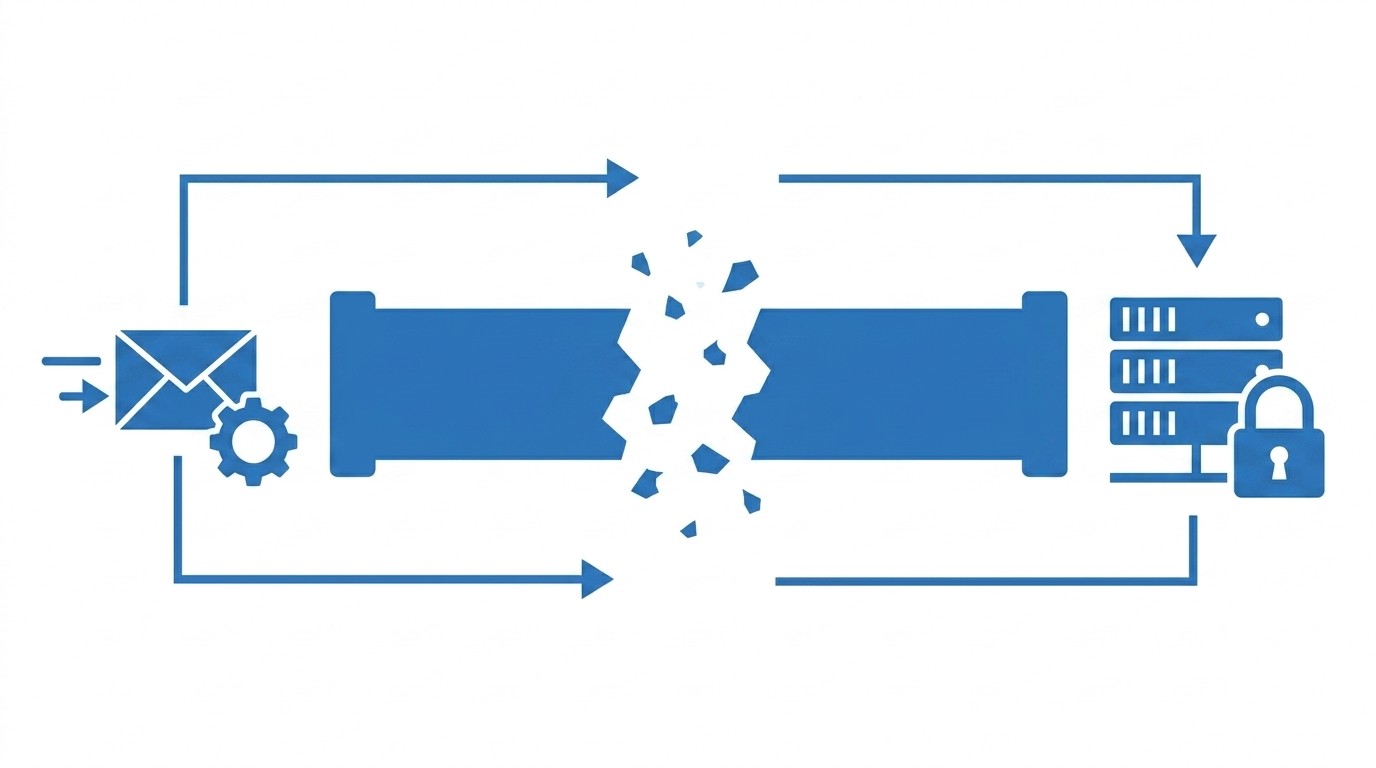
A Workflow Diagram Doesn't Prove Operational Control
A polished flow diagram proves very little about how an AI agent behaves under pressure. Drawing the message sequence is easy. The harder work starts when an agent must update a balance, clear a flag, attach evidence, or trigger another policy-bound event without creating duplicates.
Visual workflow tools still have merit. They make early agent design easier and give operations, risk, and technical stakeholders something concrete to review. Yet a design canvas can't show whether an intermittent connection caused the agent to post the same payment arrangement twice, or whether a failed writeback left the customer journey open after the agent showed completion.
An agent-driven workflow should only move into production when it can answer a practical question: if the same completion event arrives twice, what changes the second time? The correct answer is nothing. If the system can't prove that behaviour, the flow isn't ready for regulated operations.
Changing Business Rules Expose the Real Weakness
During each monthly statement run, a diversified financial group had to apply changing segmentation rules across millions of accounts. Customers in arrears needed different content, conditional exclusions had to work correctly, and every variation required testing before release. One incorrect branch could affect both customer experience and compliance.
The organisation used a managed execution model with multi-stage testing for every monthly change. That process achieved 100% accurate execution while allowing the rules to change between runs. The lesson isn't that every AI agent needs more manual review, but that changing policy must be treated as controlled configuration rather than informal campaign logic.
Meeting compliance obligations while adapting AI-driven customer engagement requires clear ownership of each rule. Someone must approve the change, record its effective date, test affected paths, and preserve the released version. Otherwise, the organisation can show what the current agent does, but not what it did when a particular customer received a message.
More Channels Create More Control Points
One channel creates a communication path. SMS, WhatsApp, and email create several possible routes, each with its own consent state, timing rules, delivery events, and customer responses. Adding channels improves an agent's reach, but it also multiplies the places where policy can drift.
The risk isn't omni-channel engagement itself. Customers benefit when an agent can reach them through a channel they already use, and operations teams gain options when one channel fails. Problems begin when each channel runs separate agent logic or sends customers toward different completion paths.
Think of the agent's message as the front counter and the system of record as the account ledger. A transaction isn't complete because someone received a receipt at the counter. It becomes complete when the ledger holds the correct entry and the organisation can trace how it got there.
How to Use AI Agents for Customer Engagement Without Losing Control
Safe AI-driven customer engagement starts with the outcome, then works backwards through policy, identity, exceptions, and writeback. Channel selection comes later. That order keeps regulatory controls attached to the task itself, rather than spreading them across messages, portals, and manual agent procedures.
Find the Point Where Control Actually Ends
Where does regulatory control end in the current agent journey? For many operations teams, it ends when the customer clicks a link or reaches a portal. The communication platform records engagement, while the final action takes place somewhere else and returns through a delayed integration or agent update.
We'd argue that this boundary is the first thing to diagnose. Follow one real case from its source-system trigger to its final recorded outcome, including failed identity checks and abandoned actions. If the trail disappears between the agent and back-end systems, the automation has a control gap even when every platform reports success.
Before redesigning the agent journey, answer five questions:
What event starts the workflow? Identify the source system and required customer context.
What counts as completion? Name the exact balance, flag, note, document, or status that must change.
Who or what approves eligibility? Record the policy rule and its owner.
Where do exceptions go? Define the destination and context passed with each escalation.
What evidence remains? Confirm that consent, agent actions, decisions, and writebacks can be reconstructed.
If one answer depends on a human agent remembering what to do, keep that step in the control review. Human work isn't automatically unsafe, but undocumented judgment makes consistent execution difficult to prove.
Define Completion Before Choosing a Channel
Completion must be specific enough for operations and risk teams to test. "Customer engaged" isn't completion, even when an AI agent says the conversation went well. A collections arrangement, for example, is complete when the customer has passed the required identity check, selected an eligible option, provided consent, and the arrangement has been posted to the correct account.
Starting with channels reverses that logic. A team may choose WhatsApp for reach, email for detail, and SMS for urgency, then build separate agent journeys around each one. What looked like an engagement plan becomes three versions of the same regulated process, with different rules and evidence.
Define the agent workflow in the following order:
Source trigger: State the event that makes the case actionable.
Eligible outcomes: List the actions policy allows for that customer and context.
Required evidence: Specify the identity, consent, and supporting data to retain.
System update: Name the exact writeback that confirms completion.
Exception state: Record what happens when the normal path can't finish.
Only then should the team decide how SMS, WhatsApp, or email will carry the customer into that controlled process. Meeting regulatory requirements while adding channels becomes manageable when every agent interaction shares one completion definition.
Turn Policy Documents Into Executable Decisions
A policy document explains what should happen. An AI agent needs to determine what happens for a specific customer, at a specific point, using the data available at that moment. The gap between those two forms is where compliant agent automation often stalls.
Operations and risk owners should break each policy into inputs, decisions, permitted actions, and blocked outcomes. For an arrangement workflow, inputs might include account status and eligibility data. The decision then controls which plans the agent can offer, whether an action can proceed, or whether the case needs human review.
Each rule should contain four parts:
Required inputs: Data that must exist before the rule runs.
Decision logic: The condition that allows, blocks, or changes an action.
Customer path: The options the agent presents after the decision.
Evidence produced: The reason, version, timestamp, and resulting state.
Some policies resist automation because they rely on broad judgment or incomplete data. That's a valid limitation. Those cases should follow a defined exception route, while routine policy-bound work continues without forcing every customer into a human agent queue.
Design Exceptions Before the Standard Journey
A collections manager can map the expected agent journey in an afternoon: send a message, verify the customer, present an arrangement, and record the outcome. Missing data, an ineligible option, or a declined transaction changes that path. The exception design determines whether the AI agent remains controlled.
Starting with exceptions may feel backward. Productive workshops often focus on the successful path because it's easier to understand and demonstrate. Still, regulated operations are judged by how the agent handles blocked, incomplete, and conflicting states, not only by how well the standard case runs.
Use a simple sequence for every exception:
Stop the affected action before an invalid outcome reaches the core system.
Record the reason using a consistent status rather than free text alone.
Preserve the context already collected from the customer and source system.
Route the case to the right queue with the blocked rule clearly identified.
Define re-entry so the workflow can resume without repeating completed actions.
If an exception arrives with enough context for a human agent to make the next decision, the AI has reduced work without hiding risk. If the human must restart discovery, the workflow has only moved the queue.
Make Every Writeback Safe to Repeat
One duplicate writeback can create more operational work than hundreds of successful agent interactions remove. Networks fail, timeouts happen, and downstream systems sometimes confirm an update after the calling service has already started a retry. Reliable AI agents assume those conditions will occur.
Repeat-safe writebacks prevent the same completion event from changing the record twice. The system uses a stable event identity, checks whether the action has already been applied, and returns the existing outcome when a duplicate arrives. Agent retries then protect completion without creating a second payment, arrangement, note, or status change.
A useful release test is simple: submit the same valid completion event twice. The first attempt should create the approved state change, while the second should produce no new change. Next, interrupt the connection after the agent processes the action but before confirmation, then retry and confirm that the record still changes only once.
Meeting regulatory requirements while connecting AI agents to older core systems depends on this behaviour. Copy approval can't compensate for an unreliable transaction layer. Safe integration and reliable writebacks are the hard part.
Measure the Evidence Chain, Not Just Engagement
Open rates and click rates show whether an agent's message reached the customer. They don't show whether identity was confirmed, policy was applied, consent was captured, or the system of record accepted the outcome. For a regulated workflow, those later events carry more operational value.
We prefer a joined event trail because it exposes agent failure at the exact stage where it occurs. A workflow with strong engagement but weak writeback success has an integration problem. Low completion after successful identity validation points toward the available actions or agent path instead.
Track the following measures together:
Identity validation: How many customers passed, failed, or abandoned verification.
Eligible action display: Which policy-approved options were presented.
Customer completion: How many customers submitted a valid action.
Writeback success: Whether the target system accepted and recorded the outcome.
Exception routing: Why cases left the standard path and where they went.
Time to resolution: How long the full task took from trigger to confirmed update.
Review those measures by workflow version, not only by campaign. When a policy change affects completion or exceptions, the version link makes that shift visible and gives internal audit a defensible record.
How RadMedia Makes Regulated Workflows Auditable
RadMedia connects policy-aware automation, omni-channel communication, secure customer action, and reliable writeback in one managed workflow. The service is built for routine financial services tasks that must complete inside the message while preserving identity controls, audit evidence, and operational reliability from trigger to resolution.
Autopilot Keeps Policy Attached to Every Case
RadMedia's Autopilot Workflow Engine advances each case using policy-aware rules, time-based logic, and defined exception routing. Eligibility thresholds and compliance checks control which actions a customer can take. When a rule blocks completion, the case moves to an agent with the existing context rather than restarting from the beginning.
Omni-channel messaging orchestration sequences SMS, email, and WhatsApp around that shared workflow. Consent, preferences, timing windows, and frequency limits remain part of the orchestration, so changing channels doesn't create a separate policy path. Secure in-message mini-apps then present only the actions allowed for that customer.
Security, identity, and audit controls support meeting regulatory requirements while customers act digitally. TLS protects data in transit, encryption protects stored data, and role-based access controls govern operator access. Signed deep links, one-time codes or known-fact checks validate customers, while inputs, consent, and workflow events receive timestamps for later review.
Managed Writebacks Close the Compliance Gap
RadMedia manages back-end integration across legacy cores and modern APIs, including authentication, schema mapping, and error handling. Completed outcomes write back to systems of record using idempotent operations, retries with backoff, and circuit breaking. Those controls protect both record consistency and downstream stability when real-world failures occur.
Closed-loop resolution connects the original trigger to the final system update. Telemetry covers deliveries, opens, actions, validations, and writebacks, allowing operations teams to measure completion rate, time to resolution, and deflection rather than stopping at message activity. Outcome and log data can also be exported to a data lake or SIEM for enterprise reporting.
The approach isn't intended for organisations that only need a low-cost bulk email pipe. It fits policy-bound workflows where completion, evidence, and system updates matter as much as reach. Starting with one high-volume workflow gives procurement, security, risk, and operations teams a defined process to test before wider adoption.
For a workflow that needs to preserve policy decisions through the final writeback, a conversation about putting customer communication workflows on autopilot can begin with one routine case and its required evidence.
Make Compliance Part of the Completed Workflow
Meeting regulatory requirements while automating customer communication isn't achieved by adding another approval to the message. It requires a controlled path from source trigger through customer action to a verified, repeat-safe system update. Auditability follows when every rule, exception, consent event, and writeback remains connected.
Start with one policy-bound workflow and define completion in system terms. Test duplicate events, failed connections, blocked rules, and agent handoffs before adding channels or volume. Communication automation becomes defensible when the task is resolved, the record is correct, and the evidence survives review.