List: 6 Design Patterns for Secure In‑Message Payments and Data Capture

Most financial services teams want secure in-message payments because customers act faster when they can finish inside SMS, email, or WhatsApp. That speed is only safe when the message becomes the application surface with portal-grade identity, consent, and writeback controls. We’ll walk you through six design patterns that keep fraud low, audits simple, and friction contained.

We’ll discuss the specific ways to protect links, bind actions to identity and context, and close the loop with idempotent writebacks. The goal is simple and strict. Resolution happens inside the message, and the outcome writes back to your systems automatically, with full evidence and no manual wrap‑up.

Key Takeaways:

  • Treat every link as a session initiator with nonces, short TTL, device binding, and replay protection

  • Keep PII and payment data out of channels, pass only signed references and tokens

  • Use risk-based step-up, including OTP, passkeys, or 3DS2, when signals change

  • Stay in SAQ A scope with hosted fields or wallet delegates, and capture timestamped consent

  • Enforce idempotent writebacks, HMAC-signed callbacks, and immutable audit logs

  • Measure completion rate, time-to-resolution, writeback success, and deflection, not send volume

  • Close the loop inside the message so agents handle only exceptions, not routine rework

Secure In-message Payments Require Portal-grade Controls

Secure in-message payments require portal-grade controls applied to a different surface. The message is the entry point, but the session must be authenticated, scoped, and time-bound before any sensitive action. The safest approach keeps raw data off the channel and uses signed references, server checks, and strict writeback guarantees.
What Customers Feel When Friction Spikes, and How Trust Erodes concept illustration - RadMedia

What changes inside a message?

The link is no longer a navigation aid. It is a session initiator that must carry intent, scope, and a nonce that proves freshness. After tap, verify who opened it, confirm the allowed action and amount, and render a minimal, policy-safe surface. You cannot rely on browser cookies or app state. You need explicit proof at each hop.

In practice, that means per-link nonces, short TTLs, device binding, and server-side replay protection. Identity validation sits in-flow, not later. PII and payment data never ride the message channel. The message carries only signed references that your server verifies before showing options. If any check fails, fall back to a higher-assurance path.

This is the same bar you expect from a portal, only with fewer crutches. The controls move earlier, and they must be explicit. Done right, customers move faster and your risk stays contained.

Why lighter controls backfire

“Lite” flows seem friendly until they fail under real risk. Forwarded links on shared devices, SIM swaps, and basic phishing erode authentication quickly. When action scopes are vague or not time-bound, repudiation risk rises. False declines also spike when signals are thin or mismatched, and operations pay the cost in disputes and rework.

You want adaptive friction, not blind trust. Add step-up based on clear risk signals like new device, location change, velocity anomalies, or high amounts. Bind every sensitive action to identity, context, and a short time window. When the data proves risk is low, keep it smooth. When signals turn, raise assurance cleanly so good users move and fraud hits a wall.

This balance reduces both fraud and abandonment. It also gives your risk and audit teams confidence that every decision is justified and reconstructable.

Set the bar: PCI, SCA, and audit expectations

Security-by-design principles still apply. Use hosted fields or wallet delegates so primary account numbers never touch your stack, which keeps scope in SAQ A. Apply strong customer authentication where required, including 3DS2 for high-risk or regulated regions. Capture consent, timestamps, and action details in an immutable log.

The controls need to be both specific and checkable. The Secure Product Design Cheat Sheet is a good baseline for threat modeling and control mapping. For payments, practices like tokenization, network tokens, and dynamic authentication from guides such as Secure Payment Systems Explained help reduce false declines without dropping your guard.

Define success as portal-grade security with lower friction because context is tighter. Not weaker controls. The difference is where you validate and how you bind scope, not whether you validate at all.

Checklist to operationalize the bar:

  • Keep PCI scope to SAQ A through hosted fields or wallet delegates

  • Require 3DS2 or equivalent step-up for high-risk or regulatory use cases

  • Capture explicit consent with timestamps and scoped details for every action

  • Enforce idempotency keys and HMAC-signed callbacks on server interactions

  • Persist immutable audit logs that link identity, consent, and outcomes

Reframing Risk: Identity, Context, and Writeback Beat UI Shine

Securing the surface is not enough. The strongest control stack defends the full path from trigger to writeback, with proofs at each hop. Identity, context, and reliable outcomes matter more than UI polish. Pretty flows with weak binding still fail, cost time, and invite disputes.
How RadMedia Delivers Secure In-message Payments and Document Capture concept illustration - RadMedia

Shift from endpoint security to end-to-end guarantees

Think in chains, not endpoints. The chain starts when a back-end trigger fires, continues through message composition and link open, runs through the in-message app and network call, then finishes when the outcome writes back correctly. You need evidence across the chain, not just a “nice form” in the middle.

Require server-side verification of nonces and signatures, not just client checks. Bind session to device and identity. Confirm that the requested action still matches policy and scope before you touch payments or documents. Then confirm completion by reading the system of record, not by assuming a call succeeded. The result is a defensible, end-to-end posture.

If you need a mental model, patterns in the Azure Architecture Patterns library help teams reason about idempotency, retry, and circuit breaking. They are essential when you normalize legacy cores and modern APIs under one flow.

How do you validate who, what, and when?

Identity works best in layers. Start with channel reputation and deliverability. Add known-fact or one-time code validation in-flow. Include device fingerprinting, then raise assurance for risk events like new device, location shift, or large amount. Keep the challenge short and clear so good users do not stall.

Bind the action scope tightly. That means account, amount, and timeframe are explicit and signed. On open, the server verifies that the link, identity, and scope still match the original trigger. Block replay and cross-account attempts. If any factor does not match, step up or stop. This reduces fraud and lowers false declines because the context is stronger.

When you can prove who acted, on what, and when, audits move faster and disputes drop. Your operations do not need to reconstruct a shaky story after the fact.

The Cost of Getting It Wrong: Declines, Disputes, and Manual Rework

Weak flows do not just fail quietly. They create fraud, false declines, and back-office work that eats margins. Digital payment fraud continues to rise, and shallow signals drive conservative risk decisions that block good customers. The downstream cost lands on your agents and your reconciliation teams.

Quantify fraud, false declines, and rework

Fraud and dispute rates are the visible tip. The hidden cost is the avalanche of manual wrap-up caused by thin identity binding and unreliable writebacks. Agents chase receipts, rekey details, and annotate cases that should have closed in seconds. Teams lose hours to reconcile mismatched records across tools and cores.

Industry research shows that payment system design mistakes compound across retries, dispute handling, and data consistency. For a grounding on durability, buffering, and retries, the BIS overview in [Work1242.pdf] outlines the systemic risks when payment flows lack strong guarantees. While your use case is retail rather than wholesale, the lesson holds. Integrity beats speed when speed is brittle.

Measure the cost precisely. Time-to-resolution, writeback success, and deflection correlate to real savings. Send volume and bot containment do not.

Where the operational waste hides

Waste hides in context switches and brittle integrations. A customer gets a reminder, lands in a portal, forgets a password, and calls. An agent verifies identity, updates details, and then rekeys results into multiple systems. Every extra step is a chance to lose the customer, miss data, or make a mistake.

This is where closed-loop flows help. When the task finishes inside the message and the outcome writes back automatically, cases close without manual wrap-up. Exceptions still route to people with context, but the majority never hit the queue. You cut risk and cost together, and you free agents to handle the work that actually needs judgment.

What Customers Feel When Friction Spikes, and How Trust Erodes

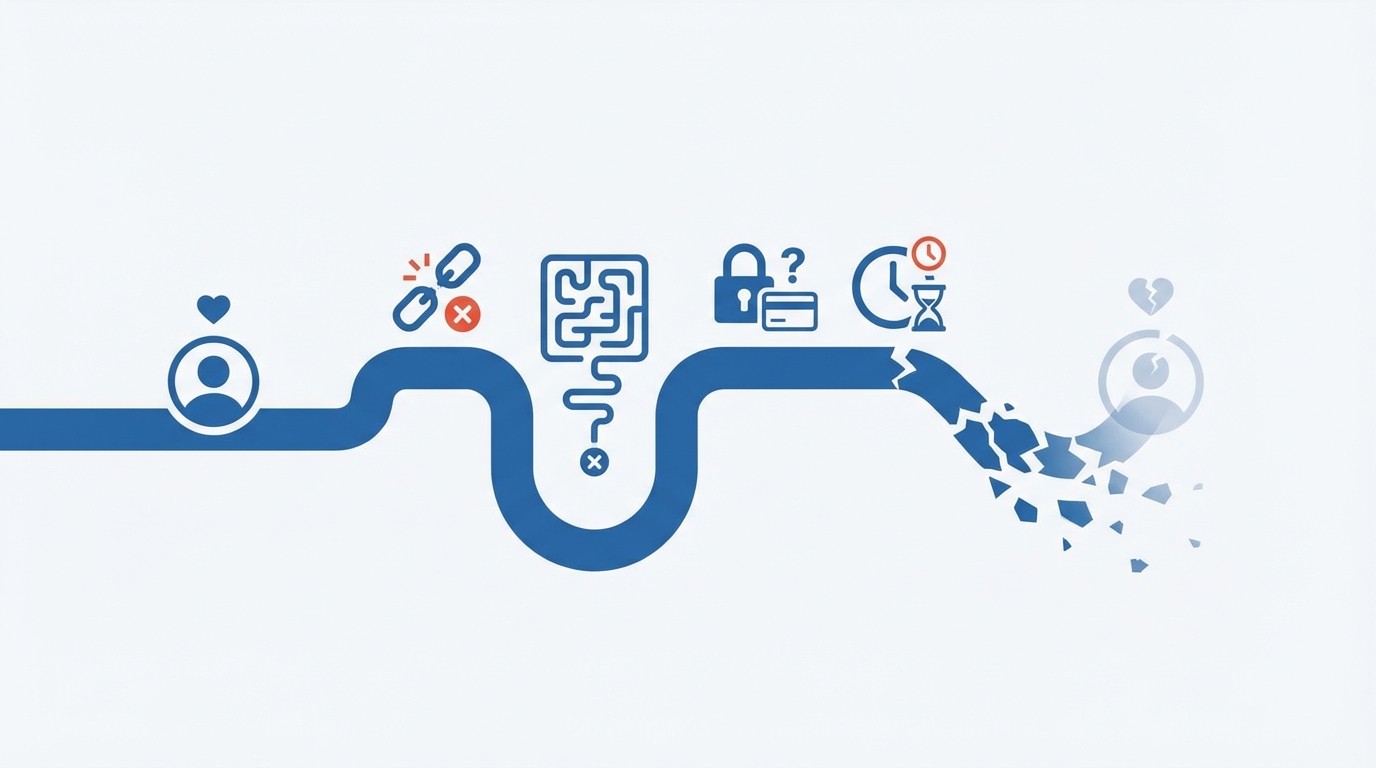
Friction erodes trust fast. Customers forward a link and it fails. Redirects feel unsafe. A 3DS challenge appears with no clear reason. Uploads time out. After two or three surprises, intent fades and people abandon the task. You lose conversions, and you lose confidence.

Micro-frictions that break intent

Small gaps add up. A deep link that expires too soon without a friendly restart flow. A consent screen that uses vague language. A spinner that hides real progress on a document upload. These moments feel risky to customers even when they are safe, and safe customers will still walk away.

Reduce unnecessary steps and make the necessary ones predictable. Pre-populate safe defaults from your trigger payload. Explain why you need a challenge when risk signals change. Keep uploads resilient so short disconnects do not force restarts. Then, deliver instant confirmations so the customer sees the outcome stick.

Your strongest signal of trust is a clean receipt tied to the action they just took. It tells them the job is done. It tells you the same.

Build confidence from the first tap

Confidence starts before the tap. Use branded, short-lived, signed links and clear sender identity. Keep visual language consistent so the in-message app feels like your brand. Explain consent in plain language. Show real progress indicators for payments and uploads, and give customers a way to pause and resume without jumping to a portal or calling an agent.

Designing for security and reassurance is a discipline. The OWASP product design guidance you used earlier still applies here, even if you do not cite it again. The point is not perfection. It is predictability. Customers do not mind guardrails when they are explained and fast.

Six Patterns That Make Secure In-message Payments and Data Capture Work

Six design patterns make secure in-message payments and data capture safe, fast, and audit-ready. They protect links, bind identity, avoid raw PAN handling, and guarantee outcomes through idempotent writebacks. Use them together. The gaps live in the seams.

Pattern pair 1: Signed deep links plus risk-based step-up

Start with per-user, one-click deep links that include nonces, device binding, allowed scope, and a short TTL. On open, verify eligibility and scope server-side before you render any action. If context changed, stop or adjust the flow. Do not trust the client to enforce these checks.

Then add adaptive step-up. Trigger OTP, passkey, or a 3DS challenge when signals indicate risk, such as a new device, high amount, or rapid retries. Log every decision with reason codes that an auditor can follow later. This pattern keeps fraud low without punishing good users.

Signals worth watching, then stepping up:

  • New or untrusted device or location for this account

  • High amount relative to typical behavior or policy limit

  • Unusual velocity, multiple attempts, or quick channel switches

Pattern pair 2: Tokenized card updates and wallet-first authorizations

Keep PAN out of your environment. Use hosted fields or wallet delegates so your stack never sees raw card data. That keeps PCI scope at SAQ A and reduces breach impact. Prefer network tokens, and use automatic card-on-file update flows to avoid stale credentials and wasted retries.

Wallet-first authorization often raises approval rates because issuers see stronger signals. Pre-populate amounts safely and require explicit consent. Store only tokens and references, not raw data. Your customers finish faster, and your risk team sleeps better.

When you need more context on the security and approval benefits, vendor materials like Secure Payment Systems Explained outline how tokenization and modern authentication reduce declines without relaxing controls.

Pattern pair 3: Tamper-evident receipts and idempotent writebacks

Generate signed receipts that include action details, timestamps, and hashes of submitted data. Persist an immutable audit log that links identity, consent, payment authorization, and any document fingerprints. These artifacts settle disputes faster and cut back-office cycles.

Guarantee outcomes with idempotent writebacks. Use idempotency keys for payment capture and arrangement creation. Add retries with backoff and circuit breakers for downstream issues. Confirm completion by reading the system of record, not by trusting a single response. Messaging patterns help here, and resources like Enterprise Integration Patterns describe how to coordinate retries and state transitions reliably.

How RadMedia Delivers Secure In-message Payments and Document Capture

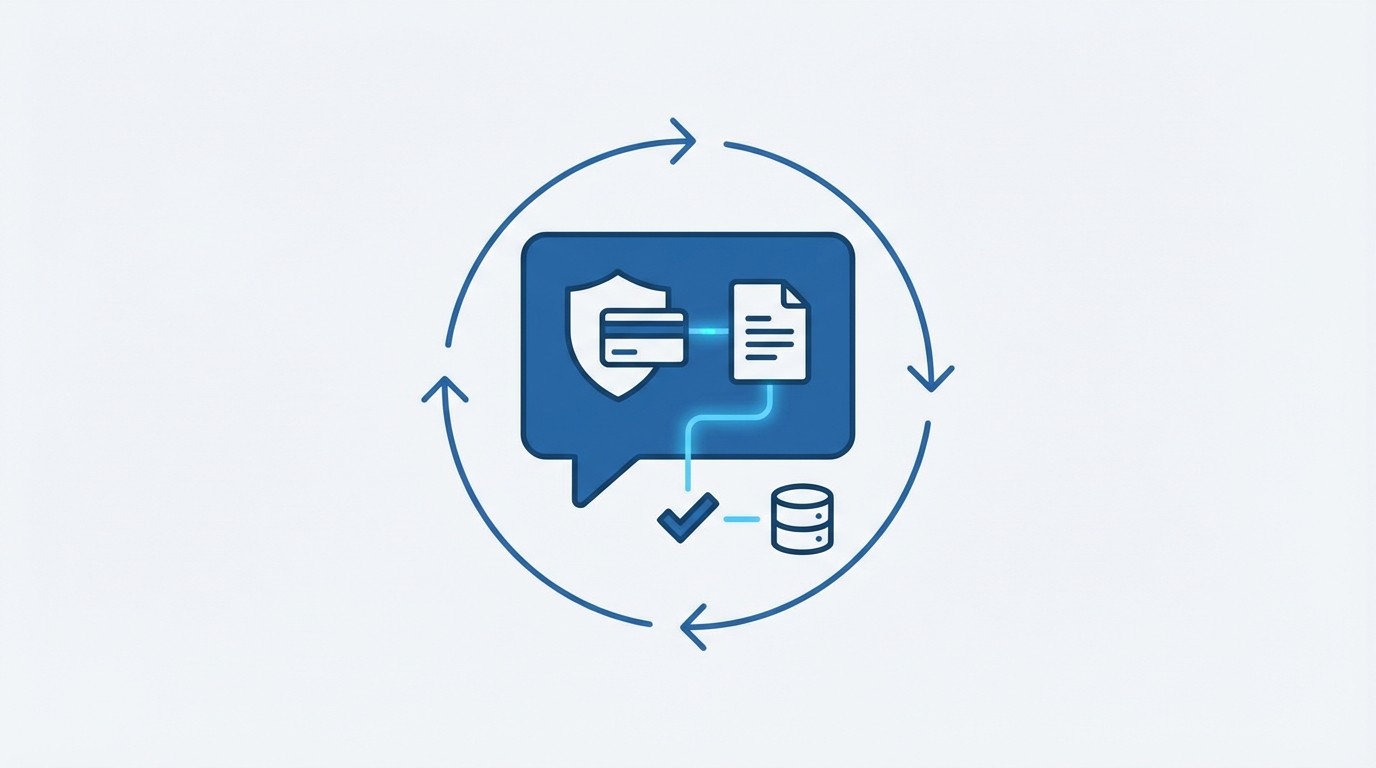
RadMedia delivers secure in-message payments and data capture by handling identity, consent, orchestration, and writebacks end to end. The message becomes the app, and outcomes write back automatically to your systems. You get portal-grade control with less friction because context is tighter and validation happens earlier.

Identity, consent, and link security handled for you

RadMedia issues per-customer, signed deep links with nonces, short TTL, and device binding. In-flow validation uses one-time codes or known-fact checks, with adaptive step-up based on risk signals. Digital consent is captured with timestamps and stored alongside the case. This reduces fraud, lowers dispute exposure, and removes the manual rework that drains teams.

Behind the scenes, server-side checks confirm link scope, identity, and policy eligibility before any action appears. If context shifts, RadMedia pauses or escalates with clear prompts. Your customers see a simple path. Your auditors see a complete trail.

Wallets, hosted fields, and safer authorization flows

RadMedia’s in-message mini-app uses wallet delegates or hosted fields so PAN never touches your environment. Card updates become token updates. High-risk or regulated scenarios route through step-up or 3DS as required. Teams see higher approval rates and fewer chargebacks while staying in lighter PCI scope, without portal detours that cause abandonment.

Actions are explicit, scoping is clear, and consent is recorded in plain language. This clarity prevents the hidden costs you saw earlier, including false declines and repudiation.

Idempotent writebacks, telemetry, and audit-ready records

Outcomes write back to systems of record with idempotency keys, retries, and circuit breaking. Payments, plans, flags, notes, and documents synchronize automatically, and telemetry captures each step. RadMedia confirms completion by reading the source of truth. That closes the loop that previously forced agent intervention, cutting time-to-resolution and lifting deflection without adding headcount.

For engineering teams, RadMedia’s approach aligns with patterns like idempotency, retry, and circuit breaker described in the Azure Architecture Patterns. The difference is simple. You do not have to build and maintain that reliability layer across legacy cores and modern APIs. It is operated for you, with evidence ready for audit.

RadMedia brings identity binding, secure in-message payments, and writeback guarantees into one managed workflow so financial services operations can scale resolution safely. That is how you reduce cost without losing control.

Conclusion

Secure in-message payments are safe when you treat the message as the app, bind every sensitive action to identity and context, and guarantee outcomes with idempotent writebacks. The six patterns above keep fraud down, reduce false declines, and remove the manual rework that raises cost.

Start with one high-volume workflow. Protect links with nonces and short TTL, validate identity in-flow with adaptive step-up, keep PAN out of scope with hosted fields or wallets, and prove completion from the system of record. Measure completion rate, time-to-resolution, writeback success, and deflection. That is how you deliver faster outcomes with less risk and more trust.

Explore 6 effective design patterns for secure in-message payments. Enhance compliance and user experience while minimizing friction in financial transactions.

List: 6 Design Patterns for Secure In‑Message Payments and Data Capture - RadMedia professional guide illustration

[{"q":"How do I set up secure in-message payments with RadMedia?","a":"To set up secure in-message payments using RadMedia, follow these steps: 1) Integrate RadMedia with your back-end systems using REST or SOAP APIs to ensure seamless data flow. This will allow you to trigger messages based on events like failed payments. 2) Use RadMedia’s in-message self-service apps to create a secure, no-download mini-app that customers can access directly within their messages. This app should allow actions like updating payment details or confirming transactions. 3) Ensure that the outcomes of these actions write back to your systems automatically, updating records without manual intervention. This closed-loop process minimizes friction and enhances customer experience."},{"q":"What if my customers face issues during in-message payments?","a":"If customers encounter issues during in-message payments, you can use RadMedia's autopilot workflow engine to manage exceptions effectively. Here's how: 1) Define clear exception paths in your workflow that automatically escalate cases to agents only when necessary, ensuring that agents receive full context of the issue. 2) Use telemetry features to monitor each step of the payment process, which helps identify where customers are experiencing difficulties. 3) Ensure your in-message apps capture timestamps and consent, providing a complete audit trail that can assist in resolving disputes or issues quickly."},{"q":"When should I use risk-based step-up authentication?","a":"You should consider using risk-based step-up authentication when there are changes in customer behavior or context that may indicate higher risk. For example: 1) If a customer attempts to make a payment from a new device or location, this could trigger additional verification steps. 2) Use RadMedia's capabilities to implement one-time passcodes (OTPs) or other verification methods within the message itself, allowing customers to authenticate without leaving the conversation. 3) Regularly review and adjust your risk parameters to ensure they align with current fraud trends and customer behavior patterns."},{"q":"How do I ensure compliance when capturing customer data?","a":"To ensure compliance while capturing customer data, follow these best practices: 1) Use RadMedia's secure identity verification methods, such as one-time codes or known-fact checks, to validate customer identities before data capture. 2) Make sure that all consent is captured digitally and timestamped, which RadMedia supports, to maintain an audit trail for compliance purposes. 3) Regularly review your data handling processes to ensure they align with current regulations and best practices, and utilize RadMedia's built-in compliance features to streamline this process."},{"q":"Why does my payment resolution process take too long?","a":"If your payment resolution process is taking too long, it may be due to fragmented workflows. To improve this: 1) Assess your current processes to identify bottlenecks, such as requiring customers to switch channels or log into portals. 2) Implement RadMedia’s in-message self-service solutions, which allow customers to complete transactions directly within their messages, reducing the need for manual follow-ups. 3) Use the closed-loop resolution features of RadMedia to ensure that once a customer completes an action, the outcomes are written back to your systems automatically, streamlining the entire process."}]

16 Feb 2026

aa3fa9ec-2375-42e7-b2f7-25929068fb5d

{"@graph":[{"@id":"https://radmedia.co.za/list-6-design-patterns-for-secure-in-message-payments-and-data-capture#article","@type":"Article","image":"https://jdbrszggncetflrhtwcd.supabase.co/storage/v1/object/public/article-images/6dca98ae-107d-47b7-832f-ee543e4b5364/list-6-design-patterns-for-secure-in-message-payments-and-data-capture-hero-1771255093027.png","author":{"name":"RadMedia","@type":"Organization"},"headline":"List: 6 Design Patterns for Secure In‑Message Payments and Data Capture","keywords":"secure in-message payments","publisher":{"name":"RadMedia","@type":"Organization"},"wordCount":2579,"description":"List: 6 Design Patterns for Secure In‑Message Payments and Data Capture","dateModified":"2026-02-16T15:17:57.346+00:00","datePublished":"2026-02-16T15:14:43.303731+00:00","mainEntityOfPage":{"@id":"https://radmedia.co.za/list-6-design-patterns-for-secure-in-message-payments-and-data-capture","@type":"WebPage"}},{"@id":"https://radmedia.co.za/list-6-design-patterns-for-secure-in-message-payments-and-data-capture#itemlist","name":"List: 6 Design Patterns for Secure In‑Message Payments and Data Capture","@type":"ItemList","itemListElement":[{"name":"Secure In-message Payments Require Portal-grade Controls","@type":"ListItem","position":1},{"name":"Reframing Risk: Identity, Context, and Writeback Beat UI Shine","@type":"ListItem","position":2},{"name":"The Cost of Getting It Wrong: Declines, Disputes, and Manual Rework","@type":"ListItem","position":3},{"name":"What Customers Feel When Friction Spikes, and How Trust Erodes","@type":"ListItem","position":4},{"name":"Six Patterns That Make Secure In-message Payments and Data Capture Work","@type":"ListItem","position":5},{"name":"How RadMedia Delivers Secure In-message Payments and Document Capture","@type":"ListItem","position":6}]},{"@id":"https://radmedia.co.za/list-6-design-patterns-for-secure-in-message-payments-and-data-capture#breadcrumb","@type":"BreadcrumbList","itemListElement":[{"item":"https://radmedia.co.za","name":"Home","@type":"ListItem","position":1},{"item":"https://radmedia.co.za/list-6-design-patterns-for-secure-in-message-payments-and-data-capture","name":"List: 6 Design Patterns for Secure In‑Message Payments and D","@type":"ListItem","position":2}]}],"@context":"https://schema.org"}

[{"url":"https://jdbrszggncetflrhtwcd.supabase.co/storage/v1/object/public/article-images/6dca98ae-107d-47b7-832f-ee543e4b5364/list-6-design-patterns-for-secure-in-message-payments-and-data-capture-inline-0-1771255118553.png","alt":"What Customers Feel When Friction Spikes, and How Trust Erodes concept illustration - RadMedia","filename":"list-6-design-patterns-for-secure-in-message-payments-and-data-capture-inline-0-1771255118553.png","position":"after_h2_1","asset_id":null,"type":"ai_generated","dimensions":{"width":1024,"height":1024}},{"url":"https://jdbrszggncetflrhtwcd.supabase.co/storage/v1/object/public/article-images/6dca98ae-107d-47b7-832f-ee543e4b5364/list-6-design-patterns-for-secure-in-message-payments-and-data-capture-inline-1-1771255134577.png","alt":"How RadMedia Delivers Secure In-message Payments and Document Capture concept illustration - RadMedia","filename":"list-6-design-patterns-for-secure-in-message-payments-and-data-capture-inline-1-1771255134577.png","position":"after_h2_2","asset_id":null,"type":"ai_generated","dimensions":{"width":1024,"height":1024}}]

90

2579

Most financial services teams want secure in-message payments because customers act faster when they can finish inside SMS, email, or WhatsApp. That speed is only safe when the message becomes the application surface with portal-grade identity, consent, and writeback controls. We’ll walk you through six design patterns that keep fraud low, audits simple, and friction contained.

We’ll discuss the specific ways to protect links, bind actions to identity and context, and close the loop with idempotent writebacks. The goal is simple and strict. Resolution happens inside the message, and the outcome writes back to your systems automatically, with full evidence and no manual wrap‑up.

Key Takeaways:

  • Treat every link as a session initiator with nonces, short TTL, device binding, and replay protection

  • Keep PII and payment data out of channels, pass only signed references and tokens

  • Use risk-based step-up, including OTP, passkeys, or 3DS2, when signals change

  • Stay in SAQ A scope with hosted fields or wallet delegates, and capture timestamped consent

  • Enforce idempotent writebacks, HMAC-signed callbacks, and immutable audit logs

  • Measure completion rate, time-to-resolution, writeback success, and deflection, not send volume

  • Close the loop inside the message so agents handle only exceptions, not routine rework

Secure In-message Payments Require Portal-grade Controls

Secure in-message payments require portal-grade controls applied to a different surface. The message is the entry point, but the session must be authenticated, scoped, and time-bound before any sensitive action. The safest approach keeps raw data off the channel and uses signed references, server checks, and strict writeback guarantees.

What Customers Feel When Friction Spikes, and How Trust Erodes concept illustration - RadMedia

What changes inside a message?

The link is no longer a navigation aid. It is a session initiator that must carry intent, scope, and a nonce that proves freshness. After tap, verify who opened it, confirm the allowed action and amount, and render a minimal, policy-safe surface. You cannot rely on browser cookies or app state. You need explicit proof at each hop.

In practice, that means per-link nonces, short TTLs, device binding, and server-side replay protection. Identity validation sits in-flow, not later. PII and payment data never ride the message channel. The message carries only signed references that your server verifies before showing options. If any check fails, fall back to a higher-assurance path.

This is the same bar you expect from a portal, only with fewer crutches. The controls move earlier, and they must be explicit. Done right, customers move faster and your risk stays contained.

Why lighter controls backfire

“Lite” flows seem friendly until they fail under real risk. Forwarded links on shared devices, SIM swaps, and basic phishing erode authentication quickly. When action scopes are vague or not time-bound, repudiation risk rises. False declines also spike when signals are thin or mismatched, and operations pay the cost in disputes and rework.

You want adaptive friction, not blind trust. Add step-up based on clear risk signals like new device, location change, velocity anomalies, or high amounts. Bind every sensitive action to identity, context, and a short time window. When the data proves risk is low, keep it smooth. When signals turn, raise assurance cleanly so good users move and fraud hits a wall.

This balance reduces both fraud and abandonment. It also gives your risk and audit teams confidence that every decision is justified and reconstructable.

Set the bar: PCI, SCA, and audit expectations

Security-by-design principles still apply. Use hosted fields or wallet delegates so primary account numbers never touch your stack, which keeps scope in SAQ A. Apply strong customer authentication where required, including 3DS2 for high-risk or regulated regions. Capture consent, timestamps, and action details in an immutable log.

The controls need to be both specific and checkable. The Secure Product Design Cheat Sheet is a good baseline for threat modeling and control mapping. For payments, practices like tokenization, network tokens, and dynamic authentication from guides such as Secure Payment Systems Explained help reduce false declines without dropping your guard.

Define success as portal-grade security with lower friction because context is tighter. Not weaker controls. The difference is where you validate and how you bind scope, not whether you validate at all.

Checklist to operationalize the bar:

  • Keep PCI scope to SAQ A through hosted fields or wallet delegates

  • Require 3DS2 or equivalent step-up for high-risk or regulatory use cases

  • Capture explicit consent with timestamps and scoped details for every action

  • Enforce idempotency keys and HMAC-signed callbacks on server interactions

  • Persist immutable audit logs that link identity, consent, and outcomes

Reframing Risk: Identity, Context, and Writeback Beat UI Shine

Securing the surface is not enough. The strongest control stack defends the full path from trigger to writeback, with proofs at each hop. Identity, context, and reliable outcomes matter more than UI polish. Pretty flows with weak binding still fail, cost time, and invite disputes.

How RadMedia Delivers Secure In-message Payments and Document Capture concept illustration - RadMedia

Shift from endpoint security to end-to-end guarantees

Think in chains, not endpoints. The chain starts when a back-end trigger fires, continues through message composition and link open, runs through the in-message app and network call, then finishes when the outcome writes back correctly. You need evidence across the chain, not just a “nice form” in the middle.

Require server-side verification of nonces and signatures, not just client checks. Bind session to device and identity. Confirm that the requested action still matches policy and scope before you touch payments or documents. Then confirm completion by reading the system of record, not by assuming a call succeeded. The result is a defensible, end-to-end posture.

If you need a mental model, patterns in the Azure Architecture Patterns library help teams reason about idempotency, retry, and circuit breaking. They are essential when you normalize legacy cores and modern APIs under one flow.

How do you validate who, what, and when?

Identity works best in layers. Start with channel reputation and deliverability. Add known-fact or one-time code validation in-flow. Include device fingerprinting, then raise assurance for risk events like new device, location shift, or large amount. Keep the challenge short and clear so good users do not stall.

Bind the action scope tightly. That means account, amount, and timeframe are explicit and signed. On open, the server verifies that the link, identity, and scope still match the original trigger. Block replay and cross-account attempts. If any factor does not match, step up or stop. This reduces fraud and lowers false declines because the context is stronger.

When you can prove who acted, on what, and when, audits move faster and disputes drop. Your operations do not need to reconstruct a shaky story after the fact.

The Cost of Getting It Wrong: Declines, Disputes, and Manual Rework

Weak flows do not just fail quietly. They create fraud, false declines, and back-office work that eats margins. Digital payment fraud continues to rise, and shallow signals drive conservative risk decisions that block good customers. The downstream cost lands on your agents and your reconciliation teams.

Quantify fraud, false declines, and rework

Fraud and dispute rates are the visible tip. The hidden cost is the avalanche of manual wrap-up caused by thin identity binding and unreliable writebacks. Agents chase receipts, rekey details, and annotate cases that should have closed in seconds. Teams lose hours to reconcile mismatched records across tools and cores.

Industry research shows that payment system design mistakes compound across retries, dispute handling, and data consistency. For a grounding on durability, buffering, and retries, the BIS overview in [Work1242.pdf] outlines the systemic risks when payment flows lack strong guarantees. While your use case is retail rather than wholesale, the lesson holds. Integrity beats speed when speed is brittle.

Measure the cost precisely. Time-to-resolution, writeback success, and deflection correlate to real savings. Send volume and bot containment do not.

Where the operational waste hides

Waste hides in context switches and brittle integrations. A customer gets a reminder, lands in a portal, forgets a password, and calls. An agent verifies identity, updates details, and then rekeys results into multiple systems. Every extra step is a chance to lose the customer, miss data, or make a mistake.

This is where closed-loop flows help. When the task finishes inside the message and the outcome writes back automatically, cases close without manual wrap-up. Exceptions still route to people with context, but the majority never hit the queue. You cut risk and cost together, and you free agents to handle the work that actually needs judgment.

What Customers Feel When Friction Spikes, and How Trust Erodes

Friction erodes trust fast. Customers forward a link and it fails. Redirects feel unsafe. A 3DS challenge appears with no clear reason. Uploads time out. After two or three surprises, intent fades and people abandon the task. You lose conversions, and you lose confidence.

Micro-frictions that break intent

Small gaps add up. A deep link that expires too soon without a friendly restart flow. A consent screen that uses vague language. A spinner that hides real progress on a document upload. These moments feel risky to customers even when they are safe, and safe customers will still walk away.

Reduce unnecessary steps and make the necessary ones predictable. Pre-populate safe defaults from your trigger payload. Explain why you need a challenge when risk signals change. Keep uploads resilient so short disconnects do not force restarts. Then, deliver instant confirmations so the customer sees the outcome stick.

Your strongest signal of trust is a clean receipt tied to the action they just took. It tells them the job is done. It tells you the same.

Build confidence from the first tap

Confidence starts before the tap. Use branded, short-lived, signed links and clear sender identity. Keep visual language consistent so the in-message app feels like your brand. Explain consent in plain language. Show real progress indicators for payments and uploads, and give customers a way to pause and resume without jumping to a portal or calling an agent.

Designing for security and reassurance is a discipline. The OWASP product design guidance you used earlier still applies here, even if you do not cite it again. The point is not perfection. It is predictability. Customers do not mind guardrails when they are explained and fast.

Six Patterns That Make Secure In-message Payments and Data Capture Work

Six design patterns make secure in-message payments and data capture safe, fast, and audit-ready. They protect links, bind identity, avoid raw PAN handling, and guarantee outcomes through idempotent writebacks. Use them together. The gaps live in the seams.

Pattern pair 1: Signed deep links plus risk-based step-up

Start with per-user, one-click deep links that include nonces, device binding, allowed scope, and a short TTL. On open, verify eligibility and scope server-side before you render any action. If context changed, stop or adjust the flow. Do not trust the client to enforce these checks.

Then add adaptive step-up. Trigger OTP, passkey, or a 3DS challenge when signals indicate risk, such as a new device, high amount, or rapid retries. Log every decision with reason codes that an auditor can follow later. This pattern keeps fraud low without punishing good users.

Signals worth watching, then stepping up:

  • New or untrusted device or location for this account

  • High amount relative to typical behavior or policy limit

  • Unusual velocity, multiple attempts, or quick channel switches

Pattern pair 2: Tokenized card updates and wallet-first authorizations

Keep PAN out of your environment. Use hosted fields or wallet delegates so your stack never sees raw card data. That keeps PCI scope at SAQ A and reduces breach impact. Prefer network tokens, and use automatic card-on-file update flows to avoid stale credentials and wasted retries.

Wallet-first authorization often raises approval rates because issuers see stronger signals. Pre-populate amounts safely and require explicit consent. Store only tokens and references, not raw data. Your customers finish faster, and your risk team sleeps better.

When you need more context on the security and approval benefits, vendor materials like Secure Payment Systems Explained outline how tokenization and modern authentication reduce declines without relaxing controls.

Pattern pair 3: Tamper-evident receipts and idempotent writebacks

Generate signed receipts that include action details, timestamps, and hashes of submitted data. Persist an immutable audit log that links identity, consent, payment authorization, and any document fingerprints. These artifacts settle disputes faster and cut back-office cycles.

Guarantee outcomes with idempotent writebacks. Use idempotency keys for payment capture and arrangement creation. Add retries with backoff and circuit breakers for downstream issues. Confirm completion by reading the system of record, not by trusting a single response. Messaging patterns help here, and resources like Enterprise Integration Patterns describe how to coordinate retries and state transitions reliably.

How RadMedia Delivers Secure In-message Payments and Document Capture

RadMedia delivers secure in-message payments and data capture by handling identity, consent, orchestration, and writebacks end to end. The message becomes the app, and outcomes write back automatically to your systems. You get portal-grade control with less friction because context is tighter and validation happens earlier.

Identity, consent, and link security handled for you

RadMedia issues per-customer, signed deep links with nonces, short TTL, and device binding. In-flow validation uses one-time codes or known-fact checks, with adaptive step-up based on risk signals. Digital consent is captured with timestamps and stored alongside the case. This reduces fraud, lowers dispute exposure, and removes the manual rework that drains teams.

Behind the scenes, server-side checks confirm link scope, identity, and policy eligibility before any action appears. If context shifts, RadMedia pauses or escalates with clear prompts. Your customers see a simple path. Your auditors see a complete trail.

Wallets, hosted fields, and safer authorization flows

RadMedia’s in-message mini-app uses wallet delegates or hosted fields so PAN never touches your environment. Card updates become token updates. High-risk or regulated scenarios route through step-up or 3DS as required. Teams see higher approval rates and fewer chargebacks while staying in lighter PCI scope, without portal detours that cause abandonment.

Actions are explicit, scoping is clear, and consent is recorded in plain language. This clarity prevents the hidden costs you saw earlier, including false declines and repudiation.

Idempotent writebacks, telemetry, and audit-ready records

Outcomes write back to systems of record with idempotency keys, retries, and circuit breaking. Payments, plans, flags, notes, and documents synchronize automatically, and telemetry captures each step. RadMedia confirms completion by reading the source of truth. That closes the loop that previously forced agent intervention, cutting time-to-resolution and lifting deflection without adding headcount.

For engineering teams, RadMedia’s approach aligns with patterns like idempotency, retry, and circuit breaker described in the Azure Architecture Patterns. The difference is simple. You do not have to build and maintain that reliability layer across legacy cores and modern APIs. It is operated for you, with evidence ready for audit.

RadMedia brings identity binding, secure in-message payments, and writeback guarantees into one managed workflow so financial services operations can scale resolution safely. That is how you reduce cost without losing control.

Conclusion

Secure in-message payments are safe when you treat the message as the app, bind every sensitive action to identity and context, and guarantee outcomes with idempotent writebacks. The six patterns above keep fraud down, reduce false declines, and remove the manual rework that raises cost.

Start with one high-volume workflow. Protect links with nonces and short TTL, validate identity in-flow with adaptive step-up, keep PAN out of scope with hosted fields or wallets, and prove completion from the system of record. Measure completion rate, time-to-resolution, writeback success, and deflection. That is how you deliver faster outcomes with less risk and more trust.