
How to Build Scalable Automated Collections Workflows with Instant Apps

Collections teams aren’t short on messages. You’re short on completions. If most of your “automation” still punts customers to portals or phone queues, you’re scaling activity, not outcomes. We’ll walk you through how to close the loop inside the message, so customers can verify identity, choose a plan, pay, or dispute—without switching channels.

We’ll discuss the specific ways instant, in-channel apps reduce friction, guarantee writebacks, and stabilize performance during spikes. You’ll see how to measure what matters (completion, writeback success, cycle time), and how a resolution-first approach deflects routine work from agents while improving customer experience and compliance.

Key Takeaways:

  • Make the message the app so tasks finish in-channel with guaranteed writebacks

  • Track completion, time-to-resolution, writeback success, and automated containment—not conversation counts

  • Validate identity and capture consent in flow to make compliance automatic and repeatable

  • Replace portal hops and phone queues with secure, no-download mini-apps that drive action

  • Use managed integration, retries, and idempotency to remove manual wrap-up and reconciliation

  • Orchestrate channels based on consent and responsiveness; escalate only exceptions with context

Prefer to skip ahead and see a working example? Explore a quick, task-focused flow and how it closes the loop end-to-end. Explore a Sample Instant-App Flow

More messages, same bottleneck: why contact-first scaling fails collections

Contact-first scaling fails because it treats messaging as outreach, not completion. The last mile—identity, policy, and payment execution—still lives in portals or call queues, adding friction and drop-off. For example, customers receive SMS reminders but end up in two-minute waits or forgotten logins, and the task stalls.
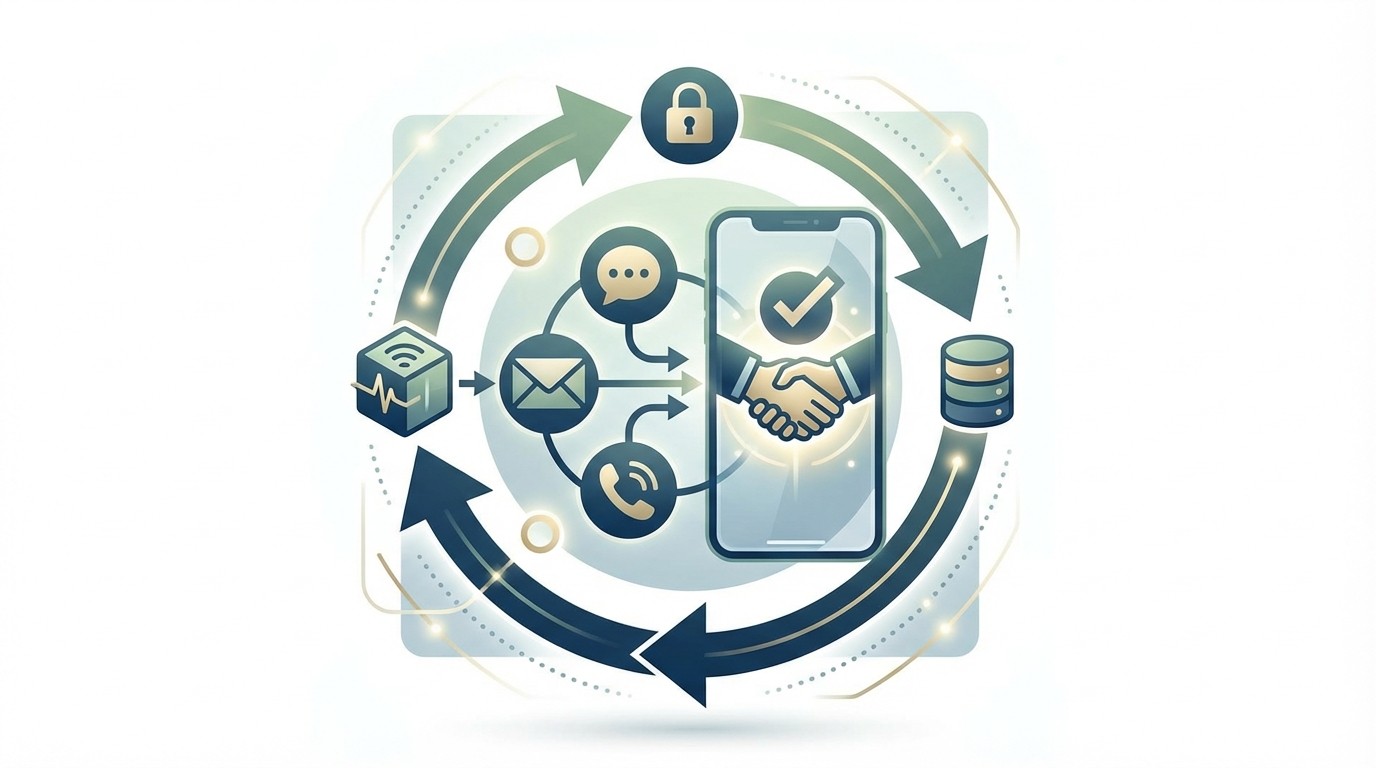
Build a resolution-first collections flow with instant apps concept illustration - RadMedia

The hidden last mile in collections

Most teams boost outreach volume, then wonder why resolution lags. The problem lives at the last mile. Messages push customers toward portals or call queues where identity, policy, and payment execution live. Every hop adds friction and risk, so completion drops. Treat messaging as the place where the task finishes, not just starts, and you remove the bottleneck that caps outcomes.

This last-mile gap shows up in familiar ways: a failed payment link that leads to a login page, a forgotten password, and then a phone call. By the time the customer reaches an agent, the original intent has cooled and the agent must re-collect context and rekey outcomes. The result isn’t just delay—it’s variability, higher unit costs, and inconsistent compliance.

Closing the last mile inside the message changes the physics. When identity verification, policy checks, and payments happen in-channel, you reduce handoffs and eliminate context switches. That’s what turns reminders into results: fewer steps, fewer errors, and a complete writeback at the moment of action.

Why adding channels fragments work

Adding SMS, WhatsApp, and email without closed-loop completion creates parallel queues that still land on people. Work splits across tools, reconciliation becomes manual, and costs rise even as sends increase. Channel breadth only helps when customers can complete payment, plan selection, or disputes inside the conversation and the result writes back automatically.

Fragmentation also masks problems. Dashboards look busy—more sends, more replies—while outcomes stagnate. Teams then add headcount for reconciliation, which further inflates unit cost. The right approach integrates channels around the outcome, not the conversation, so each message carries a direct path to completion with guaranteed system updates.

If you’re choosing between more channels or better completion, choose completion. Channels amplify good process and magnify bad process. Without in-message resolution, you’re multiplying entry points to the same bottleneck.

What metrics signal a resolution problem?

If your dashboards emphasize conversations and deflections but not completed tasks, you have a resolution gap. Track completion rate, time to resolution, writeback success, and automated containment to see the true picture. If customers still switch channels or your team reconciles outcomes by hand, you are measuring activity instead of results.

High agent wrap-up time, frequent rework, and mismatched system states are other telltales. When outcomes don’t write back reliably, you’ll see duplicate tickets, escalations without context, and audit gaps. You want fewer touchpoints, faster cycle times, and clean, consistent records—those are the operational signals of resolution-first design.

External research on process fragmentation shows the same pattern across industries: more tools without integrated completion add time, errors, and cost. For a broader lens on why fragmented processes inflate operational risk, see this overview of the practical impacts of workflow sprawl from DocuWare’s process automation perspective.

Make the message the app to close the loop

Making the message the app means delivering a secure, task-focused mini experience inside SMS, email, or WhatsApp. Identity is verified, policy rules apply, consent is captured, and outcomes write back automatically. For instance, a customer can set a payment plan in-message and receive an immediate receipt, with flags updated in core systems.
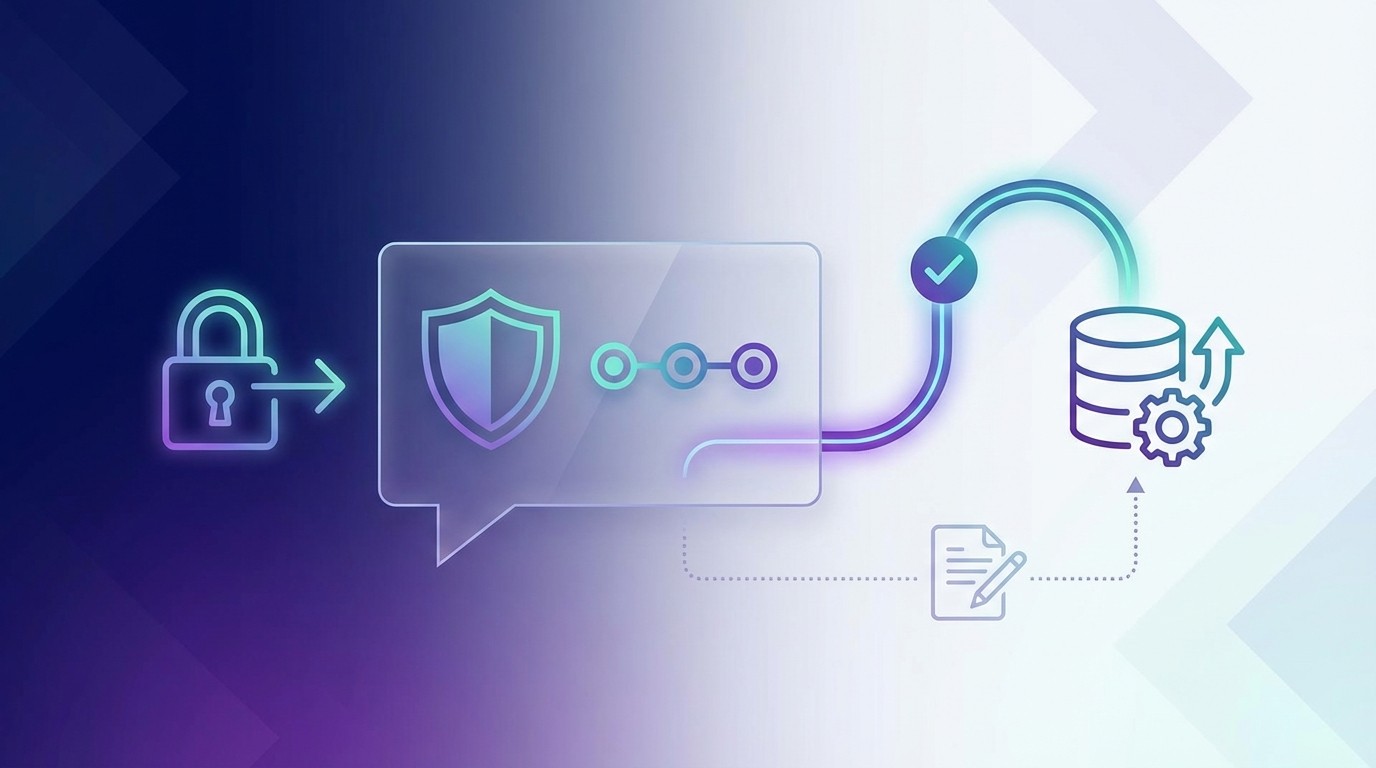
How RadMedia automates secure, in-message collections at scale concept illustration - RadMedia

What is an instant, in-channel app in collections?

An instant app is a secure mini experience that opens from a message and completes the task inside the conversation. Customers verify identity, choose a compliant payment option, capture consent, and submit, with no downloads or logins. When finished, outcomes post back to systems of record, receipts issue, and the case closes without agent involvement.

“Instant” matters because intent is perishable. Every extra step—app download, portal login—erodes follow-through. With in-message mini apps, the customer acts in context, and the system closes the loop immediately. For a primer on task-focused, rapid app experiences, review this explanation of instant app design concepts and why lightweight, purpose-built flows drive completion.

You don’t have to redesign your core systems to get there. You only need a communication layer that can transact safely and write back reliably, so each message contains the last mile, not a pointer to it.

Identity, consent, and policy belong in flow

Collections flows must validate identity, apply eligibility rules, and capture digital consent without forcing a channel switch. Use one-time codes or known fact checks, present only policy-allowed actions, and store consent with timestamps. This creates consistent, audit-ready outcomes that scale across high volumes without adding agent burden or compliance risk.

When identity and policy live outside the message, your team pays an operations tax: more escalations, manual checks, and error-prone documentation. Bringing these steps in-message standardizes execution. It also tightens compliance because the system—not the agent—enforces the rules and collects evidence predictably.

Consistency is the benefit you’ll feel first. Instead of chasing missing attestation data or reconciling plan terms, you’ll see clean, complete records the moment the customer acts.

Integration handled for you beats DIY sprawl

Drawing a flow is easy. Making it transact against legacy cores, enforce idempotency, and write back reliably is hard. A platform that owns adapters, event subscriptions, and retries eliminates custom glue work. You gain predictable behavior across REST, SOAP, and batch processes, so automated outcomes are consistent and safe at scale.

DIY stacks often stitch together multiple tools—messaging, identity, payment, logging—then rely on scripts for the last mile. That approach is brittle. A practical comparison of automation approaches shows that toolchains multiply maintenance and failure points as you scale. For context, see this overview of common automation tool choices from Upskillist’s survey of workflow automation tools.

Reliability isn’t just retries—it’s telemetry, backoff policies, and idempotent writebacks. Borrow from proven workflow execution patterns used in engineering, like those documented in Datadog’s action workflows concepts, to ensure your operation can absorb downstream hiccups without human intervention.

The real costs of manual wrap up and portal detours

Manual wrap-up and portal detours add minutes per case that compound into weeks at scale. Each handoff increases unit cost, introduces error risk, and lengthens cycle time. For example, updating a card in a portal often ends with an agent reconciling records manually—time your team doesn’t have.

Time, money, and risk at scale

Each detour from message to portal or phone injects minutes of delay, agent handling, and rekeying. Across thousands of accounts, that becomes weeks of lost throughput, higher unit cost, and inconsistent compliance. When completion happens in flow and writebacks are automated, you reduce cycle times, error rates, and the operational tax of reconciliation.

Costs show up in three places: agent minutes (labor), customer abandonment (lost revenue), and rework (quality). Even small inefficiencies become material at scale. Eliminating detours means less back-and-forth, fewer exceptions, and a cleaner audit trail.

Fragmented processes compound risk. Industry commentary on process automation notes that disconnected steps increase error and documentation gaps—exactly the issues collections teams fight daily. For a concise treatment of these impacts, review DocuWare’s take on process fragmentation.

When call queues throttle outcomes

Spikes break human systems first. Long wait times push abandonment over acceptable thresholds, even when customers want to pay. Shifting volume to in-message self-service removes the queue entirely for routine cases, keeps agents focused on exceptions, and stabilizes conversion when inbound infrastructure is constrained or failing.

Queues also create volatility. A two-minute delay might seem minor; at scale, it’s a conversion cliff. If the customer can resolve instantly in-channel, they do. If they must wait, many won’t. Your throughput shouldn’t hinge on call volume or staffing levels for routine tasks.

By designing flows to finish in-message, you immunize routine work from call-center bottlenecks and keep service levels stable during promotions, billing cycles, or economic shocks.

How do you measure containment and deflection?

Containment measures the share of cases that complete without an agent. Track automated resolution rate, drop-to-human rate by reason, and time to resolution. Pair this with writeback success and audit completeness. The goal is 50 to 90 percent automated outcomes, with transparent reasons for any escalation so you can tune flows with data.

You’ll also want strong observability on the workflow itself—step-level telemetry, retry outcomes, and idempotency checks—to pinpoint bottlenecks. Workflow engines that expose these signals help operations teams iterate like engineers. For examples of the telemetry and retry patterns to monitor, consult Datadog’s workflow execution guidance.

Still reconciling outcomes by hand? We can review one high-volume flow and outline a closed-loop design. Get a 30-Minute Workflow Review

When spikes hit, human systems break

Spikes expose bottlenecks in queues, logins, and manual wrap-up. Even well-run teams see abandonment spike when wait times rise, or when portal logins fail during peak traffic. The fix is structural: resolve routine cases in-message so volume doesn’t overwhelm people or infrastructure.

The campaign that collapsed under its own success

A retail bank scaled an SMS-to-call campaign four times, only to hit two minute queues and over 50 percent abandonment. Customers tried to resolve, the infrastructure blocked them. Pivoting to in-message self-service replaced the queue with instant completion. Results wrote back, exceptions routed with context, and efficiency surged.

The core issue wasn’t the outreach or the offer—it was the dependency on inbound capacity at the moment of decision. Once the flow brought identity, policy, and payment into the message, customers completed immediately and the contact center focused on true exceptions.

Teams often discover this the hard way during year-end pushes or promotional periods. Building for resolution, not conversation, prevents these collapses before they start.

What customers feel at the moment of payment

At the decision point, any extra step, login, or channel switch erodes intent. Fast, secure, branded minis that open from a trusted link convert better because they respect context. Customers can verify identity, choose a plan, or pay now without leaving the thread, then receive immediate confirmation and a receipt.

Design matters here. Task-focused configurations make the action obvious and safe, which is why instant-experience patterns are used across industries. For a cross-domain example of configuring focused, task-first experiences, see this overview of manager instant-app workflows.

When the customer feels certainty—clear steps, visible security, instant confirmation—completion follows naturally.

Why operations teams deserve better tools

Ops leaders do not lack discipline. They run within regulatory constraints, aging systems, and complex policies. What’s been missing is a way to encode those policies into channel-native experiences and write outcomes back safely without months of integration work. With that foundation, your team can finally scale resolution without scaling headcount.

Build a resolution-first collections flow with instant apps

A resolution-first flow starts with source-system triggers, then moves through channel-native outreach to in-message completion and guaranteed writebacks. The key is designing from the outcome backward and encoding policy into the flow. For example, a failed payment trigger initiates outreach; the customer updates details in-message; the system writes back and closes the case.

Orchestrate triggers and channel strategy

Connect back-end triggers like failed payments, due date thresholds, or eligibility windows. Sequence SMS, email, and WhatsApp based on consent, preferences, and responsiveness. Optimize send windows and cadence, and use dynamic content to prefill amounts and options. Keep the call center as an exception path, not the default, to avoid queue overload.

This approach respects customer context and compliance simultaneously. Quiet-hours rules, consent-aware sequencing, and send-time optimization raise completion without adding noise. Over time, telemetry will show which sequences convert best for each workflow, allowing continuous tuning.

Your orchestration should be outcome-aware: nudge until completion or escalation, never just “send three reminders.” Every send should serve the resolution.

Design identity verification, consent, and disclosures

Implement one-time codes, secure deep links, or known fact validation in flow. Present only policy-allowed actions for that customer, and capture consent with timestamps. Include required disclosures in the mini experience, and store artifacts alongside case records. Make identity and compliance invisible to customers, but fully auditable for your team.

Treat these steps as non-negotiable components, not ad hoc scripts. When identity and consent are standardized, agents handle fewer exceptions and audits become straightforward. The customer simply sees a clear, trusted path to resolution; your systems see complete, consistent evidence.

In practice, this means embedding verification, consent capture, and disclosure acknowledgement before any transactional action, and writing those outcomes back atomically with the transaction.

How RadMedia automates secure, in-message collections at scale

RadMedia enables resolution-first collections by connecting triggers to in-message self-service, enforcing policy in flow, and writing outcomes back to systems—automatically. We handle legacy adapters, retries, idempotent writebacks, security, and audit so your team can focus on outcomes, not plumbing. For example, a failed card triggers outreach, the customer updates in-message, and balances and flags update instantly.

Managed integration and idempotent writebacks

RadMedia connects to legacy cores and modern APIs, manages authentication and schema mapping, and guarantees idempotent writebacks. Retries with backoff and circuit breaking shield operations from downstream hiccups. The result is reliable, high-volume automation without custom glue code or manual reconciliation.

By closing the loop at the point of communication, RadMedia eliminates the manual wrap-up that inflates unit cost. Your systems stay in sync because outcomes post back atomically with full telemetry and audit metadata.

In-message mini apps with verified identity

Customers open a secure, branded mini from a message, verify identity via one-time codes or known facts, and see only compliant actions—Pay Now, Promise to Pay, or plan selection. Digital consent and required disclosures are captured with timestamps and stored alongside the case. Routine cases resolve automatically; exceptions escalate with full context.

This improves conversion and compliance simultaneously. Customers act where they are, while your team gains consistent evidence for audits and QA without extra work.

RadMedia brings the last mile into the message, so identity, policy, and payment execution live exactly where decisions happen.

Ready to move to resolution-first collections with RadMedia and see it working on your data? We’ll scope a pilot and quantify the lift in weeks, not quarters. Schedule a Working Session

Conclusion

Scaling collections isn’t about sending more messages. It’s about finishing the task inside the message and writing the outcome back automatically. When identity, policy, and payments live in-channel, you cut cycle time, deflect routine work, and stabilize throughput—even during spikes. Start with one high-volume workflow, design from the outcome backward, and measure completion, writeback success, and time-to-resolution. That’s how you turn conversation volume into resolved accounts.

Discover how to build automated collections workflows that enhance customer experience and streamline operations. Learn to automate high-volume collections effectively.

How to Build Scalable Automated Collections Workflows with Instant Apps - RadMedia professional guide illustration

[{"q":"How do I set up automated payment reminders?","a":"To set up automated payment reminders, you can use RadMedia to create a workflow that triggers messages based on due dates. Start by integrating your back-end systems with RadMedia, ensuring it can access payment due dates. Then, configure your outreach plan to send personalized messages via SMS, email, or WhatsApp as the due date approaches. Make sure to include a secure link to an in-message mini-app where customers can easily update their payment details or set up a payment plan. This way, you can improve completion rates and reduce manual follow-ups."},{"q":"What if customers don't respond to automated messages?","a":"If customers aren't responding to automated messages, consider adjusting your outreach strategy. Use RadMedia's omni-channel capabilities to test different messaging channels, like SMS or email, to see which gets better engagement. Additionally, personalize your messages based on customer behavior and preferences to increase relevance. You can also set up reminders or nudges that are timed strategically to encourage action. If the issue persists, analyze the content of your messages to ensure they are clear and actionable."},{"q":"Can I track the success of my automated workflows?","a":"Yes, you can track the success of your automated workflows with RadMedia. Focus on key metrics such as completion rates, time-to-resolution, and writeback success. These metrics will help you understand how well your workflows are performing. RadMedia's system captures these metrics automatically, allowing you to measure the effectiveness of your automated communications. Regularly review these metrics to identify areas for improvement and optimize your workflows for better outcomes."},{"q":"When should I escalate customer issues to agents?","a":"You should escalate customer issues to agents when the workflow encounters exceptions that cannot be resolved automatically. With RadMedia, the system is designed to handle most routine cases without human intervention. However, if there are issues like eligibility failures or missing data, the case will follow a defined exception path and escalate to an agent. This escalation includes all necessary context, so agents can quickly understand the situation and assist the customer effectively."},{"q":"Why does my automation not close the loop with customers?","a":"If your automation isn't closing the loop with customers, it may be due to fragmented workflows. Ensure that your setup with RadMedia includes in-message self-service apps that allow customers to complete their tasks directly within the message. This means no portal detours or manual wrap-ups are needed. The system should be configured to write outcomes back to your core systems automatically, ensuring that every action taken by the customer updates their records seamlessly."},{"q":"How do I ensure compliance in my automated workflows?","a":"To ensure compliance in your automated workflows, utilize RadMedia's built-in compliance features. Capture customer consent and verify identity during the workflow using secure methods like one-time codes or known-fact validation. Make sure that every step of the process is logged for audit purposes, which helps maintain a clear record of compliance. Additionally, model your business rules within the RadMedia system to ensure that compliance checks are integrated into the workflow, reducing the risk of errors."}]

21 Jan 2026

1dbb3a86-ff88-4538-9c55-92c970401d88

{"@graph":[{"@id":"https://radmedia.co.za/how-to-build-scalable-automated-collections-workflows-with-instant-apps#article","@type":"Article","image":"https://jdbrszggncetflrhtwcd.supabase.co/storage/v1/object/public/article-images/6dca98ae-107d-47b7-832f-ee543e4b5364/how-to-build-scalable-automated-collections-workflows-with-instant-apps-hero-1768996280273.png","author":{"name":"RadMedia","@type":"Organization"},"headline":"How to Build Scalable Automated Collections Workflows with Instant Apps","keywords":"automated collections workflows","publisher":{"name":"RadMedia","@type":"Organization"},"wordCount":2604,"description":"How to Build Scalable Automated Collections Workflows with Instant Apps","dateModified":"2026-01-21T11:47:35.326+00:00","datePublished":"2026-01-21T11:45:44.841833+00:00","mainEntityOfPage":{"@id":"https://radmedia.co.za/how-to-build-scalable-automated-collections-workflows-with-instant-apps","@type":"WebPage"}},{"@id":"https://radmedia.co.za/how-to-build-scalable-automated-collections-workflows-with-instant-apps#howto","name":"How to Build Scalable Automated Collections Workflows with Instant Apps","step":[{"name":"More messages, same bottleneck: why contact-first scaling fails collections","text":"Contact-first scaling fails because it treats messaging as outreach, not completion. The last mile—identity, policy, and payment execution—still lives in portals or call queues, adding friction and drop-off. For example, customers receive SMS reminders but end up in two-minute waits or forgotten logins, and the task stalls. !Build a resolution-first collections flow with instant apps concept illustration - RadMedia","@type":"HowToStep","position":1},{"name":"The hidden last mile in collections","text":"Most teams boost outreach volume, then wonder why resolution lags. The problem lives at the last mile. Messages push customers toward portals or call queues where identity, policy, and payment execution live. Every hop adds friction and risk, so completion drops. Treat messaging as the place where the task finishes, not just starts, and you remove the bottleneck that caps outcomes. This last-mile gap shows up in familiar ways: a failed payment link that leads to a login page, a forgotten passwor","@type":"HowToStep","position":2},{"name":"Why adding channels fragments work","text":"Adding SMS, WhatsApp, and email without closed-loop completion creates parallel queues that still land on people. Work splits across tools, reconciliation becomes manual, and costs rise even as sends increase. Channel breadth only helps when customers can complete payment, plan selection, or disputes inside the conversation and the result writes back automatically. Fragmentation also masks problems. Dashboards look busy—more sends, more replies—while outcomes stagnate. Teams then add headcount f","@type":"HowToStep","position":3},{"name":"What metrics signal a resolution problem?","text":"If your dashboards emphasize conversations and deflections but not completed tasks, you have a resolution gap. Track completion rate, time to resolution, writeback success, and automated containment to see the true picture. If customers still switch channels or your team reconciles outcomes by hand, you are measuring activity instead of results. High agent wrap-up time, frequent rework, and mismatched system states are other telltales. When outcomes don’t write back reliably, you’ll see duplicat","@type":"HowToStep","position":4},{"name":"Make the message the app to close the loop","text":"Making the message the app means delivering a secure, task-focused mini experience inside SMS, email, or WhatsApp. Identity is verified, policy rules apply, consent is captured, and outcomes write back automatically. For instance, a customer can set a payment plan in-message and receive an immediate receipt, with flags updated in core systems. !How RadMedia automates secure, in-message collections at scale concept illustration - RadMedia","@type":"HowToStep","position":5},{"name":"What is an instant, in-channel app in collections?","text":"An instant app is a secure mini experience that opens from a message and completes the task inside the conversation. Customers verify identity, choose a compliant payment option, capture consent, and submit, with no downloads or logins. When finished, outcomes post back to systems of record, receipts issue, and the case closes without agent involvement. “Instant” matters because intent is perishable. Every extra step—app download, portal login—erodes follow-through. With in-message mini apps, th","@type":"HowToStep","position":6},{"name":"Identity, consent, and policy belong in flow","text":"Collections flows must validate identity, apply eligibility rules, and capture digital consent without forcing a channel switch. Use one-time codes or known fact checks, present only policy-allowed actions, and store consent with timestamps. This creates consistent, audit-ready outcomes that scale across high volumes without adding agent burden or compliance risk. When identity and policy live outside the message, your team pays an operations tax: more escalations, manual checks, and error-prone","@type":"HowToStep","position":7},{"name":"Integration handled for you beats DIY sprawl","text":"Drawing a flow is easy. Making it transact against legacy cores, enforce idempotency, and write back reliably is hard. A platform that owns adapters, event subscriptions, and retries eliminates custom glue work. You gain predictable behavior across REST, SOAP, and batch processes, so automated outcomes are consistent and safe at scale. DIY stacks often stitch together multiple tools—messaging, identity, payment, logging—then rely on scripts for the last mile. That approach is brittle. A practica","@type":"HowToStep","position":8},{"name":"The real costs of manual wrap up and portal detours","text":"Manual wrap-up and portal detours add minutes per case that compound into weeks at scale. Each handoff increases unit cost, introduces error risk, and lengthens cycle time. For example, updating a card in a portal often ends with an agent reconciling records manually—time your team doesn’t have.","@type":"HowToStep","position":9},{"name":"Time, money, and risk at scale","text":"Each detour from message to portal or phone injects minutes of delay, agent handling, and rekeying. Across thousands of accounts, that becomes weeks of lost throughput, higher unit cost, and inconsistent compliance. When completion happens in flow and writebacks are automated, you reduce cycle times, error rates, and the operational tax of reconciliation. Costs show up in three places: agent minutes (labor), customer abandonment (lost revenue), and rework (quality). Even small inefficiencies bec","@type":"HowToStep","position":10},{"name":"When call queues throttle outcomes","text":"Spikes break human systems first. Long wait times push abandonment over acceptable thresholds, even when customers want to pay. Shifting volume to in-message self-service removes the queue entirely for routine cases, keeps agents focused on exceptions, and stabilizes conversion when inbound infrastructure is constrained or failing. Queues also create volatility. A two-minute delay might seem minor; at scale, it’s a conversion cliff. If the customer can resolve instantly in-channel, they do. If t","@type":"HowToStep","position":11},{"name":"How do you measure containment and deflection?","text":"Containment measures the share of cases that complete without an agent. Track automated resolution rate, drop-to-human rate by reason, and time to resolution. Pair this with writeback success and audit completeness. The goal is 50 to 90 percent automated outcomes, with transparent reasons for any escalation so you can tune flows with data. You’ll also want strong observability on the workflow itself—step-level telemetry, retry outcomes, and idempotency checks—to pinpoint bottlenecks. Workflow en","@type":"HowToStep","position":12},{"name":"When spikes hit, human systems break","text":"Spikes expose bottlenecks in queues, logins, and manual wrap-up. Even well-run teams see abandonment spike when wait times rise, or when portal logins fail during peak traffic. The fix is structural: resolve routine cases in-message so volume doesn’t overwhelm people or infrastructure.","@type":"HowToStep","position":13},{"name":"The campaign that collapsed under its own success","text":"A retail bank scaled an SMS-to-call campaign four times, only to hit two minute queues and over 50 percent abandonment. Customers tried to resolve, the infrastructure blocked them. Pivoting to in-message self-service replaced the queue with instant completion. Results wrote back, exceptions routed with context, and efficiency surged. The core issue wasn’t the outreach or the offer—it was the dependency on inbound capacity at the moment of decision. Once the flow brought identity, policy, and pay","@type":"HowToStep","position":14},{"name":"What customers feel at the moment of payment","text":"At the decision point, any extra step, login, or channel switch erodes intent. Fast, secure, branded minis that open from a trusted link convert better because they respect context. Customers can verify identity, choose a plan, or pay now without leaving the thread, then receive immediate confirmation and a receipt. Design matters here. Task-focused configurations make the action obvious and safe, which is why instant-experience patterns are used across industries. For a cross-domain example of ","@type":"HowToStep","position":15},{"name":"Why operations teams deserve better tools","text":"Ops leaders do not lack discipline. They run within regulatory constraints, aging systems, and complex policies. What’s been missing is a way to encode those policies into channel-native experiences and write outcomes back safely without months of integration work. With that foundation, your team can finally scale resolution without scaling headcount.","@type":"HowToStep","position":16},{"name":"Build a resolution-first collections flow with instant apps","text":"A resolution-first flow starts with source-system triggers, then moves through channel-native outreach to in-message completion and guaranteed writebacks. The key is designing from the outcome backward and encoding policy into the flow. For example, a failed payment trigger initiates outreach; the customer updates details in-message; the system writes back and closes the case.","@type":"HowToStep","position":17},{"name":"Orchestrate triggers and channel strategy","text":"Connect back-end triggers like failed payments, due date thresholds, or eligibility windows. Sequence SMS, email, and WhatsApp based on consent, preferences, and responsiveness. Optimize send windows and cadence, and use dynamic content to prefill amounts and options. Keep the call center as an exception path, not the default, to avoid queue overload. This approach respects customer context and compliance simultaneously. Quiet-hours rules, consent-aware sequencing, and send-time optimization rai","@type":"HowToStep","position":18},{"name":"Design identity verification, consent, and disclosures","text":"Implement one-time codes, secure deep links, or known fact validation in flow. Present only policy-allowed actions for that customer, and capture consent with timestamps. Include required disclosures in the mini experience, and store artifacts alongside case records. Make identity and compliance invisible to customers, but fully auditable for your team. Treat these steps as non-negotiable components, not ad hoc scripts. When identity and consent are standardized, agents handle fewer exceptions a","@type":"HowToStep","position":19},{"name":"How RadMedia automates secure, in-message collections at scale","text":"RadMedia enables resolution-first collections by connecting triggers to in-message self-service, enforcing policy in flow, and writing outcomes back to systems—automatically. We handle legacy adapters, retries, idempotent writebacks, security, and audit so your team can focus on outcomes, not plumbing. For example, a failed card triggers outreach, the customer updates in-message, and balances and flags update instantly.","@type":"HowToStep","position":20},{"name":"Managed integration and idempotent writebacks","text":"RadMedia connects to legacy cores and modern APIs, manages authentication and schema mapping, and guarantees idempotent writebacks. Retries with backoff and circuit breaking shield operations from downstream hiccups. The result is reliable, high-volume automation without custom glue code or manual reconciliation. By closing the loop at the point of communication, RadMedia eliminates the manual wrap-up that inflates unit cost. Your systems stay in sync because outcomes post back atomically with f","@type":"HowToStep","position":21},{"name":"In-message mini apps with verified identity","text":"Customers open a secure, branded mini from a message, verify identity via one-time codes or known facts, and see only compliant actions—Pay Now, Promise to Pay, or plan selection. Digital consent and required disclosures are captured with timestamps and stored alongside the case. Routine cases resolve automatically; exceptions escalate with full context. This improves conversion and compliance simultaneously. Customers act where they are, while your team gains consistent evidence for audits and ","@type":"HowToStep","position":22}],"@type":"HowTo","image":"https://jdbrszggncetflrhtwcd.supabase.co/storage/v1/object/public/article-images/6dca98ae-107d-47b7-832f-ee543e4b5364/how-to-build-scalable-automated-collections-workflows-with-instant-apps-hero-1768996280273.png","totalTime":"PT18M","description":"How to Build Scalable Automated Collections Workflows with Instant Apps"},{"@id":"https://radmedia.co.za/how-to-build-scalable-automated-collections-workflows-with-instant-apps#breadcrumb","@type":"BreadcrumbList","itemListElement":[{"item":"https://radmedia.co.za","name":"Home","@type":"ListItem","position":1},{"item":"https://radmedia.co.za/how-to-build-scalable-automated-collections-workflows-with-instant-apps","name":"How to Build Scalable Automated Collections Workflows with I","@type":"ListItem","position":2}]}],"@context":"https://schema.org"}

[{"url":"https://jdbrszggncetflrhtwcd.supabase.co/storage/v1/object/public/article-images/6dca98ae-107d-47b7-832f-ee543e4b5364/how-to-build-scalable-automated-collections-workflows-with-instant-apps-inline-0-1768996298659.png","alt":"Build a resolution-first collections flow with instant apps concept illustration - RadMedia","filename":"how-to-build-scalable-automated-collections-workflows-with-instant-apps-inline-0-1768996298659.png","position":"after_h2_1","asset_id":null,"type":"ai_generated","dimensions":{"width":1024,"height":1024}},{"url":"https://jdbrszggncetflrhtwcd.supabase.co/storage/v1/object/public/article-images/6dca98ae-107d-47b7-832f-ee543e4b5364/how-to-build-scalable-automated-collections-workflows-with-instant-apps-inline-1-1768996315350.png","alt":"How RadMedia automates secure, in-message collections at scale concept illustration - RadMedia","filename":"how-to-build-scalable-automated-collections-workflows-with-instant-apps-inline-1-1768996315350.png","position":"after_h2_2","asset_id":null,"type":"ai_generated","dimensions":{"width":1024,"height":1024}}]

92

2604

Collections teams aren’t short on messages. You’re short on completions. If most of your “automation” still punts customers to portals or phone queues, you’re scaling activity, not outcomes. We’ll walk you through how to close the loop inside the message, so customers can verify identity, choose a plan, pay, or dispute—without switching channels.

We’ll discuss the specific ways instant, in-channel apps reduce friction, guarantee writebacks, and stabilize performance during spikes. You’ll see how to measure what matters (completion, writeback success, cycle time), and how a resolution-first approach deflects routine work from agents while improving customer experience and compliance.

Key Takeaways:

  • Make the message the app so tasks finish in-channel with guaranteed writebacks

  • Track completion, time-to-resolution, writeback success, and automated containment—not conversation counts

  • Validate identity and capture consent in flow to make compliance automatic and repeatable

  • Replace portal hops and phone queues with secure, no-download mini-apps that drive action

  • Use managed integration, retries, and idempotency to remove manual wrap-up and reconciliation

  • Orchestrate channels based on consent and responsiveness; escalate only exceptions with context

Prefer to skip ahead and see a working example? Explore a quick, task-focused flow and how it closes the loop end-to-end. Explore a Sample Instant-App Flow

More messages, same bottleneck: why contact-first scaling fails collections

Contact-first scaling fails because it treats messaging as outreach, not completion. The last mile—identity, policy, and payment execution—still lives in portals or call queues, adding friction and drop-off. For example, customers receive SMS reminders but end up in two-minute waits or forgotten logins, and the task stalls.

Build a resolution-first collections flow with instant apps concept illustration - RadMedia

The hidden last mile in collections

Most teams boost outreach volume, then wonder why resolution lags. The problem lives at the last mile. Messages push customers toward portals or call queues where identity, policy, and payment execution live. Every hop adds friction and risk, so completion drops. Treat messaging as the place where the task finishes, not just starts, and you remove the bottleneck that caps outcomes.

This last-mile gap shows up in familiar ways: a failed payment link that leads to a login page, a forgotten password, and then a phone call. By the time the customer reaches an agent, the original intent has cooled and the agent must re-collect context and rekey outcomes. The result isn’t just delay—it’s variability, higher unit costs, and inconsistent compliance.

Closing the last mile inside the message changes the physics. When identity verification, policy checks, and payments happen in-channel, you reduce handoffs and eliminate context switches. That’s what turns reminders into results: fewer steps, fewer errors, and a complete writeback at the moment of action.

Why adding channels fragments work

Adding SMS, WhatsApp, and email without closed-loop completion creates parallel queues that still land on people. Work splits across tools, reconciliation becomes manual, and costs rise even as sends increase. Channel breadth only helps when customers can complete payment, plan selection, or disputes inside the conversation and the result writes back automatically.

Fragmentation also masks problems. Dashboards look busy—more sends, more replies—while outcomes stagnate. Teams then add headcount for reconciliation, which further inflates unit cost. The right approach integrates channels around the outcome, not the conversation, so each message carries a direct path to completion with guaranteed system updates.

If you’re choosing between more channels or better completion, choose completion. Channels amplify good process and magnify bad process. Without in-message resolution, you’re multiplying entry points to the same bottleneck.

What metrics signal a resolution problem?

If your dashboards emphasize conversations and deflections but not completed tasks, you have a resolution gap. Track completion rate, time to resolution, writeback success, and automated containment to see the true picture. If customers still switch channels or your team reconciles outcomes by hand, you are measuring activity instead of results.

High agent wrap-up time, frequent rework, and mismatched system states are other telltales. When outcomes don’t write back reliably, you’ll see duplicate tickets, escalations without context, and audit gaps. You want fewer touchpoints, faster cycle times, and clean, consistent records—those are the operational signals of resolution-first design.

External research on process fragmentation shows the same pattern across industries: more tools without integrated completion add time, errors, and cost. For a broader lens on why fragmented processes inflate operational risk, see this overview of the practical impacts of workflow sprawl from DocuWare’s process automation perspective.

Make the message the app to close the loop

Making the message the app means delivering a secure, task-focused mini experience inside SMS, email, or WhatsApp. Identity is verified, policy rules apply, consent is captured, and outcomes write back automatically. For instance, a customer can set a payment plan in-message and receive an immediate receipt, with flags updated in core systems.

How RadMedia automates secure, in-message collections at scale concept illustration - RadMedia

What is an instant, in-channel app in collections?

An instant app is a secure mini experience that opens from a message and completes the task inside the conversation. Customers verify identity, choose a compliant payment option, capture consent, and submit, with no downloads or logins. When finished, outcomes post back to systems of record, receipts issue, and the case closes without agent involvement.

“Instant” matters because intent is perishable. Every extra step—app download, portal login—erodes follow-through. With in-message mini apps, the customer acts in context, and the system closes the loop immediately. For a primer on task-focused, rapid app experiences, review this explanation of instant app design concepts and why lightweight, purpose-built flows drive completion.

You don’t have to redesign your core systems to get there. You only need a communication layer that can transact safely and write back reliably, so each message contains the last mile, not a pointer to it.

Identity, consent, and policy belong in flow

Collections flows must validate identity, apply eligibility rules, and capture digital consent without forcing a channel switch. Use one-time codes or known fact checks, present only policy-allowed actions, and store consent with timestamps. This creates consistent, audit-ready outcomes that scale across high volumes without adding agent burden or compliance risk.

When identity and policy live outside the message, your team pays an operations tax: more escalations, manual checks, and error-prone documentation. Bringing these steps in-message standardizes execution. It also tightens compliance because the system—not the agent—enforces the rules and collects evidence predictably.

Consistency is the benefit you’ll feel first. Instead of chasing missing attestation data or reconciling plan terms, you’ll see clean, complete records the moment the customer acts.

Integration handled for you beats DIY sprawl

Drawing a flow is easy. Making it transact against legacy cores, enforce idempotency, and write back reliably is hard. A platform that owns adapters, event subscriptions, and retries eliminates custom glue work. You gain predictable behavior across REST, SOAP, and batch processes, so automated outcomes are consistent and safe at scale.

DIY stacks often stitch together multiple tools—messaging, identity, payment, logging—then rely on scripts for the last mile. That approach is brittle. A practical comparison of automation approaches shows that toolchains multiply maintenance and failure points as you scale. For context, see this overview of common automation tool choices from Upskillist’s survey of workflow automation tools.

Reliability isn’t just retries—it’s telemetry, backoff policies, and idempotent writebacks. Borrow from proven workflow execution patterns used in engineering, like those documented in Datadog’s action workflows concepts, to ensure your operation can absorb downstream hiccups without human intervention.

The real costs of manual wrap up and portal detours

Manual wrap-up and portal detours add minutes per case that compound into weeks at scale. Each handoff increases unit cost, introduces error risk, and lengthens cycle time. For example, updating a card in a portal often ends with an agent reconciling records manually—time your team doesn’t have.

Time, money, and risk at scale

Each detour from message to portal or phone injects minutes of delay, agent handling, and rekeying. Across thousands of accounts, that becomes weeks of lost throughput, higher unit cost, and inconsistent compliance. When completion happens in flow and writebacks are automated, you reduce cycle times, error rates, and the operational tax of reconciliation.

Costs show up in three places: agent minutes (labor), customer abandonment (lost revenue), and rework (quality). Even small inefficiencies become material at scale. Eliminating detours means less back-and-forth, fewer exceptions, and a cleaner audit trail.

Fragmented processes compound risk. Industry commentary on process automation notes that disconnected steps increase error and documentation gaps—exactly the issues collections teams fight daily. For a concise treatment of these impacts, review DocuWare’s take on process fragmentation.

When call queues throttle outcomes

Spikes break human systems first. Long wait times push abandonment over acceptable thresholds, even when customers want to pay. Shifting volume to in-message self-service removes the queue entirely for routine cases, keeps agents focused on exceptions, and stabilizes conversion when inbound infrastructure is constrained or failing.

Queues also create volatility. A two-minute delay might seem minor; at scale, it’s a conversion cliff. If the customer can resolve instantly in-channel, they do. If they must wait, many won’t. Your throughput shouldn’t hinge on call volume or staffing levels for routine tasks.

By designing flows to finish in-message, you immunize routine work from call-center bottlenecks and keep service levels stable during promotions, billing cycles, or economic shocks.

How do you measure containment and deflection?

Containment measures the share of cases that complete without an agent. Track automated resolution rate, drop-to-human rate by reason, and time to resolution. Pair this with writeback success and audit completeness. The goal is 50 to 90 percent automated outcomes, with transparent reasons for any escalation so you can tune flows with data.

You’ll also want strong observability on the workflow itself—step-level telemetry, retry outcomes, and idempotency checks—to pinpoint bottlenecks. Workflow engines that expose these signals help operations teams iterate like engineers. For examples of the telemetry and retry patterns to monitor, consult Datadog’s workflow execution guidance.

Still reconciling outcomes by hand? We can review one high-volume flow and outline a closed-loop design. Get a 30-Minute Workflow Review

When spikes hit, human systems break

Spikes expose bottlenecks in queues, logins, and manual wrap-up. Even well-run teams see abandonment spike when wait times rise, or when portal logins fail during peak traffic. The fix is structural: resolve routine cases in-message so volume doesn’t overwhelm people or infrastructure.

The campaign that collapsed under its own success

A retail bank scaled an SMS-to-call campaign four times, only to hit two minute queues and over 50 percent abandonment. Customers tried to resolve, the infrastructure blocked them. Pivoting to in-message self-service replaced the queue with instant completion. Results wrote back, exceptions routed with context, and efficiency surged.

The core issue wasn’t the outreach or the offer—it was the dependency on inbound capacity at the moment of decision. Once the flow brought identity, policy, and payment into the message, customers completed immediately and the contact center focused on true exceptions.

Teams often discover this the hard way during year-end pushes or promotional periods. Building for resolution, not conversation, prevents these collapses before they start.

What customers feel at the moment of payment

At the decision point, any extra step, login, or channel switch erodes intent. Fast, secure, branded minis that open from a trusted link convert better because they respect context. Customers can verify identity, choose a plan, or pay now without leaving the thread, then receive immediate confirmation and a receipt.

Design matters here. Task-focused configurations make the action obvious and safe, which is why instant-experience patterns are used across industries. For a cross-domain example of configuring focused, task-first experiences, see this overview of manager instant-app workflows.

When the customer feels certainty—clear steps, visible security, instant confirmation—completion follows naturally.

Why operations teams deserve better tools

Ops leaders do not lack discipline. They run within regulatory constraints, aging systems, and complex policies. What’s been missing is a way to encode those policies into channel-native experiences and write outcomes back safely without months of integration work. With that foundation, your team can finally scale resolution without scaling headcount.

Build a resolution-first collections flow with instant apps

A resolution-first flow starts with source-system triggers, then moves through channel-native outreach to in-message completion and guaranteed writebacks. The key is designing from the outcome backward and encoding policy into the flow. For example, a failed payment trigger initiates outreach; the customer updates details in-message; the system writes back and closes the case.

Orchestrate triggers and channel strategy

Connect back-end triggers like failed payments, due date thresholds, or eligibility windows. Sequence SMS, email, and WhatsApp based on consent, preferences, and responsiveness. Optimize send windows and cadence, and use dynamic content to prefill amounts and options. Keep the call center as an exception path, not the default, to avoid queue overload.

This approach respects customer context and compliance simultaneously. Quiet-hours rules, consent-aware sequencing, and send-time optimization raise completion without adding noise. Over time, telemetry will show which sequences convert best for each workflow, allowing continuous tuning.

Your orchestration should be outcome-aware: nudge until completion or escalation, never just “send three reminders.” Every send should serve the resolution.

Design identity verification, consent, and disclosures

Implement one-time codes, secure deep links, or known fact validation in flow. Present only policy-allowed actions for that customer, and capture consent with timestamps. Include required disclosures in the mini experience, and store artifacts alongside case records. Make identity and compliance invisible to customers, but fully auditable for your team.

Treat these steps as non-negotiable components, not ad hoc scripts. When identity and consent are standardized, agents handle fewer exceptions and audits become straightforward. The customer simply sees a clear, trusted path to resolution; your systems see complete, consistent evidence.

In practice, this means embedding verification, consent capture, and disclosure acknowledgement before any transactional action, and writing those outcomes back atomically with the transaction.

How RadMedia automates secure, in-message collections at scale

RadMedia enables resolution-first collections by connecting triggers to in-message self-service, enforcing policy in flow, and writing outcomes back to systems—automatically. We handle legacy adapters, retries, idempotent writebacks, security, and audit so your team can focus on outcomes, not plumbing. For example, a failed card triggers outreach, the customer updates in-message, and balances and flags update instantly.

Managed integration and idempotent writebacks

RadMedia connects to legacy cores and modern APIs, manages authentication and schema mapping, and guarantees idempotent writebacks. Retries with backoff and circuit breaking shield operations from downstream hiccups. The result is reliable, high-volume automation without custom glue code or manual reconciliation.

By closing the loop at the point of communication, RadMedia eliminates the manual wrap-up that inflates unit cost. Your systems stay in sync because outcomes post back atomically with full telemetry and audit metadata.

In-message mini apps with verified identity

Customers open a secure, branded mini from a message, verify identity via one-time codes or known facts, and see only compliant actions—Pay Now, Promise to Pay, or plan selection. Digital consent and required disclosures are captured with timestamps and stored alongside the case. Routine cases resolve automatically; exceptions escalate with full context.

This improves conversion and compliance simultaneously. Customers act where they are, while your team gains consistent evidence for audits and QA without extra work.

RadMedia brings the last mile into the message, so identity, policy, and payment execution live exactly where decisions happen.

Ready to move to resolution-first collections with RadMedia and see it working on your data? We’ll scope a pilot and quantify the lift in weeks, not quarters. Schedule a Working Session

Conclusion

Scaling collections isn’t about sending more messages. It’s about finishing the task inside the message and writing the outcome back automatically. When identity, policy, and payments live in-channel, you cut cycle time, deflect routine work, and stabilize throughput—even during spikes. Start with one high-volume workflow, design from the outcome backward, and measure completion, writeback success, and time-to-resolution. That’s how you turn conversation volume into resolved accounts.