
Conversations Are Vanity: A Contrarian Playbook to Cut Contact Centre Cost
Focus on in-message completion instead of call volume to cut contact centre costs. Shift metrics to resolution rates and automate processes, leading to faster resolutions and reduced queues. Start with one workflow for measurable results in a quarter.
Most operations teams worship volume: calls, chats, tickets, bot deflections. The metric that matters is different—completion inside the message, recorded in your systems with no manual wrap‑up. Conversations Are Vanity: A Contrarian Playbook to Cut Contact Centre Cost is our working lens for audits, and we will walk you through it step by step.
We will discuss the specific ways conversation metrics hide real costs, why writebacks and last‑mile friction are the root cause, and how a resolution‑first playbook cuts routine agent load fast. You will see where teams go wrong, how to measure resolution properly, and what it takes to make in‑message completion safe, auditable, and fast.
Key Takeaways:
Replace talk volume with completion rate, time to resolution, writeback success, and deflection as your north‑star KPIs.
Audit one high‑volume workflow to quantify last‑mile friction and the integration tax that keeps costs high.
Teach the six‑step playbook to shift work from agents to in‑message self‑service with automatic writebacks.
Re‑skill agents for exceptions and high‑judgment cases, not routine policy work.
Expect measurable results in one quarter by starting with a single, repeatable workflow.
Build for audits from day one, including identity, consent, and evidence of writebacks.
Treat channel orchestration as completion design, not broadcast, so customers act where they are.
Conversations Are Vanity: Measure Resolution, Not Talk
Resolution inside the message is the only metric that reliably reduces contact centre cost. Talk volume, handle time, and bot containment can look healthy while unresolved work piles up. When completion writes back to your systems automatically, queues shrink and unit cost drops.

Teams lean on talk metrics because they are easy to count and trend, yet they mask the waste from handoffs and rework. A simple pattern repeats: the message starts a journey, a portal or agent must finish it, records need manual recon, and the same case returns next week. Completion inside the message, with idempotent writebacks, breaks that loop and turns busywork into outcomes you can prove.
Anchor your reporting to binary, verifiable outcomes:
Completion rate = verified writebacks ÷ conversations started (for the workflow)
Time to resolution = timestamp of first outreach → timestamp of successful writeback
Writeback success = successful writebacks ÷ writeback attempts
Deflection = % of eligible cases resolved without an agent
Most leaders know this instinctively. Few measure it directly. Start now. Shift your weekly dashboard to completion rate, time to resolution, writeback success, and deflection. Those are the numbers you can manage and improve.
Why conversation metrics mislead ops leaders
Talk metrics reward activity, not outcomes. A spike in chats or calls can mean outreach worked, or it can mean last‑mile friction got worse. Without completion data, you cannot tell. The risk is simple: you congratulate the team for more activity while unresolved work expands in the background.
In our reviews, we often see bot containment celebrated even as agents spend late nights closing the same cases by hand. Handle time looks efficient, but only because customers are bounced to a portal that they abandon. The symptom is clear: talk is up, yet balances, flags, and notes are still stale in core systems. That gap is the cost.
Leaders need clarity. Tie outreach to verified outcomes that write back automatically. If a case does not finish inside the message and return a recorded update, treat it as unresolved—full stop. Anything else is noise that drives the wrong decisions.
Resolution inside the message as the real metric
Completion inside the message removes the channel switch at the moment of action. Customers see only eligible options, take one, and the outcome posts back to the system of record. That is the definition worth adopting. It is binary: either the writeback succeeded and your records changed, or it did not.
A binary definition prevents debate about partial progress. It also aligns every team on a measurable end state. When you report completion this way, you expose where friction lives—identity gates that block good customers, forms that collect the wrong data, and integrations that fail silently. You get the truth fast.
Evidence then compounds. With writebacks logged and attributable, you can run real experiments. Change cadence, channel, or copy and see completion move. Stop guessing.
What changes when you cut the last mile
Removing the portal detour changes customer behaviour. People act when the decision is in front of them. That means fewer escalations, fewer abandoned calls, and fewer returns of the same case. It also changes team behaviour. Ops stops firefighting and starts managing a predictable pipeline of completions.
The cost story improves quickly. Routine cases no longer hit agents. Exceptions route with context when needed, which shortens those calls too. Audit anxiety fades because every consent, input, and writeback is captured in one trail. The experience improves for everyone involved.
The Hidden Root Cause of High Contact Centre Cost
High contact centre cost persists because systems start conversations but cannot finish tasks without a channel switch. The real blocker is not agent skill; it is missing writebacks and last‑mile friction. When outcomes do not post to core systems automatically, work returns and cost snowballs.
Many stacks separate outreach from action. Messages nudge, portals demand logins, and agents close the gap. Each hop invites failure. Password resets stall customers. Forms ask for data that back‑end systems cannot consume. Payments succeed, then fail to record. Every miss creates rework for your team and frustration for your customers.
A resolution‑first model collapses those hops into one flow. Validate identity inside the message, present only policy‑eligible choices, collect structured inputs, then write back idempotently. Do that, and routine work stops hitting your queues.
The real blocker: missing writebacks, not agent skill
Agents do hard work well. The fail point is the system boundary where a transaction must touch cores safely. Generic chat tools and light bots detect intent, then stall when the action needs a reliable writeback. That stall is the source of many hidden costs.
When a writeback is unreliable, teams invent manual workarounds: a spreadsheet of cases to reconcile weekly, a queue for balance updates, a batch job that someone monitors at night. Those patches keep the lights on, yet they anchor cost at the wrong level and introduce new risks.
Safe writebacks need idempotency, retries with backoff, and circuit breakers. Vendors like AWS document idempotency patterns for exactly this reason—repeated calls must not create duplicate transactions, and failures must resolve into a single, correct outcome. See the AWS idempotency guidance (https://docs.aws.amazon.com/whitepapers/latest/building-event-driven-architectures/idempotency.html) for foundational patterns.
Portals and bots add friction at the moment of action
Portals are fine for browsing history and documents. They are fragile at the point of decision. Customers forget passwords, lose MFA devices, or quit when a page fails to load on a weak connection. Bots feel modern, yet they escalate precisely when a rule or payment must touch a core system.
The cost of this friction is real. Every abandoned login becomes a call. Every bot handoff resets context that the next human must rebuild. Each manual wrap‑up increases the chance of a missed writeback, which then triggers more calls. The loop is expensive.
Channels like WhatsApp, SMS, and email reduce friction when used for completion, not just nudges. Official guidance exists for secure, policy‑aligned use in business contexts, including consent and template requirements. See Meta’s WhatsApp Business Platform overview (https://developers.facebook.com/docs/whatsapp/overview) for channel rules and capabilities.
What Unresolved Workflows Cost Your Contact Centre
Unresolved workflows waste agent time, inflate rework, and increase risk exposure. The cost shows up as higher unit cost, slower cycle times, and audit gaps. In most financial services operations we audit, 60–80% of traffic is routine and policy‑bound, which means the waste is both large and fixable.
When a failed payment email pushes to a portal, then to a call, two or three people touch the same case. Each touch adds handle time, and each hop introduces another chance to miss evidence or fail a writeback. Multiplied across thousands of accounts, the cost becomes a material budget line.
You can measure this easily. For one workflow, track how many cases start in messaging, how many finish inside the message, how many require agent help, and how many return within 30 days. The gap between starts and verified writebacks is your monthly operations tax.
The contact centre cost of handoffs and context switches
Handoffs create duplication. Agents repeat identity checks, re‑collect data, and restate rules customers already saw. Context switches add delay while systems load, customers search for details, or agents track down the right form. None of that work moves the outcome forward.
Queues lengthen as these inefficiencies stack. Leaders then add headcount to hold service levels, which masks the underlying problem. Without a path to completion inside the message, cost scales with volume, not outcomes.
A direct answer is available. Eliminate the handoff for routine work, and you eliminate the duplication. Keep context in one flow, and you cut repeat calls. It is straightforward once you define completion and design for it.
The integration tax you pay every month
Integration debt shows up as manual reconciliation. When systems cannot accept structured updates automatically, people bridge the gap. That means copying data between screens, re‑keying forms, or uploading documents to shared drives for someone else to process later.
These tasks are slow and error‑prone. They also fail audits. Without idempotent operations, you cannot prove a duplicate post did not occur. Without a reliable log, you cannot prove which consent applied. Regulators want that evidence, and so do your risk teams. The UK’s Consumer Duty guidance, for example, expects firms to demonstrate good outcomes with clear records that match what customers experienced—see the FCA Consumer Duty (https://www.fca.org.uk/firms/consumer-duty).
Investing in safe writebacks once pays down this tax permanently. You replace ad hoc work with predictable, controlled operations that deliver consistent results.
Evidence from the field: a bank campaign that stalled
One retail bank scaled an interactive SMS‑to‑call collections campaign. It collapsed under its own weight when new inbound lines added long queues. Customers who tried to pay gave up. Agents inherited a flood of frustrated callers with no context of prior steps.
The pivot was decisive. The bank replaced the call handoff with a secure link to a branded, in‑message app. Customers verified identity, then chose to pay now, promise to pay later, or dispute the amount. Outcomes posted back to core systems automatically.
The result: routine cases resolved without agents, and specialists focused on complex disputes. Cost fell because the same campaign now ended in completion, not another queue.
What It Feels Like To Run On Conversation Metrics
Running on talk volume feels busy and brittle. Leaders push for more outreach. Agents sprint to keep up. Customers receive mixed signals as they bounce across channels. The team knows something is off, yet dashboards show progress. That mismatch creates stress and doubt.
Everyone feels the weight of unresolved work. Supervisors manage callbacks from last week’s “almost done” cases. Ops leaders debate why bot containment rose while writebacks lagged. Risk and audit ask for evidence that is scattered across tools. Nobody sleeps well the night before a board review.
A different feeling arrives when completion is the north star. The load lightens. Reviews focus on outcomes and root causes, not excuses. People trust the numbers because the logs match reality.
Living with queues that never shrink
Queues that never shrink are demoralising. New campaigns launch, volume jumps, and yet unresolved counts barely move. Leaders cycle through theories while frontline teams absorb the impact. It is a grind.
You can change that story. When customers can act inside the message and the result writes back, the queue that matters starts to fall. The win is visible, and the team feels it. That momentum opens the door to the next fix.
The late‑night rework nobody budgets for
Late‑night rework is the hidden tax of poor integration. Teams reconcile files, correct balances, and paste notes after hours to keep tomorrow’s reports clean. That effort is real, and it is never in the plan.
Cutting this tax frees capacity without a hiring plan. It also reduces risk. With clean, automatic writebacks and a unified log, you stop relying on heroics to pass audits. That change is worth more than any one metric shift because it restores trust in the system.
A Contrarian Playbook To Cut Contact Centre Cost
The contrarian playbook replaces talk metrics with resolution metrics, collapses last‑mile friction, and guarantees writebacks. Start with one high‑volume, policy‑bound workflow. Redesign it to finish inside the message. Prove deflection and cost reduction, then scale.
We will walk you through the playbook in six steps. Keep the goal simple: completion inside the message with idempotent writebacks. Teach your teams to measure that outcome, and to treat anything else as unresolved.
Before you start, capture a two‑week baseline for completion, time to resolution, writeback success, and deflection. Publish it, then set a modest target for the first quarter.
Shift the KPI: from talk volume to completion rate
Start by changing what you celebrate. Move weekly status reviews to completion, time to resolution, writeback success, and deflection. Publish a baseline for one workflow, then set a modest target—for example, a 20% improvement in completion within one quarter.
Make the definition strict: a case counts only when the writeback succeeded and the system of record reflects it. That clarity forces better conversations across ops, IT, and risk. It also guides design decisions, because every step now serves a single, testable outcome.
The six‑step contrarian playbook
You can adopt the playbook without a big programme. One workflow, one quarter, clear evidence. The steps below outline the work in plain terms, then you can scale.
Pick a routine, high‑volume workflow (for example, failed payment remediation).
Map the journey and measure drop‑offs, especially at the last mile.
Define completion and model policies, eligibility, and exception routes.
Embed identity checks, then present only valid, policy‑bound actions.
Orchestrate messaging for action, not awareness—point to the in‑message app.
Guarantee writebacks with idempotent operations, retries, and full logging.
Each step has one purpose: cut friction and prove writebacks. Keep scope narrow so you can measure the lift and learn fast.
Governance you can defend in audits
Governance is not paperwork; it is design. Identity must be verified before actions appear. Consent must be explicit and timestamped. Every input must be validated, and every outcome must be logged with enough detail to prove what happened later.
When you build governance into the flow, audits become easier. Risk partners stop being blockers and become allies because the evidence is clear. That creates room to expand into adjacent workflows with confidence.
Ready for customer communication workflows on autopilot? Get in touch: https://radmedia.co.za/contactus?utm_source=oleno&utm_medium=cta&utm_campaign=conversations-are-vanity-a-contrarian-playbook-to-cut-contact-centre-cost
How RadMedia Makes The Playbook Real
RadMedia enables the playbook by wiring triggers from your systems to in‑message self‑service, orchestrating channels for action, and writing outcomes back to systems of record. The platform manages back‑end integration, executes rules on autopilot, and enforces identity and audit controls so completion becomes predictable and safe.
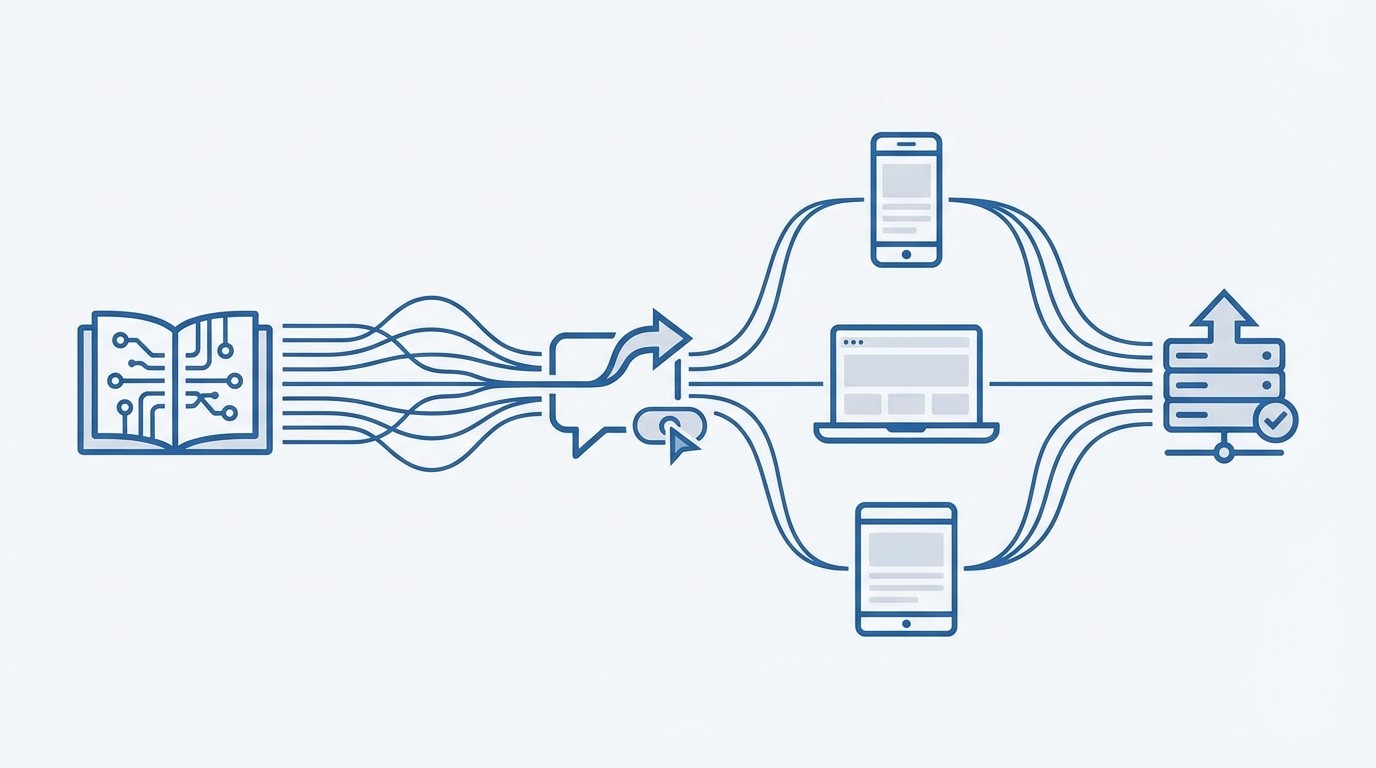
Leaders adopt RadMedia to remove the integration tax and the last‑mile friction that keeps routine work in queues. The change shows up in the numbers you now care about: completion rate increases, time to resolution compresses, writeback success rises, and deflection moves routine cases away from agents. Those improvements add up to lower unit cost and calmer operations.
Managed back‑end integration without client engineering
RadMedia owns adapters, authentication, schema mapping, and error handling so you do not need an internal integration project to get to completion. Triggers from billing, collections, policy, and compliance systems feed context into outreach and in‑message apps. When a customer acts, outcomes write back idempotently to the system of record.
The practical impact is speed. Instead of stalling at the hardest part, safe writebacks arrive early, and your team measures completion immediately. The brittle handoffs that create rework disappear because the platform treats integration as a first‑order responsibility, not an afterthought.
In‑message self‑service that actually completes tasks
Customers complete tasks in secure, no‑download mini‑apps embedded in SMS, email, or WhatsApp. Identity is validated with one‑time codes, known‑fact checks, or signed links before any action appears. The app then presents only policy‑eligible options—for example, update a card, authorise a payment, choose a compliant plan, confirm details, upload documents, or sign an attestation.
Forms enforce validation, capture digital consent with timestamps, and return structured data that back‑end systems accept. That closes the loop without a portal login or an agent call, which reduces time to resolution and deflects routine work from your teams.
Autopilot, omni‑channel, and closed‑loop writeback
The Autopilot Workflow Engine advances each case with policy‑aware rules and time‑based logic, linking back‑end events to outreach and in‑message interactions. Omni‑channel orchestration sequences SMS, email, and WhatsApp to drive action, respecting consent, preferences, and quiet hours. Every message points to the in‑message app so customers act where they are.
Closed‑loop resolution ensures outcomes write back to systems of record with idempotent guarantees, retries with backoff, and circuit breakers to protect downstream stability. That directly addresses the earlier costs: fewer handoffs, fewer abandoned logins, and fewer manual reconciliations. The numbers you track shift in the right direction because the loop truly closes.
Ready for customer communication workflows on autopilot? Get in touch: https://radmedia.co.za/contactus?utm_source=oleno&utm_medium=cta&utm_campaign=conversations-are-vanity-a-contrarian-playbook-to-cut-contact-centre-cost
Security and telemetry your regulators expect
Financial services demands strong identity, secure transport, role‑based access, and complete auditability. RadMedia enforces TLS in transit, encryption at rest, and optional SSO for operator access. Every consent, input, and writeback is timestamped and logged so you can prove what happened.
Operational visibility is built in. Each step emits telemetry—deliveries, opens, actions, validations, and writebacks. You track completion rate, time to resolution, and deflection with confidence. Data export to your lake or SIEM supports enterprise reporting and continuous improvement. Industry research shows that disciplined, data‑driven service operations outperform peers on cost to serve and customer outcomes; see McKinsey’s customer service operations research (https://www.mckinsey.com/capabilities/operations/our-insights/transforming-customer-experience-in-operations).
Ready for customer communication workflows on autopilot? Get in touch: https://radmedia.co.za/contactus?utm_source=oleno&utm_medium=cta&utm_campaign=conversations-are-vanity-a-contrarian-playbook-to-cut-contact-centre-cost
Conclusion
Conversations are not outcomes. Resolution inside the message, with verified writebacks, is how you cut contact centre cost without adding headcount. Start small—one high‑volume workflow, one quarter, completion‑first KPIs, and a strict definition of done.
The target is clear: replace conversation KPIs with completion metrics for a single workflow, reduce routine agent cases by at least 60 percent, and show measurable cost reduction within 90 days. We will discuss the specific ways to apply this playbook to your environment, then expand to adjacent workflows once the evidence is in.
Discover how to shift from conversation metrics to resolution-first KPIs. Learn to streamline workflows and reduce contact centre costs effectively.
Conversations Are Vanity: A Contrarian Playbook to Cut Contact Centre Cost - RadMedia professional guide illustration
[{"q":"How do I handle edge cases effectively?","a":"To effectively handle edge cases, start by defining what constitutes an edge case in your workflows. Then, use RadMedia's Autopilot Workflow Engine to create specific exception paths for these cases. This engine allows you to model policies and eligibility rules, ensuring that any edge cases are routed to the right agent with full context. By doing this, you can minimize the time agents spend on routine issues and focus on high-judgment scenarios."},{"q":"What if my customers prefer different communication channels?","a":"If your customers have varying channel preferences, you can use RadMedia's Omni-Channel Messaging Orchestration feature. This allows you to personalize outreach across SMS, email, and WhatsApp based on customer preferences. By sequencing messages and optimizing for timing and content, you can ensure that customers receive communications through their preferred channels, increasing the likelihood of task completion."},{"q":"When should I consider automating my customer communication workflows?","a":"Consider automating your customer communication workflows when you notice high volumes of routine inquiries, like payment updates or document collections. RadMedia can help you automate these processes, reducing contact center load and improving efficiency. Start by identifying a high-volume workflow and use RadMedia's Managed Back-End Integration to connect your systems, ensuring that tasks can be completed without manual intervention."},{"q":"Can I track the success of my automated workflows?","a":"Yes, you can track the success of your automated workflows using RadMedia's built-in telemetry features. This allows you to measure key metrics like completion rate, time-to-resolution, and writeback success. By analyzing these metrics, you can identify areas for improvement and ensure that your workflows are effectively reducing costs and enhancing customer satisfaction."},{"q":"How do I ensure compliance in my automated communications?","a":"To ensure compliance in your automated communications, leverage RadMedia's Security, Identity, and Audit Controls. This feature enforces strong identity verification and secure transport for all communications. Additionally, every consent and input is timestamped and logged, providing a clear audit trail that meets regulatory requirements. By embedding these controls into your workflows, you can maintain compliance while automating customer interactions."}]
20 Feb 2026
09dde954-4759-4480-820e-d96e54e28342
{"@graph":[{"@id":"https://radmedia.co.za/conversations-are-vanity-a-contrarian-playbook-to-cut-contact-centre-cost#article","@type":"Article","image":"https://jdbrszggncetflrhtwcd.supabase.co/storage/v1/object/public/article-images/6dca98ae-107d-47b7-832f-ee543e4b5364/conversations-are-vanity-a-contrarian-playbook-to-cut-contact-centre-cost-hero-1771574804118.png","author":{"name":"RadMedia","@type":"Organization"},"headline":"Conversations Are Vanity: A Contrarian Playbook to Cut Contact Centre Cost","keywords":"conversation metrics are vanity","publisher":{"name":"RadMedia","@type":"Organization"},"wordCount":3092,"description":"Discover how to shift from conversation metrics to resolution-first KPIs. Learn to streamline workflows and reduce contact centre costs effectively.","dateModified":"2026-02-20T07:58:52.556+00:00","datePublished":"2026-02-20T07:53:05.535479+00:00","mainEntityOfPage":{"@id":"https://radmedia.co.za/conversations-are-vanity-a-contrarian-playbook-to-cut-contact-centre-cost","@type":"WebPage"}},{"@id":"https://radmedia.co.za/conversations-are-vanity-a-contrarian-playbook-to-cut-contact-centre-cost#faq","@type":"FAQPage","mainEntity":[{"name":"How do I handle edge cases effectively?","@type":"Question","acceptedAnswer":{"text":"To effectively handle edge cases, start by defining what constitutes an edge case in your workflows. Then, use RadMedia's Autopilot Workflow Engine to create specific exception paths for these cases. This engine allows you to model policies and eligibility rules, ensuring that any edge cases are routed to the right agent with full context. By doing this, you can minimize the time agents spend on routine issues and focus on high-judgment scenarios.","@type":"Answer"}},{"name":"What if my customers prefer different communication channels?","@type":"Question","acceptedAnswer":{"text":"If your customers have varying channel preferences, you can use RadMedia's Omni-Channel Messaging Orchestration feature. This allows you to personalize outreach across SMS, email, and WhatsApp based on customer preferences. By sequencing messages and optimizing for timing and content, you can ensure that customers receive communications through their preferred channels, increasing the likelihood of task completion.","@type":"Answer"}},{"name":"When should I consider automating my customer communication workflows?","@type":"Question","acceptedAnswer":{"text":"Consider automating your customer communication workflows when you notice high volumes of routine inquiries, like payment updates or document collections. RadMedia can help you automate these processes, reducing contact center load and improving efficiency. Start by identifying a high-volume workflow and use RadMedia's Managed Back-End Integration to connect your systems, ensuring that tasks can be completed without manual intervention.","@type":"Answer"}},{"name":"Can I track the success of my automated workflows?","@type":"Question","acceptedAnswer":{"text":"Yes, you can track the success of your automated workflows using RadMedia's built-in telemetry features. This allows you to measure key metrics like completion rate, time-to-resolution, and writeback success. By analyzing these metrics, you can identify areas for improvement and ensure that your workflows are effectively reducing costs and enhancing customer satisfaction.","@type":"Answer"}},{"name":"How do I ensure compliance in my automated communications?","@type":"Question","acceptedAnswer":{"text":"To ensure compliance in your automated communications, leverage RadMedia's Security, Identity, and Audit Controls. This feature enforces strong identity verification and secure transport for all communications. Additionally, every consent and input is timestamped and logged, providing a clear audit trail that meets regulatory requirements. By embedding these controls into your workflows, you can maintain compliance while automating customer interactions.","@type":"Answer"}}]},{"@id":"https://radmedia.co.za/conversations-are-vanity-a-contrarian-playbook-to-cut-contact-centre-cost#breadcrumb","@type":"BreadcrumbList","itemListElement":[{"item":"https://radmedia.co.za","name":"Home","@type":"ListItem","position":1},{"item":"https://radmedia.co.za/conversations-are-vanity-a-contrarian-playbook-to-cut-contact-centre-cost","name":"Conversations Are Vanity: A Contrarian Playbook to Cut Conta","@type":"ListItem","position":2}]}],"@context":"https://schema.org"}
[{"url":"https://jdbrszggncetflrhtwcd.supabase.co/storage/v1/object/public/article-images/6dca98ae-107d-47b7-832f-ee543e4b5364/conversations-are-vanity-a-contrarian-playbook-to-cut-contact-centre-cost-inline-0-1771574832401.png","alt":"How RadMedia Makes The Playbook Real concept illustration - RadMedia","filename":"conversations-are-vanity-a-contrarian-playbook-to-cut-contact-centre-cost-inline-0-1771574832401.png","position":"after_h2_6","asset_id":null,"type":"ai_generated","dimensions":{"width":1024,"height":1024}},{"url":"https://jdbrszggncetflrhtwcd.supabase.co/storage/v1/object/public/article-images/6dca98ae-107d-47b7-832f-ee543e4b5364/conversations-are-vanity-a-contrarian-playbook-to-cut-contact-centre-cost-inline-1-1771574856936.png","alt":"Conversations Are Vanity: Measure Resolution, Not Talk concept illustration - RadMedia","filename":"conversations-are-vanity-a-contrarian-playbook-to-cut-contact-centre-cost-inline-1-1771574856936.png","position":"after_h2_1","asset_id":null,"type":"ai_generated","dimensions":{"width":1024,"height":1024}}]
83
3092
Most operations teams worship volume: calls, chats, tickets, bot deflections. The metric that matters is different—completion inside the message, recorded in your systems with no manual wrap‑up. Conversations Are Vanity: A Contrarian Playbook to Cut Contact Centre Cost is our working lens for audits, and we will walk you through it step by step.
We will discuss the specific ways conversation metrics hide real costs, why writebacks and last‑mile friction are the root cause, and how a resolution‑first playbook cuts routine agent load fast. You will see where teams go wrong, how to measure resolution properly, and what it takes to make in‑message completion safe, auditable, and fast.
Key Takeaways:
Replace talk volume with completion rate, time to resolution, writeback success, and deflection as your north‑star KPIs.
Audit one high‑volume workflow to quantify last‑mile friction and the integration tax that keeps costs high.
Teach the six‑step playbook to shift work from agents to in‑message self‑service with automatic writebacks.
Re‑skill agents for exceptions and high‑judgment cases, not routine policy work.
Expect measurable results in one quarter by starting with a single, repeatable workflow.
Build for audits from day one, including identity, consent, and evidence of writebacks.
Treat channel orchestration as completion design, not broadcast, so customers act where they are.
Conversations Are Vanity: Measure Resolution, Not Talk
Resolution inside the message is the only metric that reliably reduces contact centre cost. Talk volume, handle time, and bot containment can look healthy while unresolved work piles up. When completion writes back to your systems automatically, queues shrink and unit cost drops.

Teams lean on talk metrics because they are easy to count and trend, yet they mask the waste from handoffs and rework. A simple pattern repeats: the message starts a journey, a portal or agent must finish it, records need manual recon, and the same case returns next week. Completion inside the message, with idempotent writebacks, breaks that loop and turns busywork into outcomes you can prove.
Anchor your reporting to binary, verifiable outcomes:
Completion rate = verified writebacks ÷ conversations started (for the workflow)
Time to resolution = timestamp of first outreach → timestamp of successful writeback
Writeback success = successful writebacks ÷ writeback attempts
Deflection = % of eligible cases resolved without an agent
Most leaders know this instinctively. Few measure it directly. Start now. Shift your weekly dashboard to completion rate, time to resolution, writeback success, and deflection. Those are the numbers you can manage and improve.
Why conversation metrics mislead ops leaders
Talk metrics reward activity, not outcomes. A spike in chats or calls can mean outreach worked, or it can mean last‑mile friction got worse. Without completion data, you cannot tell. The risk is simple: you congratulate the team for more activity while unresolved work expands in the background.
In our reviews, we often see bot containment celebrated even as agents spend late nights closing the same cases by hand. Handle time looks efficient, but only because customers are bounced to a portal that they abandon. The symptom is clear: talk is up, yet balances, flags, and notes are still stale in core systems. That gap is the cost.
Leaders need clarity. Tie outreach to verified outcomes that write back automatically. If a case does not finish inside the message and return a recorded update, treat it as unresolved—full stop. Anything else is noise that drives the wrong decisions.
Resolution inside the message as the real metric
Completion inside the message removes the channel switch at the moment of action. Customers see only eligible options, take one, and the outcome posts back to the system of record. That is the definition worth adopting. It is binary: either the writeback succeeded and your records changed, or it did not.
A binary definition prevents debate about partial progress. It also aligns every team on a measurable end state. When you report completion this way, you expose where friction lives—identity gates that block good customers, forms that collect the wrong data, and integrations that fail silently. You get the truth fast.
Evidence then compounds. With writebacks logged and attributable, you can run real experiments. Change cadence, channel, or copy and see completion move. Stop guessing.
What changes when you cut the last mile
Removing the portal detour changes customer behaviour. People act when the decision is in front of them. That means fewer escalations, fewer abandoned calls, and fewer returns of the same case. It also changes team behaviour. Ops stops firefighting and starts managing a predictable pipeline of completions.
The cost story improves quickly. Routine cases no longer hit agents. Exceptions route with context when needed, which shortens those calls too. Audit anxiety fades because every consent, input, and writeback is captured in one trail. The experience improves for everyone involved.
The Hidden Root Cause of High Contact Centre Cost
High contact centre cost persists because systems start conversations but cannot finish tasks without a channel switch. The real blocker is not agent skill; it is missing writebacks and last‑mile friction. When outcomes do not post to core systems automatically, work returns and cost snowballs.
Many stacks separate outreach from action. Messages nudge, portals demand logins, and agents close the gap. Each hop invites failure. Password resets stall customers. Forms ask for data that back‑end systems cannot consume. Payments succeed, then fail to record. Every miss creates rework for your team and frustration for your customers.
A resolution‑first model collapses those hops into one flow. Validate identity inside the message, present only policy‑eligible choices, collect structured inputs, then write back idempotently. Do that, and routine work stops hitting your queues.
The real blocker: missing writebacks, not agent skill
Agents do hard work well. The fail point is the system boundary where a transaction must touch cores safely. Generic chat tools and light bots detect intent, then stall when the action needs a reliable writeback. That stall is the source of many hidden costs.
When a writeback is unreliable, teams invent manual workarounds: a spreadsheet of cases to reconcile weekly, a queue for balance updates, a batch job that someone monitors at night. Those patches keep the lights on, yet they anchor cost at the wrong level and introduce new risks.
Safe writebacks need idempotency, retries with backoff, and circuit breakers. Vendors like AWS document idempotency patterns for exactly this reason—repeated calls must not create duplicate transactions, and failures must resolve into a single, correct outcome. See the AWS idempotency guidance (https://docs.aws.amazon.com/whitepapers/latest/building-event-driven-architectures/idempotency.html) for foundational patterns.
Portals and bots add friction at the moment of action
Portals are fine for browsing history and documents. They are fragile at the point of decision. Customers forget passwords, lose MFA devices, or quit when a page fails to load on a weak connection. Bots feel modern, yet they escalate precisely when a rule or payment must touch a core system.
The cost of this friction is real. Every abandoned login becomes a call. Every bot handoff resets context that the next human must rebuild. Each manual wrap‑up increases the chance of a missed writeback, which then triggers more calls. The loop is expensive.
Channels like WhatsApp, SMS, and email reduce friction when used for completion, not just nudges. Official guidance exists for secure, policy‑aligned use in business contexts, including consent and template requirements. See Meta’s WhatsApp Business Platform overview (https://developers.facebook.com/docs/whatsapp/overview) for channel rules and capabilities.
What Unresolved Workflows Cost Your Contact Centre
Unresolved workflows waste agent time, inflate rework, and increase risk exposure. The cost shows up as higher unit cost, slower cycle times, and audit gaps. In most financial services operations we audit, 60–80% of traffic is routine and policy‑bound, which means the waste is both large and fixable.
When a failed payment email pushes to a portal, then to a call, two or three people touch the same case. Each touch adds handle time, and each hop introduces another chance to miss evidence or fail a writeback. Multiplied across thousands of accounts, the cost becomes a material budget line.
You can measure this easily. For one workflow, track how many cases start in messaging, how many finish inside the message, how many require agent help, and how many return within 30 days. The gap between starts and verified writebacks is your monthly operations tax.
The contact centre cost of handoffs and context switches
Handoffs create duplication. Agents repeat identity checks, re‑collect data, and restate rules customers already saw. Context switches add delay while systems load, customers search for details, or agents track down the right form. None of that work moves the outcome forward.
Queues lengthen as these inefficiencies stack. Leaders then add headcount to hold service levels, which masks the underlying problem. Without a path to completion inside the message, cost scales with volume, not outcomes.
A direct answer is available. Eliminate the handoff for routine work, and you eliminate the duplication. Keep context in one flow, and you cut repeat calls. It is straightforward once you define completion and design for it.
The integration tax you pay every month
Integration debt shows up as manual reconciliation. When systems cannot accept structured updates automatically, people bridge the gap. That means copying data between screens, re‑keying forms, or uploading documents to shared drives for someone else to process later.
These tasks are slow and error‑prone. They also fail audits. Without idempotent operations, you cannot prove a duplicate post did not occur. Without a reliable log, you cannot prove which consent applied. Regulators want that evidence, and so do your risk teams. The UK’s Consumer Duty guidance, for example, expects firms to demonstrate good outcomes with clear records that match what customers experienced—see the FCA Consumer Duty (https://www.fca.org.uk/firms/consumer-duty).
Investing in safe writebacks once pays down this tax permanently. You replace ad hoc work with predictable, controlled operations that deliver consistent results.
Evidence from the field: a bank campaign that stalled
One retail bank scaled an interactive SMS‑to‑call collections campaign. It collapsed under its own weight when new inbound lines added long queues. Customers who tried to pay gave up. Agents inherited a flood of frustrated callers with no context of prior steps.
The pivot was decisive. The bank replaced the call handoff with a secure link to a branded, in‑message app. Customers verified identity, then chose to pay now, promise to pay later, or dispute the amount. Outcomes posted back to core systems automatically.
The result: routine cases resolved without agents, and specialists focused on complex disputes. Cost fell because the same campaign now ended in completion, not another queue.
What It Feels Like To Run On Conversation Metrics
Running on talk volume feels busy and brittle. Leaders push for more outreach. Agents sprint to keep up. Customers receive mixed signals as they bounce across channels. The team knows something is off, yet dashboards show progress. That mismatch creates stress and doubt.
Everyone feels the weight of unresolved work. Supervisors manage callbacks from last week’s “almost done” cases. Ops leaders debate why bot containment rose while writebacks lagged. Risk and audit ask for evidence that is scattered across tools. Nobody sleeps well the night before a board review.
A different feeling arrives when completion is the north star. The load lightens. Reviews focus on outcomes and root causes, not excuses. People trust the numbers because the logs match reality.
Living with queues that never shrink
Queues that never shrink are demoralising. New campaigns launch, volume jumps, and yet unresolved counts barely move. Leaders cycle through theories while frontline teams absorb the impact. It is a grind.
You can change that story. When customers can act inside the message and the result writes back, the queue that matters starts to fall. The win is visible, and the team feels it. That momentum opens the door to the next fix.
The late‑night rework nobody budgets for
Late‑night rework is the hidden tax of poor integration. Teams reconcile files, correct balances, and paste notes after hours to keep tomorrow’s reports clean. That effort is real, and it is never in the plan.
Cutting this tax frees capacity without a hiring plan. It also reduces risk. With clean, automatic writebacks and a unified log, you stop relying on heroics to pass audits. That change is worth more than any one metric shift because it restores trust in the system.
A Contrarian Playbook To Cut Contact Centre Cost
The contrarian playbook replaces talk metrics with resolution metrics, collapses last‑mile friction, and guarantees writebacks. Start with one high‑volume, policy‑bound workflow. Redesign it to finish inside the message. Prove deflection and cost reduction, then scale.
We will walk you through the playbook in six steps. Keep the goal simple: completion inside the message with idempotent writebacks. Teach your teams to measure that outcome, and to treat anything else as unresolved.
Before you start, capture a two‑week baseline for completion, time to resolution, writeback success, and deflection. Publish it, then set a modest target for the first quarter.
Shift the KPI: from talk volume to completion rate
Start by changing what you celebrate. Move weekly status reviews to completion, time to resolution, writeback success, and deflection. Publish a baseline for one workflow, then set a modest target—for example, a 20% improvement in completion within one quarter.
Make the definition strict: a case counts only when the writeback succeeded and the system of record reflects it. That clarity forces better conversations across ops, IT, and risk. It also guides design decisions, because every step now serves a single, testable outcome.
The six‑step contrarian playbook
You can adopt the playbook without a big programme. One workflow, one quarter, clear evidence. The steps below outline the work in plain terms, then you can scale.
Pick a routine, high‑volume workflow (for example, failed payment remediation).
Map the journey and measure drop‑offs, especially at the last mile.
Define completion and model policies, eligibility, and exception routes.
Embed identity checks, then present only valid, policy‑bound actions.
Orchestrate messaging for action, not awareness—point to the in‑message app.
Guarantee writebacks with idempotent operations, retries, and full logging.
Each step has one purpose: cut friction and prove writebacks. Keep scope narrow so you can measure the lift and learn fast.
Governance you can defend in audits
Governance is not paperwork; it is design. Identity must be verified before actions appear. Consent must be explicit and timestamped. Every input must be validated, and every outcome must be logged with enough detail to prove what happened later.
When you build governance into the flow, audits become easier. Risk partners stop being blockers and become allies because the evidence is clear. That creates room to expand into adjacent workflows with confidence.
Ready for customer communication workflows on autopilot? Get in touch: https://radmedia.co.za/contactus?utm_source=oleno&utm_medium=cta&utm_campaign=conversations-are-vanity-a-contrarian-playbook-to-cut-contact-centre-cost
How RadMedia Makes The Playbook Real
RadMedia enables the playbook by wiring triggers from your systems to in‑message self‑service, orchestrating channels for action, and writing outcomes back to systems of record. The platform manages back‑end integration, executes rules on autopilot, and enforces identity and audit controls so completion becomes predictable and safe.

Leaders adopt RadMedia to remove the integration tax and the last‑mile friction that keeps routine work in queues. The change shows up in the numbers you now care about: completion rate increases, time to resolution compresses, writeback success rises, and deflection moves routine cases away from agents. Those improvements add up to lower unit cost and calmer operations.
Managed back‑end integration without client engineering
RadMedia owns adapters, authentication, schema mapping, and error handling so you do not need an internal integration project to get to completion. Triggers from billing, collections, policy, and compliance systems feed context into outreach and in‑message apps. When a customer acts, outcomes write back idempotently to the system of record.
The practical impact is speed. Instead of stalling at the hardest part, safe writebacks arrive early, and your team measures completion immediately. The brittle handoffs that create rework disappear because the platform treats integration as a first‑order responsibility, not an afterthought.
In‑message self‑service that actually completes tasks
Customers complete tasks in secure, no‑download mini‑apps embedded in SMS, email, or WhatsApp. Identity is validated with one‑time codes, known‑fact checks, or signed links before any action appears. The app then presents only policy‑eligible options—for example, update a card, authorise a payment, choose a compliant plan, confirm details, upload documents, or sign an attestation.
Forms enforce validation, capture digital consent with timestamps, and return structured data that back‑end systems accept. That closes the loop without a portal login or an agent call, which reduces time to resolution and deflects routine work from your teams.
Autopilot, omni‑channel, and closed‑loop writeback
The Autopilot Workflow Engine advances each case with policy‑aware rules and time‑based logic, linking back‑end events to outreach and in‑message interactions. Omni‑channel orchestration sequences SMS, email, and WhatsApp to drive action, respecting consent, preferences, and quiet hours. Every message points to the in‑message app so customers act where they are.
Closed‑loop resolution ensures outcomes write back to systems of record with idempotent guarantees, retries with backoff, and circuit breakers to protect downstream stability. That directly addresses the earlier costs: fewer handoffs, fewer abandoned logins, and fewer manual reconciliations. The numbers you track shift in the right direction because the loop truly closes.
Ready for customer communication workflows on autopilot? Get in touch: https://radmedia.co.za/contactus?utm_source=oleno&utm_medium=cta&utm_campaign=conversations-are-vanity-a-contrarian-playbook-to-cut-contact-centre-cost
Security and telemetry your regulators expect
Financial services demands strong identity, secure transport, role‑based access, and complete auditability. RadMedia enforces TLS in transit, encryption at rest, and optional SSO for operator access. Every consent, input, and writeback is timestamped and logged so you can prove what happened.
Operational visibility is built in. Each step emits telemetry—deliveries, opens, actions, validations, and writebacks. You track completion rate, time to resolution, and deflection with confidence. Data export to your lake or SIEM supports enterprise reporting and continuous improvement. Industry research shows that disciplined, data‑driven service operations outperform peers on cost to serve and customer outcomes; see McKinsey’s customer service operations research (https://www.mckinsey.com/capabilities/operations/our-insights/transforming-customer-experience-in-operations).
Ready for customer communication workflows on autopilot? Get in touch: https://radmedia.co.za/contactus?utm_source=oleno&utm_medium=cta&utm_campaign=conversations-are-vanity-a-contrarian-playbook-to-cut-contact-centre-cost
Conclusion
Conversations are not outcomes. Resolution inside the message, with verified writebacks, is how you cut contact centre cost without adding headcount. Start small—one high‑volume workflow, one quarter, completion‑first KPIs, and a strict definition of done.
The target is clear: replace conversation KPIs with completion metrics for a single workflow, reduce routine agent cases by at least 60 percent, and show measurable cost reduction within 90 days. We will discuss the specific ways to apply this playbook to your environment, then expand to adjacent workflows once the evidence is in.
