
7 KPIs That Actually Move the Needle for Communication Automation
Focus on resolution, not conversation volume, by using KPIs like completion rate and writeback success to drive communication automation. Set clear targets, monitor performance, and attribute savings to improve efficiency and reduce costs.
Conversation counts look busy, not better. If you want real savings, measure whether work finishes inside the message and writes back to your core systems. We’ll walk you through 7 KPIs That Actually Move the Needle for Communication Automation, plus formulas, thresholds, and alerts that tell you where flow is broken and what to fix first.
We’ll discuss the specific ways resolution metrics expose hidden costs, from manual wrap‑up to reconciliation drift. You’ll get practical targets you can adopt today, like writeback success at or above 95 percent and time to resolution thresholds by workflow. The goal is simple, clear, and fair: move attention from talk to completion, then prove it on a dashboard everyone trusts.
Key Takeaways:
Replace conversation volume with completion rate, writeback success, and time to resolution as primary KPIs.
Set targets: writeback success 95 percent or higher, straight‑through processing 60 to 80 percent for routine flows, median time to resolution in hours, not days.
Alert on drops in completion by channel, any writeback dip below target, and rising exception rate or recovery time.
Attribute savings directly: agent minutes avoided, fewer manual reconciliations, lower unit cost per resolved case.
Start with one high‑volume workflow, instrument it end to end, then scale once the dashboard shows deflection and reliability.
Use policy‑aware orchestration and in‑message self‑service to cut handoffs and raise first attempt completion.
Guarantee writebacks to systems of record to eliminate rekeying, errors, and audit risk.
Why KPIs Must Track Resolution, Not Conversation Volume
Resolution KPIs tell you whether customers finished the task and your systems recorded the outcome. Conversation KPIs only describe activity, which often hides extra cost and rework. When dashboards track completion and writebacks, teams see where flows fail and fix the root cause, not the symptom.
Why Conversation Volume Misleads Ops
High contact counts can mask broken flows. A surge in chats or calls might look like engagement, yet every extra touch is usually a missed opportunity to finish the task inside the message. In our experience, teams celebrate activity while unit cost quietly climbs because cases bounce across channels.
Conversation metrics often reward the wrong behavior. More messages get sent, but customers still hit portals, wait for agents, or give up at login. That is a costly mistake. Resolution KPIs force a different lens: did the customer complete, and did the system of record reflect the change without manual wrap‑up?
You will notice the shift quickly. Leaders start asking about first attempt completion, writeback integrity, and time to resolution. Agents ask for fewer handoffs and better context. Customers stop bouncing between SMS, email, WhatsApp, and calls because they can act where they are.
What Resolution Inside the Message Means
Resolution inside the message means a customer receives a secure link, verifies identity, completes a policy‑valid action, and the outcome writes back automatically. No portals. No downloads. No rekeying. Once done, the case closes and the record updates idempotently.
That definition matters because it sets clear system boundaries. The message is the app, the flow is policy‑aware, and the writeback is guaranteed. Without those parts working together, you risk partial completions, orphaned updates, and audit gaps that force manual clean‑up later.
Leaders who adopt this definition see an immediate benefit. It becomes obvious which steps are noise and which steps move the needle. Then the right KPIs almost pick themselves.
KPIs That Signal Real Progress
The KPIs that matter are simple to name and hard to fake. Completion rate proves customers finished the job. Writeback success proves systems stayed in sync. Time to resolution shows how quickly value was delivered. Straight‑through processing, first attempt completion, deflection, and exception recovery round out the picture.
When these numbers improve, cost falls and CX rises. When they slip, you know exactly where to look. That clarity replaces debates about message volume with facts about outcomes and reliability.
The Real Problem: No Closed Loop in Communication Automation
The real problem is not slow agents or weak scripts. It is that most communication stacks start in messaging but finish in portals or calls, then fail to write back automatically. That broken loop creates handoffs, delays, and errors that inflate cost while confusing customers.
The Root Cause Hiding in Plain Sight
Most teams split outreach and action. Messages ask customers to switch channels, remember passwords, and navigate forms that do not reflect policy context. Every switch introduces friction. Every detour invites abandonment.
Ownership is also unclear. Ops owns workflows, marketing owns messaging, IT owns integration, and no single group owns the writeback. Without clear system ownership, nobody optimizes end to end. That is why volume grows while resolution stalls.
Writebacks as the Control Point
Writebacks are the control point because they signal finality. If balances, flags, notes, and documents do not update automatically, your process is not complete. You just moved the burden to people who now reconcile, rekey, and explain gaps during audits.
Idempotency, retries with backoff, and circuit breakers protect systems from duplicate or failed writes. That reliability is not optional in financial services. It is the difference between trust and risk, between straight‑through processing and late‑night clean‑ups. For a grounding in idempotency patterns, see the AWS guidance on idempotent operations: https://docs.aws.amazon.com/lambda/latest/dg/invocation-async.html#invocation-async-guarantees
Why Chatbots and Portals Stall at the Last Mile
Chatbots detect intent well, but they rarely complete transactions that must touch core systems. Portals add account context but force customers to switch channels and remember credentials. Both approaches often stop short of a reliable writeback.
Teams then add more scripts, more steps, and more reminders. That looks like progress. It is not. The last mile still breaks, and agents pick up the pieces.
Costs When KPIs Ignore Writeback Success
When KPIs ignore writebacks, costs rise in hidden ways. Manual wrap‑up, reconciliation, and repeat contacts erase any savings from automation. Agent queues grow, audit risk increases, and customers learn to ignore outreach. The price is paid in time, money, and trust.
Time Cost You Can Measure
Time to resolution inflates when customers switch channels or wait for approvals. Each manual review adds minutes. Each failed writeback adds hours of rework. Multiply that by thousands of cases and you lose weeks of team capacity every quarter.
Median time to resolution is your early warning. If the median creeps from hours to days, flow is broken. Track it by workflow, not in aggregate. You will find outliers that need a simple policy tweak or a better identity check step to unblock completion.
Financial Impact on Unit Cost
Unit cost balloons when straight‑through processing is low. Every agent touch adds salary, training, and supervision overhead. Manual reconciliation adds even more cost and, often, penalties for late or incorrect postings.
Industry analyses have shown that high‑performing service operations reduce cost by shifting to completion metrics and systematized workflows, not just by adding channels. For context on where efficiency gains typically come from, review this perspective on contact center productivity: https://www.mckinsey.com/capabilities/operations/our-insights/five-levers-of-customer-service-productivity
Risk and Compliance Exposure
Failed or partial writebacks create audit exposure. Missing timestamps, inconsistent balances, and absent consent records invite findings you cannot afford to ignore. A small percentage of failures can consume a large share of remediation time.
You do not want a regulator to discover gaps before you do. Monitor writeback success continuously and log every input, consent, and outcome with timestamps. Strong evidence removes doubt and protects your brand.
What It Feels Like When Workflows Stall
Stalled workflows feel like déjà vu. Customers receive messages, click, and bounce. Agents repeat the same identity checks and data collection steps. Leaders see dashboards glow green on sends while queues get longer. It is exhausting and avoidable.
The Week Everyone Wants Back
Picture a busy Monday. A billing campaign goes out, click‑through looks good, but portal drop‑off spikes. By Wednesday, calls are flooding in. By Friday, supervisors are moving headcount to handle the mess. The team lost a week to rework because completion was never designed to happen inside the message.
Nobody feels proud of that week. Everyone knows the work was avoidable. The fix is not harder labor; it is a better system.
The Noise Customers Learn to Ignore
Customers learn quickly. If messages do not let them act, they stop trying. They wait for an agent call or ignore outreach entirely. That lost trust takes time to rebuild.
Design for action where customers already are. Respect consent, time windows, and channel preferences. Give people one clean path to finish the job, then confirm it with a record they can reference.
The New Way: Resolution‑First KPIs for Communication Automation
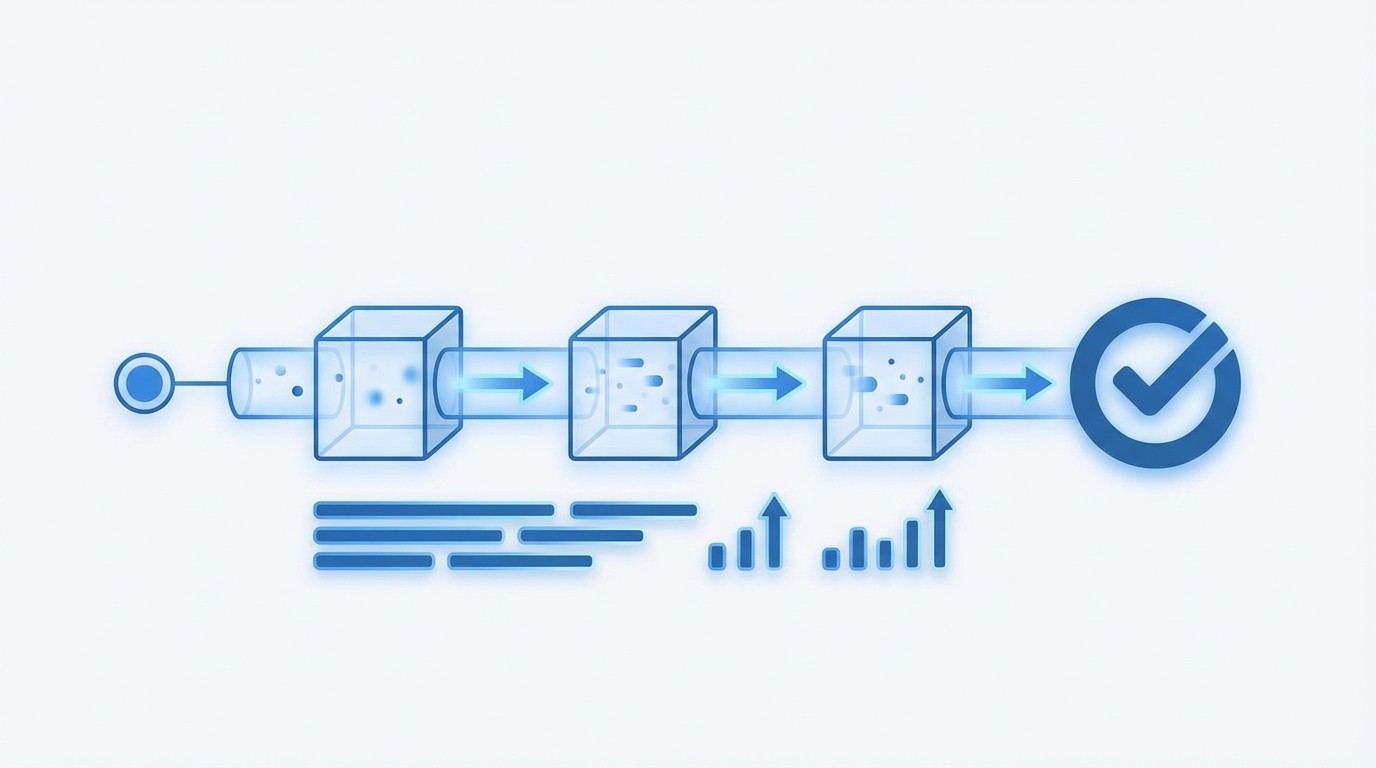
A resolution‑first KPI set makes progress visible and repeatable. Define completion cleanly, encode policy so the path is valid, and guarantee writebacks so outcomes stick. Then track seven KPIs that expose failure modes and guide improvements.
The KPI Set That Actually Moves the Needle
Start with a clear definition of each KPI and a practical formula. Keep names simple and specific so teams adopt them without debate. You want numbers that map directly to actions ops can take next week.
Then socialize the set across ops, risk, IT, and finance. A shared dashboard prevents turf battles and speeds decisions. In our experience, once everyone sees the same resolution numbers, priorities align.
To operationalize communication automation, measure these seven KPIs:
Completion Rate: completed tasks divided by initiated cases.
Writeback Success Rate: successful writes divided by completion attempts. Target 95 percent or higher.
Time to Resolution: median time from trigger to confirmed writeback, by workflow.
Straight‑Through Processing Rate: cases resolved without agents divided by total cases in scope.
First Attempt Completion: completions achieved in the first message or session divided by initiated cases.
Deflection Rate: agent‑handled cases avoided, measured versus your pre‑automation baseline.
Exception Rate and Recovery Time: percent of cases entering exception paths and median time to resolution after escalation.
Thresholds, Alerts, and Ownership
Targets should be firm enough to drive behavior and flexible enough to reflect workflow complexity. Treat them as guardrails, not weapons. People will improve what they are trusted to own.
Writeback success: aim for 95 percent or higher. Alert immediately on any hourly dip below 92 percent.
Time to resolution: set targets by workflow. For billing remediation, aim for same‑day median; for document collection, set a 48‑hour median with 90th percentile under five days.
Straight‑through processing: target 60 to 80 percent for routine, policy‑bound flows. Alert if this drops more than 5 points week over week.
Completion rate: alert on any channel or campaign falling more than 10 percent below its 4‑week rolling median.
Exceptions: alert if exception rate rises week over week for two consecutive weeks, or if exception recovery time exceeds its target by 20 percent.
Make ownership explicit. Ops owns completion. IT owns writeback reliability. Risk owns consent, evidence, and exceptions. Shared visibility prevents finger‑pointing and speeds fixes.
Instrumentation That Attributes Savings
Tie KPIs to dollars and hours. Finance will lean in when savings show up with math they trust. Keep formulas transparent and easy to audit.
Agent minutes avoided = deflected cases × average handle time (minutes).
Reconciliation time saved = reduction in manual writebacks × average reconciliation minutes.
Unit cost impact = (agent‑handled cases avoided × cost per case) ÷ total resolved cases.
Capacity gained (FTE) = total minutes saved ÷ minutes per FTE per period.
You can also benchmark channel‑level completion to refine outreach. Research shows channel‑native experiences drive higher action rates than channel switches or portal jumps, especially in messaging‑led strategies. For a broad view of channel engagement trends, see: https://www.twilio.com/state-of-customer-engagement
Ready For Customer Communication Workflows On Autopilot? Get In Touch.
How RadMedia Makes Resolution KPIs Real
RadMedia enables resolution inside the message by handling integration, in‑message self‑service, orchestration, and reliable writebacks with full audit. That alignment turns KPI targets into steady improvements you can defend in reviews and audits.

Managed Integration That Guarantees Writebacks
RadMedia’s managed back‑end integration connects legacy cores and modern APIs, then posts outcomes idempotently to systems of record. The platform owns adapters, authentication, schema mapping, retries with backoff, and circuit breaking so updates remain consistent under real‑world conditions.
The payoff maps directly to your KPIs. Writeback success climbs toward target, reconciliation time falls, and exception investigation starts with full context, not guesswork. You get speed to resolution without standing up your own fragile connectors or asking engineers to maintain brittle scripts.
In‑Message Self‑Service That Finishes the Task
RadMedia delivers secure, no‑download mini‑apps inside SMS, WhatsApp, and email so customers act where they already are. After identity validation with one‑time codes, known‑fact checks, or signed deep links, customers see only policy‑eligible actions like update card, authorize payment, select a plan, confirm details, upload a document, or sign an attestation.
Completion rises because friction falls. First attempt completion improves, time to resolution shrinks from days to hours, and straight‑through processing expands. Outcomes then sync back automatically, closing the loop without manual wrap‑up.
Autopilot and Telemetry That Prove Resolution
RadMedia’s Autopilot Workflow Engine encodes your policies, links triggers to outreach, and advances each case with time‑based rules and exception routing. When a customer acts, the engine executes downstream transactions and schedules next steps.
Telemetry exposes every step that matters to your dashboard: deliveries, opens, actions, validations, writebacks. You can track completion rate, time to resolution, deflection, and exception recovery in one place. Security, identity, and audit controls keep evidence complete and defensible for regulators and internal audit.
Key capabilities you can put to work quickly:
Managed Back‑End Integration: adapters, schema mapping, idempotent writebacks, and reliability controls that protect downstream systems.
In‑Message Self‑Service Mini‑Apps: secure, channel‑native flows that collect structured inputs, enforce validation, capture consent, and complete the task.
Autopilot Workflow Engine: policy‑aware rules, time‑based logic, and exception routing that keep people focused on true edge cases.
Telemetry and Data Export: end‑to‑end signals for completion rate, time to resolution, writeback success, and deflection, with export to your lake or SIEM.
When you connect these capabilities, the underlying cost drivers reverse. Manual reconciliation drops as writeback success rises. Time to resolution compresses because customers act in message. Deflection improves as straight‑through processing increases.
See How Resolution KPIs Improve Within 90 Days
Conclusion
The vanity metric era is over. Count completions, not conversations. Build a KPI dashboard that centers on completion rate, writeback success, time to resolution, straight‑through processing, first attempt completion, deflection, and exception recovery. Then set thresholds, wire alerts, and make ownership explicit.
Start with one high‑volume workflow. Instrument end to end, prove deflection and reliability, and expand. When resolution happens inside the message and outcomes write back to systems of record, you can expect sizable deflection and, in our experience, a 30 to 60 percent reduction in agent‑handled cases within 90 days, depending on workflow mix and starting baseline.
Discover 7 essential KPIs that move the needle for communication automation. Learn to measure completion and writeback reliability effectively.
7 KPIs That Actually Move the Needle for Communication Automation - RadMedia professional guide illustration
[{"q":"How do I improve my completion rates?","a":"To enhance your completion rates, start by defining clear completion metrics for your workflows. Use RadMedia’s Autopilot Workflow Engine to link triggers directly to outreach, ensuring that customers receive timely messages that guide them to complete their tasks. Additionally, implement in-message self-service mini-apps that allow customers to act within the conversation, reducing the need for channel switching. This approach minimizes friction and encourages action, leading to higher completion rates."},{"q":"What if my writeback success rate drops?","a":"If you notice a drop in your writeback success rate, first check your integration setup with RadMedia’s Managed Back-End Integration. Ensure that all adapters and authentication processes are functioning correctly. You can also set up alerts for any dips below your target success rate, so you can respond quickly. Regularly review your workflows to identify any bottlenecks or issues that might be causing writeback failures, and address them promptly to maintain high performance."},{"q":"Can I track resolution times effectively?","a":"Yes, you can track resolution times effectively by using RadMedia’s telemetry features. This capability allows you to measure time-to-resolution metrics for each workflow. Set specific targets based on your operational goals, and monitor the median time from trigger to confirmed writeback. If you notice that resolution times are increasing, analyze the steps in your workflow to identify where delays are occurring and make necessary adjustments."},{"q":"When should I alert my team about exceptions?","a":"You should alert your team about exceptions when the exception rate rises week over week for two consecutive weeks or if the recovery time exceeds its target by 20%. Using RadMedia's Autopilot Workflow Engine, you can automate these alerts to ensure your team is promptly informed about any issues. This proactive approach helps in addressing exceptions before they escalate, maintaining smooth operations."},{"q":"Why does my customer engagement drop after initial contact?","a":"Customer engagement often drops after initial contact due to friction in the process. If customers are required to switch channels or navigate portals, they may abandon the task. To combat this, use RadMedia’s in-message self-service mini-apps that allow customers to complete their tasks directly within the message. This keeps them engaged and reduces the likelihood of drop-offs, leading to a better overall experience."}]
21 Feb 2026
7be8c5f0-c978-4fb3-bdec-db927c30d07c
{"@graph":[{"@id":"https://radmedia.co.za/7-kpis-that-actually-move-the-needle-for-communication-automation#article","@type":"Article","image":"https://jdbrszggncetflrhtwcd.supabase.co/storage/v1/object/public/article-images/6dca98ae-107d-47b7-832f-ee543e4b5364/7-kpis-that-actually-move-the-needle-for-communication-automation-hero-1771632716252.png","author":{"name":"RadMedia","@type":"Organization"},"headline":"7 KPIs That Actually Move the Needle for Communication Automation","keywords":"communication automation KPIs","publisher":{"name":"RadMedia","@type":"Organization"},"wordCount":2472,"description":"Discover 7 essential KPIs that move the needle for communication automation. Learn to measure completion and writeback reliability effectively.","dateModified":"2026-02-21T00:09:19.651+00:00","datePublished":"2026-02-21T00:03:30.384102+00:00","mainEntityOfPage":{"@id":"https://radmedia.co.za/7-kpis-that-actually-move-the-needle-for-communication-automation","@type":"WebPage"}},{"@id":"https://radmedia.co.za/7-kpis-that-actually-move-the-needle-for-communication-automation#itemlist","name":"7 KPIs That Actually Move the Needle for Communication Automation","@type":"ItemList","itemListElement":[{"name":"Why KPIs Must Track Resolution, Not Conversation Volume","@type":"ListItem","position":1},{"name":"The Real Problem: No Closed Loop in Communication Automation","@type":"ListItem","position":2},{"name":"Costs When KPIs Ignore Writeback Success","@type":"ListItem","position":3},{"name":"What It Feels Like When Workflows Stall","@type":"ListItem","position":4},{"name":"The New Way: Resolution‑First KPIs for Communication Automation","@type":"ListItem","position":5},{"name":"Completion Rate: completed tasks divided by initiated cases.","@type":"ListItem","position":6},{"name":"Writeback Success Rate: successful writes divided by completion attempts. Target 95 percent or higher.","@type":"ListItem","position":7},{"name":"Time to Resolution: median time from trigger to confirmed writeback, by workflow.","@type":"ListItem","position":8},{"name":"Straight‑Through Processing Rate: cases resolved without agents divided by total cases in scope.","@type":"ListItem","position":9},{"name":"First Attempt Completion: completions achieved in the first message or session divided by initiated cases.","@type":"ListItem","position":10},{"name":"Deflection Rate: agent‑handled cases avoided, measured versus your pre‑automation baseline.","@type":"ListItem","position":11},{"name":"Exception Rate and Recovery Time: percent of cases entering exception paths and median time to resolution after escalation.","@type":"ListItem","position":12},{"name":"How RadMedia Makes Resolution KPIs Real","@type":"ListItem","position":13}]},{"@id":"https://radmedia.co.za/7-kpis-that-actually-move-the-needle-for-communication-automation#faq","@type":"FAQPage","mainEntity":[{"name":"How do I improve my completion rates?","@type":"Question","acceptedAnswer":{"text":"To enhance your completion rates, start by defining clear completion metrics for your workflows. Use RadMedia’s Autopilot Workflow Engine to link triggers directly to outreach, ensuring that customers receive timely messages that guide them to complete their tasks. Additionally, implement in-message self-service mini-apps that allow customers to act within the conversation, reducing the need for channel switching. This approach minimizes friction and encourages action, leading to higher completion rates.","@type":"Answer"}},{"name":"What if my writeback success rate drops?","@type":"Question","acceptedAnswer":{"text":"If you notice a drop in your writeback success rate, first check your integration setup with RadMedia’s Managed Back-End Integration. Ensure that all adapters and authentication processes are functioning correctly. You can also set up alerts for any dips below your target success rate, so you can respond quickly. Regularly review your workflows to identify any bottlenecks or issues that might be causing writeback failures, and address them promptly to maintain high performance.","@type":"Answer"}},{"name":"Can I track resolution times effectively?","@type":"Question","acceptedAnswer":{"text":"Yes, you can track resolution times effectively by using RadMedia’s telemetry features. This capability allows you to measure time-to-resolution metrics for each workflow. Set specific targets based on your operational goals, and monitor the median time from trigger to confirmed writeback. If you notice that resolution times are increasing, analyze the steps in your workflow to identify where delays are occurring and make necessary adjustments.","@type":"Answer"}},{"name":"When should I alert my team about exceptions?","@type":"Question","acceptedAnswer":{"text":"You should alert your team about exceptions when the exception rate rises week over week for two consecutive weeks or if the recovery time exceeds its target by 20%. Using RadMedia's Autopilot Workflow Engine, you can automate these alerts to ensure your team is promptly informed about any issues. This proactive approach helps in addressing exceptions before they escalate, maintaining smooth operations.","@type":"Answer"}},{"name":"Why does my customer engagement drop after initial contact?","@type":"Question","acceptedAnswer":{"text":"Customer engagement often drops after initial contact due to friction in the process. If customers are required to switch channels or navigate portals, they may abandon the task. To combat this, use RadMedia’s in-message self-service mini-apps that allow customers to complete their tasks directly within the message. This keeps them engaged and reduces the likelihood of drop-offs, leading to a better overall experience.","@type":"Answer"}}]},{"@id":"https://radmedia.co.za/7-kpis-that-actually-move-the-needle-for-communication-automation#breadcrumb","@type":"BreadcrumbList","itemListElement":[{"item":"https://radmedia.co.za","name":"Home","@type":"ListItem","position":1},{"item":"https://radmedia.co.za/7-kpis-that-actually-move-the-needle-for-communication-automation","name":"7 KPIs That Actually Move the Needle for Communication Autom","@type":"ListItem","position":2}]}],"@context":"https://schema.org"}
[{"url":"https://jdbrszggncetflrhtwcd.supabase.co/storage/v1/object/public/article-images/6dca98ae-107d-47b7-832f-ee543e4b5364/7-kpis-that-actually-move-the-needle-for-communication-automation-inline-0-1771632738113.png","alt":"The New Way: Resolution‑First KPIs for Communication Automation concept illustration - RadMedia","filename":"7-kpis-that-actually-move-the-needle-for-communication-automation-inline-0-1771632738113.png","position":"after_h2_5","asset_id":null,"type":"ai_generated","dimensions":{"width":1024,"height":1024}},{"url":"https://jdbrszggncetflrhtwcd.supabase.co/storage/v1/object/public/article-images/6dca98ae-107d-47b7-832f-ee543e4b5364/7-kpis-that-actually-move-the-needle-for-communication-automation-inline-1-1771632757727.png","alt":"How RadMedia Makes Resolution KPIs Real concept illustration - RadMedia","filename":"7-kpis-that-actually-move-the-needle-for-communication-automation-inline-1-1771632757727.png","position":"after_h2_6","asset_id":null,"type":"ai_generated","dimensions":{"width":1024,"height":1024}}]
89
2472
Conversation counts look busy, not better. If you want real savings, measure whether work finishes inside the message and writes back to your core systems. We’ll walk you through 7 KPIs That Actually Move the Needle for Communication Automation, plus formulas, thresholds, and alerts that tell you where flow is broken and what to fix first.
We’ll discuss the specific ways resolution metrics expose hidden costs, from manual wrap‑up to reconciliation drift. You’ll get practical targets you can adopt today, like writeback success at or above 95 percent and time to resolution thresholds by workflow. The goal is simple, clear, and fair: move attention from talk to completion, then prove it on a dashboard everyone trusts.
Key Takeaways:
Replace conversation volume with completion rate, writeback success, and time to resolution as primary KPIs.
Set targets: writeback success 95 percent or higher, straight‑through processing 60 to 80 percent for routine flows, median time to resolution in hours, not days.
Alert on drops in completion by channel, any writeback dip below target, and rising exception rate or recovery time.
Attribute savings directly: agent minutes avoided, fewer manual reconciliations, lower unit cost per resolved case.
Start with one high‑volume workflow, instrument it end to end, then scale once the dashboard shows deflection and reliability.
Use policy‑aware orchestration and in‑message self‑service to cut handoffs and raise first attempt completion.
Guarantee writebacks to systems of record to eliminate rekeying, errors, and audit risk.
Why KPIs Must Track Resolution, Not Conversation Volume
Resolution KPIs tell you whether customers finished the task and your systems recorded the outcome. Conversation KPIs only describe activity, which often hides extra cost and rework. When dashboards track completion and writebacks, teams see where flows fail and fix the root cause, not the symptom.
Why Conversation Volume Misleads Ops
High contact counts can mask broken flows. A surge in chats or calls might look like engagement, yet every extra touch is usually a missed opportunity to finish the task inside the message. In our experience, teams celebrate activity while unit cost quietly climbs because cases bounce across channels.
Conversation metrics often reward the wrong behavior. More messages get sent, but customers still hit portals, wait for agents, or give up at login. That is a costly mistake. Resolution KPIs force a different lens: did the customer complete, and did the system of record reflect the change without manual wrap‑up?
You will notice the shift quickly. Leaders start asking about first attempt completion, writeback integrity, and time to resolution. Agents ask for fewer handoffs and better context. Customers stop bouncing between SMS, email, WhatsApp, and calls because they can act where they are.
What Resolution Inside the Message Means
Resolution inside the message means a customer receives a secure link, verifies identity, completes a policy‑valid action, and the outcome writes back automatically. No portals. No downloads. No rekeying. Once done, the case closes and the record updates idempotently.
That definition matters because it sets clear system boundaries. The message is the app, the flow is policy‑aware, and the writeback is guaranteed. Without those parts working together, you risk partial completions, orphaned updates, and audit gaps that force manual clean‑up later.
Leaders who adopt this definition see an immediate benefit. It becomes obvious which steps are noise and which steps move the needle. Then the right KPIs almost pick themselves.
KPIs That Signal Real Progress
The KPIs that matter are simple to name and hard to fake. Completion rate proves customers finished the job. Writeback success proves systems stayed in sync. Time to resolution shows how quickly value was delivered. Straight‑through processing, first attempt completion, deflection, and exception recovery round out the picture.
When these numbers improve, cost falls and CX rises. When they slip, you know exactly where to look. That clarity replaces debates about message volume with facts about outcomes and reliability.
The Real Problem: No Closed Loop in Communication Automation
The real problem is not slow agents or weak scripts. It is that most communication stacks start in messaging but finish in portals or calls, then fail to write back automatically. That broken loop creates handoffs, delays, and errors that inflate cost while confusing customers.
The Root Cause Hiding in Plain Sight
Most teams split outreach and action. Messages ask customers to switch channels, remember passwords, and navigate forms that do not reflect policy context. Every switch introduces friction. Every detour invites abandonment.
Ownership is also unclear. Ops owns workflows, marketing owns messaging, IT owns integration, and no single group owns the writeback. Without clear system ownership, nobody optimizes end to end. That is why volume grows while resolution stalls.
Writebacks as the Control Point
Writebacks are the control point because they signal finality. If balances, flags, notes, and documents do not update automatically, your process is not complete. You just moved the burden to people who now reconcile, rekey, and explain gaps during audits.
Idempotency, retries with backoff, and circuit breakers protect systems from duplicate or failed writes. That reliability is not optional in financial services. It is the difference between trust and risk, between straight‑through processing and late‑night clean‑ups. For a grounding in idempotency patterns, see the AWS guidance on idempotent operations: https://docs.aws.amazon.com/lambda/latest/dg/invocation-async.html#invocation-async-guarantees
Why Chatbots and Portals Stall at the Last Mile
Chatbots detect intent well, but they rarely complete transactions that must touch core systems. Portals add account context but force customers to switch channels and remember credentials. Both approaches often stop short of a reliable writeback.
Teams then add more scripts, more steps, and more reminders. That looks like progress. It is not. The last mile still breaks, and agents pick up the pieces.
Costs When KPIs Ignore Writeback Success
When KPIs ignore writebacks, costs rise in hidden ways. Manual wrap‑up, reconciliation, and repeat contacts erase any savings from automation. Agent queues grow, audit risk increases, and customers learn to ignore outreach. The price is paid in time, money, and trust.
Time Cost You Can Measure
Time to resolution inflates when customers switch channels or wait for approvals. Each manual review adds minutes. Each failed writeback adds hours of rework. Multiply that by thousands of cases and you lose weeks of team capacity every quarter.
Median time to resolution is your early warning. If the median creeps from hours to days, flow is broken. Track it by workflow, not in aggregate. You will find outliers that need a simple policy tweak or a better identity check step to unblock completion.
Financial Impact on Unit Cost
Unit cost balloons when straight‑through processing is low. Every agent touch adds salary, training, and supervision overhead. Manual reconciliation adds even more cost and, often, penalties for late or incorrect postings.
Industry analyses have shown that high‑performing service operations reduce cost by shifting to completion metrics and systematized workflows, not just by adding channels. For context on where efficiency gains typically come from, review this perspective on contact center productivity: https://www.mckinsey.com/capabilities/operations/our-insights/five-levers-of-customer-service-productivity
Risk and Compliance Exposure
Failed or partial writebacks create audit exposure. Missing timestamps, inconsistent balances, and absent consent records invite findings you cannot afford to ignore. A small percentage of failures can consume a large share of remediation time.
You do not want a regulator to discover gaps before you do. Monitor writeback success continuously and log every input, consent, and outcome with timestamps. Strong evidence removes doubt and protects your brand.
What It Feels Like When Workflows Stall
Stalled workflows feel like déjà vu. Customers receive messages, click, and bounce. Agents repeat the same identity checks and data collection steps. Leaders see dashboards glow green on sends while queues get longer. It is exhausting and avoidable.
The Week Everyone Wants Back
Picture a busy Monday. A billing campaign goes out, click‑through looks good, but portal drop‑off spikes. By Wednesday, calls are flooding in. By Friday, supervisors are moving headcount to handle the mess. The team lost a week to rework because completion was never designed to happen inside the message.
Nobody feels proud of that week. Everyone knows the work was avoidable. The fix is not harder labor; it is a better system.
The Noise Customers Learn to Ignore
Customers learn quickly. If messages do not let them act, they stop trying. They wait for an agent call or ignore outreach entirely. That lost trust takes time to rebuild.
Design for action where customers already are. Respect consent, time windows, and channel preferences. Give people one clean path to finish the job, then confirm it with a record they can reference.
The New Way: Resolution‑First KPIs for Communication Automation
A resolution‑first KPI set makes progress visible and repeatable. Define completion cleanly, encode policy so the path is valid, and guarantee writebacks so outcomes stick. Then track seven KPIs that expose failure modes and guide improvements.

The KPI Set That Actually Moves the Needle
Start with a clear definition of each KPI and a practical formula. Keep names simple and specific so teams adopt them without debate. You want numbers that map directly to actions ops can take next week.
Then socialize the set across ops, risk, IT, and finance. A shared dashboard prevents turf battles and speeds decisions. In our experience, once everyone sees the same resolution numbers, priorities align.
To operationalize communication automation, measure these seven KPIs:
Completion Rate: completed tasks divided by initiated cases.
Writeback Success Rate: successful writes divided by completion attempts. Target 95 percent or higher.
Time to Resolution: median time from trigger to confirmed writeback, by workflow.
Straight‑Through Processing Rate: cases resolved without agents divided by total cases in scope.
First Attempt Completion: completions achieved in the first message or session divided by initiated cases.
Deflection Rate: agent‑handled cases avoided, measured versus your pre‑automation baseline.
Exception Rate and Recovery Time: percent of cases entering exception paths and median time to resolution after escalation.
Thresholds, Alerts, and Ownership
Targets should be firm enough to drive behavior and flexible enough to reflect workflow complexity. Treat them as guardrails, not weapons. People will improve what they are trusted to own.
Writeback success: aim for 95 percent or higher. Alert immediately on any hourly dip below 92 percent.
Time to resolution: set targets by workflow. For billing remediation, aim for same‑day median; for document collection, set a 48‑hour median with 90th percentile under five days.
Straight‑through processing: target 60 to 80 percent for routine, policy‑bound flows. Alert if this drops more than 5 points week over week.
Completion rate: alert on any channel or campaign falling more than 10 percent below its 4‑week rolling median.
Exceptions: alert if exception rate rises week over week for two consecutive weeks, or if exception recovery time exceeds its target by 20 percent.
Make ownership explicit. Ops owns completion. IT owns writeback reliability. Risk owns consent, evidence, and exceptions. Shared visibility prevents finger‑pointing and speeds fixes.
Instrumentation That Attributes Savings
Tie KPIs to dollars and hours. Finance will lean in when savings show up with math they trust. Keep formulas transparent and easy to audit.
Agent minutes avoided = deflected cases × average handle time (minutes).
Reconciliation time saved = reduction in manual writebacks × average reconciliation minutes.
Unit cost impact = (agent‑handled cases avoided × cost per case) ÷ total resolved cases.
Capacity gained (FTE) = total minutes saved ÷ minutes per FTE per period.
You can also benchmark channel‑level completion to refine outreach. Research shows channel‑native experiences drive higher action rates than channel switches or portal jumps, especially in messaging‑led strategies. For a broad view of channel engagement trends, see: https://www.twilio.com/state-of-customer-engagement
Ready For Customer Communication Workflows On Autopilot? Get In Touch.
How RadMedia Makes Resolution KPIs Real
RadMedia enables resolution inside the message by handling integration, in‑message self‑service, orchestration, and reliable writebacks with full audit. That alignment turns KPI targets into steady improvements you can defend in reviews and audits.

Managed Integration That Guarantees Writebacks
RadMedia’s managed back‑end integration connects legacy cores and modern APIs, then posts outcomes idempotently to systems of record. The platform owns adapters, authentication, schema mapping, retries with backoff, and circuit breaking so updates remain consistent under real‑world conditions.
The payoff maps directly to your KPIs. Writeback success climbs toward target, reconciliation time falls, and exception investigation starts with full context, not guesswork. You get speed to resolution without standing up your own fragile connectors or asking engineers to maintain brittle scripts.
In‑Message Self‑Service That Finishes the Task
RadMedia delivers secure, no‑download mini‑apps inside SMS, WhatsApp, and email so customers act where they already are. After identity validation with one‑time codes, known‑fact checks, or signed deep links, customers see only policy‑eligible actions like update card, authorize payment, select a plan, confirm details, upload a document, or sign an attestation.
Completion rises because friction falls. First attempt completion improves, time to resolution shrinks from days to hours, and straight‑through processing expands. Outcomes then sync back automatically, closing the loop without manual wrap‑up.
Autopilot and Telemetry That Prove Resolution
RadMedia’s Autopilot Workflow Engine encodes your policies, links triggers to outreach, and advances each case with time‑based rules and exception routing. When a customer acts, the engine executes downstream transactions and schedules next steps.
Telemetry exposes every step that matters to your dashboard: deliveries, opens, actions, validations, writebacks. You can track completion rate, time to resolution, deflection, and exception recovery in one place. Security, identity, and audit controls keep evidence complete and defensible for regulators and internal audit.
Key capabilities you can put to work quickly:
Managed Back‑End Integration: adapters, schema mapping, idempotent writebacks, and reliability controls that protect downstream systems.
In‑Message Self‑Service Mini‑Apps: secure, channel‑native flows that collect structured inputs, enforce validation, capture consent, and complete the task.
Autopilot Workflow Engine: policy‑aware rules, time‑based logic, and exception routing that keep people focused on true edge cases.
Telemetry and Data Export: end‑to‑end signals for completion rate, time to resolution, writeback success, and deflection, with export to your lake or SIEM.
When you connect these capabilities, the underlying cost drivers reverse. Manual reconciliation drops as writeback success rises. Time to resolution compresses because customers act in message. Deflection improves as straight‑through processing increases.
See How Resolution KPIs Improve Within 90 Days
Conclusion
The vanity metric era is over. Count completions, not conversations. Build a KPI dashboard that centers on completion rate, writeback success, time to resolution, straight‑through processing, first attempt completion, deflection, and exception recovery. Then set thresholds, wire alerts, and make ownership explicit.
Start with one high‑volume workflow. Instrument end to end, prove deflection and reliability, and expand. When resolution happens inside the message and outcomes write back to systems of record, you can expect sizable deflection and, in our experience, a 30 to 60 percent reduction in agent‑handled cases within 90 days, depending on workflow mix and starting baseline.
